Very excited (and a little surprised) that my first work at @FauQuantum on classical compression of Trotter formulas has been featured in IOP's "special celebratory collection" of articles published in 2023 by researchers in Germany!
https://t.co/vOYIiu3dGF
Large-scale simulations of Floquet physics on near-term #quantum computers just published in npj quantum information: https://t.co/FFPp6zMFcB
Many thanks to Timo Eckstein, Piotr Czarnik, Jian-Xin Zhu, @hartmannquantum, @LCincio, @sornborg & @qZoeHolmes !
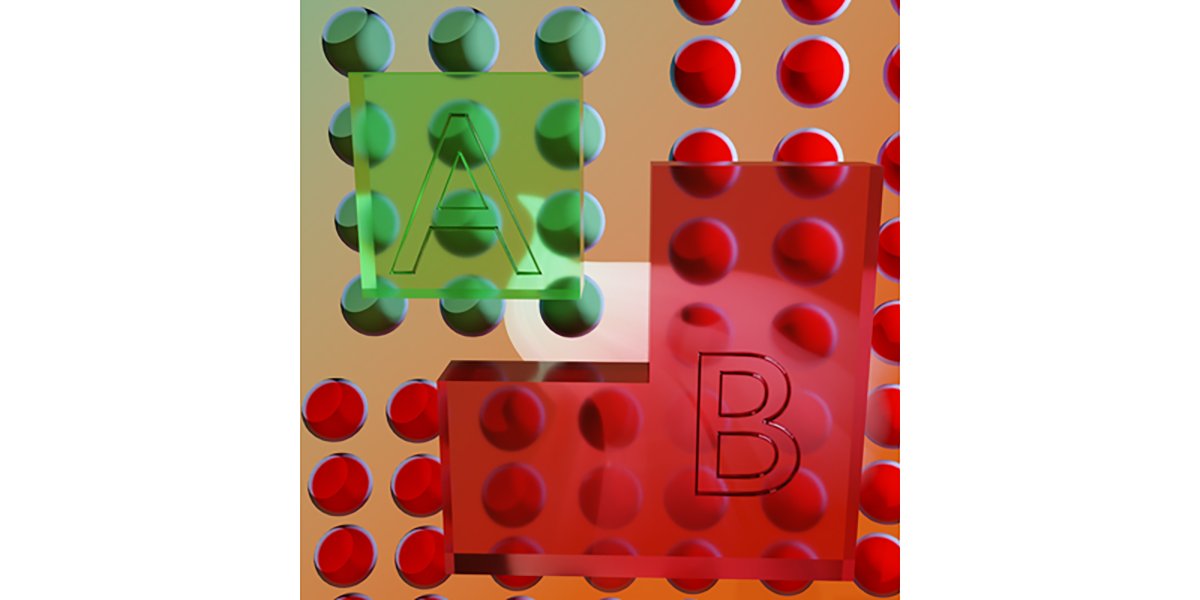
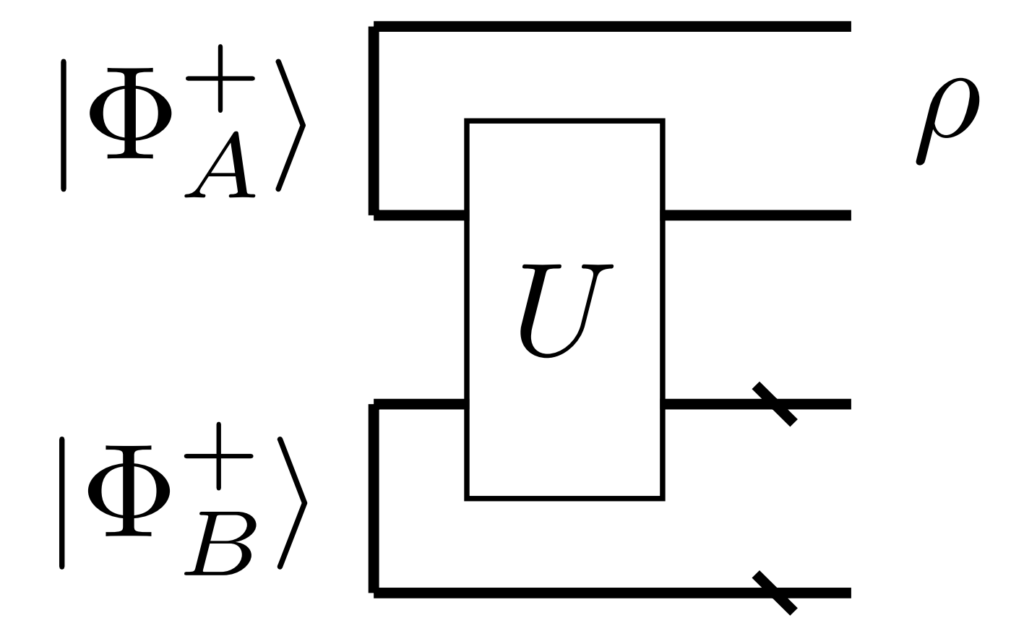
A novel quantum-classical algorithm designed to classically capture the effective action of quantum circuits on bipartite systems is introduced to help predict nonlocality and reduce quantum computing resources. @MansRefiQ@sornborg@CosmicCharsi
https://t.co/hC7EHzmJvu
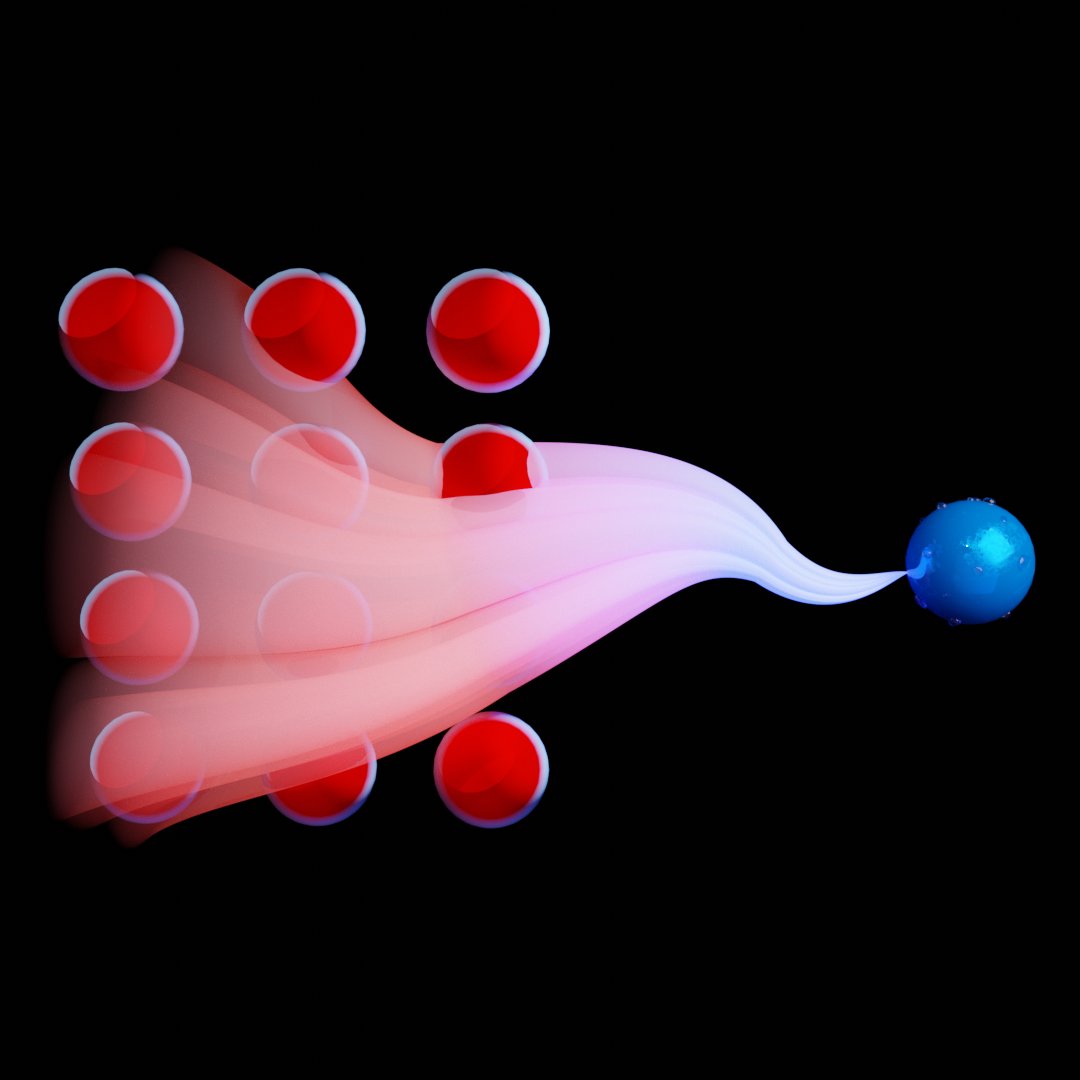
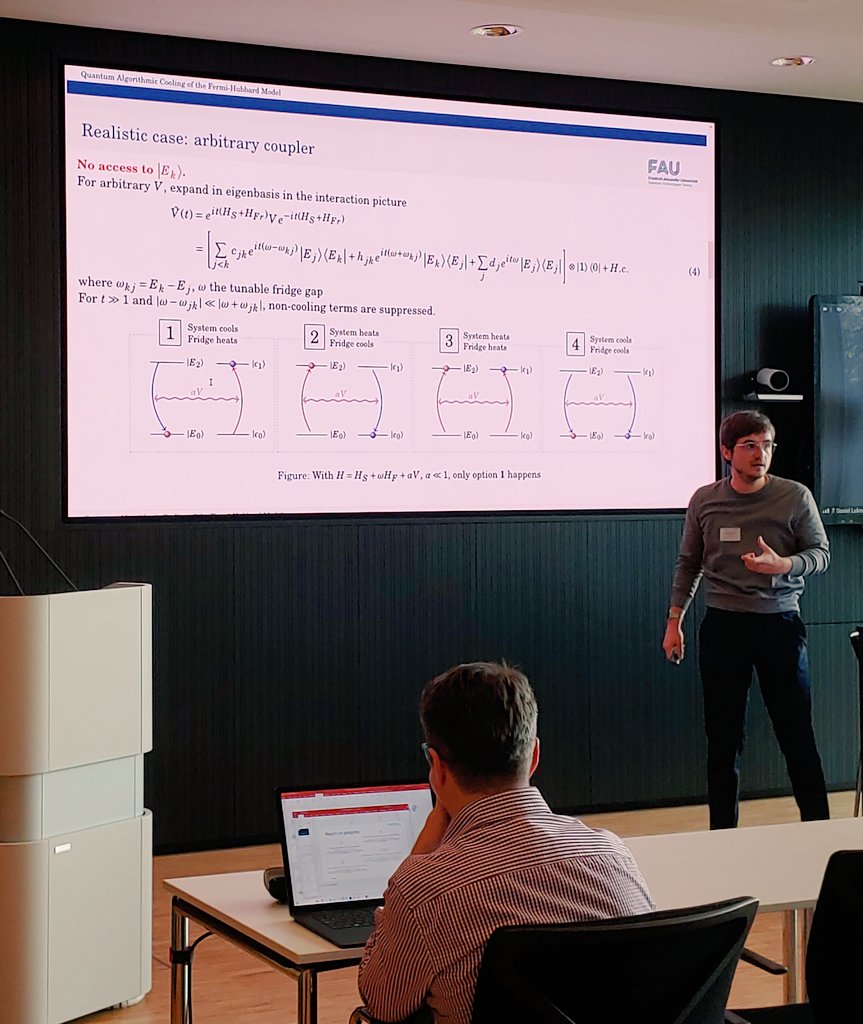
New preprint on quantum cooling for fermionic systems: https://t.co/ZcKWufvis3
We present a cooling algorithm to find ground and thermal states of fermionic Hamiltonians.
Many thanks to Lucas Marti and @hartmannquantum!
@FauQuantum@MunichQuantum
Check out our new pre-print on Tensor Product Decompositions of Quantum Circuits! We study how to split off 🪓 effective actions on small subsystems.
https://t.co/R939R3TOuO
Thanks for this nice collaboration
𝐀𝐫𝐬𝐚𝐥𝐚𝐧 𝐀𝐝𝐢𝐥, @qZoeHolmes@sornborg, @hartmannquantum !
How do you solve chemistry with a quantum computer? The first step is understanding the Fermi-Hubbard model.
𝐋𝐮𝐜𝐚𝐬 𝐌𝐚𝐫𝐭𝐢 on Quantum Algorithmic Cooling at MPQ Garching.
#Quantum@hartmannquantum@MPI_Quantum
🚨We're hiring!🚨
The Theory of Quantum Technology Group at FAU Erlangen-Nürnberg invites applications for a postdoc position in quantum algorithms and quantum simulation.
For more information, see https://t.co/8fm6lu2hhJ
#QuantumComputing@hartmannquantum
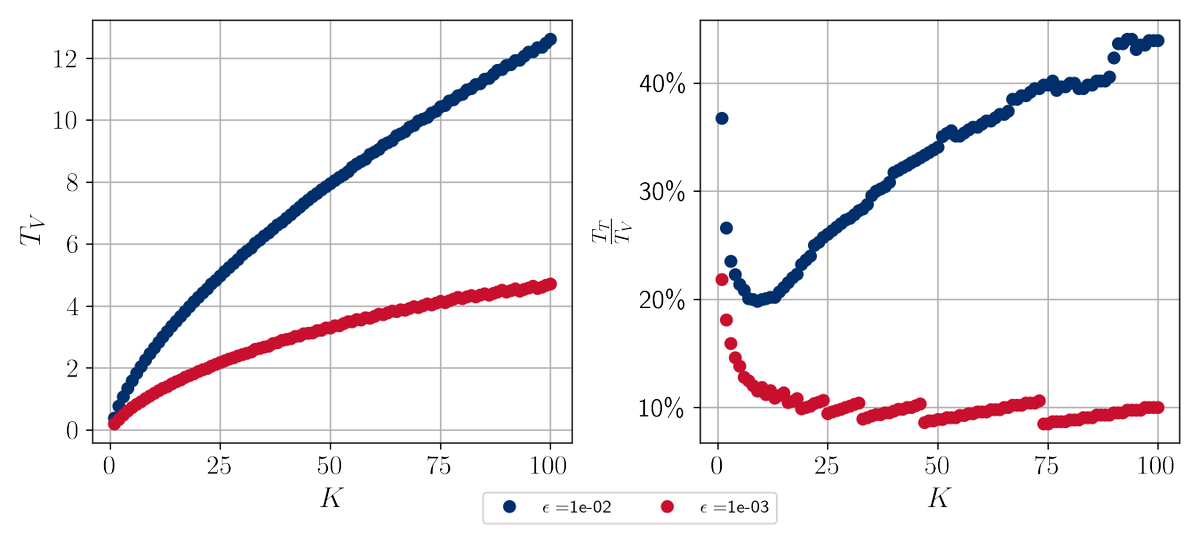
For fixed target accuracy and gate count, we show that we can reach simulation times that are up to 10 times longer than in the Trotter case on an 2D XY model with transverse field.
Be it Barren plateaus or sample problems, quantum optimization seems more and more out of sight for NISQ computers. In our latest pre-print, we pull the optimization of Hamiltonian simulation into classical pre-processing.
Check out this 🧵
https://t.co/VCjQ05EPQu
@FauQuantum
As everything we do is initial state agnostic, we can reach longer times by just repeating the optimal sequence with an error that scales linear in the number of repetitions K.
Be it Barren plateaus or sample problems, quantum optimization seems more and more out of sight for NISQ computers. In our latest pre-print, we pull the optimization of Hamiltonian simulation into classical pre-processing.
Check out this 🧵
https://t.co/VCjQ05Ei0W
@FauQuantum
Can one find more efficient gate sequences than Trotter for digital quantum simulation?
In our new preprint with @MansRefiQ we show that this is always the case, via a problem specific, classically computable cost function for optimizing gate sequences, https://t.co/Ud2V0rySKg
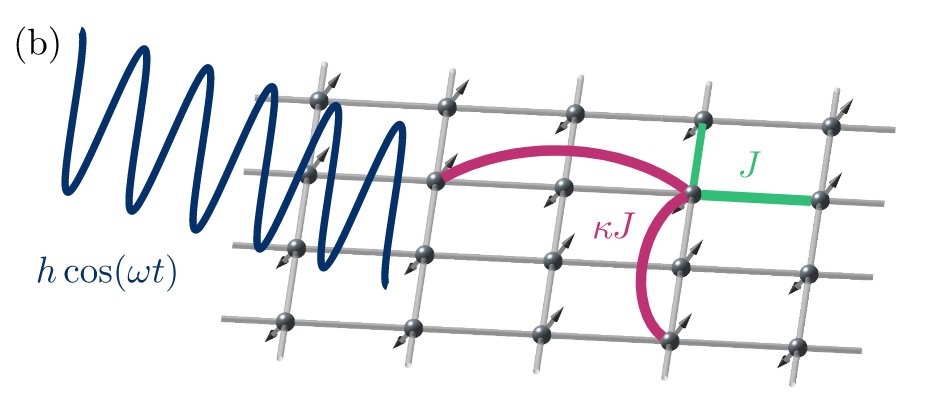
Check out our new work on simulating periodically driven (Floquet) systems! We managed a high fidelity simulation on a 20 qubit trapped ion device + provide an in depth error analysis of our quantum algorithm.
https://t.co/9EMyLsWT6H
This 🧵 sums it up.
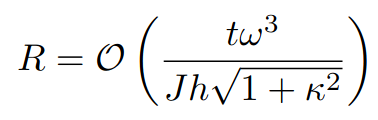
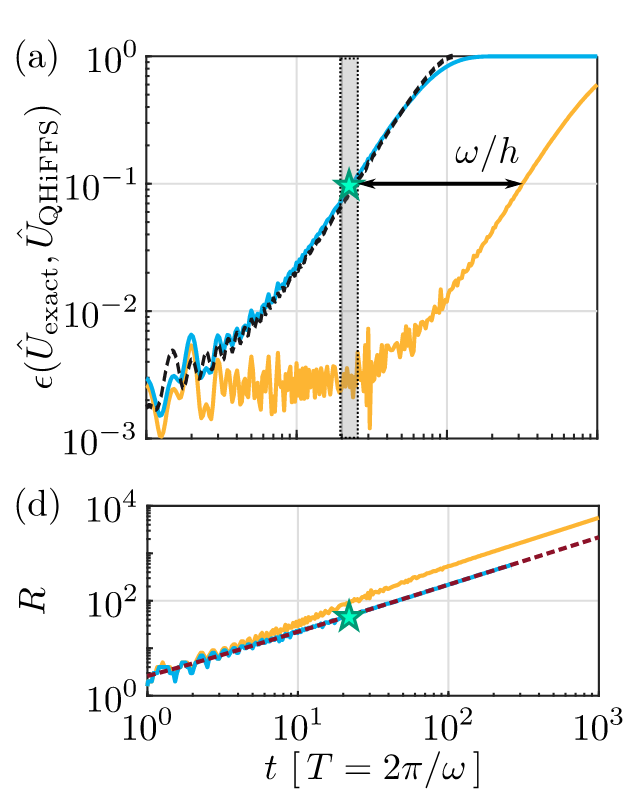
We finally provide a detailed analysis of QHiFFS errors. When compared to a Trotter-Suzuki formula, we find that QHiFFS yields savings in the ratio, R, of gate numbers that scales linearly in simulation time and cubically (!) with the driving frequency