We tend to overcomplicate what it means to have great product sense.
To put it simply: you can look at a screen and intuitively predict the percent of users who will convert to the next screen within a 10% margin of error.
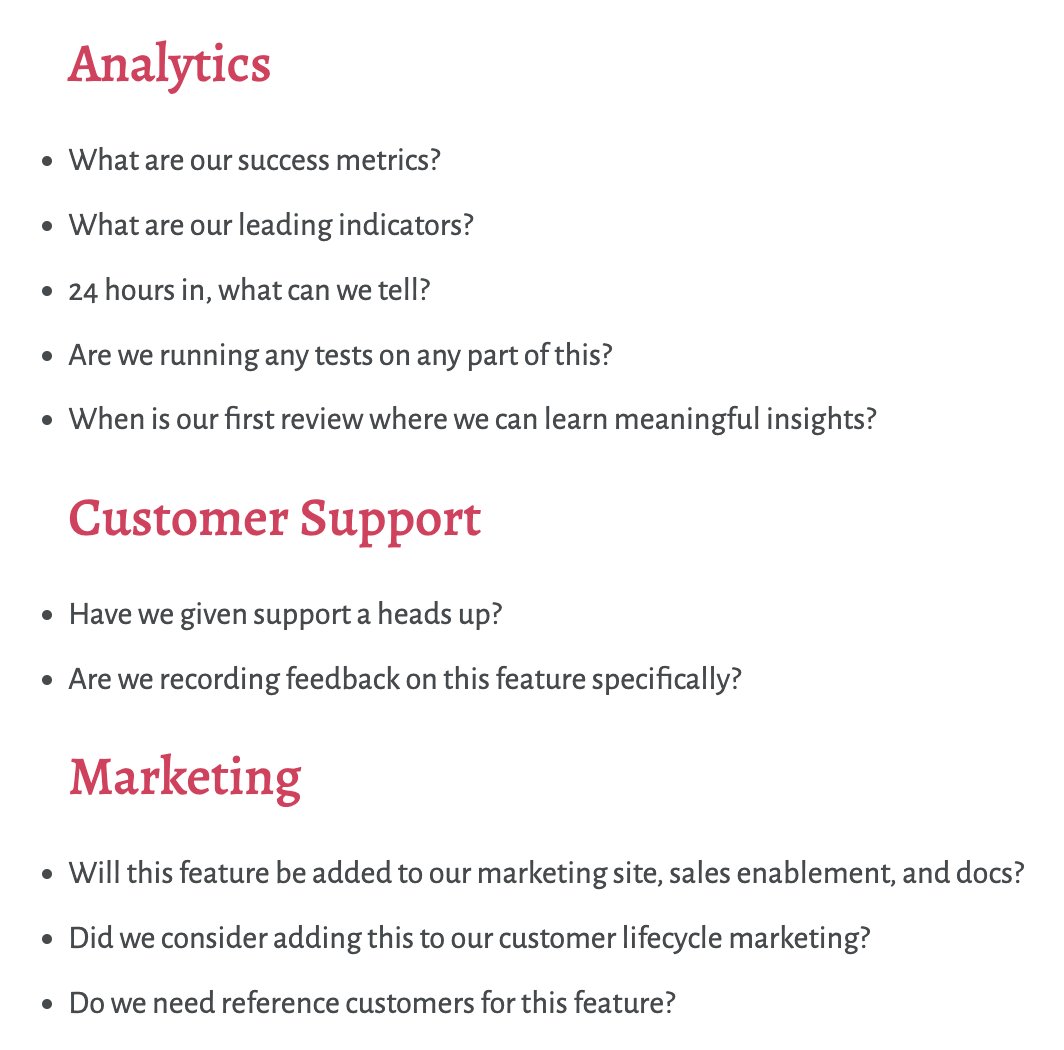
Attached are the most common questions I find myself asking in ~every product/feature review meeting.
Hopefully one or two make their way into your repertoire. (link in next post)
@clairevo@marilynika leads a adv AI, course have been thinking to join this for exactly the reasons mentioned in this tweet. To not say something something LLM 😂
⏩Fits the notion of hard skills ? @clairevo ?
https://t.co/VJjNkmvLaV
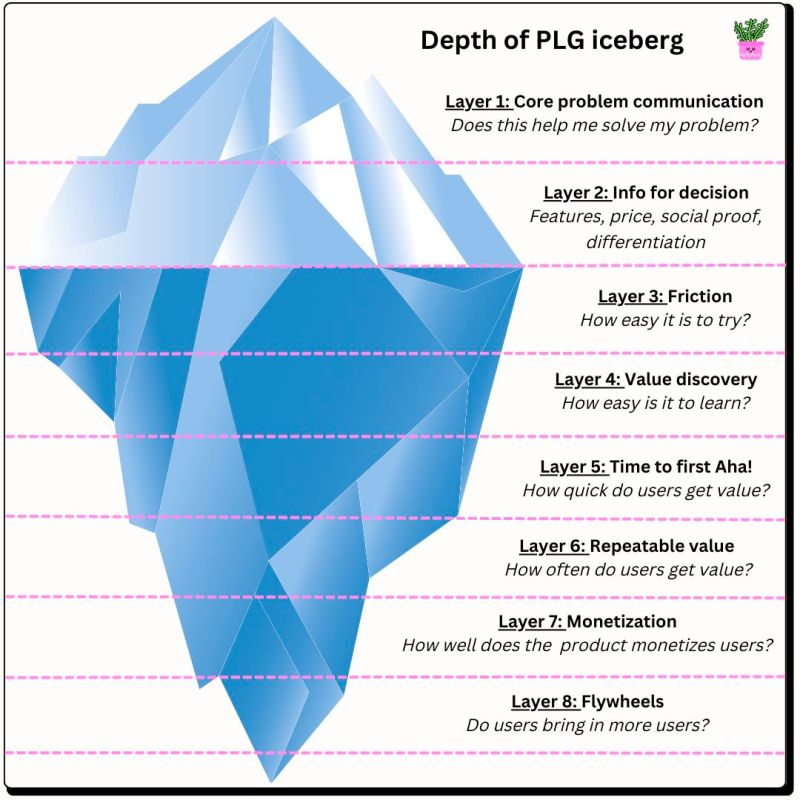
If you want to do product-led growth like the best (Miro, Canva, Notion), then you need to pull off the 8 layers of the PLG Iceberg.
In my latest deep dive with Jaryd Hermann into Miro, we go deep on this framework and break down what it takes to really execute PLG.
Here’s a quick rundown of each layer: ↓↓
👁️ 𝐋1 & 𝐋2: 𝐓𝐡𝐞 𝐓𝐢𝐩 𝐎𝐟 𝐓𝐡𝐞 𝐈𝐜𝐞𝐛𝐞𝐫𝐠
It's all about communicating your value. Miro’s onboarding begins before handing over an email with:
↳ Compelling messaging
↳ Trust-building/social proof
↳ Transparent pricing
🛝 𝐋3: 𝐅𝐫𝐢𝐜𝐭𝐢𝐨𝐧𝐥𝐞𝐬𝐬 𝐎𝐧𝐛𝐨𝐚𝐫𝐝𝐢𝐧𝐠
Miro ensures a smooth start with a minimalist setup:
↳ They nudge users to sign up with a work email, but don’t require it
↳ Sign up is basic. There are no fancy visuals trying to over-communicate anything
↳ They use progressive reveals, minimizing cognitive load
↳ They leverage Single Sign On (SSO) with business-grade auth providers
🎯 𝐋4 & 𝐋5: 𝐃𝐢𝐬𝐜𝐨𝐯𝐞𝐫𝐢𝐧𝐠 𝐕𝐚𝐥𝐮𝐞
Miro excels in personalizing the onboarding experience, ensuring users quickly find their "aha" moment.
↳ They have dedicated flows for both board Creators and Joiners
↳ There’s no “blank state”
↳ Onboarding is persona based
↳ They use templates to reduce Time To Value
↳ Miro’s onboarding is based on 𝘚𝘩𝘰𝘸 >>> 𝘛𝘦𝘭𝘭.
🔄 𝐅𝐨𝐫𝐦𝐢𝐧𝐠 𝐇𝐚𝐛𝐢𝐭𝐬 (𝐋6)
Miro focuses on creating habitual usage patterns around their core value action, driving long-term engagement.
↳ Their freemium plan avoids throttling value (use now, pay for biz features later)
↳ They focus on extensibility, embedding themselves across other popular tools
💰 𝐌𝐨𝐧𝐞𝐭𝐢𝐳𝐚𝐭𝐢𝐨𝐧: 𝐏𝐫𝐢𝐜𝐢𝐧𝐠 & 𝐏𝐚𝐜𝐤𝐚𝐠𝐢𝐧𝐠 (𝐋7)
From a generous freemium model to value-packed premium plans, Miro's pricing strategy is a masterclass in PLG.
↳ Freemium is crafted to remove barriers to entry and encourage users to invite others to collaborate, creating a viral loop.
↳ They monetize business (and power user) needs, just like Slack does
♼ 𝐏𝐫𝐨𝐝𝐮𝐜𝐭-𝐥𝐞𝐝 𝐚𝐜𝐪𝐮𝐢𝐬𝐢𝐭𝐢𝐨𝐧 𝐥𝐨𝐨𝐩𝐬 (𝐋8)
PLA is not “refer a friend”. True PLA means your users naturally invite other users while using your product—for free.
↳ Miro avoids cash incentive invites. For one, it attracts lower intent users.
↳ They leverage the viral flywheel by making the product inately collaborative
To go much deeper into each layer of the PLG Iceberg, including detailed examples and tactical takeaways, checkout our full analysis: https://t.co/CirpaUVSeP
This piece on Group Product Managers from 1998 might be the best thing I've read in years:
Group Product Manager is the most important non-executive position in a software company. In fact, it is more important and has higher impact on the company than many executive posts.
A failed product can sink the company. A successful product can literally redefine the course of the business.
Nobody is more responsible or more accountable for a product than the Group Product Manager. As a result, the job is characterized by massive success, massive failure, and little in between.
Most GPMs are either promoted or end up leaving the company or being assigned to less hazardous duty within a short period of time.
Everyone wants to be a Good Group Product Manager, but relatively few succeed.
Good GPM: Knows the Good PM / Bad PM principles cold and constantly strives to execute them
Dead GPM: Forgets about the basics
Good GPM: Owns the overall product strategy and success
Dead GPM: Overdelegates, doesn't think broadly enough, or fails to deliver
Good GPM: Asks questions, listens and learns -- about everything -- necessary to meet their responsibilities
Dead GPM: Ignores important areas, assumes the best, fails to ask tough questions
Good GPM: Asks questions, listens and learns -- about everything -- necessary to meet their responsibilities
Dead GPM: Ignores important areas, assumes the best, fails to ask tough questions
Good GPM: PMs and the GPMs have a CLEAR understanding of what they need to do to excel
Dead GPM: Subordinates and GPMs have murky or different understandings of what is needed to excel
Good PM: Creates exciting jobs with clear opportunities for visible success and failure
Dead PM: Creates mushy jobs that aren't visible
Good GPM: You set and maintain the strategy, executives provide input and leverage
Dead GPM: Rely on direction from executives
Good GPM: Knows when and how to get organizational buyoff on
product strategy and marketing plans
Dead GPM: Inadequate knowledge and skill navigating the organization
It's amazing how little the GPM role has changed in 25 years.
Ben Horowitz (the Z in A16Z) knows his stuff.
Peoplesoft → Workday → Gusto / Rippling
Adobe → Sketch → Figma
WebEx → Blue Jeans → Zoom
And now JIRA → Linear.
These all represent a pattern…
🔄 It's a cycle that constantly repeats:
1. Incumbent product becomes more complicated.
2. New product emerges applying modern UX.
3. Targets earlier stage market with a more narrow use case.
4. New product grows and becomes the incumbent.
5. The cycle repeats itself.
@ravi_mehta (Outpace, Tinder, Tripadvisor) joined @far33d and I on Episode 4 of Unsolicited Feedback Podcast.
Full episode links in the thread.
We discussed Linear's Series B, why they are gaining traction against a powerful incumbent, and what product we think is next.
What conditions need to be true?
I see lots of angel investment pitches that take the form of "X incumbent product is too complicated, we are building a better version."
No huge new tech or product innovation. There are times (like the examples above) that it works. But a lot of times it doesn't. So what conditions have to be true?
1. The incumbent product needs to have become bloated.
2. Hatred for the incumbent product has emerged among some segment.
3. There is some segment of the market you can target w/ low switching costs.
Linear is running this to perfection.
1. JIRA has become a super complicated product for many.
2. Real hatred for the product has emerged (just search Jira on twitter)
3. Linear has focused in on a more narrow use case (software development vs general IT).
4. They started by targeting early-stage startups that have low switching costs and aren't embedded on JIRA yet.
So, who is at risk next?
I was actually very surprised by Ravi's and Fareed's answers. More in the clip and full episode below.
Tim Holley (@TimHolley) is a long-time VP of Product at @Etsy where leads the buyer experience. With a tenure spanning more than a decade, Tim has seen the company through many transitions, including major shifts in culture, leadership, and explosive growth.
In our conversation, we discuss:
➔ Lessons on navigating corporate culture shifts
➔ How Etsy capitalized on the overnight growth during the pandemic
➔ Marketplace learnings: when to focus on supply vs. demand, optimizing conversion, and more
➔ How Etsy solves the “graduation problem”
➔ Tips for hiring product managers
➔ Much more
Full episode 👇
🔀 The dance between designers and PMs is a delicate balance of vision and execution. While designers strive for remarkable experiences, PMs chase speedy impact and business goals. It’s a symbiotic relationship that sparks innovation.
Let’s celebrate the dynamic duo of design and product management! 🎨🚀 vs creating 🌶️ click baits ..
#ProductManagement #productdesign #InnovationUnleashed
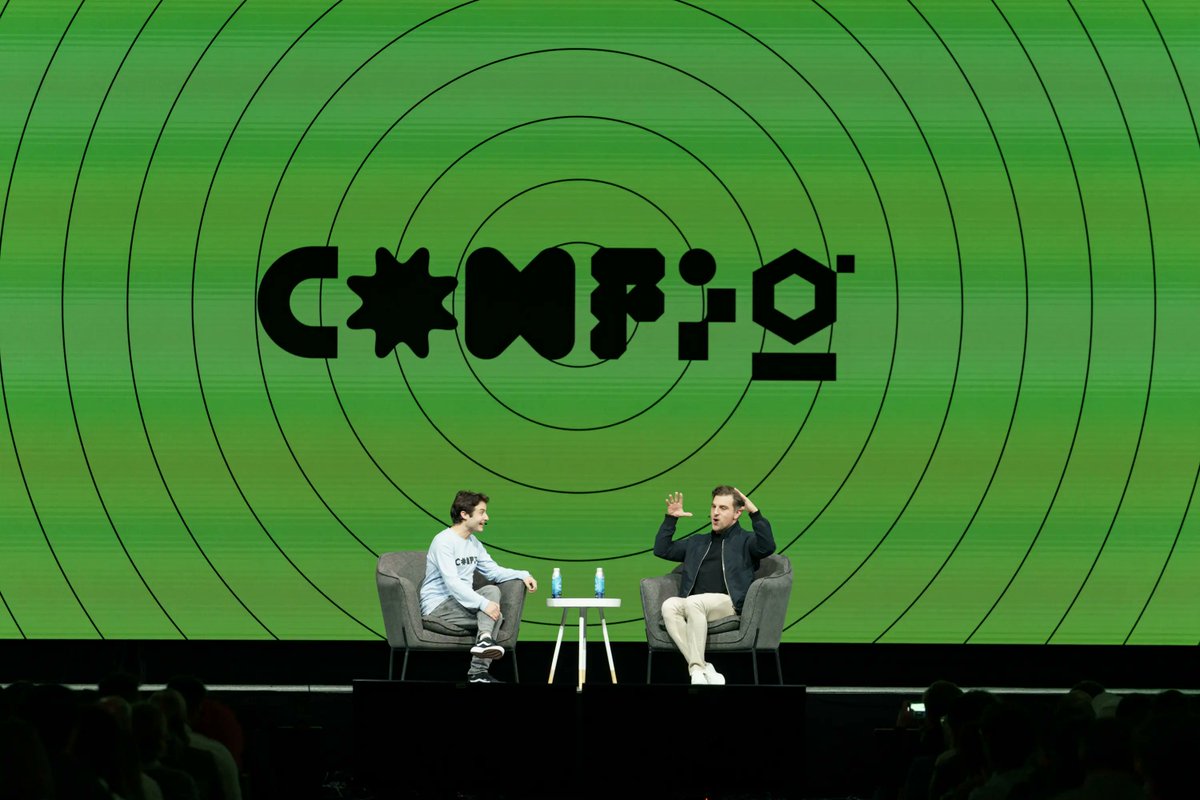
If you saw @bchesky's fireside chat at #Config2023 you know it got a little 🌶️ spicy 🌶️
So we asked @skuwamoto, @yuhkiyam, @joulee, @lennysan, and Steve Johnson to weigh in:
What does the future of product management look like?
Dive in: https://t.co/A2LMo9SaaZ