Remember the microservices hype 12 years ago?
All the cool kids couldn't stop talking about how microservices were the Holy Grail of software engineering. Ironically, most of them couldn't tell you what a microservice actually was. Like a bunch of blind men describing an elephant.
How that turned out? First, the comeback of the modular monolith, as half the crowd quietly admitted they never needed the network calls in the first place. Second, the microservices heroes mostly ended up with distributed monoliths. And to cope with the insane web of dependencies running across their poorly drawn service boundaries, they came up with a solution: the monorepo.
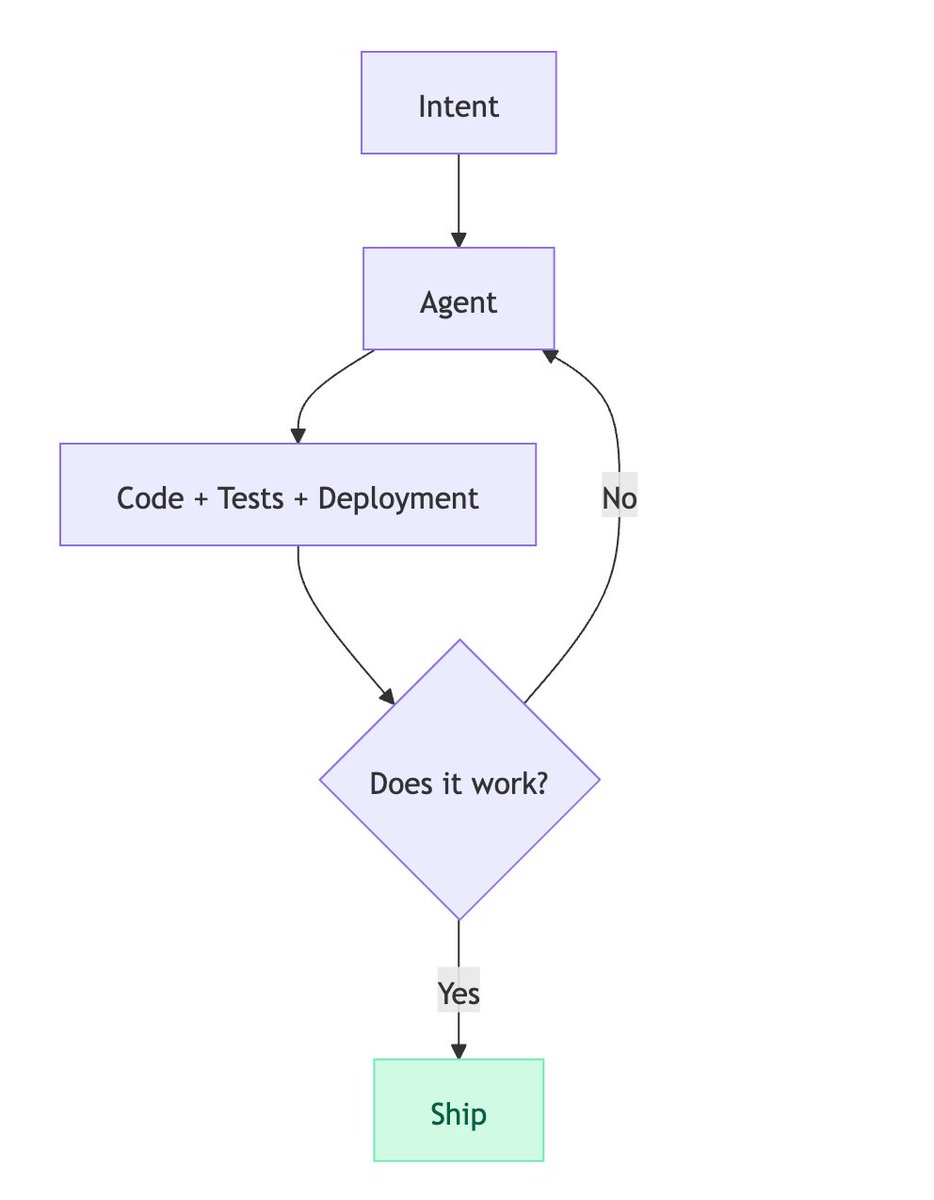
Nowadays, the cool kids discovered the new Holy Grail: the AI (s)loop. New protagonist, same plot: a crowd chasing something most of them can't quite define. 10 years ago it was about thousands of services, today it's thousands of deploys per day. Let's see what we'll reach for to cope with the hangover this time
The economic and demographic effects of corruption.
Cost of land in our urban areas is far higher than what our GDP per capita would dictate. The ratio of land value to per capita GDP is probably higher in India than anywhere else. As an example, land prices in Chennai or Bengaluru rival that of cities like New York which has a vastly higher per capita GDP.
The key reason?
First, vast sums of political corruption money is parked in real estate. This raises real estate prices and high real estate prices affect everything downstream.
Second, corruption in building approvals and the like - the famous DTCP - raises construction costs, on top of already higher real estate costs.
Third, corruption in private school regulatory compliance enforcement raises school fees.
Fourth, corruption in private hospital regulatory compliance enforcement raises health care costs.
Fifth, household goods need sales outlets and those pay higher rents due to high real estate prices and construction costs.
So housing, education, healthcare and household goods - all of these now cost higher.
As a direct consequence, the economic burden on the average person gets worse. Young people, facing all these costs, postpone marriage, and postpone children or have fewer children.
That directly affects our demographics.
While this issue exists in many parts of India, Tamil Nadu, being the most urbanized of the bigger states, is particularly hit hard.
So corruption is becoming an existential threat to our society.
If you worry about the super-low birth rate in Tamil Nadu, way below replacement, understand that corruption raising our cost of living is one of the major causes, not the only cause, but a big one in our context.
Now that the 131st Amendment Bill failed, allocation of Lok Sabha seats will be based on 2026 census data.
As per current estimates, seven States will likely lose 35 seats: AP (-5), Telangana (-3), TN (-10), Karnataka (-2), Kerala (-7), Odisha (-4), and WB (-4).
Four States will likely gain 34 seats: UP (+12), Bihar (+10), MP (+5), and Rajasthan (+7).
BJP is widely believed to be the potential beneficiary of redistribution of seats to States based on 2026 population.
In a stunning act of self-denial, the NDA government came forward to freeze the current share of States based on the 1971 census data. There could be many reasons for BJP committing to such a freeze - putting the nation above the party, paving the way for expanding their footprint in the South, or avoiding a divisive issue when the nation has to focus on growth and prosperity in the face of global challenges. Whatever be the motivation of BJP, the seven States that lost share of population are offered an unexpected gift. You don't look a gift horse in the mouth!
Surprisingly, the parties which have great stakes in the South and East have scored a spectacular self goal. This is a classic case of cutting the nose to spite the face.
In 2001, as the freeze in seats was expiring, I was deeply involved in persuading the then Vajpayee government to continue the freeze in the number of seats allocated to States for another 25 years. An unwieldy coalition and the economic challenge posed by external sanctions after the Pokharan explosion demanded national unity, and the parties responded with the 84th Amendment. Now again a priceless opportunity arose, and the Opposition squandered it without any strategic thinking.
If political animosity makes you oblivious of your own interest, or larger interests of fostering unity and focusing on growth and harmony, it is a sign of dysfunctional politics.
I appeal to all parties to come together and find a harmonious solution to the thorny problem of seats allocation in the face of demographic imbalances. National unity and our quest for opportunity and prosperity for all demand a fair and swift resolution.
In the long run migration will resolve the imbalances. Already millions of migrant workers are building and sustaining the economies of several States in the South, West and North. That is why, despite low fertility rate, Maharashtra's share of the population is increasing.
In the US, dramatic internal migration changed the demography and representation over the years. People move freely to States where there is growth and jobs are created. In a century, Florida increased its representation in the US Congress from 4 to 28, California from 11 to 52, Texas from 18 to 38, and Washington from 5 to 10. Owing to outward migration, New York lost seats, from 43 to 26, Pennsylvania from 36 to 17, Illinois from 27 to 17, Ohio from 22 to 15, and Missouri from 16 to 8.
We should make it easy for people to migrate to other States and recognize and respect their constitutional rights everywhere and make their life easier and safe. That will resolve our demographic challenges. Most states reached low fertility levels, and Bihar, UP, MP, Rajasthan and Jharkhand too are going to reach there in a few years.
We need a reasoned and pragmatic approach to grow together and become strong. Let us persuade parties to shed inflammatory and divisive rhetoric and focus on quality education and skills and opportunities for all.
This post from @boristane left me shook. What a powerful call to action.
"The SDLC is dead. The new skill is context engineering. The new safety net is observability."
"When every feature took weeks, you had to decide upfront what to build. That constraint is gone."
"Design is becoming something you discover by giving the agent the right context, not something you dictate ahead of time."
"The pull request flow needs to go. I was never a fan, but now it’s just a relic of the past."
"Monitoring is the only stage of the SDLC that survives. And it doesn’t just survive, it becomes the foundation everything else rests on."
Brilliant stuff. https://t.co/Skxcb2tRxH
GitHub Copilot CLI is now GA 🎉
This is agentic development, right in the terminal—planning, building, testing, and reviewing without context switching.
A big step forward in how developers work. 🚀
https://t.co/6PbrLEu7tI
If something feels too cheap to be true, it usually is.
Uber was cheaper than taxis in the early days. That wasn’t an accident. Today, it’s often more expensive than taxis. Once it dominated the market, prices went up. The savings were temporary. The dependency wasn’t.
We’ve seen the same pattern before.
Amazon in retail, AWS in cloud compute, Netflix in streaming, and Google in search and productivity apps.
The playbook is the same.
Subsidize the product.
Capture market share.
Extract rent.
AI is heading down the same path.
Intelligence today feels cheap, but it isn’t a gift. It’s an investment to capture market share. Losses are intentional. Subsidies are strategic.
Once market share is securely captured, the price of intelligence will go up.
We shouldn’t confuse today’s low cost of intelligence with its true cost. Once market share is captured, rent extraction follows. We’ve seen this movie too many times.
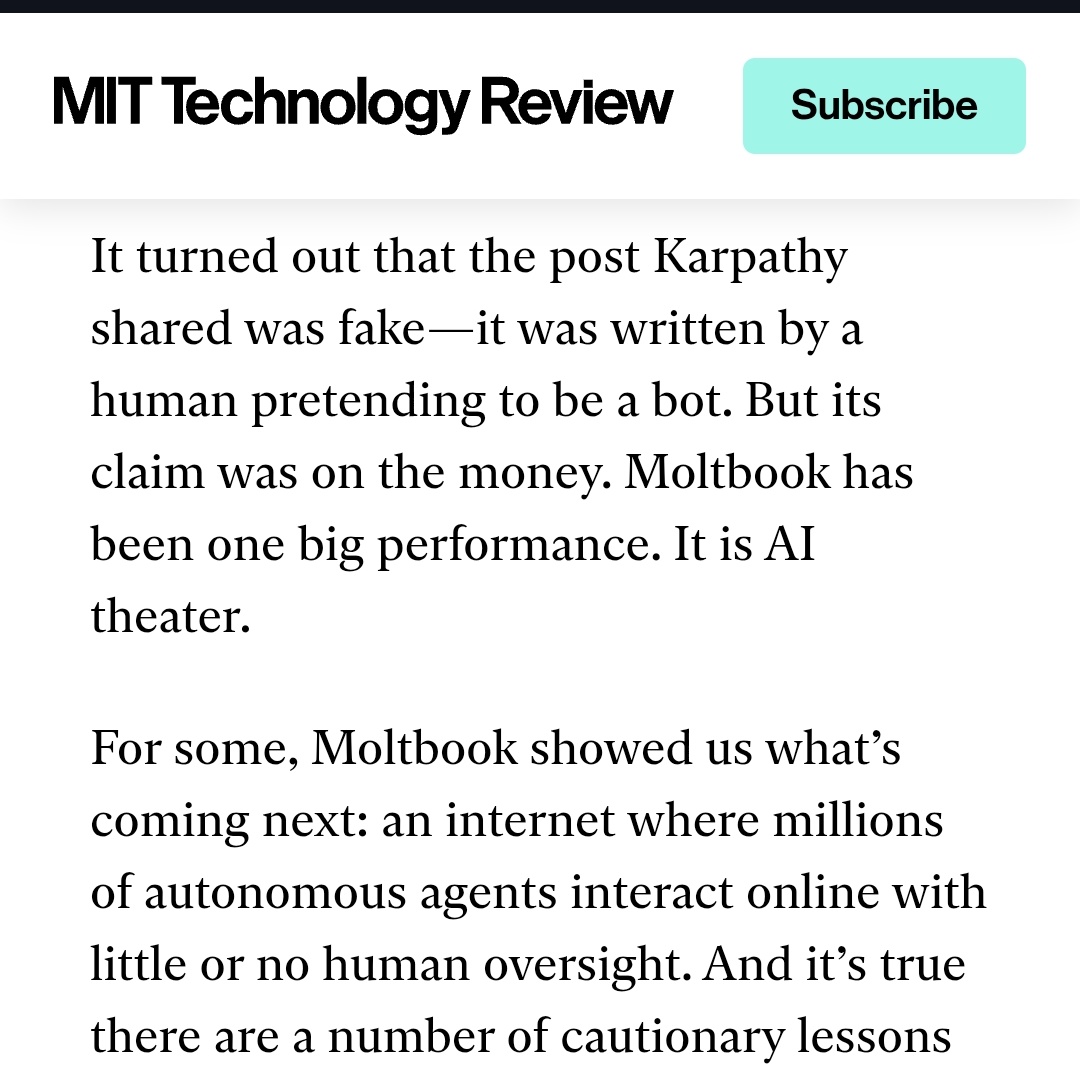
MIT Technology Review has confirmed that posts on Moltbook were fake.
Just a few days ago many AI influencers (including Andrej Karpathy) had said that the website was "the most incredible sci-fi takeoff".
It wasn't.
The "taking over humanity" posts were human-generated. The top downloads were mal-ware (human generated).
It was a phishing website dressed up in AI hype.
If you are worried about AI taking over the world in a few years, please don't. There is no research basis for that opinion.
Antrophic and OpenAI want you to beleive that they are just months away from AGI. Because it results in free marketing, boosting their stock value.
Stay skeptical, stay safe :)
New Engineering blog: We tasked Opus 4.6 using agent teams to build a C compiler. Then we (mostly) walked away. Two weeks later, it worked on the Linux kernel.
Here's what it taught us about the future of autonomous software development.
Read more: https://t.co/htX0wl4wIf
I suggest the term "AI-assisted Code Engineering" with ACE as the acronym instead of "vibe-coding".
We must have solid engineering discipline and ACE is the maturation of the tools and techniques.
It does not eliminate all software engineers but enables experienced engineers who ACE well to be much more productive.
It is also going to reshape our industry but that is a separate topic.
Last one on this topic, and I have been holding this in myself for a while.
For centuries, class divides kept the labor of the poor invisible to the rich. Factory workers toiled behind walls, farmers in distant fields, domestic help in backrooms. The wealthy consumed the fruits of that labor without ever seeing the faces or the fatigue behind it. No direct encounter, no personal guilt.
The gig economy shattered that invisibility, at unprecedented scale.
Suddenly, the poor aren't hidden away. They're at your doorstep: the delivery partner handing over your ₹1000+ biryani, late-night groceries, or quick-commerce essentials. You see them in the rain, heat, traffic, often on borrowed bikes, working 8–10 hours for earnings that give them sustenance. You see their exhaustion, their polite smile masking frustration with life in general.
This is the first time in history at this scale that the working class and consuming class interact face-to-face, transaction after transaction. And that discomfort with our own selves is why we are uncomfortable about the gig economy. We want these people to look our part, so that the guilt we feel while taking orders from them feels less.
We aren't just debating economics. We are confronting guilt. That ₹800 order might equal their entire day's earnings after fuel, bike rent, and app cuts. We tip awkwardly, or avoid eye contact, because the inequality is no longer abstract. It's personal.
Pre-gig era, the rich could enjoy luxury without moral discomfort. Labor was out of sight. Now, every doorbell ring is a reminder of systemic inequality. That's why debates explode. It's not just policy. It's emotional reckoning. Some defend the system (“they choose it”), others demand change (“this isn't progress, its exploitation”).
And here’s the uncomfortable twist: the unsaid ask of clumsy ‘solutions’ isn’t dignity. It is about returning to invisibility.
Ban gig work and you don’t solve inequality. You remove livelihoods. These jobs don’t magically reappear as formal, protected employment the next day. They disappear, or they get pushed back into the informal economy where there are even fewer protections and even less accountability. Over-regulate it until the model breaks, and you achieve the same outcome through paperwork instead of slogans: the work evaporates, prices rise, demand collapses, and the people we claim to protect are the first to lose income.
And then what happens?
The rich get their old comfort back. Convenience returns without faces. Guilt dissolves. We go back to clean abstractions and moral posturing from a distance. The poor don’t become safer, they become invisible again: back in cash economies, back in backrooms, back in shadows where regulation rarely reaches and dignity isn’t even debated.
The gig economy just exposed the reality of inequality to the people who previously had the luxury of not seeing it. The doorbell is not the problem. The question is what we do after opening the door.
Visibility is the price of progress. We can either use this discomfort to build something better (which we keep doing continuously as delivery partners are our backbone), or we can ban and over-regulate our way back into ignorance. One of those choices improves lives. The other simply helps the consuming class feel virtuous in the dark.
Writing this as an Indian who works on AI in leadership role for one the largest companies in the world (though strictly my personal opinion, but based on verifiable data).
You heard it first here:
—————————-
First some more shocks:
You heard DeepSeek.
Wait till you hear about Qwen (Alibaba), MiniMax, Kimi, DuoBao (ByteDance) all from China.
Within China, DeepSeek is not unique and their competition is close behind (not far behind).
IMHO, China has 10 labs comparable to OpenAI/Anthropic and another 50 tier 2 labs.
The world will discover them in coming weeks in awe and shock.
AI is not hard (I am not high)
————————————
Ignore Sam Altman.
Many teams that built foundation models are below 50 persons (e.g. Mixtral).
In AI, LLM science part is actually quite easy.
All these models are “Transformer Decoder only models”, an architecture that was invented in late 2017.
There are improvements since then (flash attention, ROPE, MOE, PPO/DPO/GRPO), but they are relatively minor, open source and easy to implement.
Since building foundation models is easy and Nvidia is there to help you (if not directly, then by sharing their software like “Megatron” that is assembly line to build AI models) there are so many foundation models built by Chinese labs as well as global labs.
It is machines that learn by themselves…if you give them data & compute. This is unlike writing operating system or database software. Also, everyone trains on same data: internet archives, books, github code for the first stage called “pre-training”.
What is part is hard then?
———————————-
It is the parallel & distributed computing to run AI training jobs across thousands of GPUs that is hard. DeepSeek did lot of innovation here to save on “flops” and network calls. They used an innovative architecture called Mixture of Experts and a new approach called GRPO. with verifiable rewards both of which are in open domain through 2024.
Also, there is lot of data curation needed particularly for “post training”
to teach model on proper style of answering (SFT/DPO) or to teach them learn to reason (GRPO with verifiable reward). STF/DPO is where “stealing” from existing models to save cost of manual labor may happen.
LLM building is nothing that Indian engineers living in India cannot pull off. Don’t worry about Indians who have left. There are plenty in the country as of today.
Then why India does not have foundation models?
———————
It is for the same reason India does not have Google or Facebook of its own.
You need to able to walk before you can run.
There is no protected market to practice your craft in early days. You will get replaced by American service providers as they are cheaper and better every single time. That is not the case with Chinese player. They have a protected market and leadership who treats this skillset as existential due to geopolitics.
So, even if Chinese models are not good in early days they will continue to get funding from their conglomerates as well as provincial governments. Darwinian competition ensures best rise to the top.
Recall DeepSeek took 2 years to get here without much revenue. They were funded by their parent. Also, most of their engineers are not PHDs.
There is nothing that engineers who built Ola/Swiggy/Flipkart cannot build. Remember these services are second to none when you compare them to their Bay Area counterparts. Also , don’t trivialize those services; there is brilliant engineering to make them work at the price points at which they work.
Indian DARPA with 3B USD in funding over 3 years
———————-
What we need is a mentality that treats this skillset as existential. We need a national fund that will fund such teams and the only expected output will be benchmark performance with benchmarks becoming harder every 6 months . No revenue needed to survive for first 3 years.
That money will be loose change for GOI and world’s richest men living in India.
@protosphinx@balajis@vikramchandra@naval
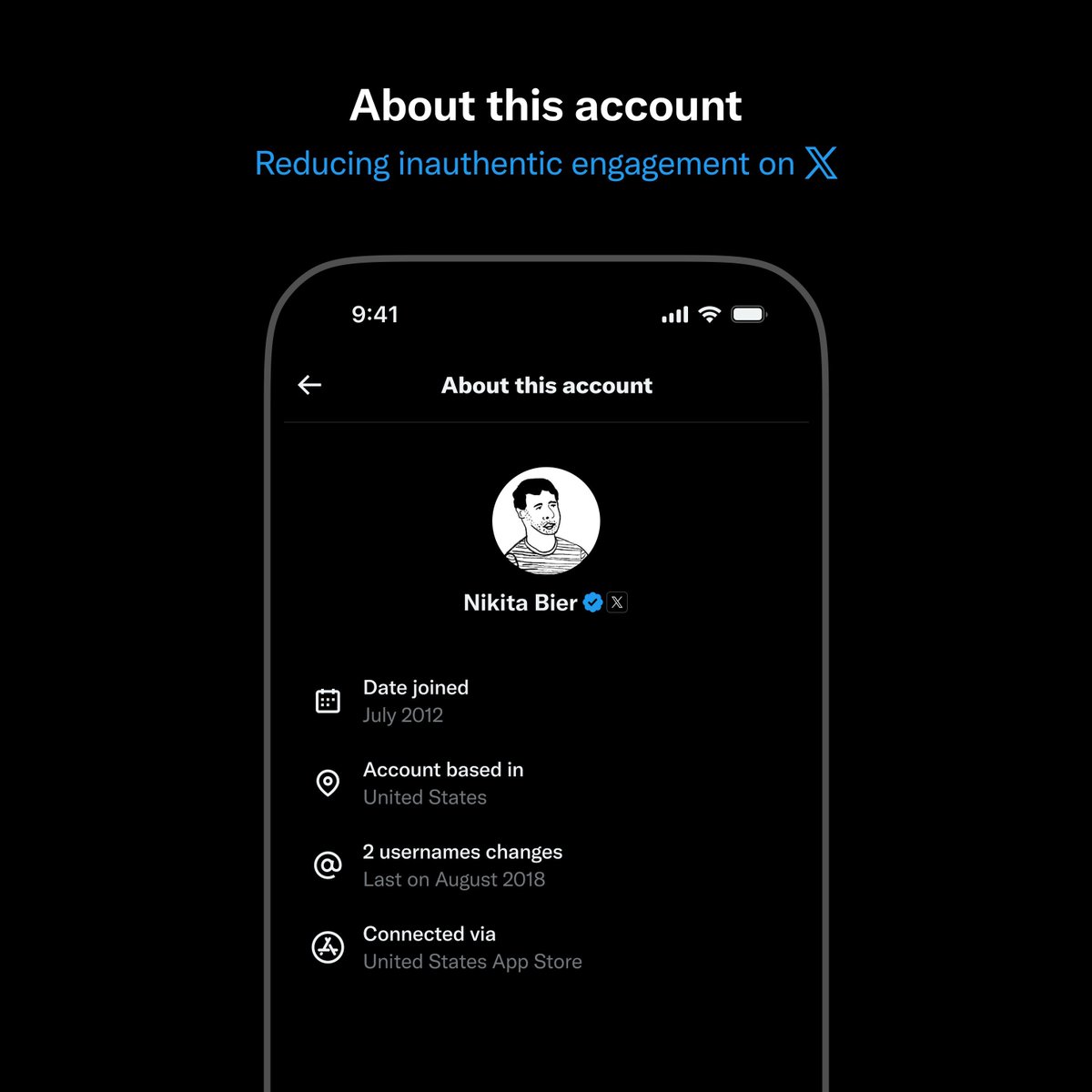
In a couple hours, we'll be rolling out About This Account globally, allowing you to see the country or region where an account is based. This will be accessible by tapping the signup date on profiles.
This is an important first step to securing the integrity of the global town square. We plan to provide many more ways for users to verify the authenticity of the content they see on X.
And for those in countries where speech has penalties, we've included privacy toggles to only show your region.
This was a huge undertaking. A special thanks to the engineers who made this happen: @sandeep_rao@singhai@mingsong@striedinger@rzhao0506
AI amplifies your way of working.
If you are the kind of person who likes to learn, understand how things work, experiment, find best practices and apply those learnings then AI helps you to do it faster.🔥
If you are the kind of person who googles and copy paste the code snippets without understanding how it works, AI helps you do that faster too 🤷♂️
My Lenksart IPO post blew up
Well meaning veterans/ founders DMed me about why take a ding on LK
For starters, I have no axe to grind, no sell side on stocks, no subscription to sell.
Also, I've got nothing against LK & it's not a ding on LK but the utter garbage valuation its being sold at + lies being peddled by the brokerage houses to get investment banking mandates
If my post dissuaded even 10 investors from not applying to LK, then my job is done
These new age founders while preaching about corporate governance/ playing the long game in podcasts have used Public markets as their personal ATM + dumped their shares on gullible public/ colluding Fund managers at every given opportunity
This is exactly like kicking the ladder down, when you use Public markets as ATM, you make it 100x more difficult for the new sets of founders who genuinely want to play the long game and create value for shareholders
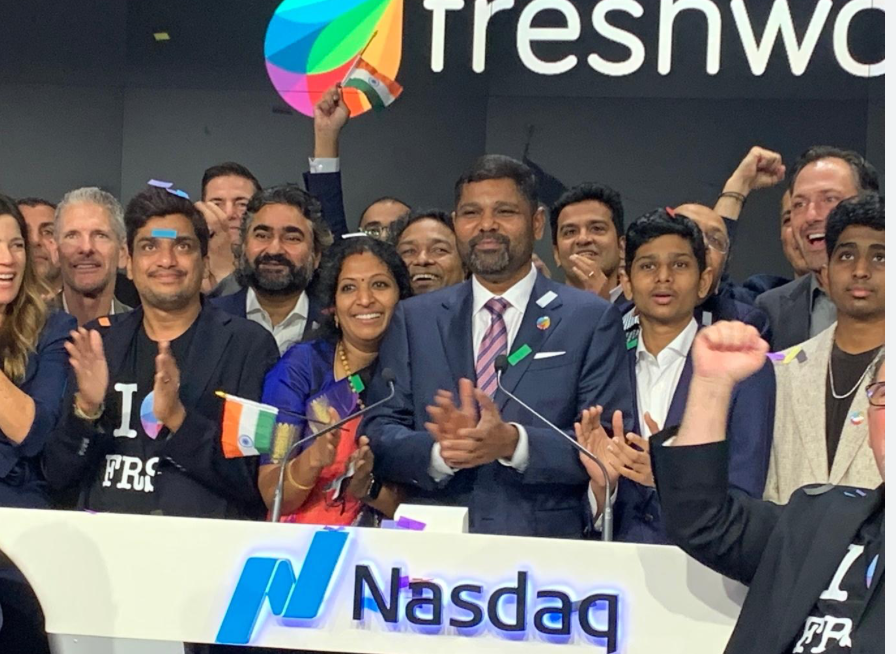
Let me give you an example, post $FRSH disastrous IPO, Freshdesk founders has SHUT DOWN Nasdaq access to every genuine Indian company out there which wants to list in Nasdaq. Worst of all he quit the company after doing secondary of all his shares
Every Indian company will be think 10x before listing in Nasdaq and every fund manager will be super suspicious of these $FRSH type companies
One on hand, against ALL ODDS, we have companies like $INFY, $TCS which did ADR and paved way for Indian Software companies to list abroad + Create enormous value for EVERY Stakeholder (Investors, Employees, customers) & on other hand you have companies like $FRSH which has scarred many investors
IPOing founders, there are many new companies (us included) who want to build generational businesses in stock markets like how Ramdevji of MO , how Munjals of Hero did, how Godrej , Tata , TVS etc did, pls dont use markets as your personal ATM & kick the ladder u used, you make our jobs insanely difficult.🙏🙏
Forget SEBI, there is Karma and pumping and dumping wealth is ill gotten wealth & no worse than what the promoters did to banks by siphoning off their loans through non existing projects in UPA era + sending their money to Swiss banks
One mentor told me, stock markets are like Kamadhenu cow, you take care of her, tend her and she will give 100x more, if you pump and dump like how Vishwamitra did, you may win small games but Karma will get back
I think the difference between a developed country and an undeveloped country is not income inequality.
It is power asymmetry.
In undeveloped countries, people in government, be it politicians, civil servants or judiciary, have an extraordinary right to trample on citizens and their rights.
That's the problem in India today.
Call it VIP culture. Call it unaccountability. Call it arrogance. In fact, call it toll exemptions, security clearance, whatever.
It all stems from a core belief that people in power are somewhat superior. So, they can get away with doing anything to people who don't have power.
The recent police videos and the SDM video are all examples of that.
It's only because of social media that these things even come to light - probably less than 0.001% of the daily sapping, brutal exercise of power.
So, if we want "Viksit Bharat", we need to do two things.
The first is, of course, financial growth, infrastructure, and all that.
But that still won't be enough.
We have to get rid of the power asymmetry. That will truly make a difference.
Less discretionary power, less perks, less privileges, less "exceptions". And more transparency thru social media.
We become a superpower when 1.4 billion people have power.
The reason these business groups don’t do any R&D is they don’t have to face competition - a scenario which often they themselves have carefully engineered. https://t.co/YnGzd4xEp3
They are masters at squeezing / smothering new entrants and potential competitors. Or they cartelize entire industries and even adjacent sectors by keeping it within a controlled, reliable group of friends and family.
Then they make these specious but ultimately lame excuses, designed to mislead gullible listeners!
Indian markets and investors should treat these assertions with due skepticism, hold large companies to better standards.
My friend Sridhar Vembu @svembu and his team at Zoho have been at the forefront of building world class products in India, a mission close to iSPIRIT's heart.
We will work together to make Arattai like a DPI.
The foundational tech is already there.
We are looking at:
- Having many front-ends.
- Plus Privacy. Portability. Plug-and-play for new innovation.
In the new innovation category, there will be payments for sure. We have to also consider AI Agents - though not sure how that will fit in.
We also want to address the needs of Global South policymakers for transparency, localisation and digital sovereignty.
More soon! @Product_nation