Iyi ntsinzi y’Amavubi mureke tuyiture @FabriceShema .
Ntago uyu mugabo yavunikiye ubusa kbs.
Uko byagenda kose azahora ari President umwe rukumbi wa Ferwafa watweretse ko Amavubi ashobora kongera guha ibyishimo abanyarwanda 🙌🙌🙌🙌🙌
📢PUBLIC ANNOUNCEMENT
The Capital Markets Authority of Rwanda is working with relevant stakeholders to facilitate participation by Rwandan investors in the Dangote Petroleum Refinery IPO. We are encouraged to see the strong interest in the opportunities afforded by capital markets.
While these arrangements are being finalised, interested investors may register their interest with United Capital Financial Services Rwanda Ltd through the following link:
https://t.co/TSShozP7f7
Registration of interest does not constitute a subscription for, or allocation of, shares. Further information on the arrangements for participation in the IPO will be communicated in due course.
“You don’t have to have everything figured out. Just take the next right step.” is a reminder that we often put pressure on ourselves to know exactly where life is heading—our career, relationships, finances, goals, or future.
Rwanda's economy grew by 10% in Q1 2026 compared to 7.8% recorded Q1 2025, driven by industry and services, according to figures released today by @statisticsRW
GDP reached Frw 6,346 billion, up from Frw 5,276 billion in the same period last year. #Economy https://t.co/LJ1POZ1RnS
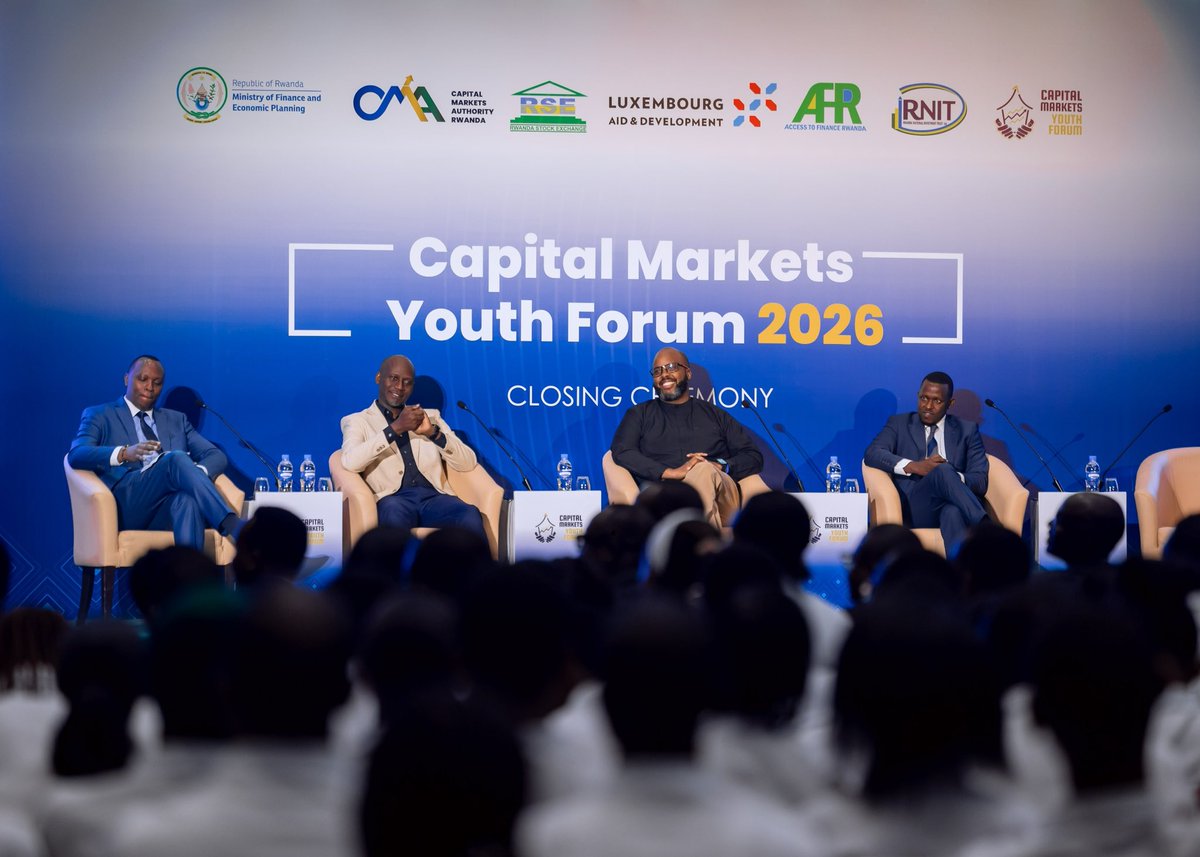
Happy to discuss with youth today during the #CapitalMarketsYouthChallenge today with the theme’” From savings to Investments: How youth can shape the future through capital markets.
The challenge helps youth build financial knowledge, investment skills, entrepreneurial capacity, career opportunities, and a habit of saving and investing for the future
Congratulations to our #VisitRwanda partner Paris Saint-Germain @PSG_inside on their well-deserved UEFA @ChampionsLeague title and on being crowned champions for the second consecutive year.
Congratulations as well to @Arsenal on reaching the final and fighting with determination until the very end.
Both clubs have made their supporters proud, but tonight, PSG proved to be the better team!
S&P Global Ratings affirmed Rwanda’s credit rating at ‘B+/B’ with a stable outlook, reflecting strong economic performance, steady growth, and continued fiscal discipline despite global and regional challenges. https://t.co/HvOswwhREo
State enterprises/state-owned enterprises succeed or fail for many of the same reasons private companies do: leadership, incentives, market conditions, and execution. But they also face unique political and institutional pressures.@JosephRyarasa
Why some state enterprises succeed while others fail?
I recently read a headline announcing that the government had appointed a ministerial team to privatize some enterprises as you can read below.
https://t.co/Ho2c1VlHvw
This article immediately brought me back to the late 1990s and early 2000s, when Rwanda went through a major wave of privatization driven by the belief that private ownership would improve efficiency, profitability, reduce pressure on the state, and create jobs through competition and productivity. The program was called Privatization Secretariat it was established within the ministry of Finance and Economic Planning.
Many state-owned enterprises were sold or restructured under the belief that the private sector could run them better. Yet two decades later, the conversation has returned. The state is once again heavily involved in strategic sectors of the economy, either directly or through companies linked to public investment structures. This raises an important question: what happened in between, and what lessons can we draw from that experience?
I personally do not believe state ownership is automatically a problem. In fact, some of the world’s most successful economies were built with strong state participation. South Korea is one of the clearest examples. The country did not become an industrial power simply by waiting for the free market to organize itself. The government deliberately identified strategic industries and supported companies like Samsung, Hyundai, and LG. These firms received protection from foreign competition, access to financing, export incentives, and long-term policy support.
At the time, many Western economists criticized this model and viewed it as market distortion or favoritism. But the South Korean government had a clear objective: building globally competitive industries. The state did not simply hand out support without expectations. Companies were required to export, innovate, and compete internationally. Managers were chosen based on competence, not political comfort. Failure had consequences, while success was rewarded with even greater support.
Today, Samsung alone generates revenues larger than the economies of several African countries combined. Hyundai became a global automotive giant. Within a few decades, South Korea transformed itself from a poor post war country into one of the world’s leading industrial economies.
The important lesson is not simply that the state supported companies. The real lesson is that these companies were run with discipline, managerial independence, and clear performance expectations.
This is where many African state enterprises struggle. In many cases, the problem is not public ownership itself, but weak governance. Operational independence becomes limited. Hiring capable managers becomes difficult when appointments are influenced more by politics than competence. Decision-making slows down, innovation weakens, and accountability becomes harder to enforce.
Earlier last year (2025), Bank of Kigali publicly shared its 2024 annual report across its branches. Anyone interested could walk in and read it. The bank has consistently generated strong profits and expanded its operations over the years. When i asked people what explained BK’s success under Diane Karusisi’s leadership, many pointed to the same reason: the institution operates with strong business discipline, professionalism, and clear performance expectations.
That distinction matters, Rwanda has also invested heavily in sectors such as dairy production and processing, especially in areas like Nyagatare. Companies like Inyange have made visible progress in expanding local production. Yet imported powdered milk brands such as NiDo remain highly visible on many shelves in Kigali. The same question applies to products like butter and processed foods. Why do imported products continue to dominate certain spaces despite local investment?
Part of the answer lies in competitiveness, branding, pricing, distribution networks, and consumer trust. Protecting local industries alone is not enough. Domestic companies must also reach a level of quality and scale that allows them to compete regionally and internationally.
Of course, critics argue that state owned enterprises can monopolize markets and limit private sector growth. That concern is legitimate, especially in small economies where a few dominant players can easily crowd out entrepreneurs and investors. However, the issue is not necessarily state participation itself. The real question is whether these enterprises compete fairly, operate transparently, and are allowed to succeed or fail based on performance rather than political protection.
In growing economies like ours, completely abandoning state enterprises can also be risky, particularly in strategic sectors such as energy, transport, healthcare, agriculture, and infrastructure. Many successful countries relied on strong state investment during their early stages of development before gradually opening up their economies over time.
History teaches us that development is rarely ideological. No country became prosperous through slogans alone. Some relied more heavily on private enterprise, others on state led industrialization, and many used a combination of both. The real challenge is not choosing between government and private sector. The challenge is building institutions that reward competence, enforce accountability, encourage innovation, and create industries capable of surviving beyond state support.
Perhaps that is the conversation the appointed ministerial committee should focus on today, rather than simply deciding which enterprises to sell. Unless, of course, the recommendation is coming from donors. Then the discussion may follow a different direction.
🌍 The most credible voice on how to do business in Africa is sometimes the one that has done it in China, India and Africa, in that order. From the main stage of the Africa CEO Forum Annual Summit in Kigali, @jptricoire , Chairman of @SchneiderElec, shared three decades of operational lessons drawn from precisely that trajectory.
🏭 Tricoire's perspective is unusual at the highest level of European industry. Schneider Electric's second largest market in the world today is China, the third is India, and he was personally part of the small teams that launched both operations from scratch. He also created most of Schneider's offices across sub-Saharan Africa some 25 years ago. The pattern he distilled is consistent across all three geographies: what works locally is largely specific to the place. Ecosystems differ, technologies differ, the very culture of building business differs. Trying to replicate a foreign playbook is the surest way to fail.
⚙️ His instruction to local teams is straightforward. Think genuinely local. Build according to the priorities of the place. Develop technologies designed for Africa first, with the option of scaling them internationally if they happen to travel well, rather than forcing global standards onto a market that calls for something else. The order matters.
🤝 On industrialisation, Tricoire was equally specific. Schneider does operate factories on the continent, but the company's priority is not to do it all in-house. The priority is to work with African partners so they can develop their own local production, their own engineering capabilities, their own project management muscle. It is the same model the group deployed in China and India, and the results speak for themselves.
🇷🇼 The lesson Kigali should take from this intervention is one of intellectual honesty. The companies that have genuinely succeeded in emerging markets are the ones that resisted the temptation to import their model and instead invested patiently in local capability. Pan-African capitalism will be built the same way, with international partners who back African operators rather than crowd them out.
#ACF2026 #AfricaCEOForum
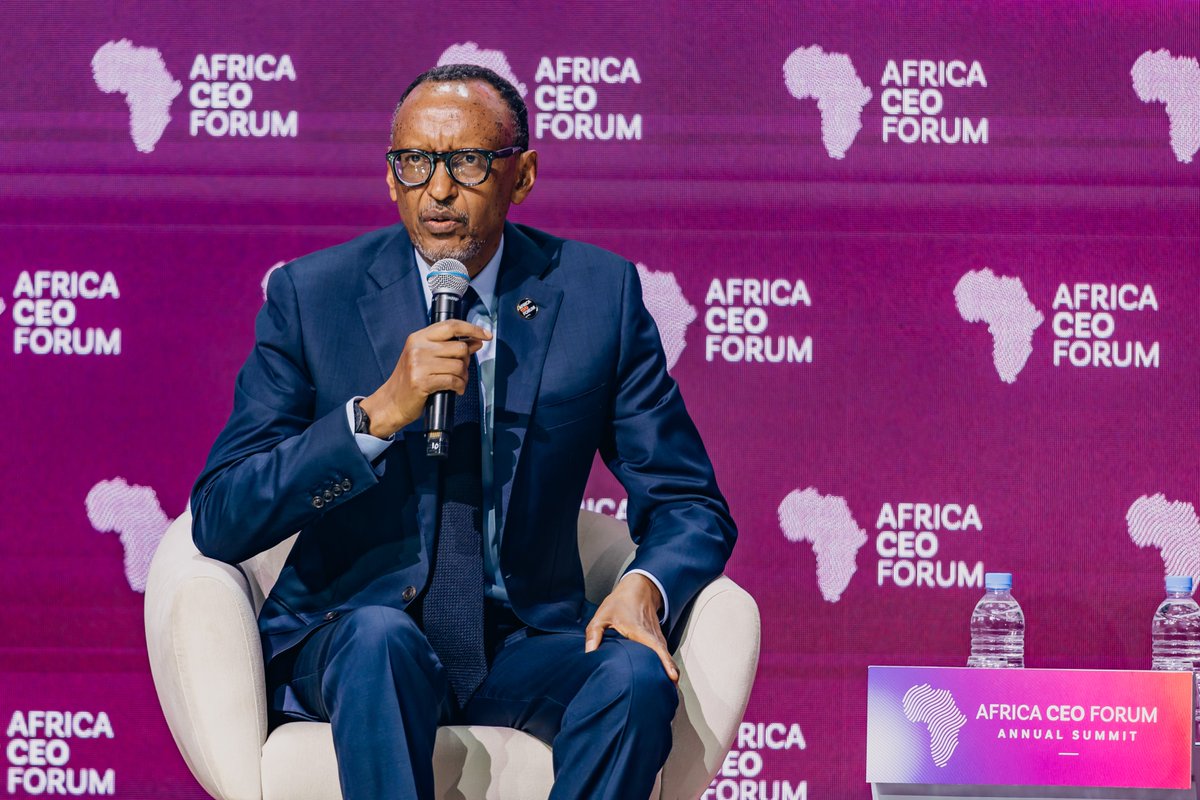
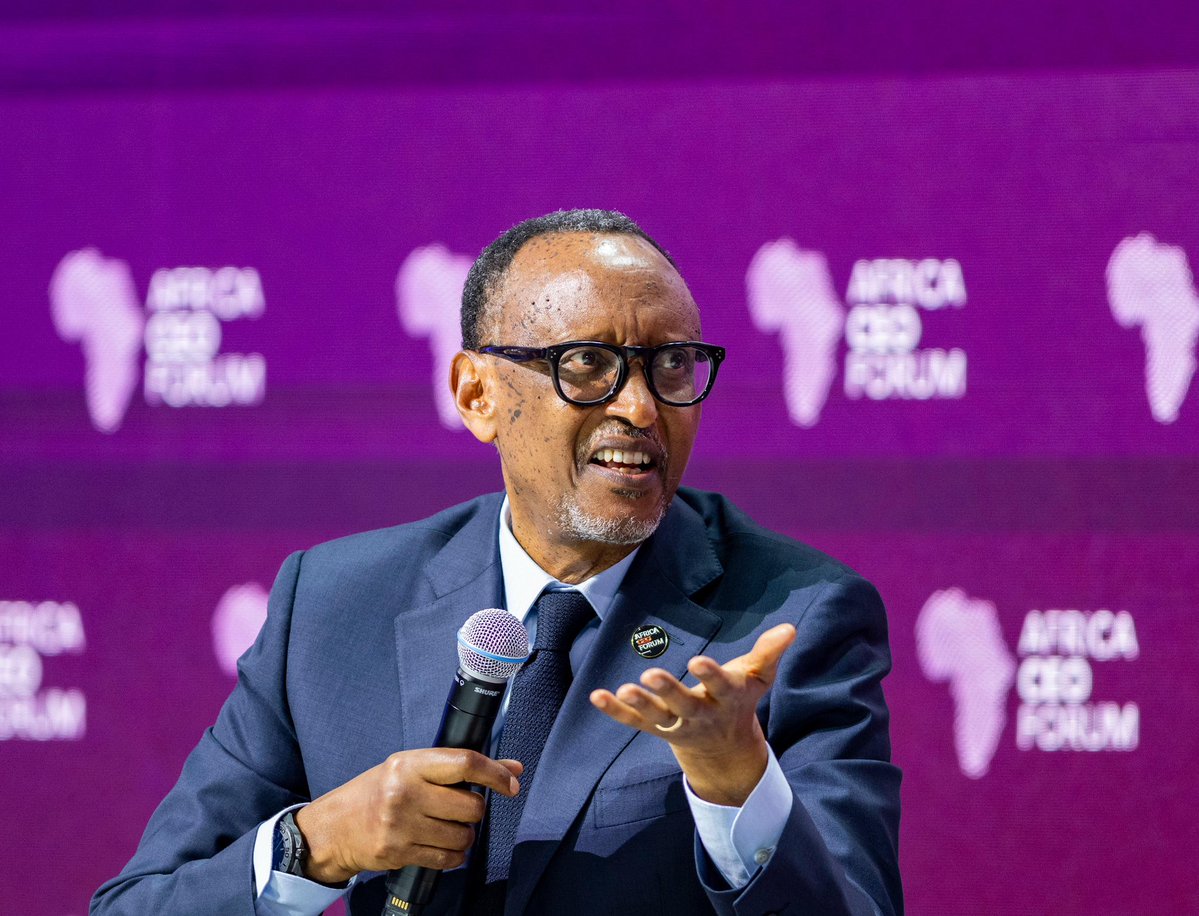
“These pressures, that we get from the rest of the world, Africa is being reminded to wake up. So the pressures are not entirely bad, they force Africa to look within for what we have. To actually do what we need to do to find a good place for us in this world of those injustices and other challenges.
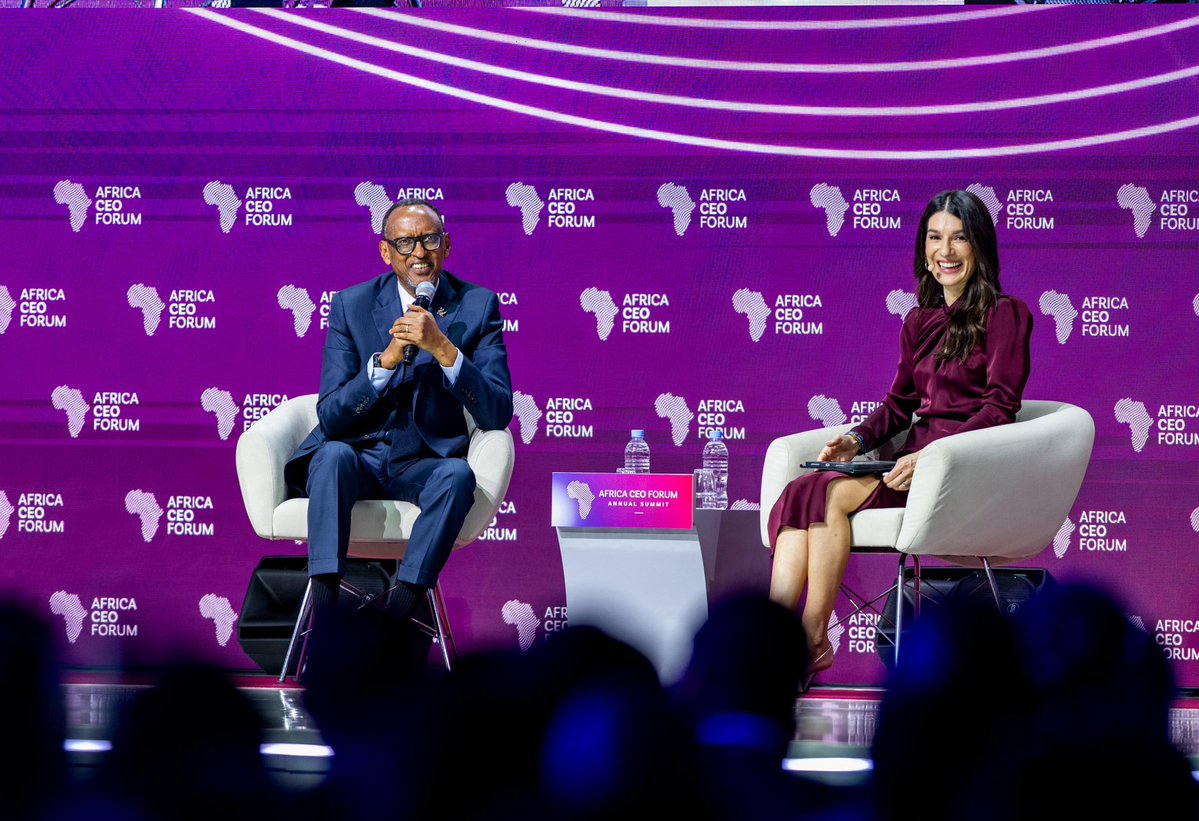
I want people to know that each one of the people in this room and beyond, have something to contribute and to benefit from, benefit each other, and the continent has a lot that is not being put to good use and it is up to us - it is not people from anywhere else, to be able to raise ourselves to that level where we should be.” President Kagame | Opening Ceremony of the Africa CEO Forum 2026 #ACF2026
“The question is not what the world is doing to Africa. The question is why Africa is still unable to fully defend its own interests despite its enormous strategic advantages.
We need to come together and do something about it. There is a lot we know, there is a lot we talk about, but we need to do a lot more.”
— H.E. Paul Kagame, President of the Republic of Rwanda, at the opening of the 2026 @africaceoforum.
#ACF2026
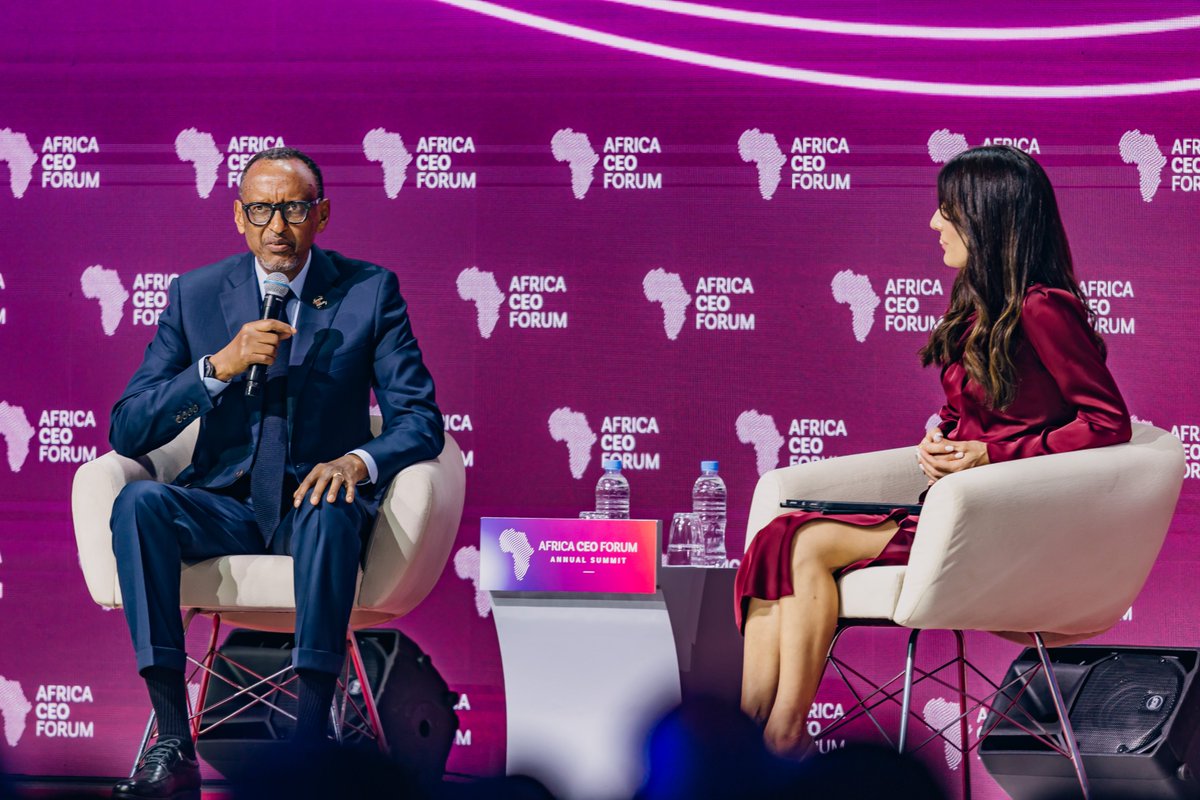
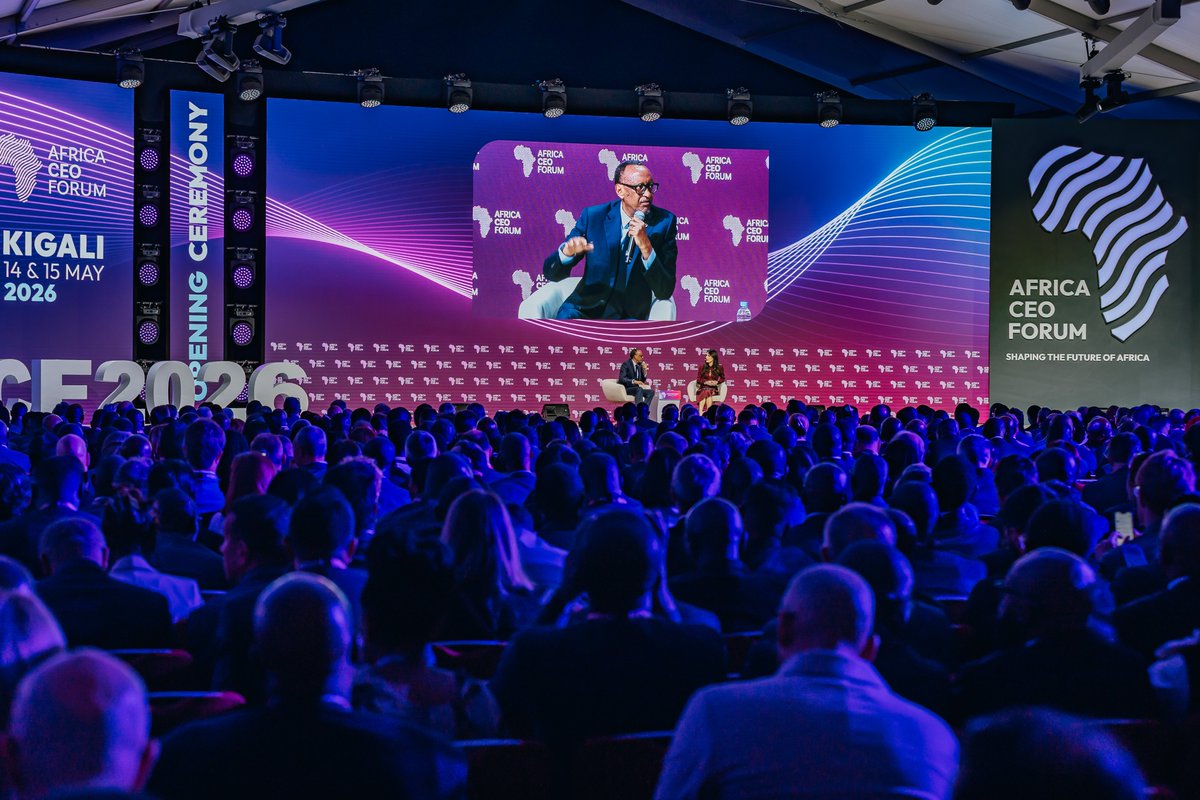
🎙️ @PaulKagame took the Africa CEO Forum stage and spoke plainly about what much of the world still finds difficult to name.
🗣️ His charge was clear. The same global powers that lecture Africa on democracy and human rights are, with the other hand, stripping the continent of what it owns. Sanctions, he reminded the room, are not always the instruments of principle they claim to be; more often they reward the highest bidder, falling on whoever offers less and sparing whoever extracts more. The cynicism, he noted, is not new. In an older century, kings handed territories to their in-laws and children to administer as they pleased, and today the same logic operates under different vocabulary, with a foreign power simply telling a chosen proxy to go and take whatever it wants from a given region.
💎 The deeper point landed hardest. For too long, Africa has played the role of a continent waiting to be ripped off by anyone shrewd enough and powerful enough to arrive at its door, and that posture has to end. "We must be able to say no," the Rwandan President insisted, before urging African leaders, public and private, to begin assigning their own value to their own assets rather than accepting whatever value others choose to recognise.
🌍 It is the question this year's ACF places at the very centre of its programme. Pan-African ownership, resource sovereignty, and the refusal to mistake openness for vulnerability are no longer aspirational language. They are the operating conditions for whatever African economic future emerges from the next decade. Kagame's intervention was not a lament about the world as it is, but a call to the continent's leadership to stop negotiating from a position of permanent disadvantage.
Kigali, 14–15 May 2026.
➡️ Follow our live: https://t.co/oOz8if7sPy
#ACF2026 #AfricaCEOForum
Facilities such as the @CntrKigali have become symbols of the country’s broader ambitions. With expanded aviation links through @FlyRwandAir , and streamlined visa policies, @cityofkigali has emerged as one of Africa’s most accessible and organized conference cities.
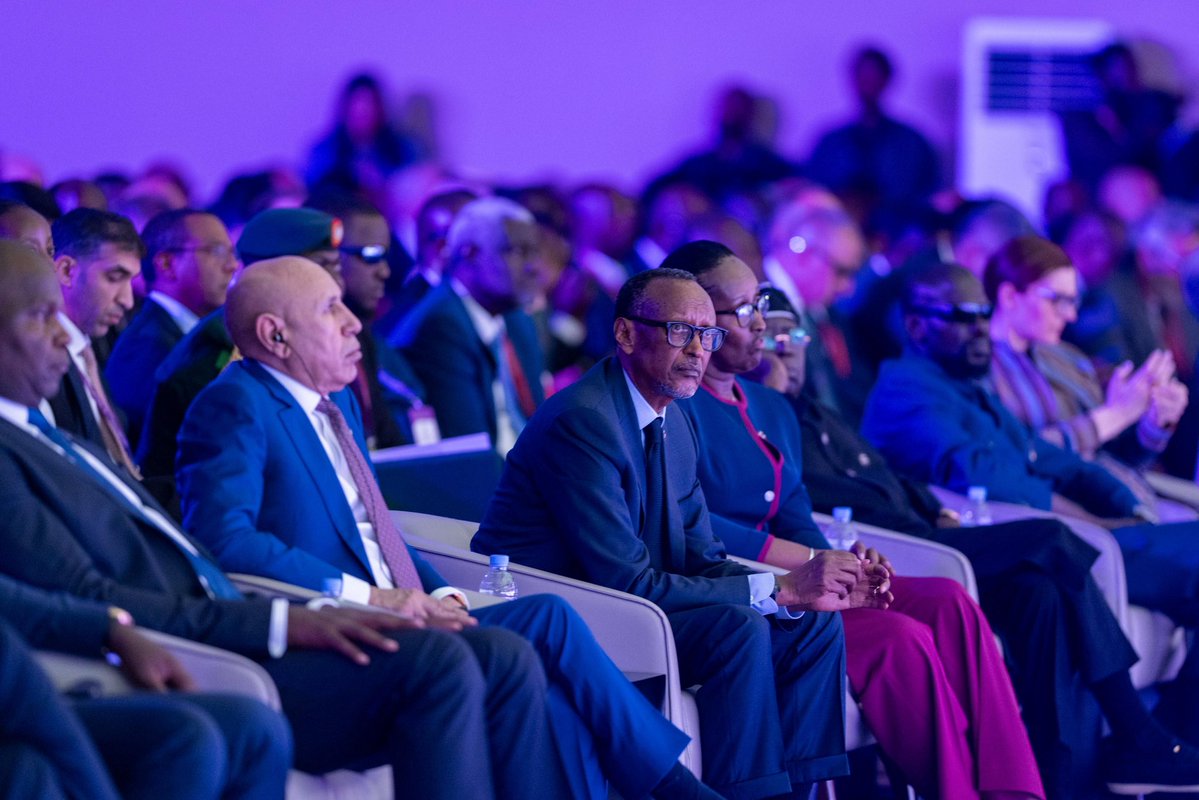
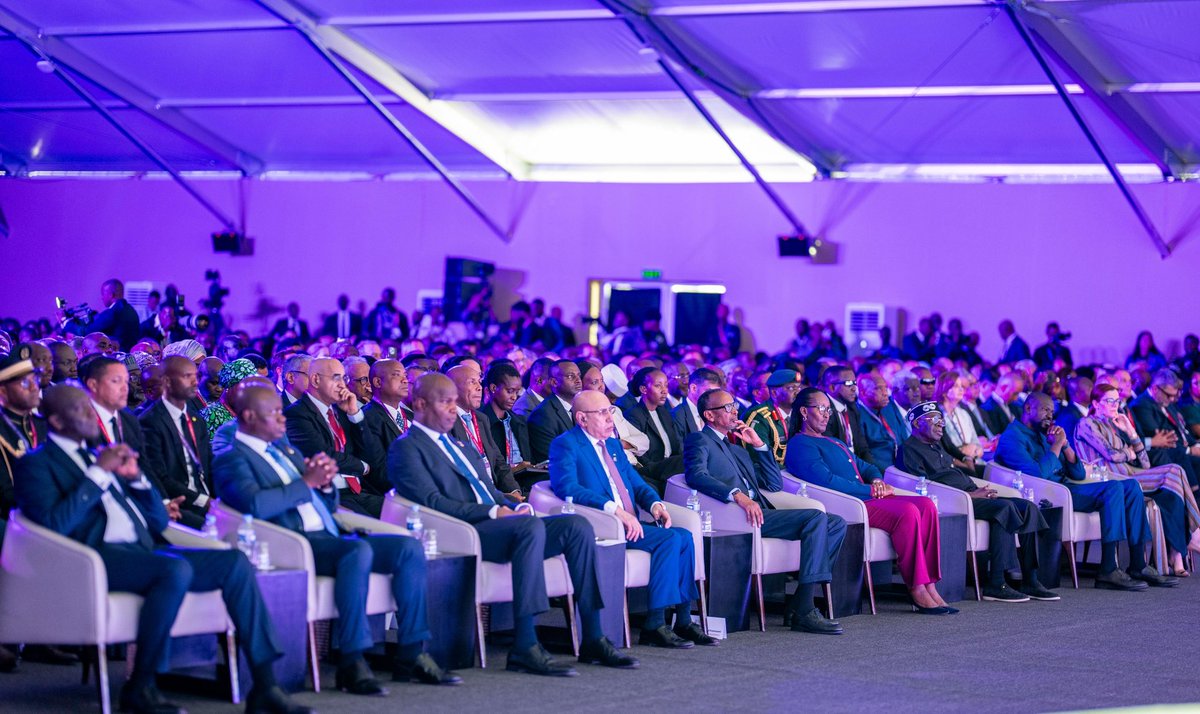
#Rwanda has mastered something many larger economies still struggle to achieve: visibility, strategic positioning, and influence far beyond its size. This becomes especially visible during the @africaceoforum , where heads of state, gather to discuss the future of Africa.