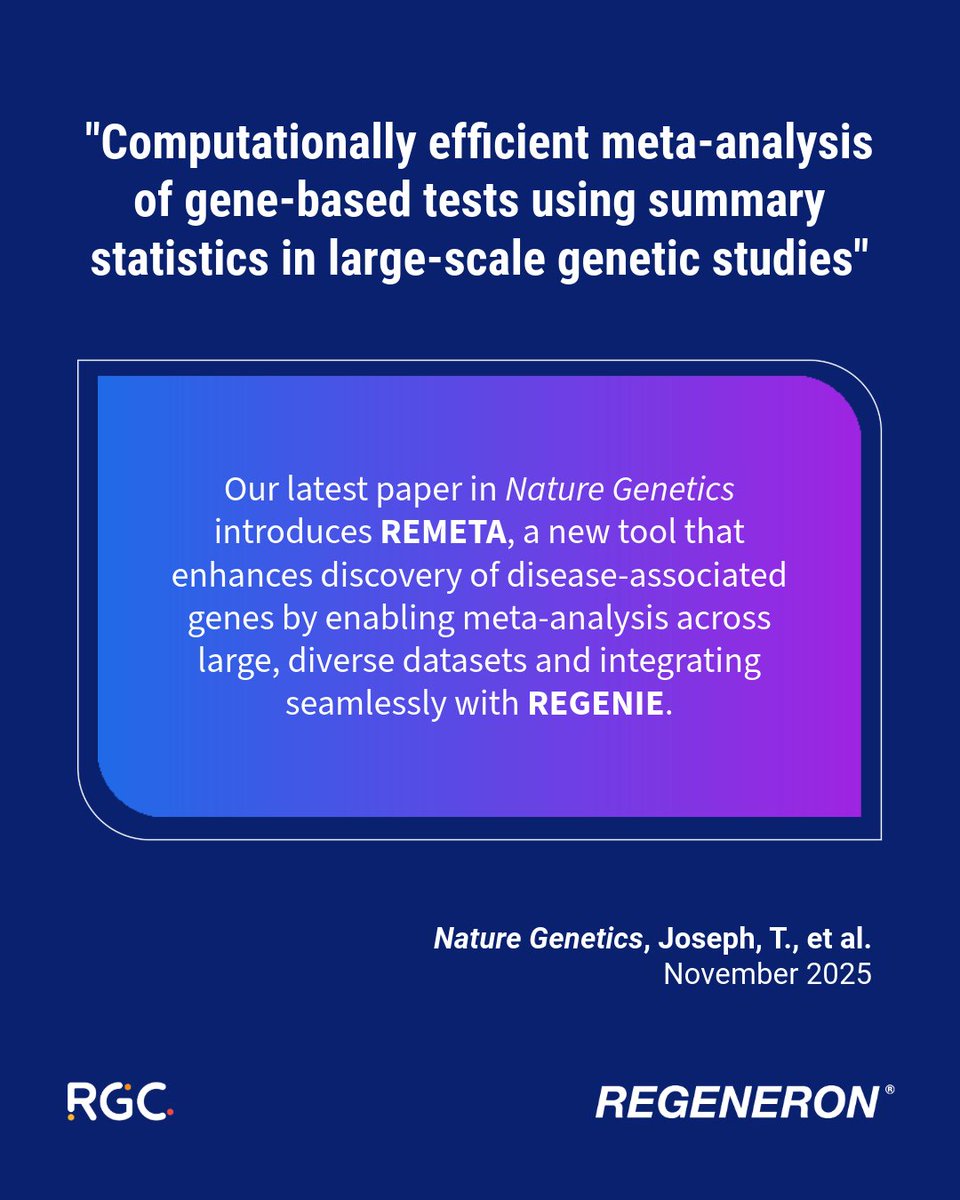
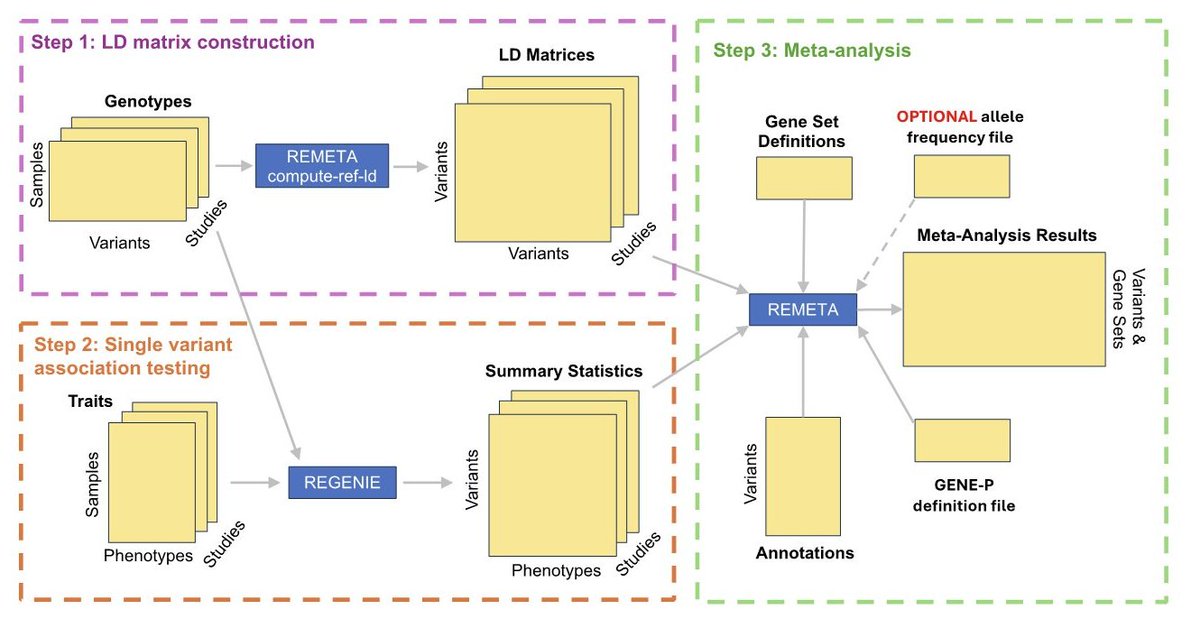
Introducing a new method called REMETA from the Regeneron Genetics Center (RGC) @RegeneronDNA for meta-analysis of gene-based tests using summary statistics https://t.co/Bv3pqMB1iy This is great work from Tyler Joseph. Pre-print is here
https://t.co/CffQXSZPv2
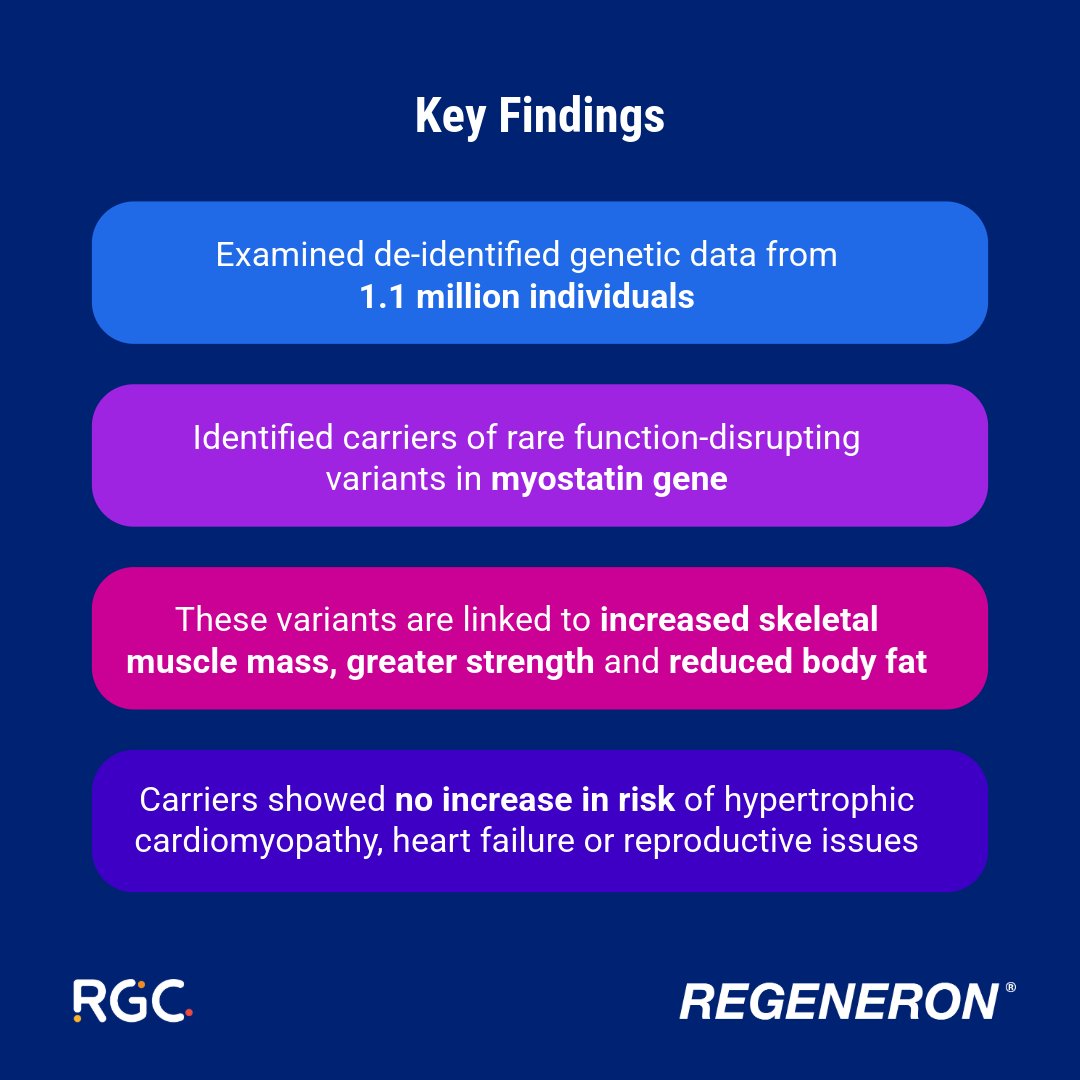
Our paper in @NatureComms reveals how myostatin gene variants may protect muscle mass during weight loss. By studying 1M+ individuals, we found that rare MSTN variants are linked to increased skeletal muscle mass and reduced body fat.
Learn more: https://t.co/qjlQ86ETGl
We’re announcing a new collaboration with TriNetX to support Regeneron’s drug discovery and development and advance future digital health solutions. The work expands RGC’s EHR-linked database with access to ~300M de-identified patient records.
Read more: https://t.co/13bfMxjQpZ
Neurological disease risk is more common, and neurodegeneration may be detected earlier than we thought.
RGC analyzed 1M+ genomes, finding repeat expansions are more widespread, and that brain changes may begin years before symptoms appear.
Via @Nature: https://t.co/J1DpUcWAJ2
Humans with function-disrupting variants in the myostatin gene (MSTN) have increased skeletal muscle mass and strength, and less adiposity
https://t.co/bl25n6ijJv
It's such a painful process to upload summary statistics to GWAS catalog. Hey @GWASCatalog if you really care for open data sharing, then make the submission process simple. Get rid of globus personal connect.
The REMETA paper is now published in Nature Genetics. Great work from Tyler Joseph and team. See my previous post for a summary of the key properties of this approach https://t.co/dMgtIiRCcr
Exciting news from the RGC team!
Our latest paper in Nature Genetics introduces REMETA – a new tool for large-scale genetic meta-analysis.
Check out the full paper: https://t.co/ayiWt5Xo9L
A thread listing 9 open positions at @RegeneronDNA. If you are at ASHG visit our booth to find out more
1. Pipeline Development https://t.co/X0KTUDd63R
2. Proteomics Analysis/Methods https://t.co/2auqyhFkQm
3. Applied Statistical Genetics https://t.co/S0NHHCcUKu
Some links to open positions in the Analytical Genetics group at @RegeneronDNA
Pipeline development https://t.co/BSfcyp5oIL
Proteomics analysis and methods https://t.co/DcqzEVogiX
Applied statistical genetics https://t.co/pw26FP9aIv
StatML and imaging https://t.co/7r8hTmkGst
JOB ADVERT If you work in statistical genetics/machine learning/imaging and want to join the amazing RGC team @RegeneronDN working on some of the largest and most ancestrally diverse genetic datasets in the world, then check out this role https://t.co/us7vucitEM
📣Today we announced that we intend to acquire @23andMe with plans to maintain their consumer genetics business and advance our shared goal of improving human health and wellness. https://t.co/cujfaF5rF📣Today we announced that we intend to acquire @23andMe with plans to maintain their consumer genetics business and advance our shared goal of improving human health and wellness. https://t.co/cujfaF5rF📣Today we announced that we intend to acquire @23andMe with plans to maintain their consumer genetics business and advance our shared goal of improving human health and wellness. https://t.co/cujfaF5rF2
We’re collaborating with @truveta, @illumina, and U.S. health systems to create the largest, most-diverse genetic database of electronic health records and linked genetic data to advance scientific innovation and healthcare delivery.
Finally, for ease of use we have developed this approach in an open-source software package called REMETA https://t.co/Lt00Fn7BuV, that is designed to integrate seamlessly with the summary statistic output files from the REGENIE software https://t.co/t5Ic7zGDGP
Fourth, we have extended the approach to handle binary trait meta-analysis of gene-based tests with high case-control imbalance and show that this is well calibrated.
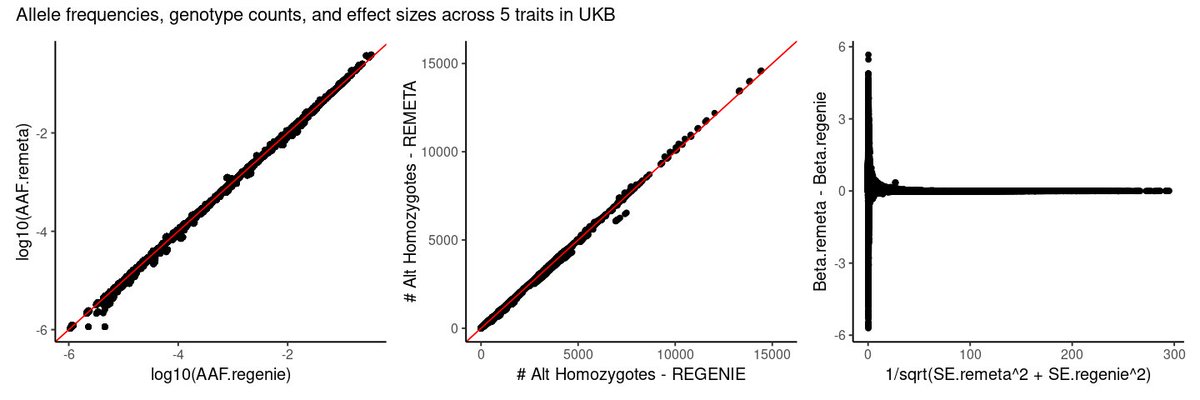
Third, p-values alone are not sufficient for follow up interpretation of gene-based tests. So we developed a very accurate approximate method for calculating allele frequencies, genotype counts and effect size of burden tests from summary statistics.
Second, we have developed a compact per-chromosome binary file format for the LD files. The format handles both marginal and conditional testing scenarios and is indexed to allow fast access to the LD information of any gene.
The approach is accurate when compared to existing approaches to meta-analysis that do not use summary stats. For some tests like variance component and ACATV tests it can lead to more power as it avoids having to meta-analyze p-values.
REMETA solves these challenges and has several nice properties. Firstly, REMETA uses a single sparse covariance reference file per study that is rescaled for each phenotype using single variant summary statistics. This can be pre-calculated once, so it massively cuts down storage