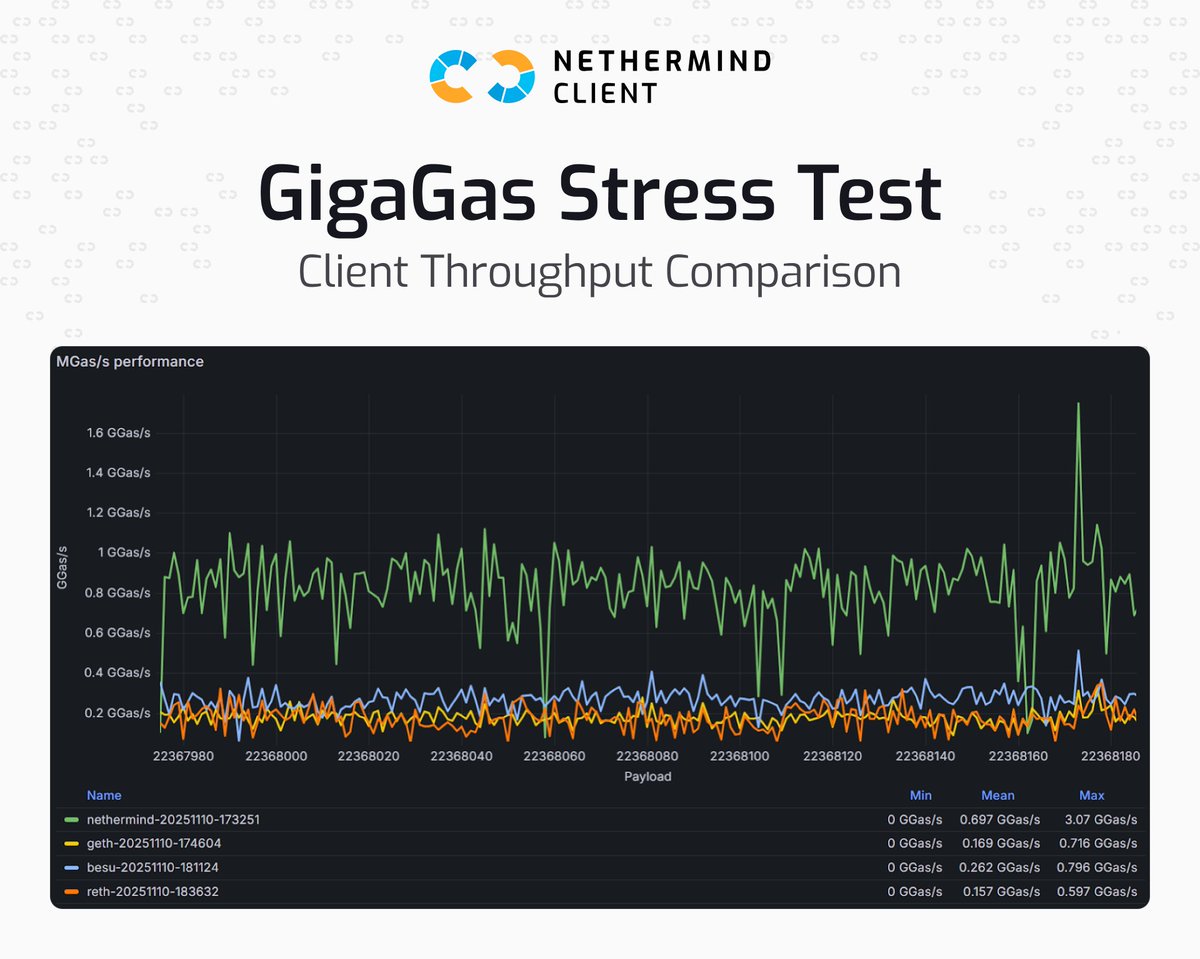
We're introducing a new benchmark for Ethereum clients.
It replays real mainnet blocks and merged super-blocks to measure real execution throughput.
Initial results show significant performance differences under heavy load, with 𝗡𝗲𝘁𝗵𝗲𝗿𝗺𝗶𝗻𝗱 𝗳𝗮𝘀𝘁𝗲𝘀𝘁 𝗮𝗺𝗼𝗻𝗴 𝗮𝗹𝗹.
🔗 https://t.co/ClMzawGH7H
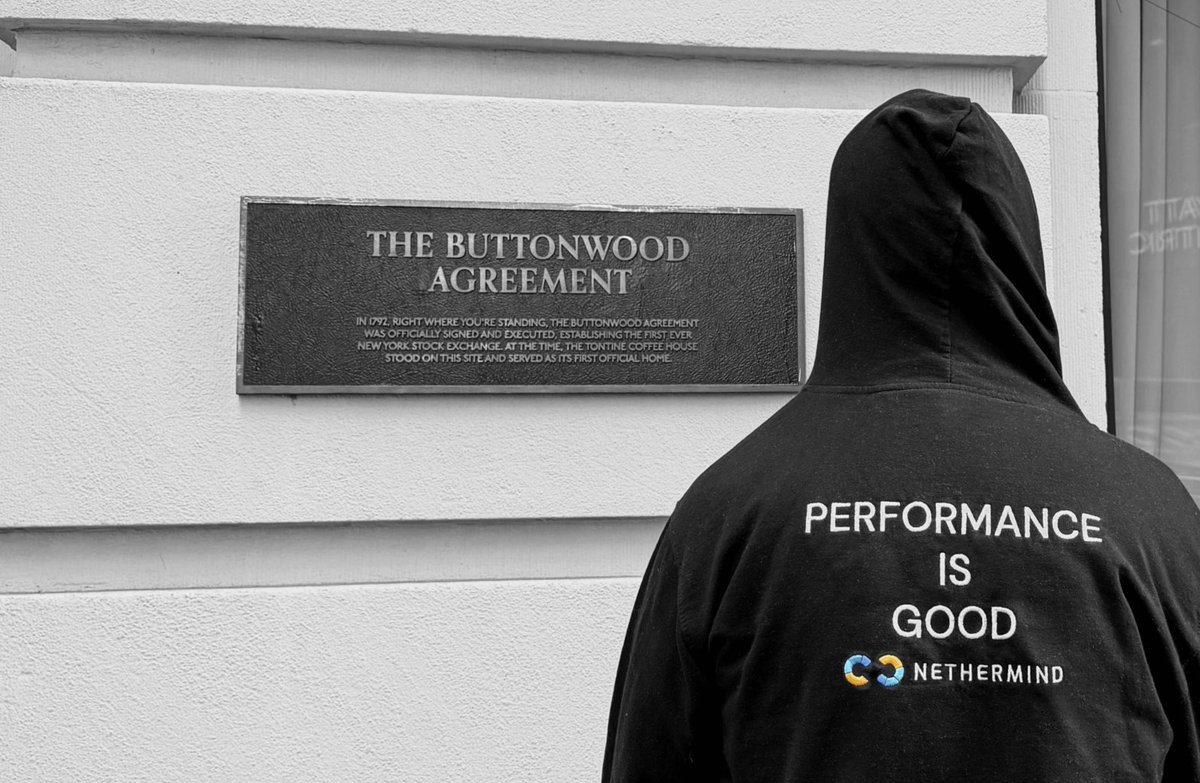
In 1792 Buttonwood was a private agreement between 24 brokers to settle trades on paper
Ethereum is a credibly neutral public agreement for anyone to settle value in code
At @Nethermind we are making that ledger fast enough for the next 200 years of truly global markets
Had a few chats like this at Devconnect:
Me: “How do you like @Nethermind client? Any feedback?”
Node operator: (long, thoughtful silence…) “Hmm… no. It just works.”
Performance is good, but making running nodes boring is always goal #1🙂
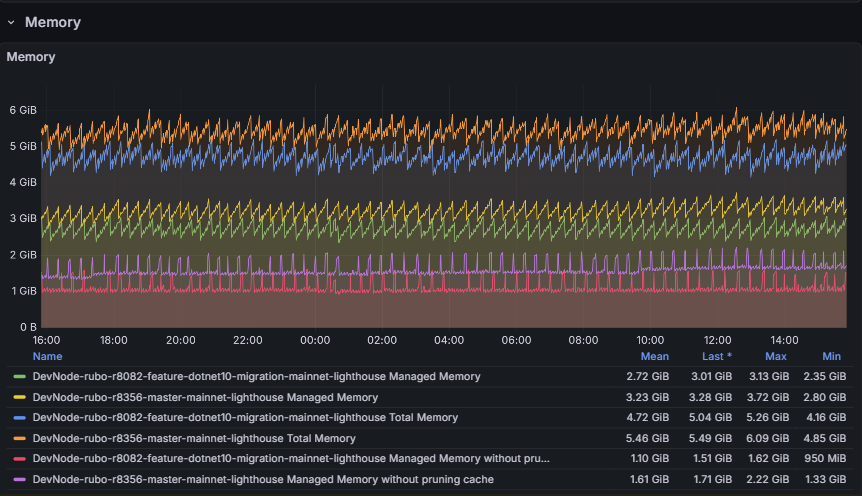
And @Nethermind client merged @dotnet 10 migration PR: https://t.co/ZWJm8EoqNN
Few additional % of free performance and a lot less memory used! Over 500MB reduction!
Someone needs to finally say it: choosing Rust or any other language doesn’t make your software fast. @Nethermind is fast because we mastered engineering and built a strong team.
People tend to overestimate the influence of your language choice and underestimate other factors such as architectures, algorithms & data structures, how familiar your team is with the given programming language, your priorities, and how your QA processes work (extremely important if your client gets high adoption; I prefer software that works rather than software that breaks fast, and this is always our number one priority).
The fact that it works for us is because we hired super strong engineers and .NET legends into our team (plus QAs, leads, DevOps). Also, I think people underestimate C#.
C# has amazing tooling that makes your team more productive and allows you to write highly performant code and control the GC, and the main limitation is how well engineers know things. And it works the same with Rust, there is no way of skipping solid engineering. If I built a new team from scratch, I might pick Rust or C#, or something else; again, it depends on many factors.
There is still lots of space to keep improving Ethereum clients and blockchains on the design level. There is still not enough data gathered to describe EL performance fully. So about the labels of “the fastest client”: EL performance has many flavors and can’t be described with one metric (different RPC endpoints, syncing, archive, block building, and many more).
If we would like to simplify EL performance to one metric, it would be how much throughput you can handle, and I am proud that Nethermind is crushing it, and if simplifying it to one metric, I can proudly say that Nethermind is the fastest client.
Gas Benchmarks became Ethereum's shared standard for validating gas limit increases. Every client now uses this methodology to prove readiness before protocol changes.
New mainnet @ethereum performance:
nethermind: 288MGas/s
reth: 235MGas/s
@ethrex_client: 141MGas/s
Ethrex ethereum execution client is approaching the other clients. We’re merging a few more relevant performance PRs in the days to come.
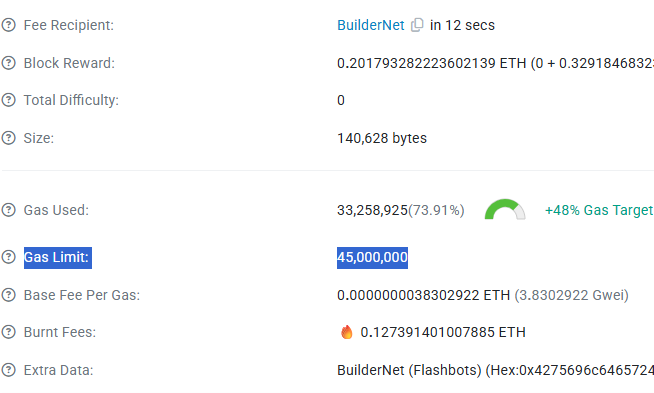
This change ships with Fusaka and lays the foundation for safe scaling to higher gas limits.
Full technical breakdown from @ben_a_adams (2/2) https://t.co/j80DmO5Hw0
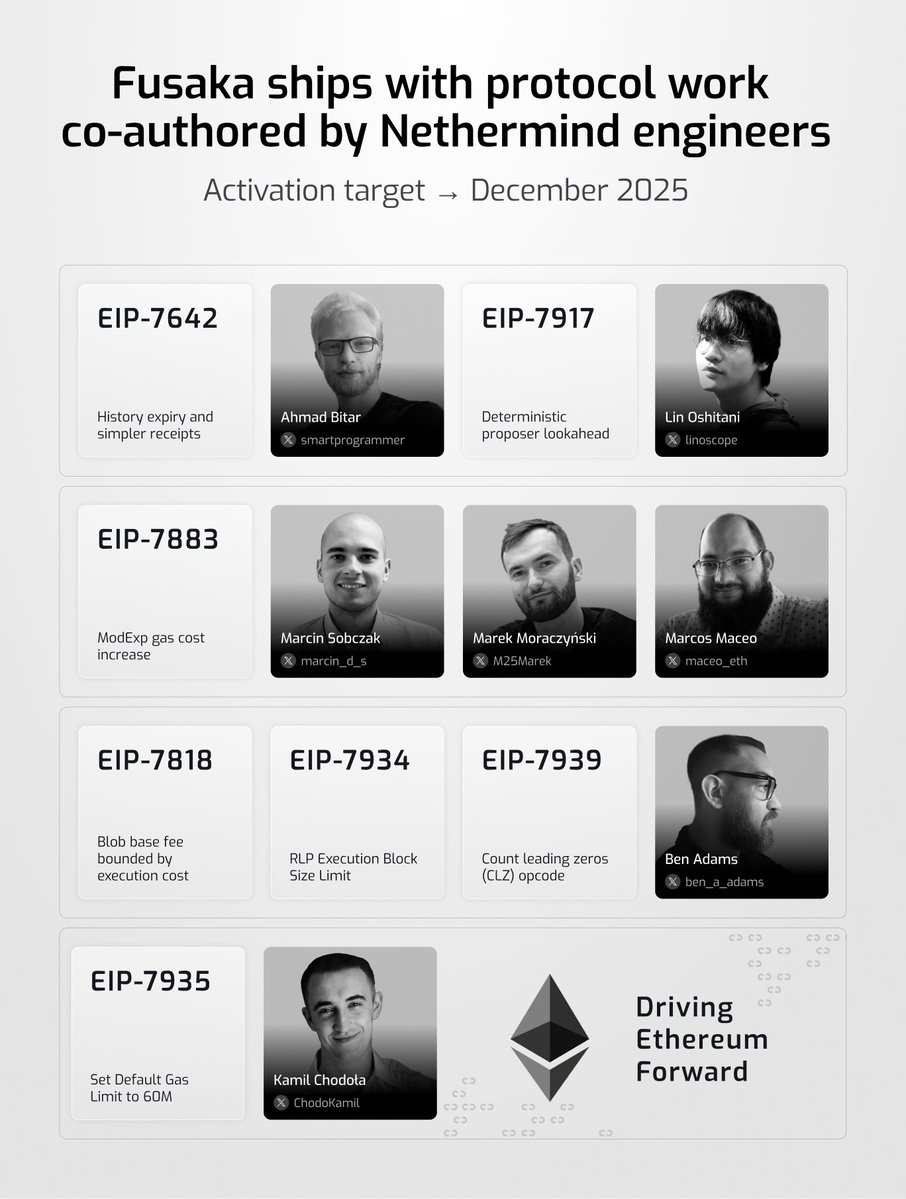
"EIP-7883: ModExp Gas Cost Increase" ensures modular exponentiation reflects its real execution cost.
We co-authored this proposal to close performance gaps and improve the predictability of Ethereum’s execution layer. (1/2)
Benchmarking #Ethereum like there’s no tomorrow📈
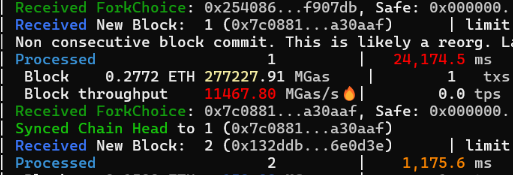
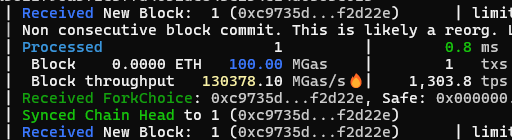
277 trillion gas blocks, 130 GGas/s throughput! Nethermind: gimme MOAR!
MGas🤔
GGas🔥
TGas🔜
A joint effort by @nethermind, @StatelessEth, @ethPandaOps & EF STEEL - pushing EL clients to the edge for fast, safe L1 scaling.
EIP Spotlight: EIP-7642 (eth/69) – history expiry and simpler receipts.
Co-authored by Nethermind Core developer Ahmad Bitar (@smartprogrammer), this EIP simplifies Ethereum’s networking protocol and removes 530 GB of redundant sync data, making nodes faster and lighter ahead of Fusaka.
🧵
🎉 The @ethereum Holesky Testnet has successfully forked and is running smoothly on the Nethermind Client!
Congrats to all the client teams, researchers, testing crews, DevOps experts, and the Ethereum community for making this possible. 🚀
Next up: Sepolia.
In the upcoming Fusaka hardfork, Ethereum will modify the gas costs and allowed inputs for the ModExp precompile through two EIPs: EIP-7883 and EIP-7823.
We encourage all developers and infrastructure providers to review their smart contracts, gas estimation algorithms, and related tooling for potential impacts.
For a detailed impact analysis, refer to the reports by @nero_eth:
🔍 https://t.co/dD0bgtkKZc
https://t.co/EtztlyY2vI
Stability is something we care deeply about at Nethermind.
444 days of uninterrupted @nethermind node uptime and it would’ve been even longer if not for a necessary upgrade for the hard fork. 🙂
The next EVM Resource Pricing call is tomorrow
Starts with updates from @marcin_d_s & @jacekglen
Then @adietrichs leads discussion on priorities for the Glamsterdam fork
Dulcis in fundo, @misilva73 will present our new proposal on multidimensional gas metering
Nethermind has been a long-term partner of Gnosis, providing critical infrastructure and serving as the supermajority client, ensuring the chain’s stability.
This proposal seeks to renew the strategic, long-term collaboration between Gnosis and Nethermind.
Cast your vote below. 🗳️