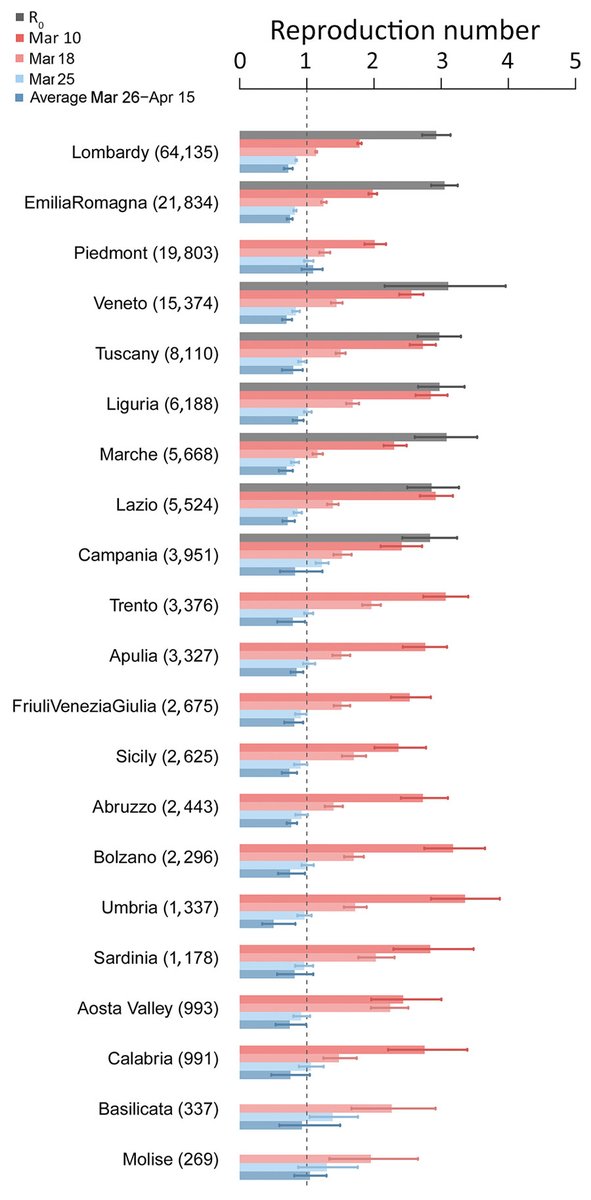
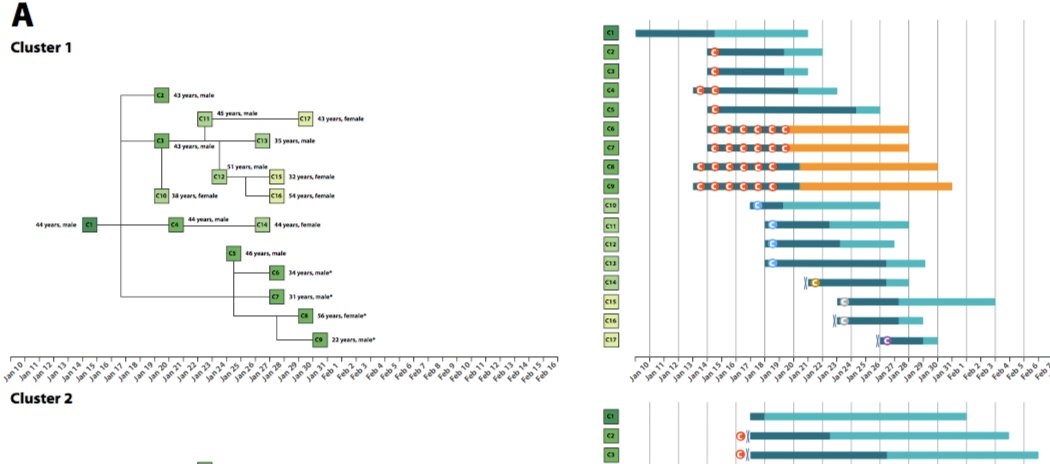
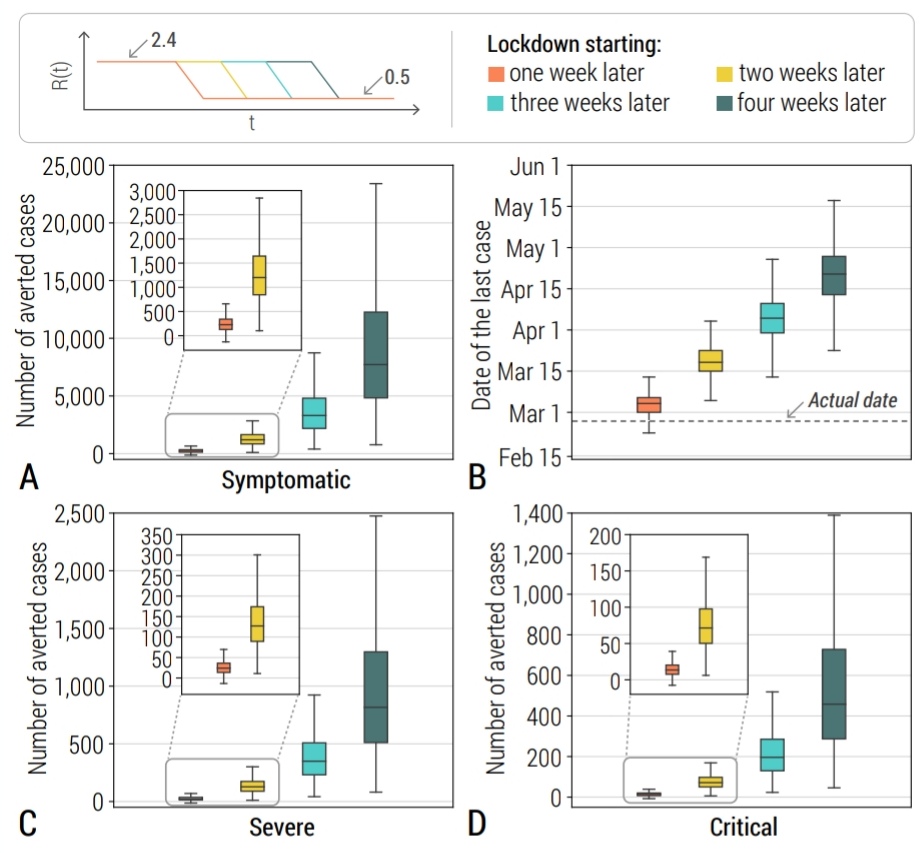
How effective are lockdowns, and how long do they take to work? Here’s is our take on the Italian experience, finally out on EID (online first version) at https://t.co/tT1y9Dq2yx
The reproduction number fell below 1 two wks after lockdown and stabilized at 0.76 after 3wks. 1/8
@NGC_3572 In this pandemic a model of behavior should consider imitation behavior of peers (e.g., in following recommendations) and media pressure (e.g., in shaping the perceived risk of infection). Still, better to use it to understand rather than to predict
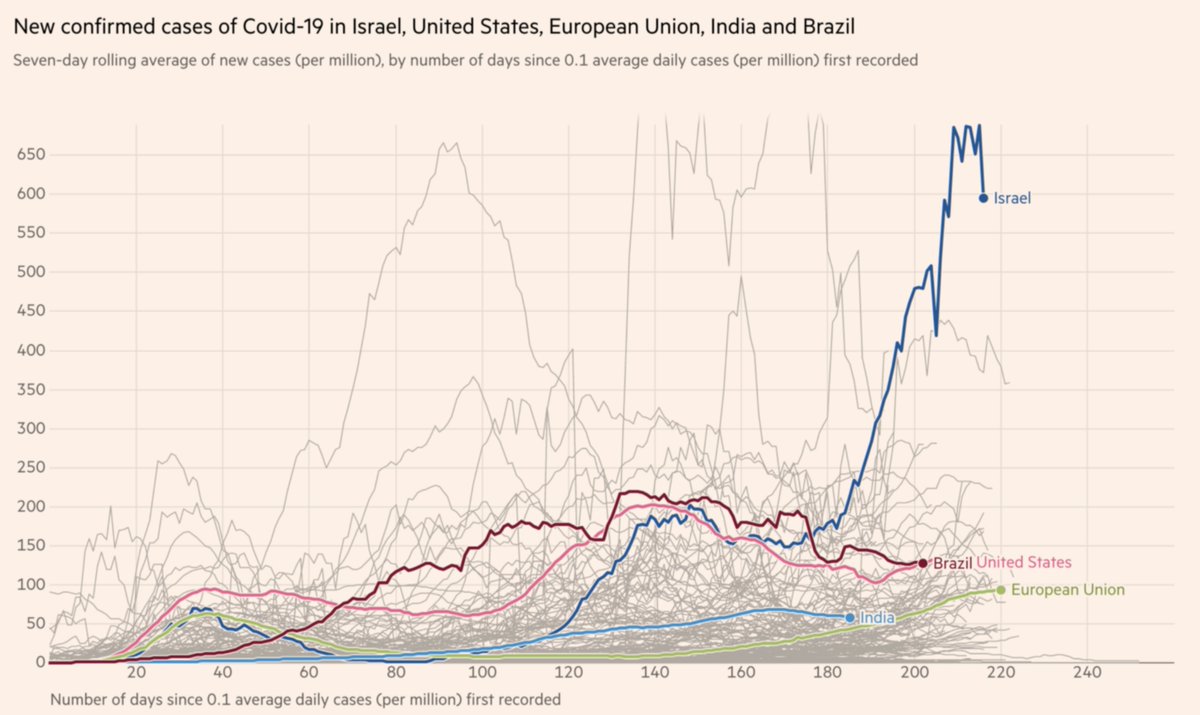
Israel: What went wrong?
How did we come to lead the COVID-19 cases chart? What caused the 2nd wave, why was it so bad, and is the lockdown working?
A thread on Israel, the first country to impose a second lockdown, with lots of (don’t do) lessons to teach the world
@EricTopol
From South Korea:
"Symptom screening fails to identify most COVID-19 cases in children, and SARS-CoV-2 RNA in children is detected for an unexpectedly long time."
We are relying on symptom screening in Ontario schools.
@etfopresident@ETFOeducators
https://t.co/fjbf3hdPKA
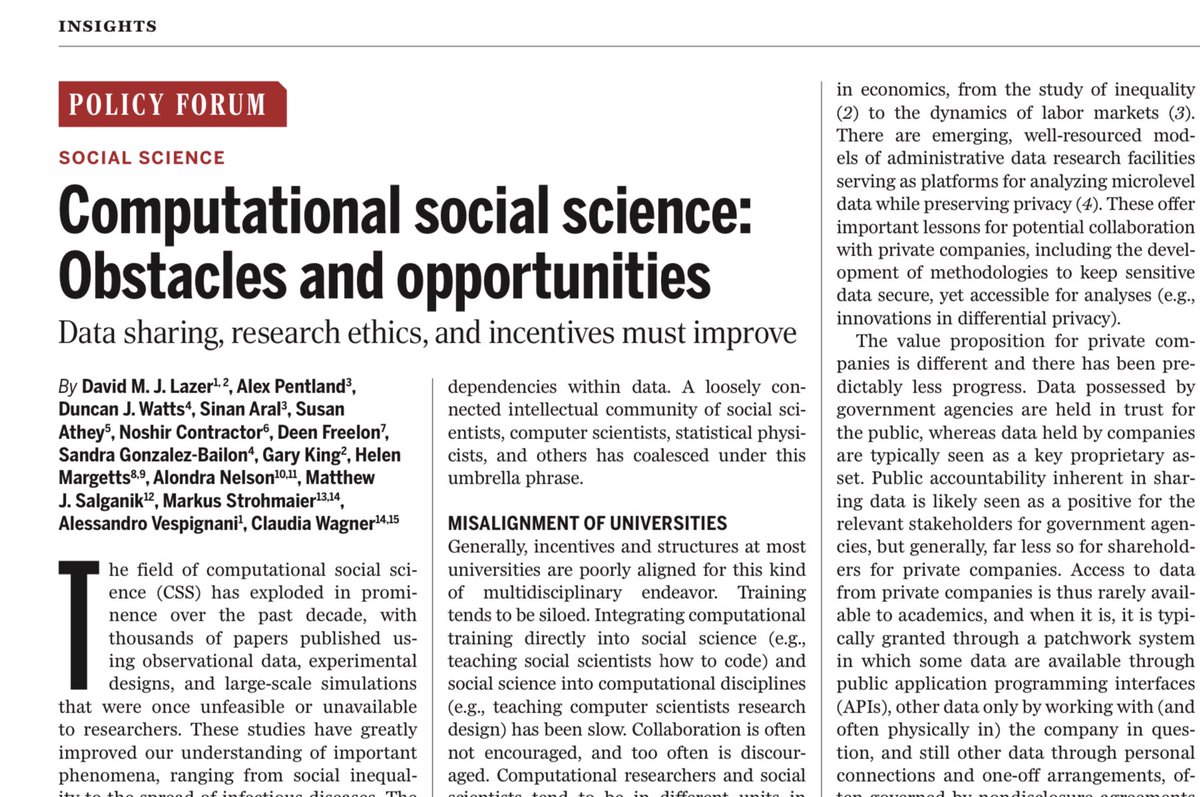
Computational social science (CSS) has exploded in prominence over the past decade, with thousands of papers published using observational data, experimental designs, and large-scale simulations that were once unfeasible or unavailable to researchers.
https://t.co/tguwTFSChP
@manlius84@_AlexArenas@alexvespi@DirkBrockmann@AdamJKucharski Of course it depends on what you want to test with the model. For general purposes, I do not feel the need to revise the modeling scheme until there is stronger evidence and the rate at which reinfection may occur
.@WHO is establishing a Science Council to support us delivering #HealthForAll & keeping the world safe through advances in science & technology.
I invite all relevant scientist to apply for membership by 14 Sept 2020
https://t.co/zuMYKUFrKC
@cgpgrey's take on making decisions during a pandemic: https://t.co/RRyI7FN2IW
Min 5.49: wonderful representation of the situation all modelers supporting decision-making are very familiar with
A first case of #COVID19 reinfection from HKU, with distinct virus genome sequences in 1st and 2nd infection (142 days apart). Kudos to the scientists for this study.
This is no cause for alarm - this is a textbook example of how immunity should work.
(1/n)
First results of REACT research out today; three papers on validity, usability & prevalence (2 published, 1 preprint) with @grahamscooke
Thread with key findings of study of 100,000 randomly selected adults who used a home test for IgG antibodies
1/6
https://t.co/vvfzeUfVk3
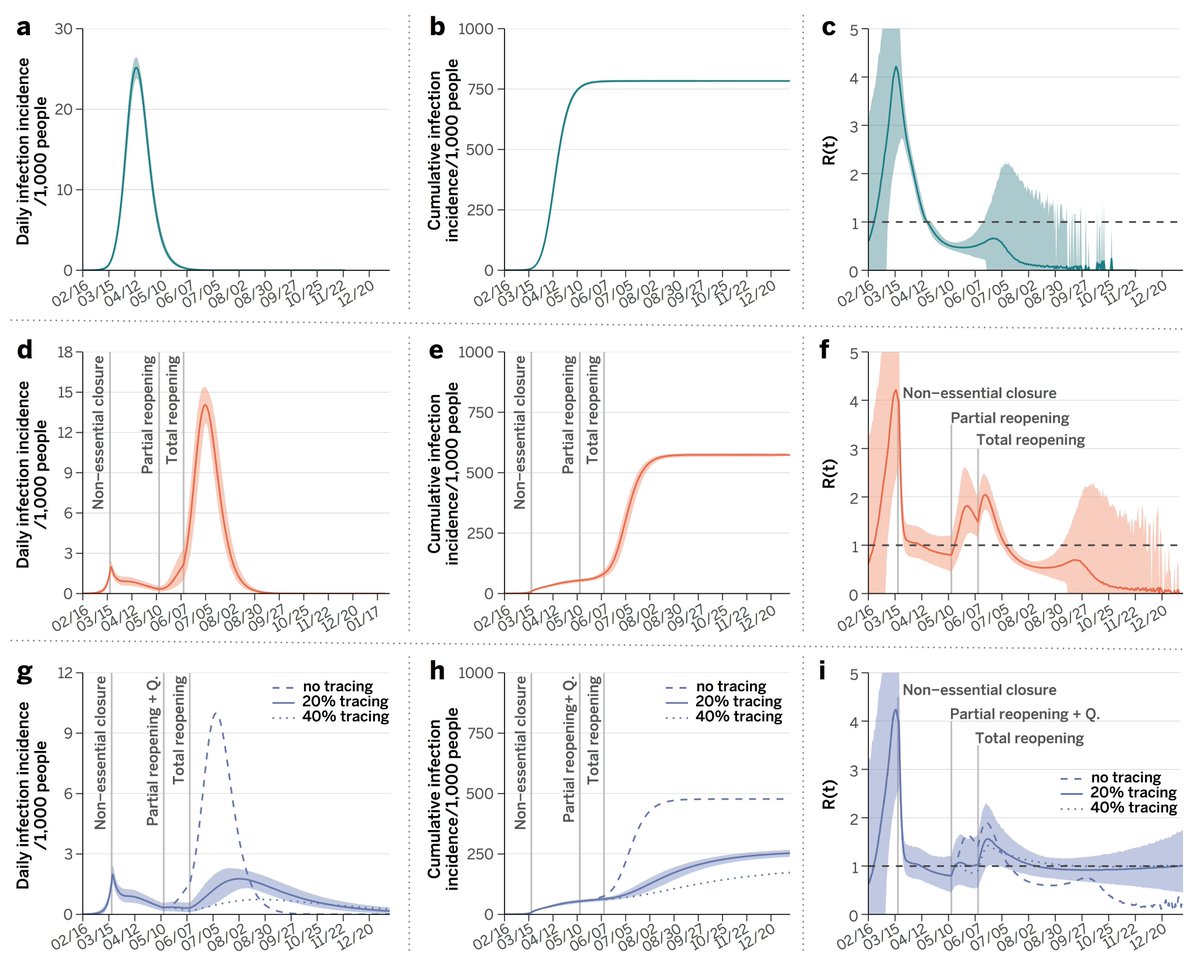
It's great to see our paper on second wave scenarios (very timely!) of #COVID19 out in @NatureHumBehav today. We show that testing work, but only if accompanied by tracing & household quarantine (panel g below). Main at https://t.co/96CWrrIYaR (see also SM for more scenarios)
By using contact tracing data from Hunan, China, we found no statistically significant differences in transmissibility between children and adults https://t.co/00NqUo5Bit
Our latest on intervention strategies and behavioral changes during the COVID-19 epidemic: synthetic scenarios and realized trajectory. https://t.co/EipGwB5KRy
Impact of timing in the implementation of NPIs to contain a COVID-19 outbreak - Insights from Sichuan, China in our latest preprint https://t.co/UUSxNwjQHe