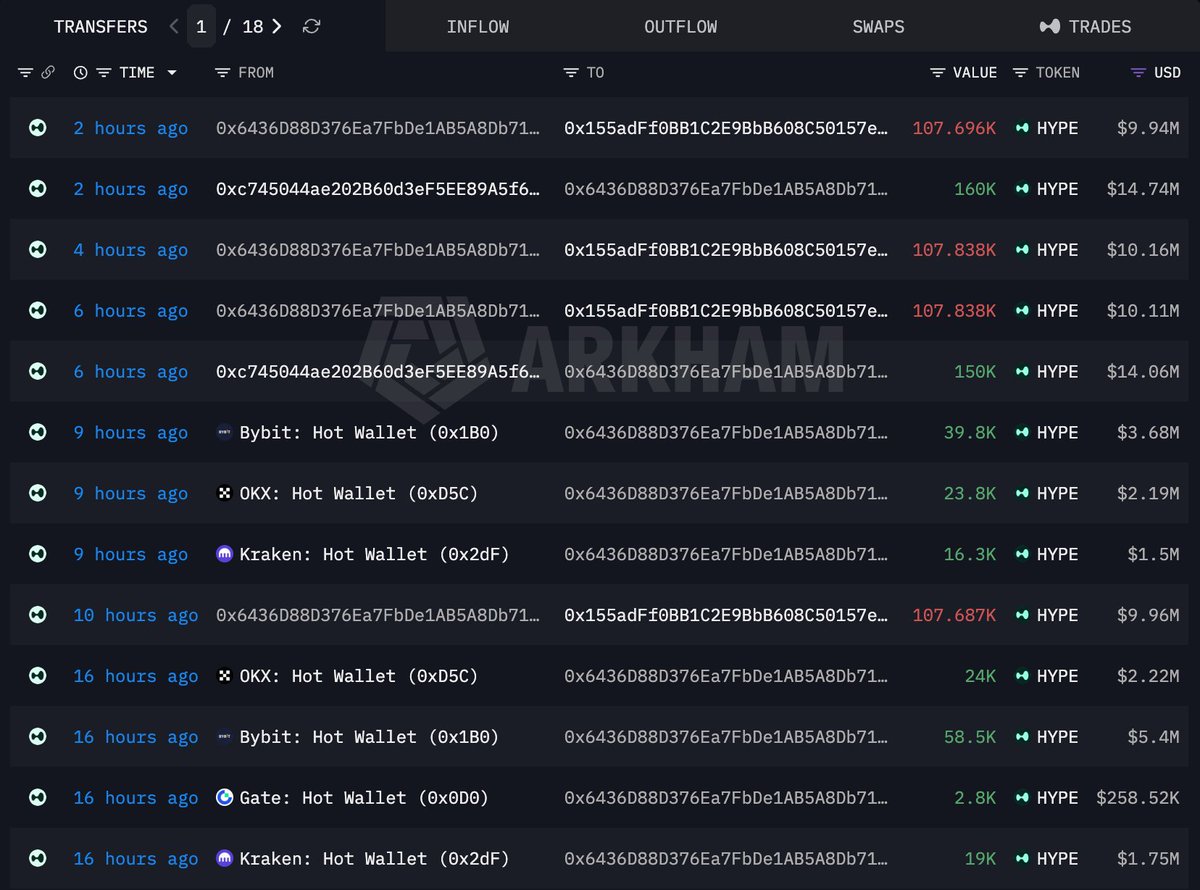
Wallet 0x6436, linked to Hyperliquid Strategies Inc (@HypeStrat), bought another 494,200 $HYPE ($45.8M) over the past 16 hours.
Over the past month, the wallet has bought a total of 5.51M $HYPE ($476M), averaging 183,574 $HYPE ($15.86M) per day.
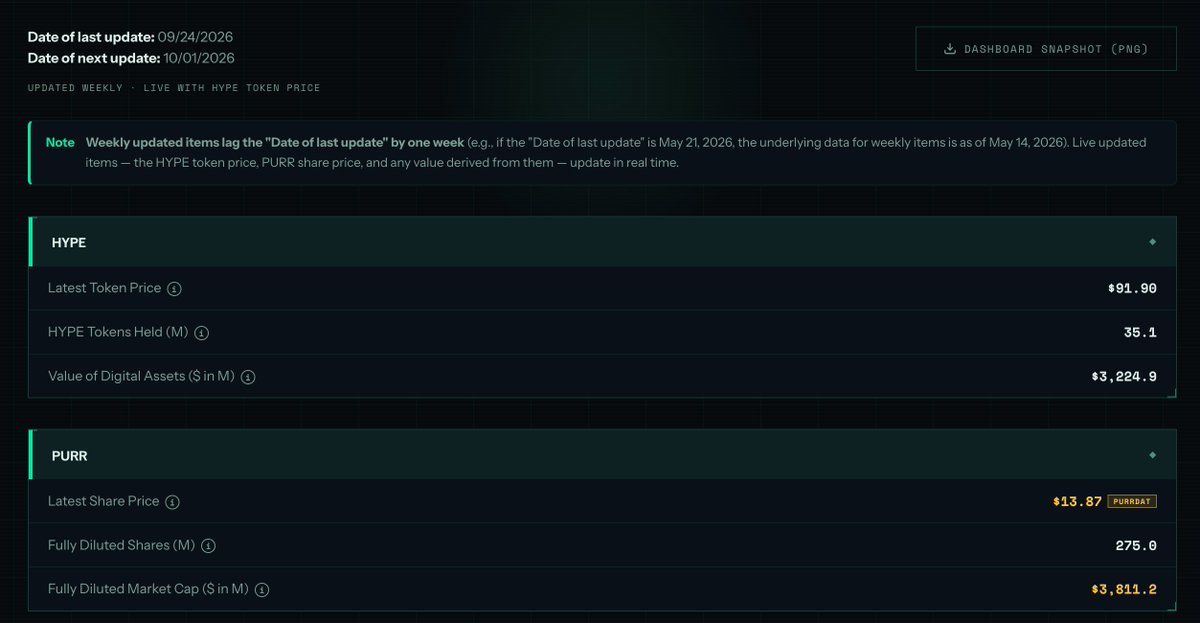
@HypeStrat currently holds 35.1M $HYPE ($3.2B).
https://t.co/fWfUrPnQ2A
https://t.co/g9Fi8NaZZu
BREAKING: NEAR launches confidential perpetual futures trading powered by Hyperliquid.
Allowing users to open positions without publicly linking trades to their accounts.
BREAKING: $HYPE is officially entering institutional crypto portfolios.
Hyperliquid’s $HYPE has been added to Hashdex’s Nasdaq CME Crypto Index ETF (NCIQ), debuting with a 3.4% weighting — making it the ETF’s 5th-largest holding.
Current NCIQ composition:
$BTC 74.6% | $ETH 11.7% | $XRP 5.1% | $SOL 3.7% | $HYPE 3.4%
$ADA 0.5% | $LINK 0.4% | $XLM 0.3% | $BCH 0.2%
HYPE’s inclusion follows its addition to the Nasdaq CME Crypto Index after meeting eligibility requirements including liquidity, market capitalization, qualified custody support and applicable listing standards.
From a relatively new L1 to becoming a component of a Nasdaq-listed crypto index ETF.
Another major step toward institutional exposure for Hyperliquid.
September 2, 2026
#Hyperliquid #HYPE #Crypto #ETF #Hashdex
@LutherB4891392@Livythinker Sono d'accordo che non sia il massimo.
Meglio sperare di non essere ammazzato/derubato per l'ennesima volta?
Lì la paura si è trasformata in coraggio, per certi versi è da invidiare
@LutherB4891392@Livythinker Se hai pistola in mano e vieni in casa mia senza permesso minacciando di morte me o miei familiari, io posso spararti e ucciderti, per come la penso io.
📌 Posso dire che la condanna definitiva del gioielliere Mario Roggero a 14 anni e 9 mesi sancisce la morte dello Stato di diritto, e che i magistrati, disponendo un risarcimento di 700mila euro per i familiari degli assaltatori, lo hanno derubato una seconda volta?
0dte options are now 40-50% of all spx volume. that means the biggest force moving the market intraday isn't news or fundamentals. it's dealers hedging same-day options. most traders can't see it. here's how it works $spy $spx
$SPCX is trapping retail this week.
The Nasdaq-100 inclusion on July 7th was the most anticipated event of the summer, and it created the ultimate liquidity trap. Here is why my short-term outlook on $SPCX is bearish for the rest of the week:
The Passive Buying Trap: We all knew passive managers and QQQ had to buy up to $4.3B worth of stock. Smart money front-ran that forced buying. Now that the index funds have their shares, we are facing a massive liquidity void. It’s a classic "buy the rumor, sell the news" IPO mechanic.
Priced for Perfection: At a $2T valuation and trading at roughly 36x forward sales, there is zero margin for error right now. The broad tech sector is heavy, and SPCX is getting pulled down with it.
The Options Tape: I am seeing heavy negative Gamma Exposure (GEX) stepping in. When dealers get caught short gamma, they are forced to sell into weakness to hedge, which acts as a magnet pulling the price down and accelerating the flush.
My take: Let the weak hands get shaken out as it breaks below the short-term EMAs. Do not try to catch this falling knife today. Let the structure break down, and wait for the dust to settle.
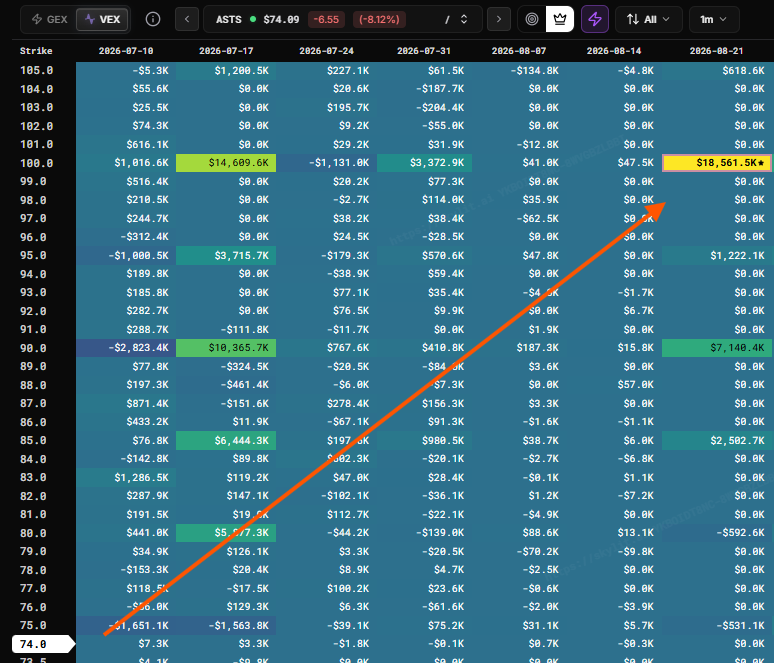
$ASTS — Major sign T-Mobile deal is coming?
Chris Sambar (AST’s loudest champion at AT&T & former Board Member) just got appointed T-Mobile’s Chief Enterprise Officer.
He knows the tech better than anyone. This one’s huge. 🚀
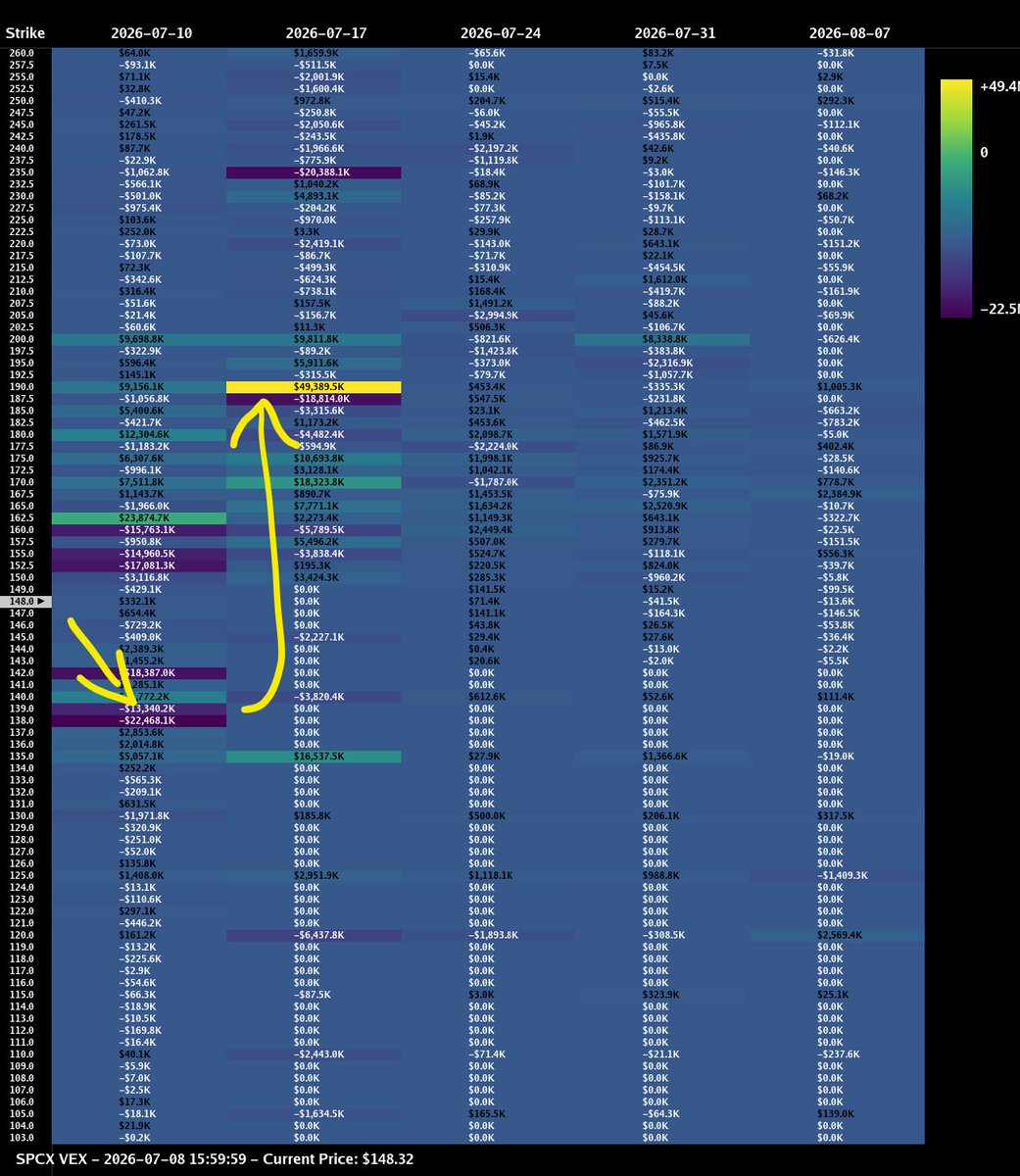
@Reformed_Trader@spacanpanman check the VEX nodes for August OPEX
The Yen Shock That Could Put Markets on Life Support
The scary part here is that Japan may be forced to save itself in a way that hurts everyone else.
For decades, Japan was the world’s cheap funding source. Near zero rates let investors borrow yen, sell yen, buy higher yielding dollar assets, and park capital in U.S. Treasuries, equities, credit, private markets, and emerging markets. That worked as long as Japanese yields stayed suppressed and the yen stayed weak in an orderly way.
That regime is now breaking. Japan’s 10 year yield near 2.8% is a historic reset after a generation of near zero financing. The BOJ is raising rates, the yen is under pressure, households are getting squeezed by import costs, and Japan is carrying one of the largest debt burdens in the developed world.
But the key nuance is this. Japan’s deeper disease is still deflation. Aging demographics, weak domestic demand, fragile real wages, and decades of low growth still pull Japan back toward disinflation. The immediate symptom is weak yen imported inflation. That is what makes this so dangerous. Japan may be forced to act hawkish against imported inflation even though the underlying economy is not strong enough to handle real tightening.
The Historical Warning
In 1998, the yen carry trade unwound after the Asian crisis and LTCM, and Japan moved toward zero rates. In 2008, forced deleveraging turned carry trades into liquidation machines, and the BOJ cut after the crisis intensified. In 2024, even a smaller BOJ normalization shock caused a yen rally and global equity volatility.
Japan often eases after carry trade blowups, but not before the damage. It cuts later because a violent yen rally, falling equities, tighter credit, exporter pain, and recession risk eventually hit Japan too.
So when people say Japan will just cut again, they are missing the sequence. The danger is not where the BOJ ends up. The danger is the window between hawkish yen defense and the later reversal. That is when the liquidation happens.
The Policy Whipsaw
Japan’s 1st problem is a weak yen and imported inflation, so it may be forced hawkish. Japan’s 2nd problem is that the hawkish turn can detonate the carry trade. Japan’s 3rd problem is that once the unwind becomes recessionary, the BOJ may have to pause, restart bond support, or cut again.
That is the nightmare loop. Tighten to save the yen, break the carry trade, then ease after the damage has already moved through global markets.
The Worst Case
The real nightmare here is stocks falling while Treasury yields rise. That breaks the normal hedge and turns the world’s safest collateral into the source of stress.
USDJPY pushes toward 170. Japan decides the yen decline is disorderly. The Ministry of Finance intervenes hard. The BOJ backs it with hawkish language or faster hikes. The yen surges. Everyone short yen has to buy it back. Carry trades unwind. Investors sell what they can, not what they want.
U.S. tech, credit, crypto, emerging markets, and Treasuries all become sources of liquidity.
Then Japanese institutions look home. If JGB yields are attractive again, why keep taking currency risk in U.S. bonds? Japan does not need to dump its Treasury portfolio to cause damage. Markets price at the margin. A $100 billion to $300 billion shift at the wrong moment can matter when Treasury liquidity is already fragile.
Mortgage rates rise. CRE refinancing gets worse. Bank securities books take pain. Credit spreads widen. Treasury auctions weaken. The Fed gets trapped because cutting into foreign liquidation and inflation risk looks reckless, while refusing to cut lets financial conditions tighten into recession.
Japan does not need to intend harm. The damage comes from self defense. A forced Japanese stabilization campaign could strengthen the yen, pull capital home, remove marginal demand from U.S. Treasuries, detonate the carry trade, and hit America at the exact layer that matters most.
The collateral layer.
Donald Trump ha guadagnato oltre due miliardi di dollari, di cui 1,2 miliardi da investimenti nelle criptovalute legate alle attività della sua famiglia, nel primo anno del suo secondo mandato alla Casa Bianca: si tratta di un record per un presidente statunitense. I dati sulla sua situazione finanziaria sono arrivati dalla dichiarazione patrimoniale presentata all'Ufficio per l'etica governativa