Especialista en Med. Interna e Infecciosas en Hospital de Manises, Valencia.
Sociedad Europea (ESCMID) y Valenciana (SEICV)
Clinical IM & ID Specialist
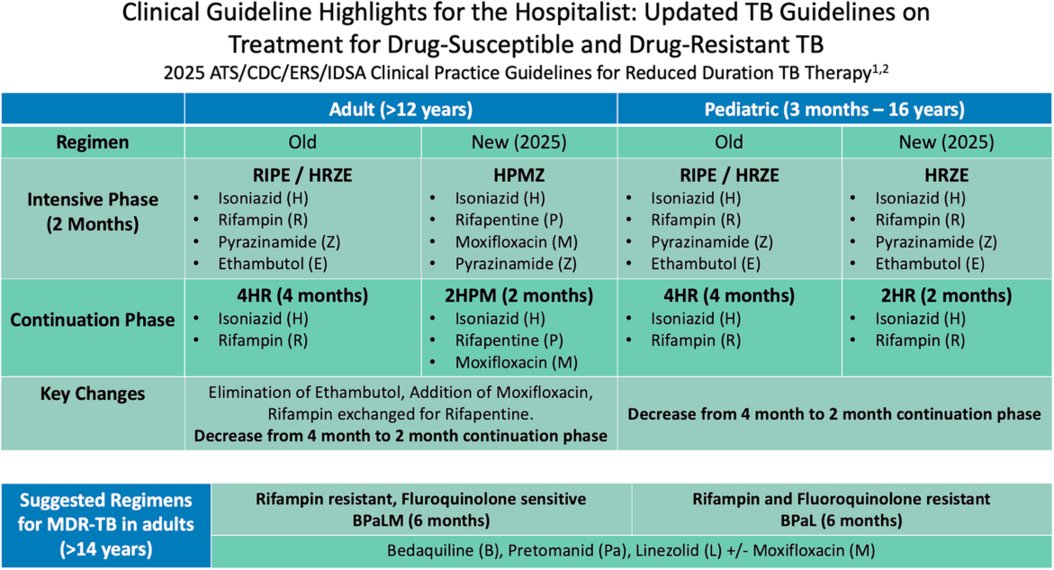
🆕✨🟢Clinical guideline highlights for the hospitalist: Updates on the treatment of drug-susceptible and drug-resistant tuberculosis
🔺2025 ATS/CDC/ERS/IDSA clinical treatment guidelines
🔺Rifampin exchanged for Rifapentine
🔺Elimination of Ethambutol, Addition of Moxifloxacin
🔺 Duration 🔽 from 4 month to 2 month continuation phase
🔺Logistical challenges related to rifapentine
🔺Further research is needed to identify predictors of treatment tolerability #idxposts
https://t.co/3GiysTAuL8
He pasado más de 200 horas exprimiendo Gemini.
El resultado: Una biblioteca en Notion con los 400 mejores prompts avanzados para clonar tu cerebro y automatizar tu negocio.
Te ahorra semanas de trabajo en:
• Creación de contenido masivo
• Automatización de sistemas
• Copywriting que vende solo
... Y mucho más en 20 categorías.
GRATIS solo hoy.
Like + RT
Sígueme (para abrir DM)
Comenta "400"
💊 “7 days of antibiotics” for community acquired pneumonia may soon become another example of medical inertia.
The study evaluated hospitalized non ICU CAP patients who:
✅ received 3 days of antibiotics
✅ became clinically stable by day 3
✅ had no severe immunosuppression or major complications
Patients receiving:
• short therapy (3 to 4 days total)
were compared against
• longer therapy (≥5 days)
Key finding:
⚠️ Outcomes were remarkably similar.
Short course therapy showed no major difference in:
• mortality
• readmission
• urgent care visits
• C. difficile infection
The adjusted mortality RR was: 0.89 (95% CI 0.01–2.25)
Importantly, mortality was extremely low in BOTH groups.
But perhaps the most interesting finding was not about antibiotics.
It was about patient selection.
📊 Out of 55,517 hospitalized CAP patients, ONLY 10.1% fulfilled strict eligibility criteria for ultra short treatment.
This highlights a critical real world problem in antimicrobial stewardship:
Evidence often applies to a far narrower population than we assume.
The majority of CAP inpatients were excluded because of:
• COPD or structural lung disease
• immunosuppression
• organ dysfunction
• anti Pseudomonas/MRSA therapy
• instability by day 3
So while shorter therapy appears safe in carefully selected stable patients, the evidence gap remains enormous for:
⚠️ frail elderly
⚠️ immunocompromised patients
⚠️ severe CAP
⚠️ persistent hypoxemia
⚠️ ICU populations
📉 Antibiotic duration should be physiology guided, not calendar guided.
Clinical stability mattered more than arbitrary duration:
• afebrile
• stable BP
• no tachycardia
• stable oxygen requirement
• normal mentation
This is probably the future of inpatient infectious disease management: individualized, physiology driven therapy duration.
Not: “complete 7-10 days because that’s what we always do.”
Another very strong methodological point:
🧪 The study used target trial emulation methodology.
This increasingly important epidemiological framework attempts to reproduce the rigor of randomized trials using large observational datasets while minimizing immortal time bias and confounding.
We will likely see this methodology used more frequently in:
• antimicrobial stewardship
• ICU medicine
• perioperative medicine
• real world effectiveness research
My main takeaway:
⚠️ We probably overtreat many stable CAP patients.
But We still lack sufficient evidence for the complex, fragile, comorbid patients we see daily in real world internal medicine and ICU practice.
That distinction matters enormously.
📖 Doumat G, Ratz D, Horowitz JK, et al. Short Versus Longer Antibiotic Duration for Community Acquired Pneumonia: A Multicenter Target Trial Emulation. Annals of Internal Medicine. 2026.
En un paciente con neumonía grave🛌🩻📉con #line o #vanco y cultivos negativos q evoluciona bien… desescalamos? En @ofidjournal METANALISIS💻detección nasal #SAMR👃🏻🍇🛡️:Menos días de vanco y mejor pronóstico.
Desescala! Es seguro y beneficioso🪜⬇️👍🏻
🔗🆓 https://t.co/92n6rlK69T
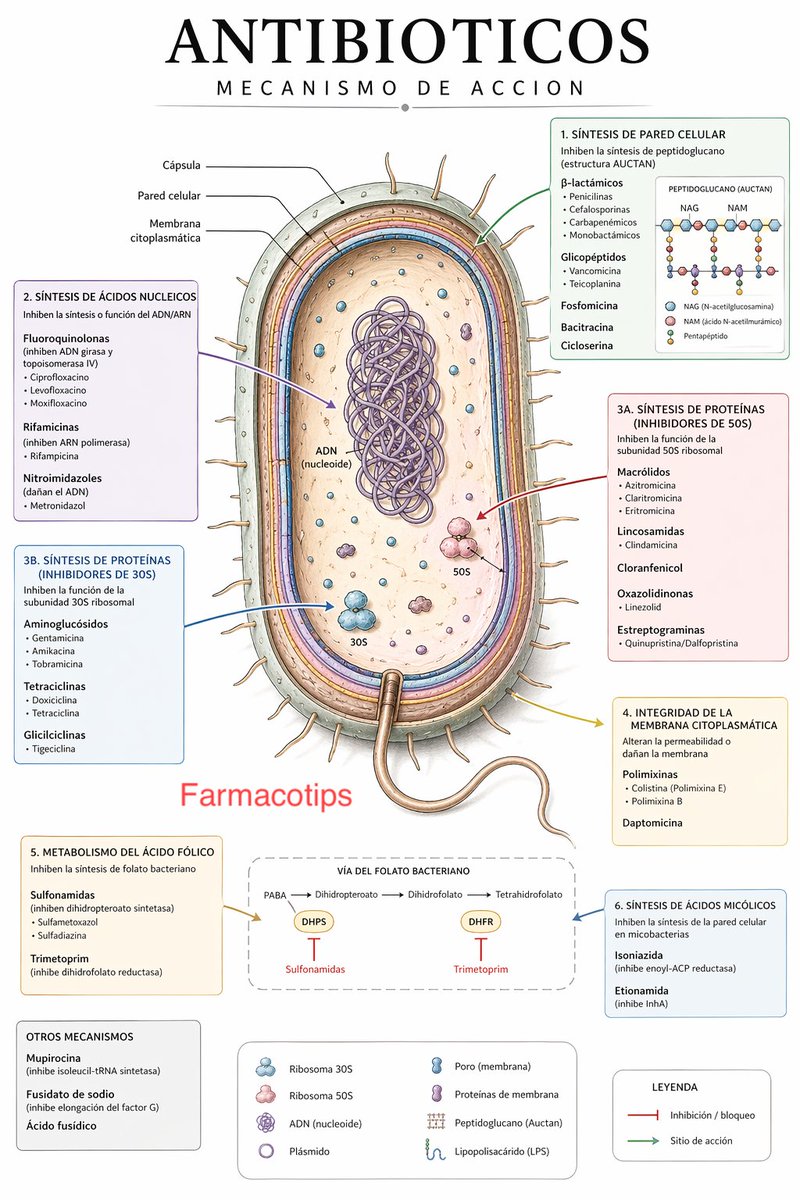
Las #Quinolonas no son todas iguales❌🟰
💊#Cipro:PSEUDOMONAS y ENTEROBACTERALES, < Gpositivos
💊#Levo:: Añade espectro Gpositivos🍇⛓️
💊#Moxi: Añade espectro ANAEROBIOS pero < pseudomonas📉🟢
💊#Dela: Añade SAMR 🍇🛡️y PSEUDOMONAS incluso algunas Pseudomonas R a otras quinolonas
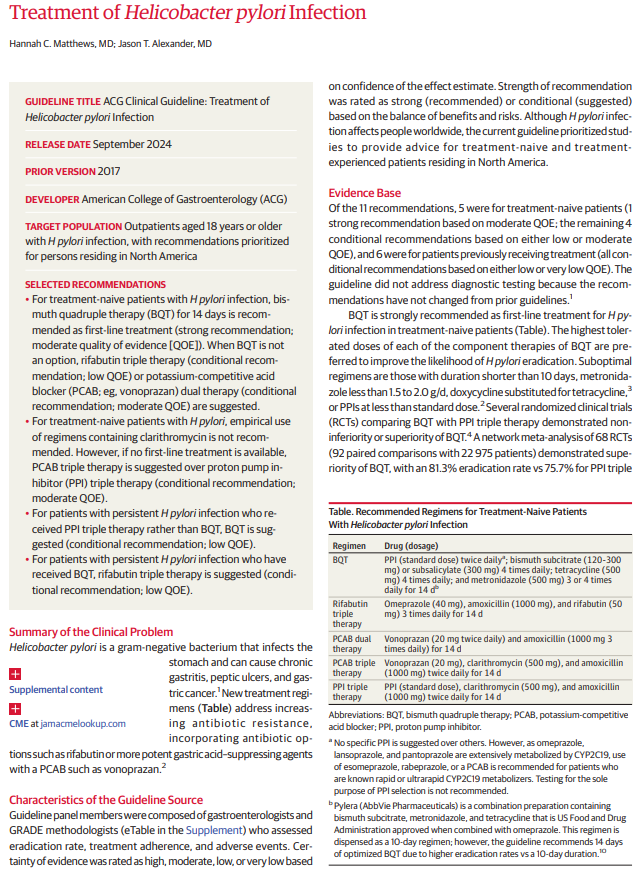
🦠🩺 Se han actualizado las guías (American College of Gastroenterology, ACG, 2024) para combatir la bacteria Helicobacter pylori, la principal causa de úlcera péptica y riesgo de cáncer de estómago. 📉
✅ Adiós a lo simple: Ya no se recomienda el uso empírico de claritromicina debido a la resistencia. 🚫💊 ✅ El nuevo estándar: La Terapia Cuádruple con Bismuto (BQT) por 14 días es ahora la primera opción recomendada. 🏥
➡️IBP / PCAB
➡️Bismuto
➡️Tetraciclina
➡️Metronidazol o tinidazol
✅ Entran en juego los PCABs (como el vonoprazan), una alternativa más potente a los clásicos protectores (IBP). ⚡
✅ Persistencia: Si el primer tratamiento falla, la terapia con rifabutina surge como una alternativa clave. 🔄 @SEIMC_@SEMicrobiologia
La clave es la adherencia al tratamiento de 14 días para asegurar la erradicación⏳
#HelicobacterPylori #Digestivo #Salud #Medicina #Gastritis #Gastroenterologia #SaludPublica #Eradication #Antibióticos #JAMA
👇
Treatment of Helicobacter pylori Infection https://t.co/nbEfvAVavQ
🧵 Manejo de Micobacterias No Tuberculosas (EP-MNT) Refractarias [Consenso 2026]
1/6 La falla terapéutica se define ahora como la ausencia de conversión de cultivo tras 6 meses de terapia adecuada.
2/6 ¿Intensificar o Desescalar? La decisión no es solo microbiológica. Se deben pesar: edad, comorbilidades, toxicidad previa y deseo del paciente.
3/6 En MAC: Considerar ALIS o Amikacina IV + Clofazimina. Monitorear niveles de macrólidos.
4/6 En M. abscessus: Tetraciclinas de 3ra gen, doble beta-lactámicos (Ceftarolina+Imipenem) y cirugía si hay enfermedad localizada.
5/6 Soporte: No olvidar fisioterapia respiratoria, nutrición y manejo de ERGE. Son pilares del éxito.
6/6 Más detalles en nuestra infografía y en: https://t.co/uJRnp8V5Rw
🆕🔥🦠 Combination antifungal therapy for invasive aspergillosis
📊 A growing body of preclinical and clinical evidence suggests triazole–echinocandin combinations may reduce mortality — challenging monotherapy dogma.
What's your current practice?
https://t.co/krE5hnb9I8
🆕⚡Multicentre study
Comparative activity of established versus new-generation β-lactams against AmpC-hyperproducing clinical isolates of Enterobacter cloacae complex and Klebsiella aerogenes
High resistance rates were observed for piperacillin/tazobactam (up to 82.4%) and cefepime (up to 20.5%), whereas carbapenems showed variable activity
New-generation agents exhibited excellent activity, with susceptibility rates ≥99% in both species #IDXposts https://t.co/teh5tnNi1H











![abrahamalimd's tweet photo. 🧵 Manejo de Micobacterias No Tuberculosas (EP-MNT) Refractarias [Consenso 2026]
1/6 La falla terapéutica se define ahora como la ausencia de conversión de cultivo tras 6 meses de terapia adecuada.
2/6 ¿Intensificar o Desescalar? La decisión no es solo microbiológica. Se deben pesar: edad, comorbilidades, toxicidad previa y deseo del paciente.
3/6 En MAC: Considerar ALIS o Amikacina IV + Clofazimina. Monitorear niveles de macrólidos.
4/6 En M. abscessus: Tetraciclinas de 3ra gen, doble beta-lactámicos (Ceftarolina+Imipenem) y cirugía si hay enfermedad localizada.
5/6 Soporte: No olvidar fisioterapia respiratoria, nutrición y manejo de ERGE. Son pilares del éxito.
6/6 Más detalles en nuestra infografía y en: https://t.co/uJRnp8V5Rw](https://pbs.twimg.com/media/HBsYPU0WQAAPEih.jpg)


