“WHY DON’T WOMEN REPORT?!”
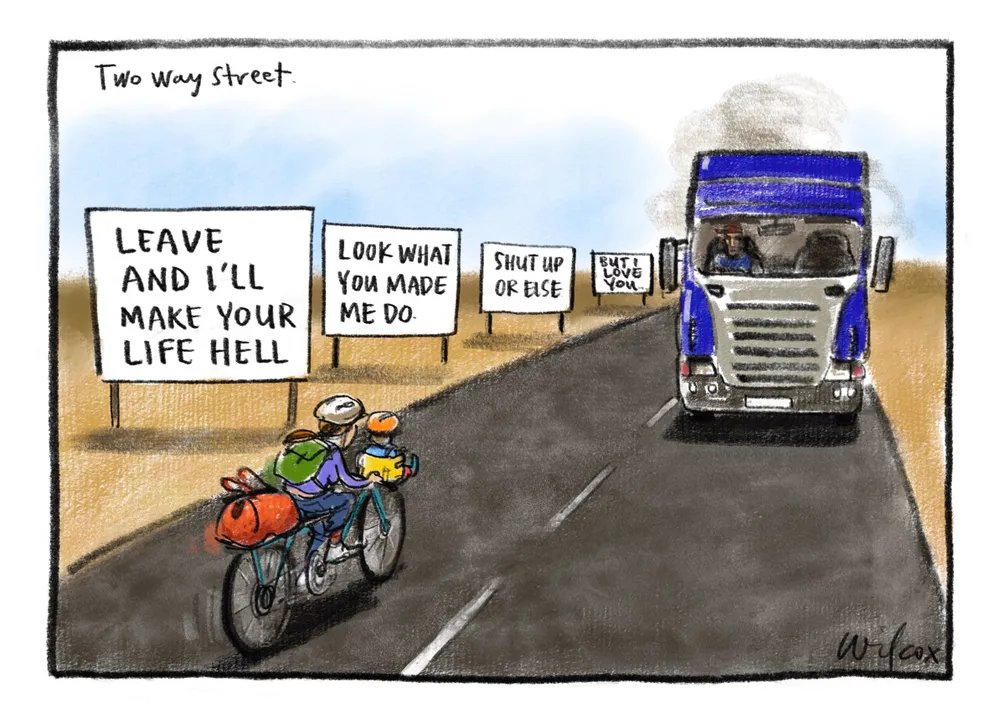
Because a young woman was drugged and gang raped at a frat house by seven men who bragged about it and zero charges were filed.
I asked Claude to rank the presidents in these tiers according to the scholarly consensus. Then I asked ChatGPT to make the image.
I did not move anyone according to my own personal preference.
In 2006, workers digging a road in Belgium unearthed the body of a soldier who had lain hidden for nearly ninety years.
Most of the battlefield dead were buried in haste, tumbled into shell holes with no time for ceremony. But not this one.
This young man had been laid to rest with unmistakable care — and when they learned who had done it, and why, it broke their hearts...
The place was Polygon Wood, near Zonnebeke, in Belgium's Flanders Fields — ground soaked in the blood of the First World War. A construction crew, breaking earth for roadworks, struck something their machines were never meant to find. Not rock. Not clay. Bones.
In this corner of Belgium, that is not as rare as you might think. More than a century after the guns fell silent, the soil around Ypres is still giving up its dead. The workers stopped at once and called the man who is summoned for exactly this: Johan Vandewalle, a Belgian battlefield archaeologist who has spent his life recovering the fallen of the Great War, and who runs a little café and museum nearby.
Over the following days, Vandewalle and his team carefully uncovered not one soldier but five, all young Australians, buried together where they fell. They would come to be known as the "Zonnebeke Five." Four of the bodies had suffered badly in the earth. But the fifth was different.
The fifth soldier had been wrapped, with great care, in a canvas groundsheet — the standard-issue sheet a soldier used for shelter. The wrapping had protected him so well that his remains, even his boots, were remarkably intact after ninety years. And there was one detail that stopped the excavators in their tracks.
His arms had been folded gently across his chest.
No one does that in the frenzy of battle unless they love the man they are burying. This was not a body dumped in a crater. This was someone laid to rest, tenderly, by a hand that grieved. Someone had knelt in that hell and taken the time to do it right.
The question was: who was he, and who had buried him with such love?
In time, several of the Zonnebeke Five were identified through DNA, matched to living relatives back in Australia. The soldier in the groundsheet was Private John Hunter — known to his family as Jack — of the 49th Battalion, Australian Infantry, a young man from the town of Nanango in Queensland. And when his family's story was traced, through the memories passed down by his niece, the truth of that tender grave finally emerged.
Jack Hunter had not gone to war alone. He had a brother.
His name was James Hunter — Jim — and he was Jack's younger brother. The two of them, boys from the same Queensland home, had enlisted and ended up serving side by side in the very same battalion, in one of the most terrible battles of the most terrible war the world had ever known.
To understand what Jim did, you have to understand where he did it.
The fighting around Polygon Wood in September of 1917 was part of the wider campaign history remembers as Passchendaele — a byword for horror even by the standards of the First World War. The land had been shelled into oblivion. Trees were reduced to blackened splinters. The earth itself had been churned into a bottomless soup of mud and water, so deep that wounded men sometimes drowned in it before anyone could reach them.
It was into this that the Hunter brothers advanced, on the 26th of September, 1917.
Somewhere in that chaos of shellfire and machine guns, Jack was hit. And his younger brother Jim reached him.
Jack died there, in Jim's arms.
What Jim did next is the reason we tell this story at all. He was in the middle of an active battlefield. Shells were still falling. Another attack could come at any moment. Every instinct of survival screamed at him to move, to take cover, to save himself. Instead, Jim stayed with his brother's body — and he buried him.
He wrapped Jack in his groundsheet. He folded Jack's arms across his chest, the way you would lay out a loved one for a proper funeral. He dug a grave as best he could in that waterlogged ground, and he laid his brother in it, and he did his utmost to mark the spot so that he could one day come back and find him.
But Passchendaele did not let anything stay marked. The next barrage reshaped the ground. The rains filled the craters. The mud closed over everything. And by the time the battle had moved on, the little grave was gone, swallowed by the churned and ruined earth.
Jim Hunter survived the war. He went back, afterward, and searched for the place where he had buried his brother — but it had vanished, erased along with the whole shattered landscape. In time, he returned home to Australia. He carried Jack with him for the rest of his life, always believing, always hoping, that one day the two of them would somehow be reunited.
He died without ever finding his brother's grave. He never knew that anyone ever would.
And then, decades after Jim was gone, a road crew broke ground near Polygon Wood — and Jack came back into the light at last, still wrapped in the groundsheet his brother had folded around him, his arms still crossed where his brother's hands had placed them.
In 2007, Private John "Jack" Hunter was reburied with full military honours at the Buttes New British Cemetery, only a short distance from where he had fallen. He has a proper headstone now, carved with his name. It reads: "Beloved son of Harry and Emily Hunter, Nanango, QLD. At rest after being lost for 90 years." And his name was removed from the great Menin Gate memorial to the missing — because he was no longer missing. He had been found.
Johan Vandewalle could not let the story rest there. So moved was he by what one brother had done for another that he set out to build a permanent memorial to it — and to all the brothers who fought and suffered and died side by side in that war. In the years that followed, an Australian sculptor named Louis Laumen created the centrepiece: a life-size bronze of Jim cradling his dying brother Jack in his arms.
That memorial stands in Zonnebeke today, and people travel from Australia and around the world to see it. They stand before the two bronze brothers, and they read the story, and very often they weep — because the loss of seventeen million souls in that war is a number too vast for the human heart to hold, but one brother refusing to leave another is something we understand completely.
Jack and Jim Hunter were not statistics. They were two boys from a Queensland town who grew up together, and went to war together, and in the end lay only a groundsheet apart across ninety years.
One brother would not leave the other behind. And in the end, neither did history.
Had you ever heard the story of the Hunter brothers? Tell us below. And here's one for today: is there a story of devotion between brothers or sisters in your own family that has stayed with you all your life?
He struggled to get through his eulogy for Lindsey Graham--which he was clearly seeing for the first time--and openly disagreed with it while reading, insisting that not everyone liked Mr. Graham.
While walking by it, he casually rapped his knuckles on Mr. Graham's casket like a waiter who's just taken your order on fifty-cent wings night at TGI Fridays.
He fell asleep during the other eulogies for Mr. Graham, five feet away in the box, even as the other eulogists took the opportunity to kiss Trump's ass while he nodded off.
Just think, Trump loyalists: this is as good as it gets for how you'll be remembered someday. This is the peak.