Under PM Harper...
Q1 2015: -0.8% annualized GDP
Q2 2015: -0.5% annualized GDP
Bank of Canada: "Yes, Canada meets the technical definition of a recession."
Under PM Carney...
Q4 2025: -1.0% annualized GDP
Q1 2026: -0.1% annualized GDP
Bank of Canada: "Two negative quarters of GDP alone should not be used to define the state of the economy."
So let me get this straight...
Canada is in a recession—the only G7 country currently in one. Unemployment is up. Inflation is rising. Food insecurity is at a record high.
Yet the highest proportion of Canadians since 2017 now say the country is on the right track.
That's either a remarkable display of optimism—or a sign that many Canadians aren't getting the full economic story from the news they consume.
The Grand Ransom™️has now been signed: a reduced & deferred carbon tax to $140/t by 2040, and the promise of a new pipeline that "is tied to Pathways", a $30BN project that is irrelevant and enormously expensive. No other country in the world is doing this to themselves, just 🇨🇦.
Last year, Canada’s three largest grocers made about $4.7 billion in adjusted profits combined. Meanwhile, an estimated $10 billion worth of food and merchandise was stolen from grocery stores across the country.
You do the math on who’s ultimately paying for this.
Why do politicians keep going back to potash?
- Potash is well valued vs grains
- Potash prices have only moved $45 since the start of the year ($35 in the last few weeks)
- We have the largest potash producer/exporter in the world to our north
Potash shouldn't be the focus.
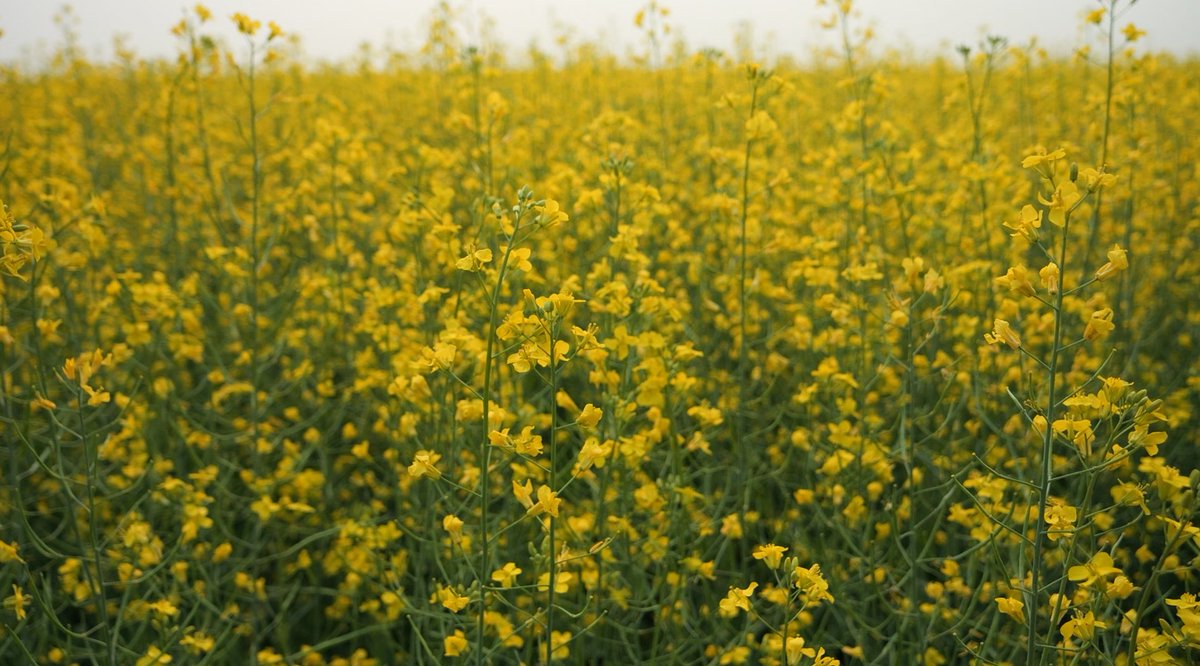
I need help! Looking for someone who has seeded canola in the Calgary area and would be willing to let me use the field as a Canola School filming location on May 21, any ideas?
Rob Carrick, a columnist for the Globe and Mail, supports the idea of opening government-owned grocery stores on the premise that “we’ve tried everything else and it didn’t work.”
Well, have we?
Interprovincial trade barriers are still there. Supply management is still there. The industrial carbon tax is still there. Our poor logistics are still there. Retail price distortions are still there. The overwhelming red tape is still there.
Tried everything? Not quite. https://t.co/bs3wS3dAbo
Someone in Manitoba was looking for Tru Count air clutches for a JD planter just the other day. 4 new ones I would throw in a box and ship if it helps.
Anyone have a flatdeck or tanker truck for sale? Ideally a triaxle. Last minute down a class one driver for this season so looking for options. TIA #agX#agtwitter retweets appreciated.
As expected, West Texas Intermediate crude oil closed today above $104 U.S. per barrel.
On the eve of the industrial carbon tax rising to $110 per tonne, this silent and largely invisible tax remains just opaque enough for Ottawa to deflect responsibility—while it continues to feed inflation, including on food.
"Government-run grocery stores may be one of the “best worst” ideas for improving food affordability. The concept is appealing to many, largely because the complexity of food distribution is often underestimated. But the reality is far more intricate than it appears. Still, if Toronto moves forward with this initiative, it could serve as a valuable case study—one that helps ground future debates in evidence rather than assumptions."
The Globe says “out of nowhere, Canada is now poorer than Alabama.”
It didn’t happen out of nowhere.
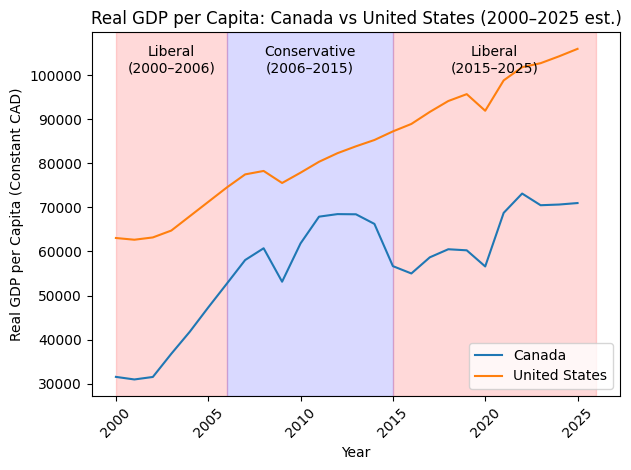
For nearly a decade, real GDP per capita has stagnated while population growth surged. Productivity stalled. Investment weakened.
Alabama didn’t suddenly boom — the U.S. simply grew faster.
If we want more competition in the food industry, this is not the path to be on. Weak productivity and declining per-capita income shrink domestic investment capacity and deter capital.
GDP per capita is living standards. This should be a wake-up call — not a partisan debate.
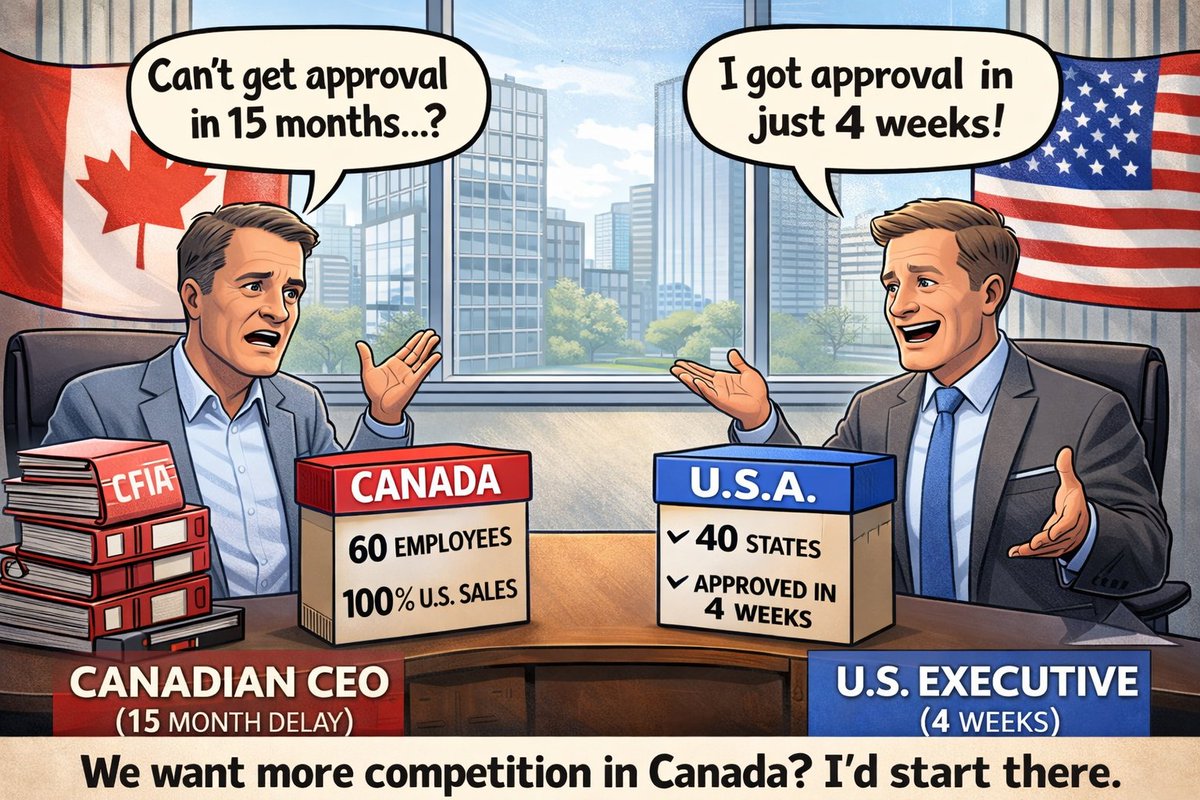
Met with the CEO of a great Canadian food company today — 60 employees, double-digit growth.
Yet 100% of its business is now in the U.S.
Why? Because it can’t get CFIA approval for its products after 15 months. In the U.S., 40 states approved those same products in four weeks.
If we truly want more competition in Canada, that’s where we should start.
We need your help. Our Ag Days records indicate that there was a person with the last name VanWellengham in the initial group of board members. BUT we have no first name. Can you help us fill in the blank? Come on internet - do your thing!
This is truly unbelievable. Czech’s go-ahead goal in the third period, they had six guys on the ice in the D zone, in the O-zone and finally on the celly