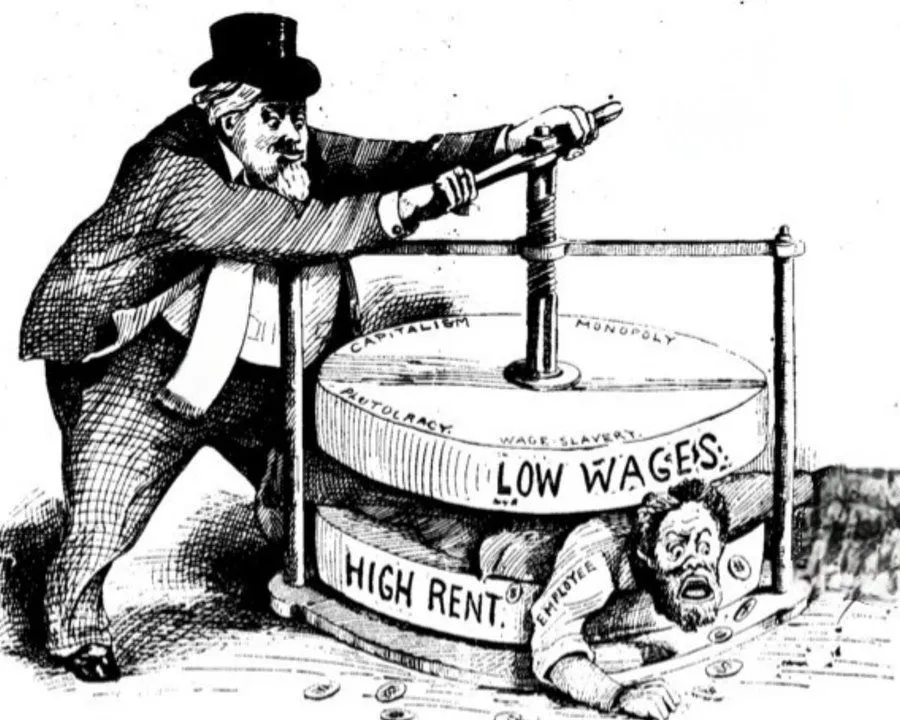
Hopeful for a fairer, more intelligent and caring politics and economics. Central to this is a secure home for all and the support to maintain that home.
I know just how hard it is to both hold and leave office, not just on those who held it but all those close to them too, as Keir rightly acknowledged today. He spoke with dignity and duty, and my thoughts are with him and his family.
I was proud to serve as Deputy as he led our party into government. History will remember not just the challenges he faced but the achievements he oversaw. I pay tribute to his record of dedicated public service.
His premiership saw us legislate new rights for working people, renters and leaseholders, invest in a generational boost to social housing, devolve powers to communities, the creation of Great British Energy and Great British Railways, action to tackle child poverty and so much more. This is a record of which any Labour government could be proud.
Labour was elected to change Britain, and as a new chapter begins, we must now redouble our efforts to deliver for working people.
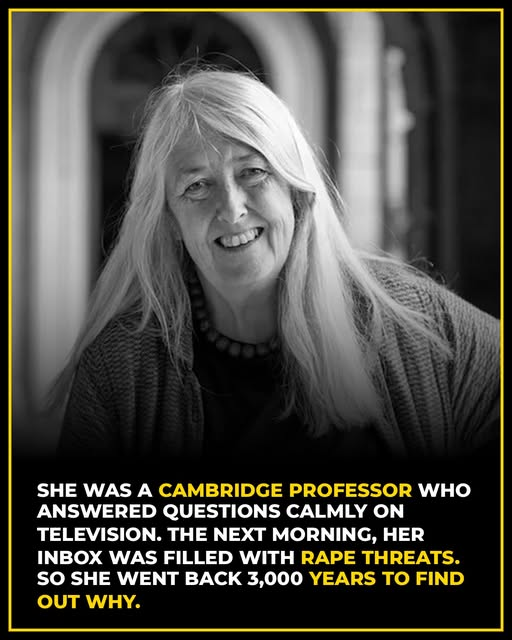
She was 57 years old.
White hair. No carefully managed image. No media training designed to make her more palatable. Just thirty years of accumulated knowledge and the calm, unhurried authority of a woman who had spent her life mastering her subject.
She sat on a BBC panel, answered questions about immigration and politics, cited evidence, made arguments — and then went home.
The next morning, her inbox looked like a crime scene.
Her name is Mary Beard — Cambridge professor, classicist, one of the most respected scholars of ancient Rome and Western civilisation alive. And the internet had decided that a woman speaking with quiet authority on television needed to be punished for it.
The messages were not criticism. They were not debate. They were rape threats. Death threats. Coordinated campaigns of personal destruction targeting her appearance, her age, her voice — anything that could be used to remind her that spaces like the one she had just occupied were not meant for her.
Most people would have gone quiet.
Mary Beard went further in.
She did what scholars do when they find a pattern that disturbs them: she followed it backward. Through decades. Through centuries. Through millennia. All the way back to some of the oldest texts in Western civilisation.
And she found it had always been there.
In Homer's Odyssey — one of the foundational works of Western literature, nearly three thousand years old — there is a scene that most readers pass over without registering its quiet violence. Penelope comes downstairs and asks the poet to sing a different song. Her own son, Telemachus, cuts her off. He orders her back to her room and tells her plainly: speech is the business of men.
She goes.
Mary Beard read that scene and recognized it immediately.
Not as ancient history. As a pattern.
In ancient Rome, women who dared to speak in public were not described as orators or thinkers. They were described as noise — disorderly sound, something that did not deserve to be called language or argument. Their voices were not speech. Their thoughts were not thoughts.
In the medieval world, women who claimed public authority were labeled as witches.
Elizabeth I — Queen of England, ruler of a nation — had to rhetorically reshape herself into something masculine just to be taken seriously as the leader of her own country.
The silencing of women who speak with authority was not invented by social media. It was not a modern pathology or a cultural accident. It was built deliberately, over centuries, into the very foundations of how Western civilisation defined who gets to speak, what authority sounds like, and who is allowed to take up space in public life.
Mary Beard had found something important.
In 2017, she published Women & Power: A Manifesto — short enough to read in an afternoon, substantial enough to reframe everything you thought you understood about why this keeps happening.
Her argument was precise and devastating.
The problem is not that women lack the ability to lead. The problem is that the model of leadership itself — the template for what public authority looks, sounds, and feels like — was built by men over centuries and has never been redesigned. When a woman enters public life and doesn't fit that template, she is not failing. The template was never built for her. It was built specifically to exclude her, and it has been doing exactly that, efficiently and continuously, for three thousand years.
The solution, Beard argued, is not to teach women to perform power the way men have always performed it. The solution is to dismantle and rebuild the very concept of what power is allowed to look like.
She kept teaching. She kept writing. She kept appearing on television — white-haired, unhurried, carrying her decades of authority without performing it, without packaging it for comfort, without apologizing for it.
The threats continued.
But other messages began arriving too. Letters from women and girls who had spent their entire lives feeling that every door was slightly too narrow, every table slightly too high, every room slightly reluctant to make space for them. Women who had spent years wondering what was wrong with them — why they couldn't quite fit, couldn't quite belong, couldn't quite be taken seriously no matter how much they knew or how hard they worked.
They read the book and understood, perhaps for the first time, that nothing had ever been wrong with them.
The room had been designed without them in mind.
That is not a personal failing.
That is a three-thousand-year-old architectural decision.
And one Cambridge professor with white hair and a calm voice — who refused to go quiet when the internet told her to — spent her career documenting it, naming it, and handing that knowledge to everyone who needed to hear it.
Telemachus told Penelope that speech was the business of men.
He was wrong then.
He is still wrong now.
And Mary Beard has three thousand years of evidence to prove it.
via The Inspireist
#FeministFriday #HERstory
The government are cowards.
They fight pensioners, disabled people and asylum seekers - because they’re too scared to fight the powerful.
Spot on from @zackpolanski
The trees were talking. And no one had been listening. For decades, foresters believed trees were competitors—silent giants fighting for sunlight, water, and space. Cut down the weak ones, they said, and the strong would thrive. But Dr. Suzanne Simard, a Canadian forest ecologist, suspected something else was happening beneath the soil. So she did an experiment that would change how we understand forests—and life itself.She discovered that trees aren't isolated individuals. They're part of a vast, intelligent, underground network—a "wood wide web" where they share resources, warn each other of danger, and care for their young.The forest, it turns out, isn't a battlefield. It's a community.Suzanne Simard grew up in the forests of British Columbia, Canada. Her family were loggers. She spent her childhood among towering trees, watching them fall and new ones planted in their place.She became a forester herself, working for the logging industry in the 1980s. But she noticed something disturbing: when forests were clear-cut and replanted with a single species—usually Douglas fir—the new trees struggled to survive.Foresters blamed the birch trees growing nearby. "They're competing for resources," they said. "Cut them down so the firs can grow."But Suzanne didn't think that made sense. In natural forests, birch and fir grew side by side, thriving together. Why would they compete in replanted forests but not in natural ones?So she designed an experiment to find out. In the early 1990s, Suzanne planted birch and fir seedlings in a forest plot. She covered some with plastic bags to isolate them from each other. Others, she left uncovered.Then she did something radical: she injected tiny amounts of radioactive carbon into the trees—different isotopes for birch and fir—so she could track where the carbon went.If the trees were truly isolated competitors, the carbon would stay inside each tree.But if they were connected somehow, the carbon would move between them.Suzanne waited. Then she used a Geiger counter to measure where the radioactive carbon had traveled.The results were stunning.The carbon didn't stay in one tree. It moved. From birch to fir. From fir to birch. Through the soil. Through their roots.But not directly. The trees were connected by mycorrhizal fungi—thread-like organisms that attach to tree roots and extend for miles underground.The fungi act as a living network, linking trees together. In exchange for sugars the trees produce through photosynthesis, the fungi provide trees with water and nutrients from deep in the soil.But Suzanne discovered something even more remarkable: the fungi weren't just passively transferring nutrients. The trees were actively sharing resources with each other. In summer, when birch trees had full leaves and were photosynthesizing, they sent carbon to the fir trees, which were shaded and struggling. In fall, when birch leaves fell and they could no longer photosynthesize, the fir trees—still green—sent carbon back to the birch to help them survive the winter.The trees were cooperating. Helping each other. Balancing the ecosystem.Suzanne called these networks "mycorrhizal networks"—and the largest, oldest trees in the forest became known as "mother trees" or "hub trees."These mother trees act as hubs in the network, connecting hundreds of younger trees. They send nutrients to struggling saplings. They share information about drought, disease, and insect attacks through chemical signals.When a mother tree is cut down, the entire network weakens. Younger trees lose their support system.Suzanne's research showed that clear-cutting forests—removing all trees and replanting a single species—destroys these networks. The new trees are isolated, vulnerable, and far less resilient.Her work was revolutionary—and controversial.Logging companies resisted her findings. Some scientists were skeptical. The idea that trees "communicate" and "help each other" sounded too anthropomorphic, too sentimental.
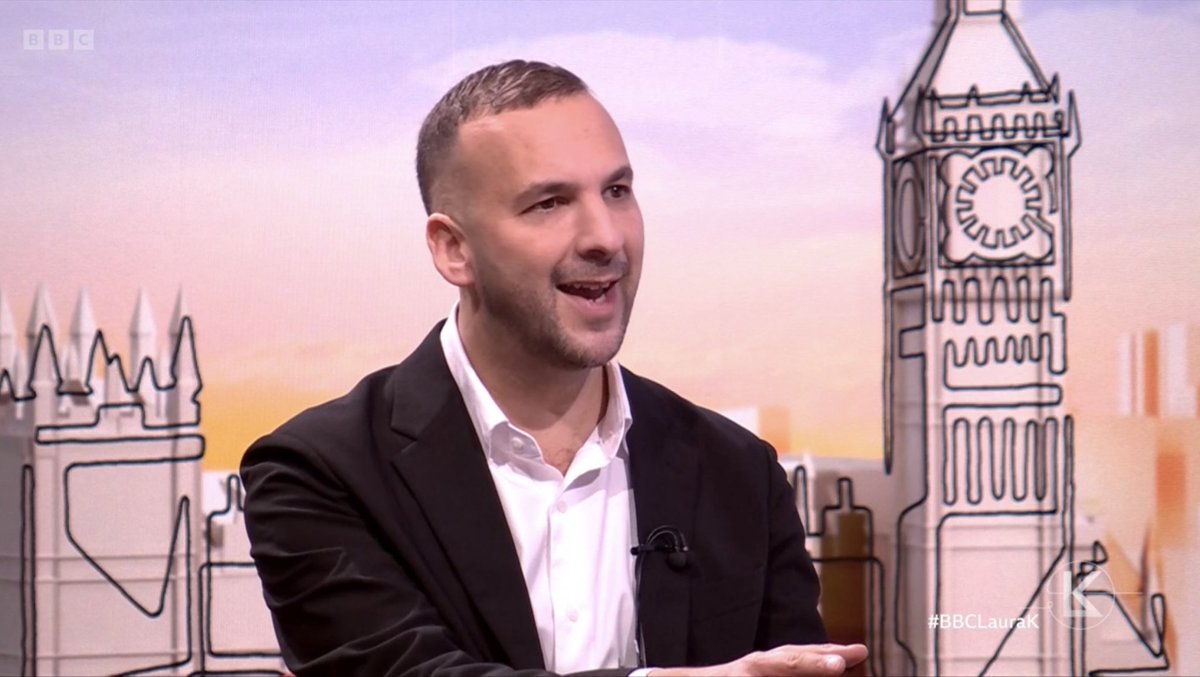
BREAKING NEWS: @ZackPolanski announces on #bbclaurak this morning that @TheGreenParty has overtaken the Tories in membership numbers to become the third largest party in the country.
There has been an 80% increase in membership numbers since Zack was elected Leader last month.
First words from Tadhg Hickey as he returns home to Ireland after being kidnapped and illegally detained by the occupying forces. We pray for the release of all Palestinian Men, Women and Children being illegally detained.
"You should never overestimate the extent to which the BBC changed this country by giving endless airtime to Nigel Farage, other far right extremists and the Tufton Street junktanks, while shutting out progressive voices."
– George Monbiot