@JesseOlson Hey @JesseOlson what do you mean with ETF low? How high are the probabilities in your thoughts that $BTC is really coming down to that area?!
I would say bottom area is around Sep/Oct this year?! Your thoughts are similar right?
@bmsquamtum @AltcoinDailyio Super cool, however the price is still falling… seems those buys doesn’t support anymore… what if Saylor stops buying more, or worse if he would need to sell some BTC?! 🫨😵💫
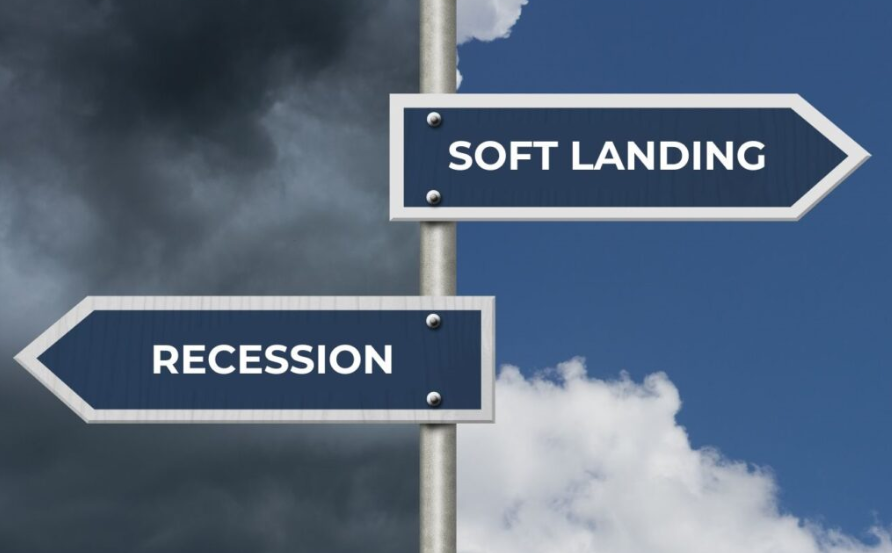
Recession or Soft Landing?
Technical Definition of a Recession and Analysis of Economic Indicators
The technical definition of a recession is defined as a significant slowdown or contraction in the growth of an economy. A recession is typically recognized when a country’s gross domestic product (GDP) experiences a decline for at least two consecutive quarters. However, this technical definition is no longer sufficient on its own, as a broader range of economic indicators is now used to determine a recession.
Key Indicators of a Recession:
GDP (Gross Domestic Product)
Unemployment Rate
Wages
Industrial Production
Consumer Spending, Retail Sales
Deflation
Corporate Profits
Let’s now examine the current state of these indicators:
US GDP Q1 24: 1.4%, Q2 24: 3% was reported. It grew in this interest rate environment! The Atlanta FED's GDPNow model estimate for real GDP growth (seasonally adjusted annual rate) in the third quarter of 2024 is 2.5 percent as of September 9, up from 2.1 percent on September 4.
Employment Data
The August non-farm payroll came in at 142,000, below expectations. Yes, the cooling in employment is very evident, but on the bright side, it shows that the labor market is still resilient. The unemployment rate has fallen from 4.3% to 4.2%, and there is no clear sign of a significant slowdown in job creation. The alarming factor is that the Sahm Rule is currently at 0.57.
Wage Growth
In August, average hourly earnings increased by 4%. This rate indicates that wages are rising faster than inflation. Continuous wage increases contribute to employees having more disposable income and, consequently, to an increase in consumer confidence.
Industrial Production
Manufacturing PMI is at 47.2%, indicating that the manufacturing sector is currently in decline. However, the rate of contraction seems to be slowing down, and some positive signals, such as inventory increases, are present. Federal policies and election uncertainties are dampening companies' appetite for investment. There is an expectation that orders may pick up again after the election, which shows potential for future recovery.
Services PMI is at 51.5%, indicating that the sector continues to grow, albeit slightly. The expansion in the services sector marked its 48th consecutive month of growth in August and the sixth expansion out of eight months in 2024.
• The Business Activity Index showed continued expansion at 53.3%, although there was a slight decrease compared to July. However, overall, sector activities are trending toward expansion.
• The New Orders Index continued to grow at 53%, indicating that demand in the sector is slowly recovering.
• The Employment Index showed continued growth at 50.2%, although there are signs of slowing compared to the previous month. Slow employment growth suggests that companies are slowing hiring somewhat due to economic uncertainties.
• The Supplier Deliveries Index is at 49.6%, signaling that supplier deliveries are speeding up. While there is improvement in the supply chain, challenges persist in certain sectors.
Consumer Spending
Consumer spending, which makes up about 70% of the US economy, is a critical area. Personal spending was reported at 0.5% in July, while retail sales were reported at 2.7%. This indicates that consumers are confident in their purchasing power and that economic activity remains vibrant.
Job Security
In the week ending August 31, 2024, jobless claims in the US were reported at 227,000, a decrease of 5,000 from the previous week’s revised level. Jobless claims have decreased in recent weeks, indicating that fewer people are losing their jobs. In addition, the decline in bankruptcy filings is another factor reinforcing economic stability.
Corporate Profits
Corporate profits have reached record levels, indicating that companies are performing well.
BONUS:
NBER-based Recession Indicators in the US during the Peak to Trough period are not currently signaling a recession.
Conclusion
Based on the indicators mentioned above, the US economy appears well-suited to continue growing in the near term without the threat of a recession. Key indicators such as wage increases, job security, strong consumer spending, and rising corporate profits point to sustainable economic expansion. The expected GDP growth also reinforces this optimistic outlook, drawing me to the conclusion that the economy is in a soft-landing phase rather than heading for a sudden downturn.
The only issue is in employment, and the Fed is saying that if we see a break, we will take swift and necessary action. Since inflation is no longer a concern, the primary focus now is on employment.
In my view, this positive outlook is based on macroeconomic data, which currently contradicts the recession danger predicted by some economists after the inverted yield curve. However, it is important to closely monitor economic indicators to see what the outcome will ultimately be.
I would appreciate it if you like and repost this article as a recognition of the effort I put into preparing it. If you're interested in following the market closely and making money on more technical and detailed matters, join https://t.co/k01vMZY1Jt
@fabioandreatta@julianhosp There is no evidence that MicroStrategy ($MSTR) should be paying taxes on unrealized gains from its Bitcoin holdings. Current U.S. tax law does not require individuals or corporations to pay taxes on unrealized capital gains.
https://t.co/VUZGMQBbE4