Dear tertiary Students,
I am pleased to inform you all of the Students Entrepreneurship and Enterprise Development Programme which will provide training, mentorship, access to networking opportunities and funding to student entrepreneurs.
If you an entrepreneur in our tertiary institutions, this is a golden opportunity to launch, or upscale your business.
We are implementing this initiative in partnership with the National Union of Ghana Students, National Service Authority and the Tertiary Institutions Innovation Hubs.
At NEIP, we remain committed to building the next set of generational entrepreneurs.
I sincerely want to thank H.E. John Dramani Mahama for fulfilling the promise to reform legal education in Ghana.
For many young people who dream of becoming lawyers, this means a lot. It gives hope to students who have struggled with the challenges and limitations within the legal education system over the years.
Keeping a promise like this shows good leadership, commitment, and a willingness to listen to the concerns of ordinary people. It is always encouraging when leaders not only speak about change but actually take steps to make it happen.
This reform is a positive step forward for legal education and for the future of many young Ghanaians.
Thank you, Your Excellency, for listening and acting!
Breaking News!!!
1. It gives me the greatest pleasure to inform you that, just now, I joined the Clerk, the AG, the Chief of Staff, the Finance Minister, Dr. Valerie Sawyerr, Hon. Marietta Brew to witness his H.E John Dramani Mahama, give his assent to the new Legal Education Act, 2026.
2. This watershed legislation widens the opportunity for many to have access to professional legal education in Ghana unlike before.
3. What’s critical to note is that, standards have been tightened under this new law ensuring that quality is not sacrificed.
4. According to my able AG, accreditation measures would be put in place now for a successful implementation of the new law.
5. What a momentous day this is for all Law Students home & abroad!!!!!
6. 8yrs of a tough fight has eventually been won.
Spiritus Invictus
Breaking News!!!
1. It gives me the greatest pleasure to inform you that, just now, I joined the Clerk, the AG, the Chief of Staff, the Finance Minister, Dr. Valerie Sawyerr, Hon. Marietta Brew to witness his H.E John Dramani Mahama, give his assent to the new Legal Education Act, 2026.
2. This watershed legislation widens the opportunity for many to have access to professional legal education in Ghana unlike before.
3. What’s critical to note is that, standards have been tightened under this new law ensuring that quality is not sacrificed.
4. According to my able AG, accreditation measures would be put in place now for a successful implementation of the new law.
5. What a momentous day this is for all Law Students home & abroad!!!!!
6. 8yrs of a tough fight has eventually been won.
Spiritus Invictus
Yesterday, NUGS engaged the Rent Control Department on the growing concerns regarding the arbitrary increase in hostel fees without adherence to the provisions of the Rent Act, as well as the unlawful treatment of student tenants by some property owners.
Among other key issues, we discussed the need for stricter regulatory oversight, tenant protection, and enforcement mechanisms to ensure compliance with existing laws. I am particularly encouraged by the readiness of the Rent Commissioner to take decisive action on these matters.
NUGS will, in the coming days, officially present a petition to the Rent Control Department to trigger the strict enforcement of the law and ensure that property owners are held accountable, thereby preventing arbitrary fee increases and safeguarding the rights of student tenants.
#nugs
#StudentVoice
#YouthInGovernance
To cushion Ghanaians from global fuel price increases, Gov’t is absorbing GH₵2.00/litre on diesel and GH₵0.36/litre on petrol.
#AbanPapaAba#GhanaFirst#PuttingYouFirst
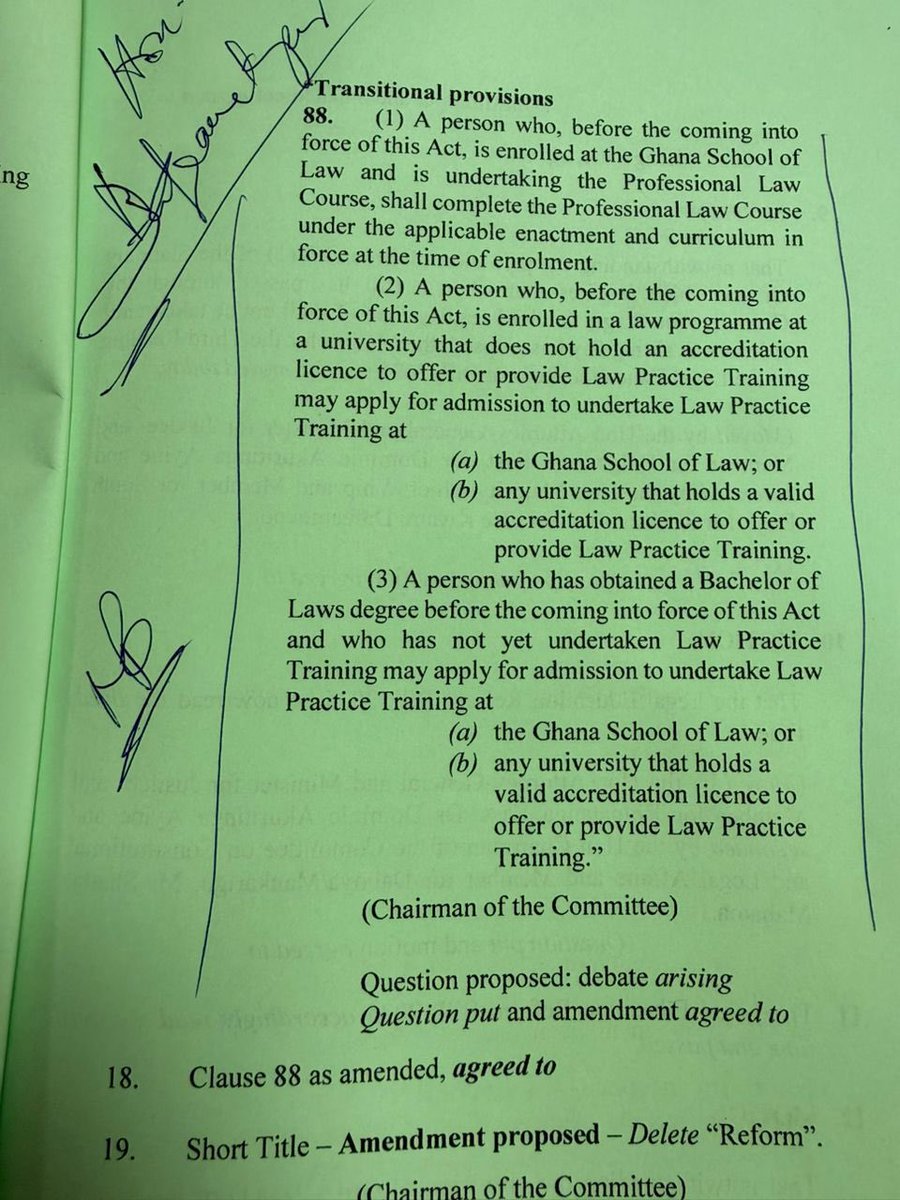
The Transitional Provisions in Section 88(3) of the new Legal Education Reform Act & Matters Arising:
——————————————-
1. The Law & its Effect
Section 88(3) of the new Legal Education Reform Act sets up a transitional path for students presently in institutions prior to the coming into force of the new law.
The Sec 88 provision confers a clear legal rights exercisable by students to apply for Law the Practice Training Course (LPT) at either:
a) Ghana School of Law; or
b) any university accredited to offer the LPT programme.
The purpose of this provision is to secure eligibility for current students whilst the new legal restructuring mechanisms are triggered for professional legal training.
2. The fate of Law Entrance Examinations under the new law
When the Act is assented to without more, the spectre of perennial entrance examination to Law School is a goner. Finito. Capish
3. Accreditation
The accreditation regime is to be administered by the newly established Council for Legal Education and Training & GTEC.
The framework requires that only universities that meet prescribed infrastructure, faculty, and training standards may be accredited to provide the LPT.
From where I sit, the likely candidates may be:
i. University of Ghana
ii. KNUST
iii. UCC
iv. UPSA
v. GIMPA
vi. UDS
vii. Central
viii. Mountcrest
ix. Zenith College
x. Wisconsin
4. Admissions
The likely scenario would be that, some accredited universities are likely to favour:
i. their present LLB Candidates; and
ii. past graduates or alumni with LLB
5. Postgraduate LLB due diligence
Postgraduate LLB holders must take deliberate steps to:
(a) verify institutional preparedness to confirm whether or not your university is to be accredited to offer LPT.
(c) Application process Preparedness for:
i. Ghana School of Law; or
ii. any accredited university opened to external candidates.
Prospective applicants must ready certified transcripts, certificates, and any required supporting documentations.
6. Graduates of Non-Accredited Schools
Scenario 1: Where an Applicants institution is not accredited: then the Ghana School of Law becomes the primary and most reliable pathway to pursuing the LPT
Scenario 2: where an Applicant’s institution is accredited, then admission is likely to be straightforward.
7. Life after Legal Reforms
Admission will remain competitive to any accredited
university.
8. Concluding Advisory Position
Section 88(3) creates a lawful path to legal education within the fresh framework.
Note: You cannot become a lawyer without Examinations. Law is the leveller. 👇
Breaking News:
1. Parliament of Ghana has just passed the ground breaking LEGAL EDUCATION REFORM BILL, 2026.
2. This is a product of nearly 10yrs of persistent and consistent advocacy on my part which my Party bought into and made it a major campaign promise.
3. When I began, the naysayers sayers said it wasn’t possible.
4. The Reform is pervasive. The Bar too has been reformed such that we no longer have a single group of professional lawyers.
5. Today, we have the GHANA LAW SOCIETY with huge membership at the Bar.
6. I’m a very happy man today. I wish all prospective Law students the best of luck.
7. Reform is always Good. This is a new dawn for our legal profession in Ghana.
Here we go……….
I was glad to receive the NUGS President-elect in my office yesterday. I'm pleased that he was with me in my office before he won the election, and I know he will deliver.
Q: I lost my Ghana Card; how do I replace it?
A: First, report it to any police station and request a police report. Submit your police report to any of our offices and request a replacement.
Q: How much would it cost to replace a missing card?
A: It costs 125 cedis at any District office and 420 at Premium centers.
1. I have been challenged by @McphelanGilbert to produce an opinion on the intriguing fight between Ghana's Communication Minister and Multichoice, a multinational PayTV operator. 🤦🏽♂️
2. The context is that the Minister wants Multichoice to reduce its DSTV prices by 30%. Multichoice is protesting. It is not clear if that is because it really CAN'T or it simply WON'T.
3. Normally, on such matters, I would have a clear position based on RESEARCH. Here, however, we don't have enough facts for serious analysis. Neither party has provided much info. What I can do is share what I know so far. In case it is useful to those who really do need to have an opinion.
4. For some reason, the Minister hasn't actually shared any kind of policy paper or even a detailed appendix along his unpublished written directive to the regulator, NCA.
5. I understand that it is one specific line of Multichoice products that he is concerned about. DSTV. This is the company's premium line, and thus the most expensive. The company also has GOTV, which is targeted at the low-end of the market for those who can't afford DSTV. The cheapest package on GOTV is less than $2 a month and the most expensive is a little above $11. Across Africa, only 14% of Multichoice's customers are on the premium segments.
6. The Minister's targeted DSTV products are priced at $5.6 a month for the cheapest all the way to $84.2 for the most premium. I'm using the Minister's FX exchange rate.
7. Every serious country nowadays grant regulators the power to act against price gouging in markets prone to monopoly power. So, it is not out of place for a Minister to intervene if he believes there is clear price gouging. However, ministerial actions must be POLICY-driven. Regulators handle the operational matters.
8. Furthermore, competition authorities would usually first launch a formal investigation. They will open a consultation phase to collect information from consumers, the companies believed to be price gouging, and even competitors and prospective competitors. Here is a list of all the documents related to one such an inquiry into PayTV operators in Britain decades ago:
https://t.co/sgpq3C1MC3
Here is a notice of a fine in a more recent case following an investigation:
https://t.co/NgJj4RMROI
Obviously, with all the information gathered in such an inquiry, one can understand the policy rationale for certain political decisions much better and them gauge if there is alignment.
9. The Minister has provided a table that appears to compare Multichoice's pricing behavior in different African countries. See attached. But it is far from complete. Let me explain why.
10. He attempts to use national populations to scope out market size. What he should be comparing are subscriber numbers. The population of a country does not define even the addressable market for a company, much less the actual customer base.
11. Multichoice says it has sold one million decoders in Ghana since inception in 1993/5. I suspect the active subscribers would thus be significantly lower than 1 million subscribers. If you consider attrition rates, we may be talking about 500,000 or less. Consider that after losing 5.5 million subscribers since 2020, Multichoice now has 14.5 million subscribers, half of which are in South Africa. Of the remaining countries, Nigeria has an almost 40% or so subscriber-share. The rest is split across 50 countries, though the majority of countries dont have formal Multichoice subsidiaries.
12. The fact that population doesn't equate subscribers is demonstrated by both Angola and Zambia being revenue drivers for the Multichoice Group, ahead of Ghana.
13. That said, the Minister does show that prices in Ghana are higher than all the other key markets. Even more than Zambia which has seen far higher price increases than Ghana in the last 2 years (and classed along with Ghana as "hyperinflationary" in Multichoice's books). An explanation is warranted.
14. To get close to determining whether price-gouging is happening and if Multichoice can afford a 30% cut in DSTV prices, first we have to ask why 30%? Why not 10% or 50%? A specific number suggests that we know what they can afford. Maybe the Minister does but none of the people I have seen commenting have shared any margin analysis.
15. For Multichoice to afford a 30% cut in revenues, its profit margin must be significantly higher than 30%. It has a group trading margin of just about 14%. Is it exceptionally profitable in Ghana? Is its Average Revenue per Subscriber in Ghana higher than elsewhere? Has that analysis been done? To whom has it been shown?
16. It is public knowledge that Multichoice's GDP contribution in Ghana (the metric it prefers to disclose because its local subsidiary does not like to publish its financials) has dropped from about $41 million a year in the 2015 - 2018 timeframe to less than $9 million a year recently. It is also public knowledge that Multichoice has been defaulting on taxes. And that for many years it reported operating losses which it then tried to offset with investing gains. In short, we have no evidence if it can AFFORD to cut prices by 30% or not. But maybe this is a negotiating gambit by the Minister.
17. Another peculiarity about Multichoice is that it is not entirely foreign-owned. In all its major subsidiary markets, it went in as a joint venture. In Ghana, the local partners are the owners of the defunct Hitech entity, the Darko family, a member of which chairs the Board. It is not surprising that the company told the Minister to forget about price cuts and focus on retaining more earnings in-country. It would be interesting to know the license fees and royalties Multichoice Ghana pays to the Group.
18. Unlike the mobile telecom industry, there is nothing like on-net advantages in the PayTV world. I.e. subscribers of one paytv operator don't call each other at lower prices to discourage porting etc. Thus, an inquiry is necessary to understand why precisely Multichoice is a monopoly or why market forces can't bring down its prices.
19. There are 4 digital pay TV providers in the market offering subscription bouquets, one of which is Multichoice's GoTV. It does not seem that GoTV or any of the 3 companies in this category has been targeted by the Minister. DSTV is placed in a license category all on its own as a "satellite subscription management service". Does it mean that the Minister's problem is with the price differentiation for that specific segment?
20. Curiously, the company most similar to Multichoice, StarTimes, a Chinese giant, doesn't operate in the same license category as DSTV. Its local partner, Mobile Zone, is classed with Homebase and K-Net in the Satellite Pay TV category.
21. Yet, Startimes also has subscription-based bouquets. The cheapest is roughly the same price as the cheapest DSTV offering but the most premium is just about 25% of what Multichoice charges for its highest-end product. The twist appears to be that the Startimes premium bouquet is full of Chinese TV offerings. Not many Ghanaians are excited about Chinese TV content yet.
22. Has Multichoice somehow found a way to corner rights for all the desirable international content like European sports and Hollywood movies? How has the government's policy to introduce digital terrestrial TV platforms dealt with the content distribution and licensing issue? Why don't Startimes and others also license from another mega-distributor other than the Multichoice Group?
23. How does streaming change the picture in all of this as smart tvs become the norm?
24. For a proper competition abuse inquiry, the Minister would need to show that Multichoice's DSTV offerings are substantially similar to those of others like Startimes but it has used abusive price techniques to build a monopoly and is now abusing its market position to overcharge.
25. Like I always say, policymaking is built on factual deliberation and analysis. Such deliberation is rarely of interest to the masses because the average citizen is too busy and occupied with bread and butter. Yet, WHAT the people want (in this case, lower PayTV prices), would always be driven/set by politics and politicians are duty-bound to respond. *HOW to respond*, on the other hand, is a policy matter. How then can we ensure that POLICY isn't done shoddily? Only if there is a critical mass of the public in the *policy community* so that they can demand POLICY (not political) accountability from duty-bearers. If that doesn't happen, then you get katanomics. 😊
26. What happens if the real situation is that Multichoice genuinely can't cut prices by 30% not that it doesn't want to? Does NCA have the power to unilaterally revoke a license based on a Minister's fiat without a full inquiry?
27. How will the Electronic Communications Tribunal view the Minister's actions in that case? What injunctive reliefs can the tribunal offer, and how will that alter the power dynamics in subsequent negotiations?
28. So many unanswered questions. But intriguing all the same.
False allegations or Justice? Here's everything you need to know about Achraf Hakimi's Rape allegations that's be trending for the past few days.
A Thread 🇲🇦
1. Ghana's National Cathedral was initially budgeted to cost $100 million.
2. The latest revised figure used by its auditors is $350 million.
3. However, with less than 10% completed, $100 million has already been spent, suggesting that the total budget would likely top $1bn.
4. Some people argue that with nearly $100m spent already (on an accrual basis), the country might just as well complete it.
5. This is the famous "sunk costs fallacy." See attached. Economists normally don't advise throwing good money after bad money in such a fashion.
6. But what if the Cathedral could make enough revenue to pay for itself as its trustees say?
7. I have addressed that issue extensively in the recent past.
Watch here: https://t.co/jb4ePPXjgx
8. The short answer is that it cannot pay for itself. You just have to look at cathedrals around the world and their financial issues to benchmark.
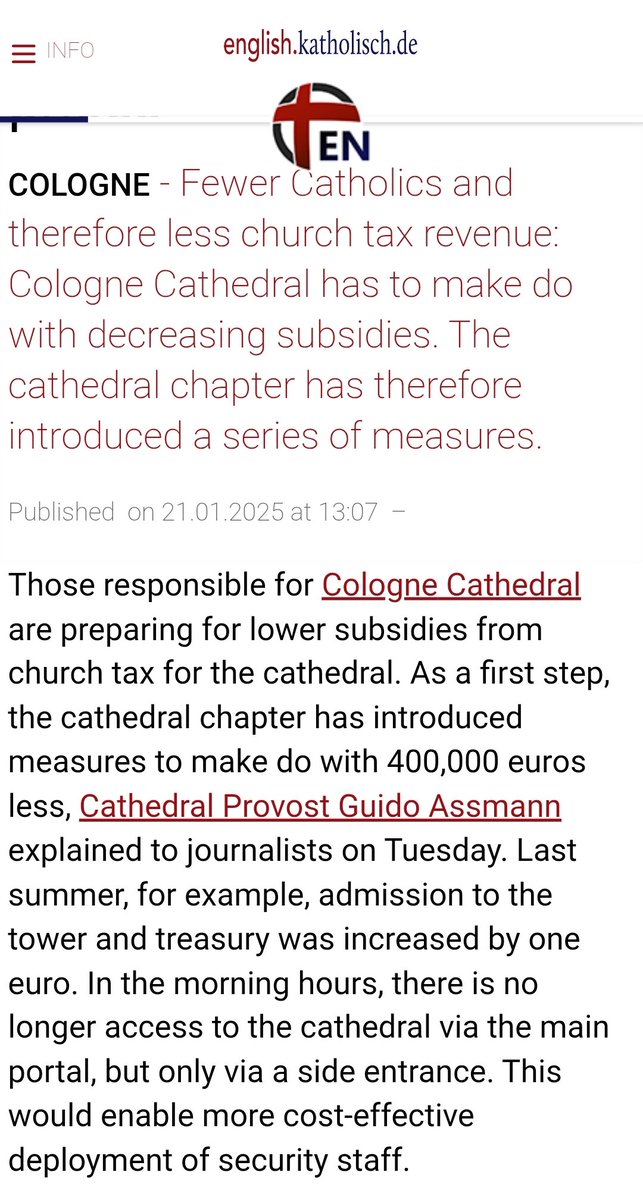
9. Cologne Cathedral, for instance, has an impressive religious pedigree. Its museum (treasury) not only houses holy relics of many important saints, such as Ursula, and fragments of the True Cross, it also hosts the Shrine of the Maggi, the proverbial "wise men" that "came from the East to worship the infant Christ." No matter how Ghana brands its Cathedral, it would simply not be able to compete with the 1000-year-old cathedrals dotted all over Christendom.
10. Cologne Cathedral receives 6 million visitors a year, more than 4x all the people who visit Ghana. Many pay to enter its museum. Yet, it is not financially self-sustaining.
11. The Christian shrine most similar to what Ghana is attempting to build is the Basilica in Yamoussoukro in Cote D'Ivoire. It barely gets 30,000 visitors a year. It is entirely funded by donations from a Polish religious order. Obviously because it is a Catholic church. Ghana's Cathedral, on the other hand, is non-denominational, probably why so few donations from Christians have come in so far.
11. Cologne Cathedral, for its part, needs 4.5 million Euros from the German Catholic Church in subsidies. Its annual maintenance costs alone exceed 10 million Euros. The Church has had to implement cost saving measures in recent years to keep the doors open.
12. In fact, without a dedicated worldwide voluntary association that donates regularly to fund Cologne Cathedral, it wouldn't be possible to maintain it.
13. All the evidence suggests, therefore, that the National Cathedral, if completed, would become another loss-making entity requiring permanent government subsidies.
14. Of course, any other project proposed to replace it must be subjected to the same rigorous cost-benefit analysis and assessed for financial sustainability.
15. There are, admittedly, certain projects that have such a high social value that permanent subsidies make sense. But the way to determine is to enhance the cost benefit analysis to capture social, and not only financial, benefits and then compare with alternative projects that also have a high social value. The total budget of a project would also always be a factor.
1. For more than a week now, we have been flooded with claims that a Deloitte audit has "cleared" Ghana's controversial "National Cathedral" project.
2. As for why the govt kept the report under wraps all this while, I simply can't fathom. Luckily, the reports have leaked.
3. I am baffled by the commotion. The report is a compilation of the same issues that have clouded the Cathedral since 2023.
4. Except that we now have additional info about how some of those millions were spent. Details that will just deepen the controversy.
5. For example, I didn't know that the Board Secretary who got into a bit of a fracas with the current Foreign Minister over his identity rented an apartment at Cantonments for several months at $4500/month and billed $3000 per month in rent to the Cathedral Secretariat because he lives in Kumasi and most of the "work" is in Accra. The action was verbally approved without a contract. I also had no idea that due to delays in appointment letters, 3 staff were paid large amounts of money in advance but only one has refunded the money. Or that the unpaid SSNIT contributions of about 5 call center staff amounted to GHS 500,000. Does that mean that their salaries came to nearly GHS 4.5M or what?
6. I didn't know that of the nearly GHS 40 million in donations made through mobile money, roughly GHS 39 million FAILED or were REVERSED but no external party at the telcos could confirm this bizarre situation. And that of the amount that did come through, none was recorded in the books. By the way, barely 15 million GHS could be raised from Ghanaian Christians over 3 years in cash donations to support the $350m cathedral.
7. The country still owes US-based Nehemiah Group over $155,000 after paying them more than $4.3 million already. For what work? A bible museum. There is no validation of actual deliverables in the audit report. Just a catalog of claims.
8. The country owes Kubik Maltbie over $1.8 million for the same Bible Museum work. Which work exactly is not detailed in the report.
9. In fact, more than $34 million is still owed to various contractors and consultants. None of that work has been independently validated.
10. There is a list of 15 breaches of the procurement law alone, and numerous instances of what the auditors call "irregularities".
Etc. Etc. Etc.
Basically, the same story we have been living with for the last 2 years.
I will post some of the screenshots on this thread in the course of the evening. But I don't see how this audit report changes the story.
Hey @grok If football had VAR from the year 2000 which player would have the most UCL's considering various wrong calls made by the referee's ?
Answer in one word