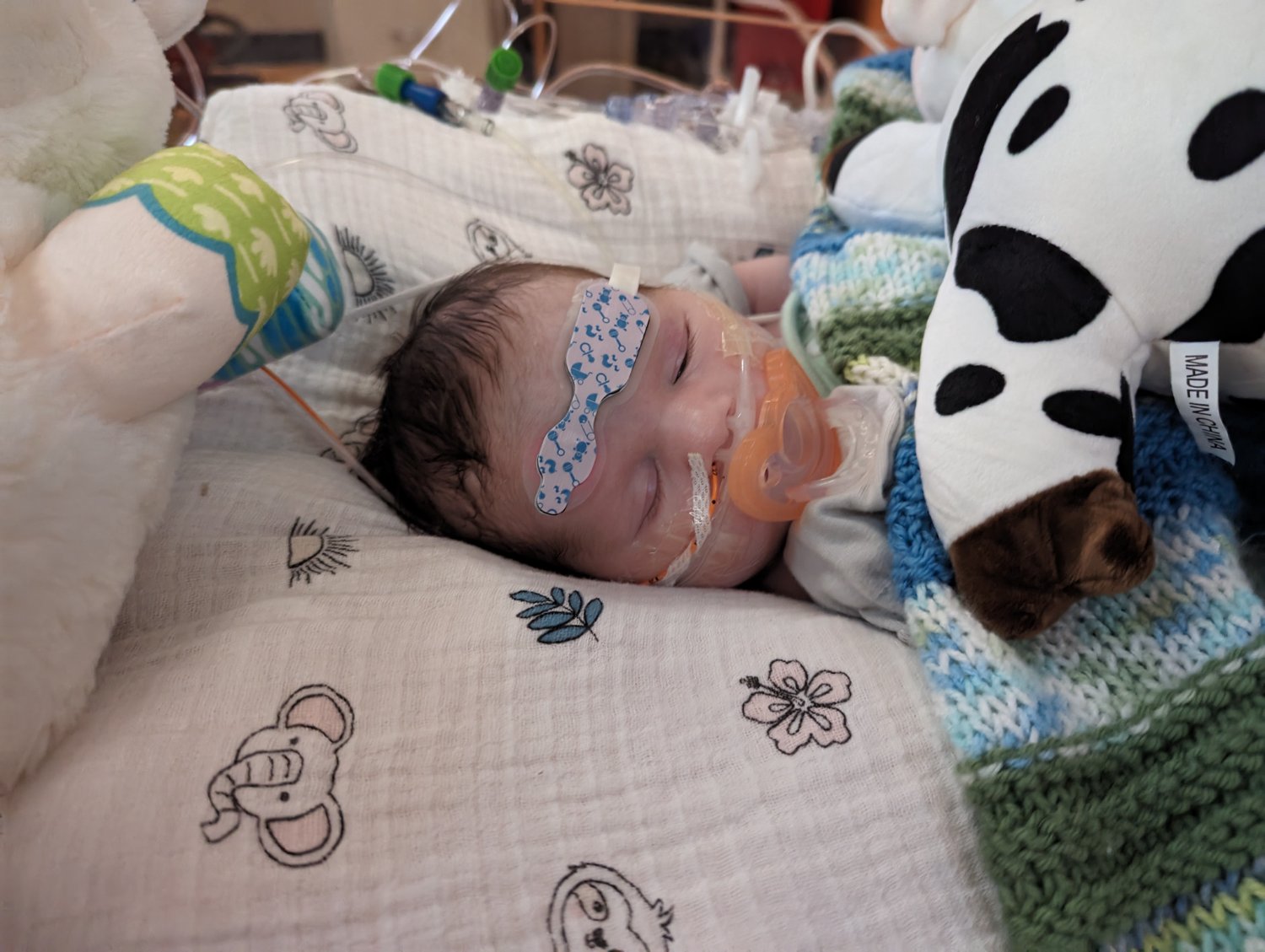
A Mother's Day reflection:
"I was blessed to be cared for by a godly mother, and when she suffers, I suffer. Moreover, when our son was born with a congenital heart defect, I bore witness to the intensity of maternal love and affection that Stennett references."
The Baptist pastor Samuel Stennett (1727–1795) on gratitude for mothers:
"Ye children that are just rising into life...realize the innumerable expressions of parental affection, with which you have been followed to the present time."
Read: https://t.co/r0KcEd4o7e
@WEEDUS40@McJuggerNuggets All people have a system of belief that influences their decision-making. The assertion by implication that womanhood somehow grants the right to bestow rights to another human being based on the condition of will or desire is ultimately a form of feministic self-deification.
@sola_chad The fact that a child's humanity is based on want or will contains an important element of self deification, in particular, in its link to feminism. In essence, it subtly asserts that the woman has the sole power to bestow human value. She acts in the place of a god.
@NancyRPearcey@BrunetteLifts@Eowyn_the_Fair David Hackett Fischer addresses this when discussing marriage ways in New England in his book, Albion's Seed. Too many have a Hawthornian view of the New England Puritans, and overlook their contractual and covenantal view of the nature of marriage.
It's a false dilemma because "crowning achievement" and "keeping with our Founding ideals" are not necessarily connected, which was an intentional part of the design (at least initially on a federal level and then increasingly among the states).
It is not a "crowning achievement," but it is a positive test case (or necessary evil, depending on your outlook) that is certainly something the Founders recognized as a distinct possible outcome of their ideals: that without religious tests for office (which many considered to be a "machine of tyranny"), Muslims, pagans, and papists, (don't forget the other two) could come to hold public offices if the people elected them to do so.
[Side note: I particularly think it is interesting how often people neglect to mention the pagans and papists, almost always listed by Founders as a group, since they were equally (if not much more) concerned about them, but our local, state, and federal government has been administered by a bureaucratic mass that has included papists and pagans for quite some time. In short, I find that the obsession with Muslims is generally (though not exclusively) sensational and contextual, and not as principled as people pretend—but I digress.]
For instance, during the constitutional ratifying convention of North Carolina, James Iredell (later a SC justice appointed by Washington) made this very point in response to the concerns of one Henry Abbot (interestingly, a Baptist minister and the architect of NC's own religious liberty clause).
After observing that the rejection of religious tests "is calculated to prevent evils of the most pernicious consequences to society" and that "under the colour of religious tests the utmost cruelties have been exercised," Iredell makes this point about the tension inherent in the guiding principle of Article 6 (a principle he calls "universal religious liberty"):
"It is to be objected that the people of America may, perhaps, choose representatives who have no religion at all, and that pagans and Mahometans may be admitted into offices. But how is it possible to exclude any set of men, without taking away that principle of religious freedom which we ourselves so warmly contend for?"
The governor of NC, Samuel Johnston likewise made the point, "It appears to me that it would have been dangerous, if Congress could intermeddle with the subject of religion. True religion is derived from a much higher source than human laws. When any attempt is made by any government to restrain mens consciences, no good consequence can possibly follow." He then pointed to two cases in which a Muslim could be elected to office: 1) "if the people of America lay aside the Christian religion altogether" or 2) if a Muslim, "notwithstanding their religion, acquire the confidence and esteem of the people of America by their good conduct and practice of virtue." (The latter point shows a level of nuance ubiquitous in that period regarding the connection of a particular religion and a capacity for civil virtue often missed in these discussions.)
So, as regards the T or F, it is both. It is T that the Founders would see something like this as an outcome consistent with their ideals regarding religious liberty. Yet, on the other hand, they would also see it as a failure on the part of the electorate (Governor Johnston's #1 scenario), not simply as a purely amoral or purely good "crowning achievement." Yet that is important: they would likely locate the problem in the electorate, not in the principle of religious liberty. They knew that doing away with religious tests could lead here (first federally, and over time, on the state and local level), and did it anyway.
@RScottClark I find the Acts 18 test case fascinating. How people interpret it tells you a lot. Chrysostom, Gill, Charles du Veil, all praise Gallio for dismissing the religious debate (though they criticize him for not keeping civil peace) Calvin and Matthew Henry rip into Gallio.
@lukestamps Mature is good. There was always tension in conversations surrounding religious liberty or liberty of conscience, all the way back to the early church. Baptists, perhaps more than others in the 17th-18th centuries, knew consistency meant extending their views beyond themselves.
I'd say it is quite close to encapsulating a historical consensus. While it would have precedent in Baptist thought, the assertion that could raise some eyebrows, might be the "religious options of any kind" line. But in terms of the progression of Baptist thought on this subject, I'd say it is substantively consistent.