Check out the Welikia Project - illuminating the rich ecological history of New York City.
https://t.co/eYsdpeuy3I
Maintained by
https://t.co/xWaTBz5yPu
and
https://t.co/pFanr4GIjM
"Revelation is the word for a complex of thought revealing itself instantaneously with the enormous impact of absolute truth." - The Body Snatchers by Jack Finney
In 2010, I discovered a presentation framework that changed my life.
After analyzing hundreds of the world's most iconic speeches and creating hundreds of thousands of presentations, I discovered the great ones all followed the same general pattern. I remember it like it was yesterday…
I was in my office mapping this presentation framework over famous speeches like Martin Luther King’s ‘I Have a Dream’ speech and Steve Jobs’s presentation of the first iPhone.
Over and over, these iconic presentations DIRECTLY aligned with this framework. It was so startling–I actually cried (a little).
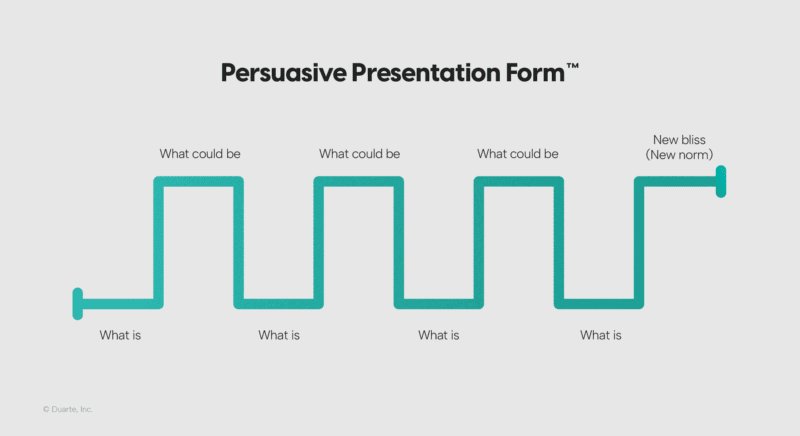
This discovery changed everything for Duarte and led to the creation of a framework that’s at the core of our business. We call it the “Sparkline”.
Whether you’re launching a new product, you’re trying to close a big contract, or you’re giving a keynote, this framework delivers results.
…and it has for (literally) hundreds of years.
Here’s how you can begin using it for your next high-stakes presentation:
1. Start by acknowledging your audience's current reality (make THEM the hero)
Begin your presentation by describing specific challenges your audience faces, using their language and perspective. Interview stakeholders beforehand to understand their frustrations, concerns, and goals so you can reflect these accurately. This demonstrates you understand their world before attempting to change it.
2. Create a stark contrast between this status quo ("what is") and the future they desire ("what could be").
Paint a vivid picture of what success looks like after implementing your idea or solution, focusing on concrete benefits and outcomes. Use sensory language that helps your audience feel, see, and experience the transformation you're proposing. Make this future state emotionally compelling, not just logically sound.
3. Toggle between these states throughout your presentation to create the BIGGEST possible gap between them.
Deliberately alternate between describing pain points and their corresponding solutions throughout your presentation, rather than grouping all problems at the beginning and solutions at the end. This helps create tension and builds up your audience’s desire for the future you’re painting.
4. End with a clear choice: remain in the status quo or take action toward transformation.
Conclude by framing a specific decision point that puts the power in your audience's hands. Make the call-to-action concrete and immediate - something they can do within the next 24-48 hours to start moving toward the "what could be" state. Remind them what's at stake if they choose inaction.
Remember: Your presentation is only as effective as the action it inspires.
The illusion of explanatory depth - A cognitive bias that causes people to overestimate their understanding of a topic.
Warren Buffett and Charlie Munger encouraged "Know your circle of competence and stick within it.“
#cognitivebias#competence#decisionmaking
Foreign travel advice for UK citizens and more
Get advice and warnings about travel abroad, including entry requirements, safety and security, health risks and legal differences.
https://t.co/QQnjDWLGLK
You can also subscribe to email notifications.
"Reward success and failure - punish inaction." Robert I. Sutton author of Weird Ideas That Work: How to Build a Creative Company
#Innovation#creativity