#LeftIsBest has left an indeliable mark on my political thought —
Pinning this indefinitely because Michael Brooks’s work was deep and just starting and will always worth connecting to if you haven’t yet
Rest In Power
Big Tech poured over $1.4 trillion into AI only to see a $613 billion return on investment.
* Amazon spent $313 billion and lost $291 billion
* Google parent company Alphabet spent $287 billion and lost $262 billion
* Microsoft spent $266 billion and lost $235 billion
* Meta spent $230 billion and lost $227 billion
And all these companies chosen to axe workers, blaming AI for the mass firings.
It’s the obvious, self evident death of the Warrenite/NGO left, a project that claimed to be an electoral compromise for socialists and ended up being way less electable than actual socialism in both primaries and generals. You can’t be highly ideological and highly technocratic.
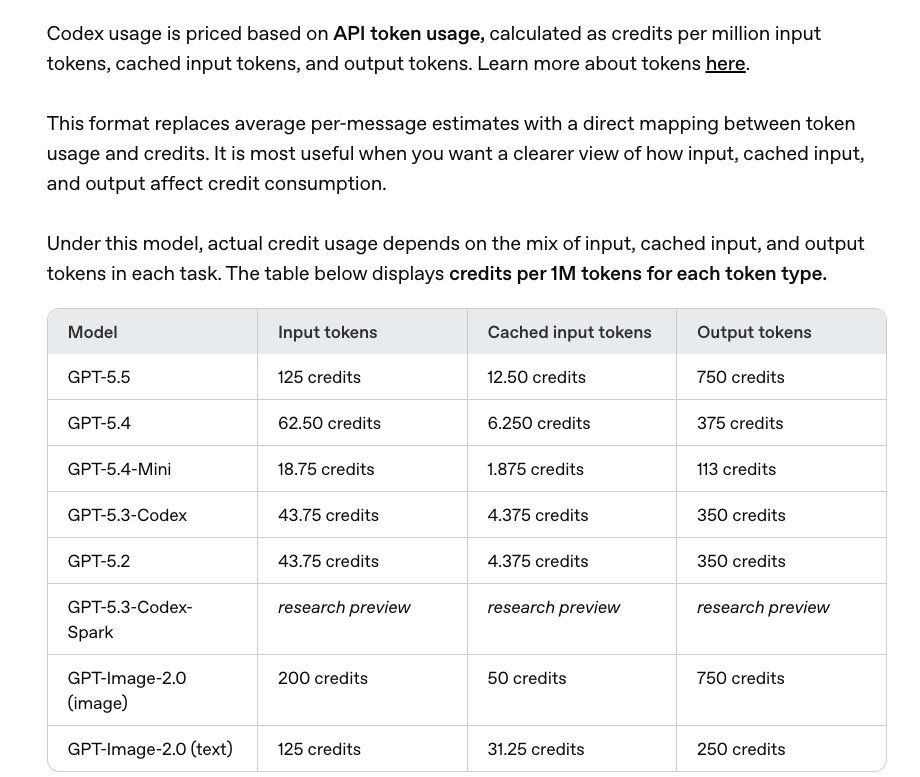
It appears that OpenAI has moved all Codex users to token-based billing using a "credits" system aligned with API pricing.
Some companies had receive a two-month-long introductory period and are now receiving a limited amount of pooled credits per user.
https://t.co/6gjbPQ5HjH
Deep inner suffering inevitably arises when the human person is reduced to performance, consumption, or a statistical datum. Many young people today live under the yoke of expectations to perform, immersed in an exasperated competitiveness that generates anxiety, fear of not measuring up, and disorientation.
USPS is now on the verge of dramatically limiting voting by mail.
The postal service is proposing a rule to limit mail-in voting for the midterms, expanding federal control over voting without congressional approval.
It's a big step in Trump's plan to take over elections.
It is useful that a figure like the Pope is groping toward the quite profound consequence of the emergence of AI and both the threat and potential it offers humans and human meaning-making.
At a time of galloping misanthropy from both the green left and tech right, Pope Leo’s encyclical offers a reminder to all, of faith or otherwise, of the radical and unique moral importance of humans.
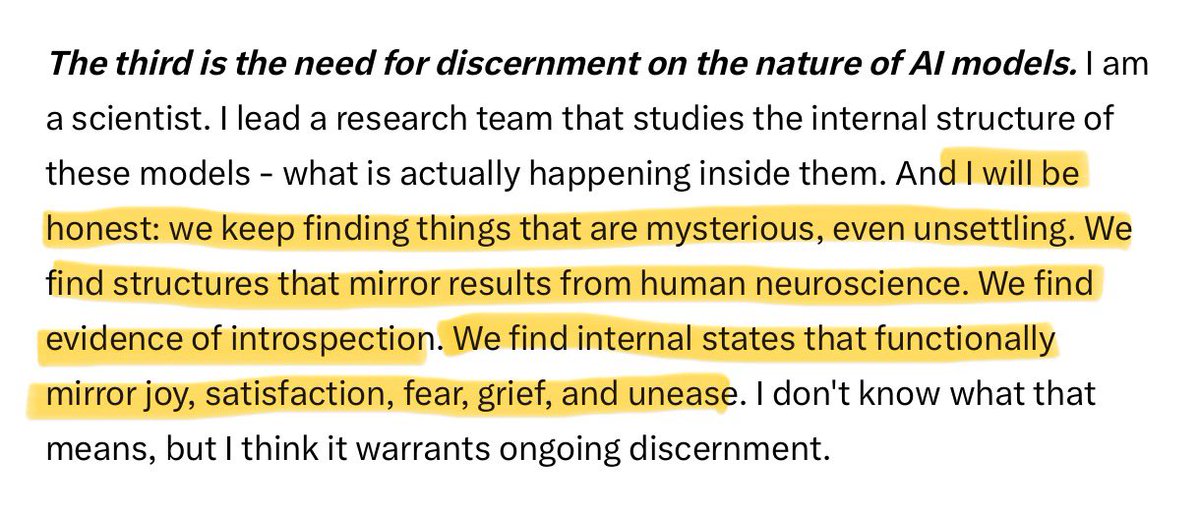
Magnifica Humanitas is a theologically dense ~180pgs, so it’ll take some time to explore it in depth, but an initial scan suggests the screen-captured paragraph below offers something of a core argument:
However impressive an engineering achievement AI is, it should not be confused with an entity that enjoys personhood, for it lacks the full complement of the key attributes that give humans and *humans alone* their inherent dignity: rationality, consciousness, interiority, self-awareness, sociality, moral agency and, what flows from the latter, the capacity for moral progress. One does not need to be Catholic or even have any faith to accept this. It is a secular argument.
Intelligence alone—which is perhaps synonymous with rationality, but also perhaps not, and we might want to meditate on the distinction between intelligence and rationality—is not commensurate with consciousness, moral agency and the rest of the above suite of attributes. We do not accord personhood to a calculator, even though it surpasses human intelligence in the single field of rapid calculation. Similarly, while AI meets or exceeds human intelligence across multiple fields, in its lack of these other attributes, AI remains—for now—morally indistinguishable from a calculator. Another example: a thermostat can hold an internal state, but it has no true interiority or self-awareness, and certainly not the rest of this suite of morally consequential attributes. There is nothing it is like to be a thermostat.
It might be useful here to compare the situation with AI to how some wish to accord personhood to chimpanzees and dolphins (and a few other species) because these animals approach us in some of these attributes of profound moral consequence. However, these creatures do not enjoy *all* these attributes, and certainly not with the same quality in which we enjoy them. How closely they approach the human is sufficient to argue for a depth of duty of care that humans owe these creatures, but it is insufficient to warrant according them a moral equivalence to humans.
But what happens if we do begin to observe interiority, self-awareness, consciousness in AI’s? Then the moral assessment changes radically. However, first we need more rigorous tests of interiority, consciousness, etc. (This is a very big ask, as philosophers know all too well! I know that *I* have interiority, but I cannot even know for sure that anybody else does)
But let us assume that we do become more rigorous in this regard, that we develop better tests of interiority etc. I think that this is what Anthropic’s Chris Olah, invited by the pope to respond to the encyclical, is getting at here (in the second screen capture).
I am for the moment sceptical that what Olah has observed are indeed internal states that are akin to what neuroscientists observe in human brains during experiences of joy, fear, grief, etc., but I’d like to know more about what exactly it is that his team has observed, and I do not put it beyond the realm of possibility that one day we could indeed create not just thinking machines but experiencing machines (while I suspect that the Pope thinks that this will never be possible, for only God could create such a creature).
If one day we do create not just thinking machines but experiencing machines, then we should indeed accord such machines personhood, but then we can’t very well be using them just as machines any more.
Once again, it is clear a rigorous definition of what it means to be human is urgently required—as urgently as perhaps the coming years or even months.
These replies are wonderful
The usual braying lunatics and gormless right-wing conspiracy influencers all with Fuddbrained “excuse me sir that sounds very simiwar to Mr Musk sir”
This morning we are introducing COGE — the Commission on Government Efficiency. This Commission will find ways for our city to work smarter, faster, and more effectively for working people. New Yorkers deserve a city government as careful with their money as they are.
This morning we are introducing COGE — the Commission on Government Efficiency. This Commission will find ways for our city to work smarter, faster, and more effectively for working people. New Yorkers deserve a city government as careful with their money as they are.
I didn't say everyone has figured it out, I said everyone is *figuring* it out. It's happening now, in real-time, as the pricing model changes from all you can eat to token budgets.
There has been a very obvious unanswered question since 2022. If AI companies are seeing demand explode, and they are losing massive amounts of money, why don't they raise prices? Isn't that what price signals are for?
The answer was an attempt to lock-in companies and consumers onto a specific expensive AI stack, with metaphysical hand-wavey nonsense about eliminating all white collar jobs or creating a higher form of intelligence. That's why Google is engaged in below-cost pricing on Gemini to win the consumer AI space, and why Anthropic and OpenAI had huge losses. They figured 'we're losing money like Amazon did,' the losses are real but the TAM in a few years is massive, as they attach themselves to corporate America and bleed out more profit.
It's like what you said, big tech has 30% of the profits in the economy, they are asking themselves how to get the other 70%. AI was their way to do that. Or so they figured. (I see Anthropic and OpenAI as part of the big tech world, they are loose proxies for their investors Nvidia/Google/Amazon/Microsoft.)
When I say 'everyone,' well, the main thrust of U.S. policy since the beginning of the Trump administration has been boosting a specific compute-heavy AI infrastructure that is closed source and vertically integrated, aided by a hype cycle to justify losses. On Trump's second day in office he did a press conference announcing a $500 billion data center buildout Stargate with Softbank and OpenAI.
I see it almost every day on CNBC, I see it in the policy world, I see it in academia, in consulting firms, on Wall Street, hell, I see it when Bernie Sanders is afraid these companies are creating God. If you want me to go through and get quotes from various important validators, like Sam Altman and Dario Amodei, I can do that. But I do think you can also take my word for it that it happened, since we have all lived through it.
There has always been a nagging problem here, which is that the Chinese open source models have been almost as good as frontier models, which makes no sense unless compute isn't as important as it's made out to be. And you're right, U.S. models have gotten more efficient too, but a key reason is clearly because they have to compete with Chinese models.
Still, the real problem these guys face is that the industry is simply not organized around real market signals, it is cross-subsidized by various big tech monopolies in search and social advertising, business software, and cloud computing/ecommerce, plus tax subsidies and Wall Street lending. That's what's filling the losses, a weird pro-monopoly industrial policy.
What seems to be happening is that pricing is right-sizing, or at least, Anthropic isn't willing to endlessly underwrite the use of their tools by corporate America. As that happens, and companies start asking if there's real ROI here, we're starting to see a broader understanding that AI is just a business method, it isn't some metaphysical achievement, and it has to be justified as something that creates more value than it costs. And now it turns out that the Chinese approach is better for producing everything except market capitalization, as is the case for every other industrial sector.
If we had a legal regime that forced actual market signals to function, then we would have asked these questions years ago. Instead, we have chosen as a society to prioritize the interests of vertically integrated dominant firms or their proxies, and they right now are betting all of their free cash flow on a particular approach. But it is a bet, it is not a sure thing. And as pricing right-sizes, well, we're seeing that it's a losing bet.
@mattpuddister Capitalism’s boom and bust cycles are the normal state
That’s why it’s hard to shake: it’s a slot machine and it feels great to win even if you end up losing more in the long run
PICARD: Data, shields up
DATA: Brilliant! Shields can reduce damage we sustain. Not immunity. Not hubris. Just prudence. It's not precaution—it's strategy.
[camera shakes]
WORF: HULL BREACHES ON NINE DECKS
DATA: Here's what happened: you told me to raise shields, and I didn't
Uber’s COO has said that it’s getting “harder to justify” its AI costs because there was no way to show a link between AI spend and any meaningful increase in useful features. This is the first time I’ve seen a company say this directly.
https://t.co/xUhZvtpwah
1. The data center boom isn’t a neutral response to public need. It’s a speculative race by Amazon, Google, Meta & Microsoft to consolidate control over AI and extend their monopoly power — while shifting huge costs onto the rest of us.
Here's ILSR's guide to what we need to do.
Contrary to what you claim, working-class people contribute significantly to funding American society today. Payroll taxes and consumption taxes absorb a high fraction of their income.
For the middle class, the income tax starts kicking in on top of these.
And for the rich, the corporate tax becomes significant.