Each cohort of psychotherapists and psychotherapeutic counsellors bring new perspectives to the field.
If you can, please donate to the UKCP Bursary fund to support student and trainee members who need financial assistance to complete their training: https://t.co/IKeM8xInUW
AJA, IGAP and GAP present
On Neurodiversity: Theoretical and Clinical Aspects
an online conference taking place over 3 days:
7pm to 9pm on 28 November 2025
10.30am to 4.30pm on 29 November 2025
10.30am to 12.30pm on 30 November 2025
To register: https://t.co/CxsNE3B07P
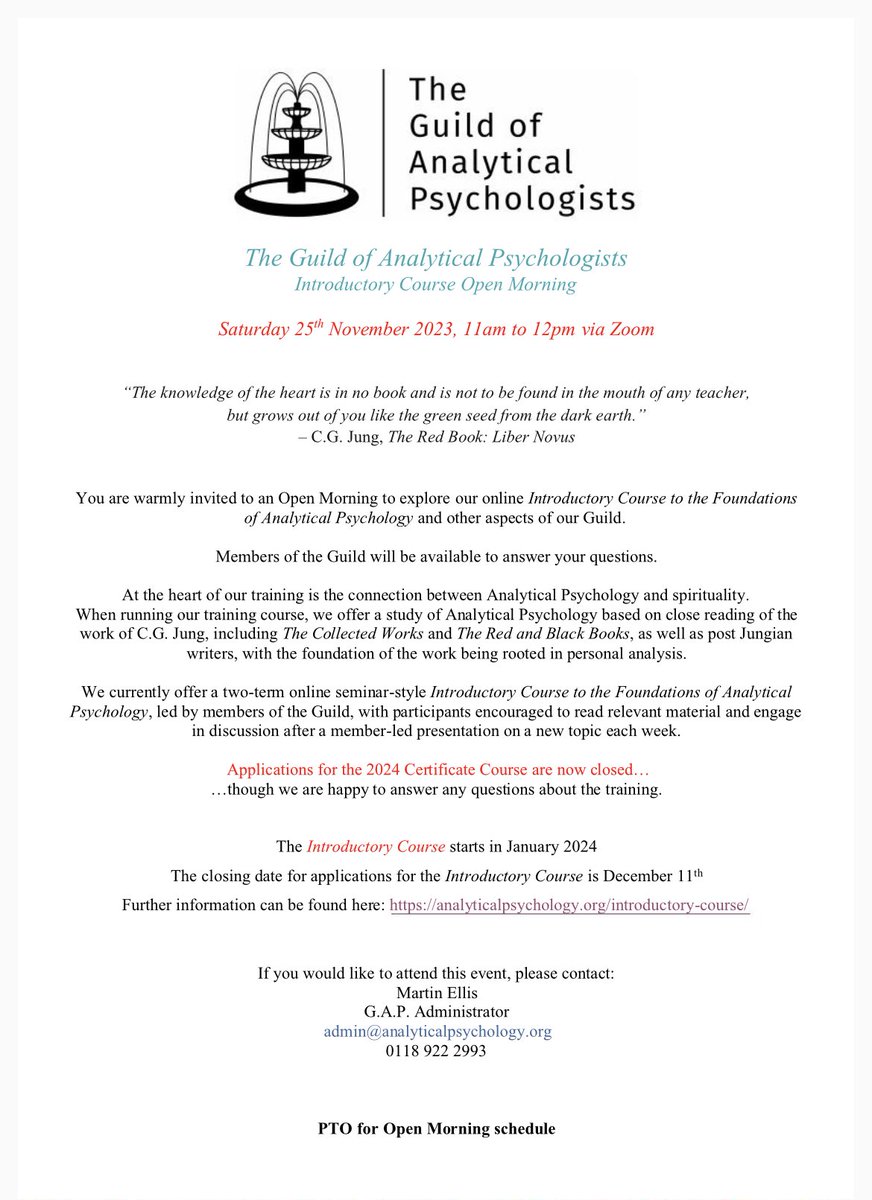
The Guild of Analytical Psychologists (G.A.P.) is holding an online Open Morning, for those interested in training to become a Jungian analyst or attend G.A.P.'s online Introductory Course. See flyer below & visit: https://t.co/XsfMINEuD9
The Guild of Analytical Psychologists, London is holding an online Open Morning for those interested in training to become a Jungian analyst or attend G.A.P.'s online Introductory Course to the Foundations of Analytical Psychology. See flyer below & visit: https://t.co/XsfMINDWNB
🎄A podcast gift for the holiday season
I'm interviewed by @MarkLRuffalo for Carlat Psychiatry Podcast
🎁Is "evidence-based therapy" better?
🎁Do grad schools prepare therapists adequately?
🎁What's the most essential psychoanalytic concept?
Lots more!
https://t.co/Bknd2wKyVX
"The #shadow is the first personification to be met in an analysis of the #unconscious. It is the antithesis of the #conscious personality, embodying those characteristics, potentialities and attitudes that have been rejected or depreciated by the #ego. Furthermore, since there is no differentiation between contents in the unconscious, everything merging with everything else, the shadow on initial meeting carries the impact of the unconscious as a whole. Only after its encounter with the conscious ego does it begin to separate from other aspects of the unconscious and lose the feature of totality."
~Edward Edinger, M.D., Jungian analyst, Melville's Moby Dick, p. 32
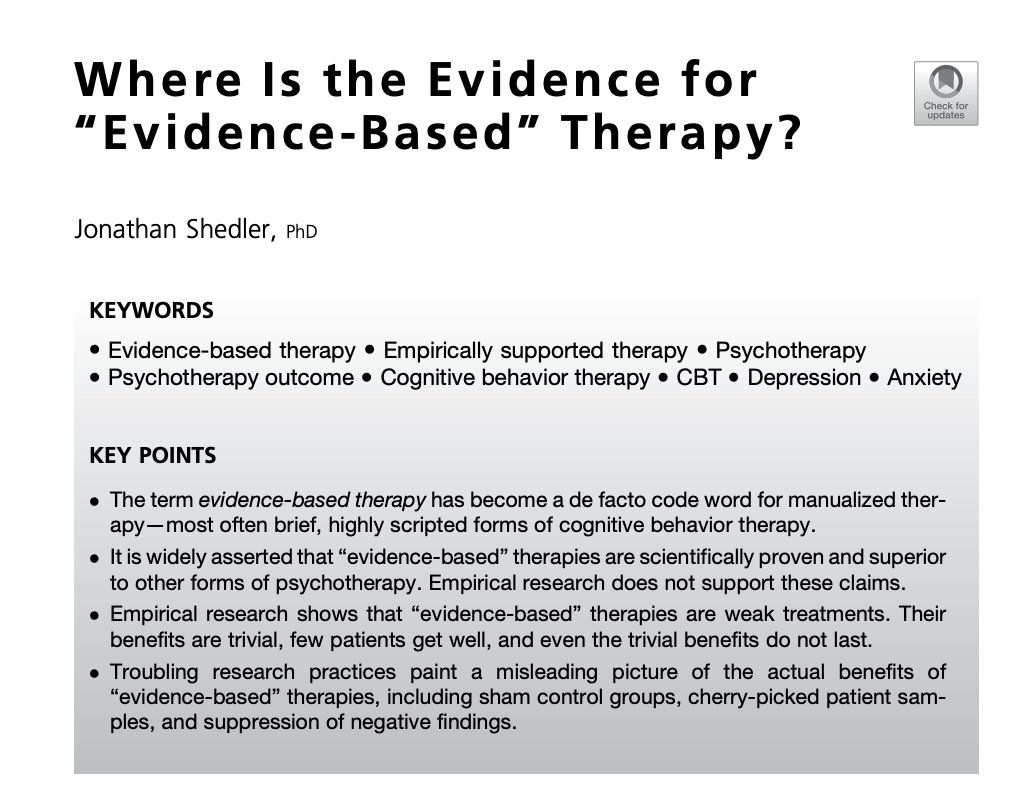
This brilliant analysis by @JonathanShedler explains why 'evidence-based therapy' is not a useful phrase & misses the entire point of psychotherapy. Seeking a quick reduction in symptoms disregards the value of the therapeutic process
https://t.co/kkSMRWbfYc
1/ The scientific evidence shows that so-called "evidence based" therapies fail most people most of the time. For example, 7 out of 10 patients who get "evidence based" therapy for depression remain depressed after treatment or relapse quickly
https://t.co/YCLWQKOONv
When Jung once said that “a neurosis is an offended god,” he meant, metaphorically, that the neglect of a deep, instinctual energy ultimately revenges itself in our somatic discords, compulsions, addictions, or projections onto others.~James Hollis
New online introductory course to the foundations of analytical psychology
Starting Jan 23 with London -based Jungian organisation G.A.P.
https://t.co/bbL4T5a5Dj
“The co-opting process begins when a psychoanalytic concept is revised and reinvented: A researcher reframes some Freudian construct in the language of another discipline, emphasizing differences between the newly described concept and the one from which it was derived.” 1/
Here are some core principles of psychoanalytic psychotherapy that over time have become well supported empirically:
-Winnicott’s theory about the importance of a “good enough” maternal (parental) environment for overall psychological development: