Archaeologists have made a stunning discovery inside a 1,600-year-old Egyptian mummy — a fragment of Homer's Iliad.
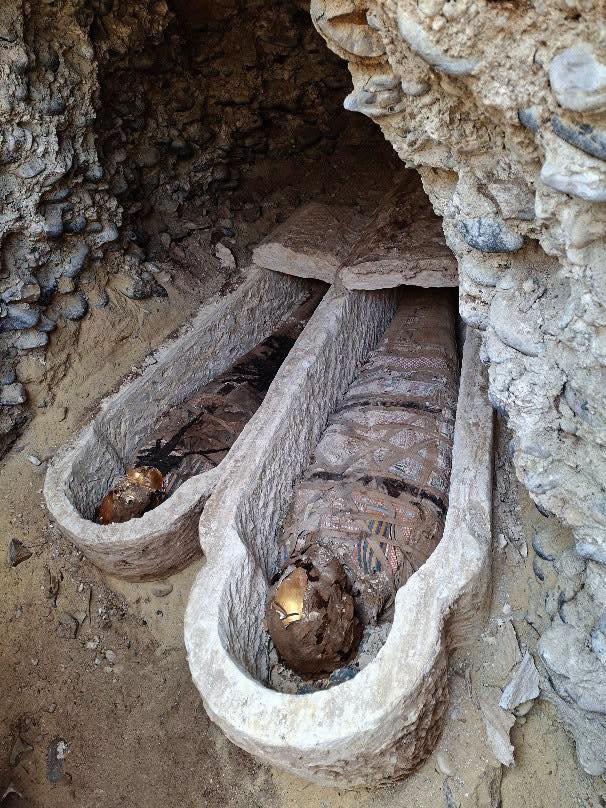
The papyrus was found tucked inside the gut of a mummy unearthed in Tomb 65 at Oxyrhynchus, an ancient city located 118 miles south of Cairo.
The excavation was carried out between November and December 2025 by a team including researchers from the University of Barcelona and the Institute of Ancient Near East Studies.
This marks the first time a Greek literary text has been found incorporated into the mummification process.
Previous discoveries at Oxyrhynchus had turned up Greek papyri used in burials, but their contents were always magical or ritualistic in nature.
The fragment found within the mummy belongs to Book II of the Iliad, a section known as the Catalogue of Ships, which lists the Greek forces that sailed to Troy.
The Iliad, composed around 800 BC, is widely considered the cornerstone of Western literature and centers on the Trojan War and the fate of the warrior Achilles.
Researchers are still unsure why this particular literary passage was chosen for the embalming ritual.
The funerary complex also yielded other remarkable finds, including mummies adorned with gold tongues and fingernails, heart scarabs, and amulets depicting gods such as Horus, Thoth, and Isis.
#archaeohistories
There are some obvious and important reasons to get vaccinated. It keeps people healthier and saves lives. But I was curious about the economic case for vaccines. Turns out, they save countries a lot of money too.
We’re looking for an editor of story packages for @bw. Help us identify the most important themes shaping business and culture, and find creative ways to tell those stories.