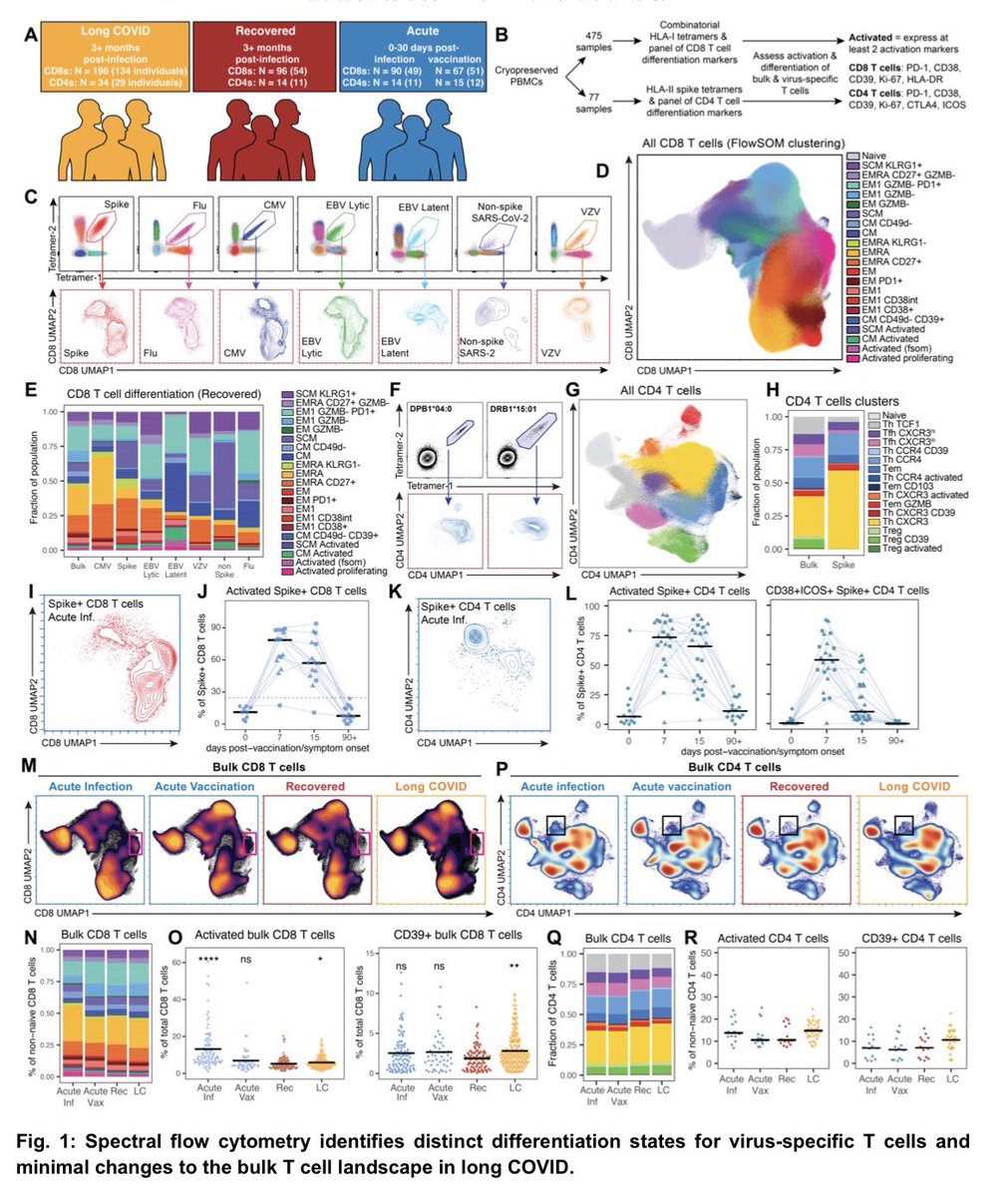
Our study on virus-specific T cell activation in Long COVID (LC) is up on bioRxiv! We identify a subset of people with LC with persistently elevated activation of CD8 T cells targeting spike and/or EBV lytic antigens, consistent with viral persistence.
https://t.co/A7ZEOKmyBP
CD19-CAR T cells clear the EBV-infected B cells that carry autoreactive antibodies. Rituximab doesn’t. That may be why only one of them produces lasting remission.
New Robinson Lab preprint led by me and @panditmahes. 🧵
https://t.co/DhAKOADJDa
How does our history of influenza infections shape the ability of CD8+ T cells to recognize new viral variants? Our new paper in @CellReports examines these questions using influenza-specific CD8+ T cells! 🧵⬇️ (1/12)
https://t.co/XvRNbk8n45
In new study, we show that SARS-CoV-2 has evolved decreased inherent antigenicity in humans, as quantified by a ~3-fold decrease in the number of naïve human B cells that can bind the spike RBD.
https://t.co/OabX5bSYwp
#LongCOVID: T Cells May Reveal the Virus That Routine Tests Miss!
➡️ A new study profiling virus-specific T cells in hundreds of people found that a subset of LongCOVID patients had persistently activated CD8⁺ T cells targeting SARS-CoV-2 spike and/or Epstein–Barr virus (EBV).
➡️ Spike-specific T cells showed signs of chronic stimulation, exhaustion and reduced function when challenged with their target antigen. 1/
Our new work using virus-specific T cells as biosensors in Long COVID. These data point to viral persistence detected by T cells and some level of T cell exhaustion. Excellent work by @markmpainter https://t.co/EXwLpYdlKv
@DuaneStorey I agree! We did try (described in the manuscript), but with the HLA types we studied (HLA-A*02:01 and -A*03:01), responses to non-spike epitopes, including nucleocapsid, were often below the limit of detection. It will be important for future studies to look in other HLA types.
The mechanisms driving LC remain unclear, slowing the development of new therapies. Different mechanisms may be at play in different people. 2 leading hypotheses, persistence of SARS-CoV-2 and herpesvirus reactivation, could explain symptoms but are difficult to measure directly.
@jan_choutka More or less arbitrary. There is no value that uniquely identifies people with LC vs. people who fully recover, but the LC group is significantly enriched above the threshold wherever you set it.
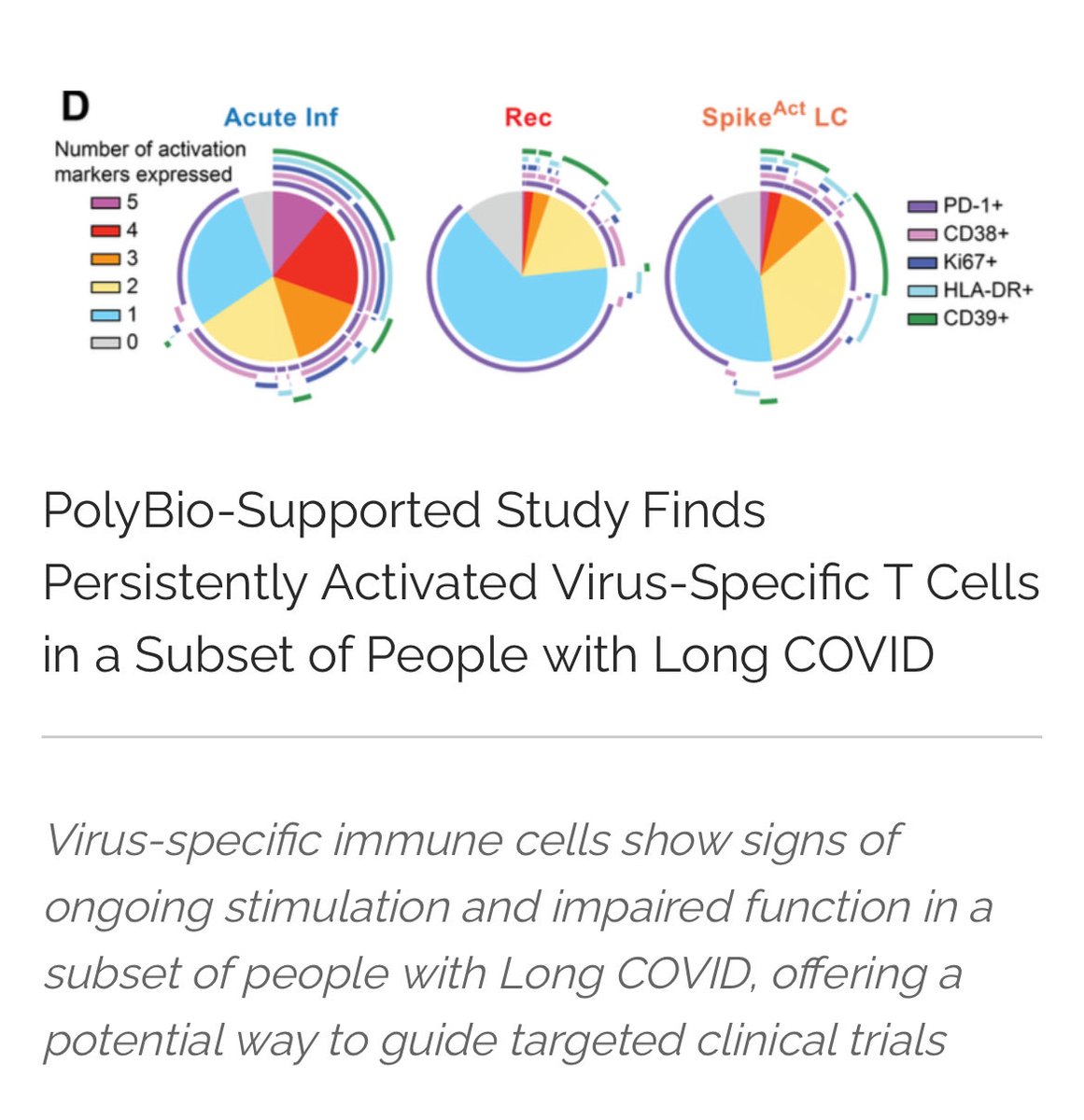
Breaking: PolyBio-Supported Preprint Finds Persistently Activated Virus-Specific T cells in a Subset of People with Long COVID
👉🏻Virus-specific immune cells show signs of ongoing stimulation and impaired function in a subset of people with Long COVID, offering a potential way to guide targeted clinical trials
1/
I want to thank everyone who worked on this study, especially David Reeg and @EJohnWherry, and all the study participants who made this possible, especially the LC patient community. Check out the paper for everything that didn't fit in this thread! https://t.co/A7ZEOKmyBP
Virus-specific T cells could also be used as a readout of intervention efficacy through changes in activation or exhaustion. Moreover, existing therapies could be used to modulate activated T cell responses in multiple ways as a potential therapy for LC.
In summary, we describe a subset of people with LC with evidence of chronic antigen-driven T cell activation. This provides key mechanistic insights and identifies a biomarker for stratifying patients, assessing response to treatment, and guiding the development of new therapies.
Clinical trials for LC often enroll and assess response without objective measures of the targeted mechanism. Activation of virus-specific T cells could therefore be used to identify patients likely to benefit from drugs targeting SARS-CoV-2 persistence or EBV reactivation.
CD8 T cells specific for EBV lytic antigens were also activated in LC, largely in the same participants who had elevated spike-specific CD8 T cell activation. These data nonetheless support an association between EBV activity and the development of LC.
Alternatively, it is possible that some people harbor viral reservoirs that are not accessible to circulating T cells. Further efforts will be needed to determine which tissues harbor persistent SARS-CoV-2 in LC and to directly link these viral reservoirs to T cell activation.
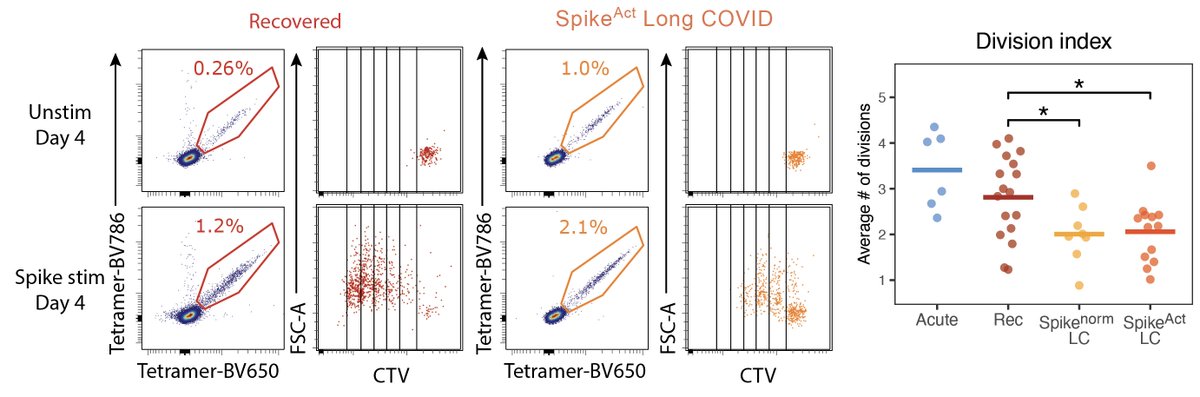
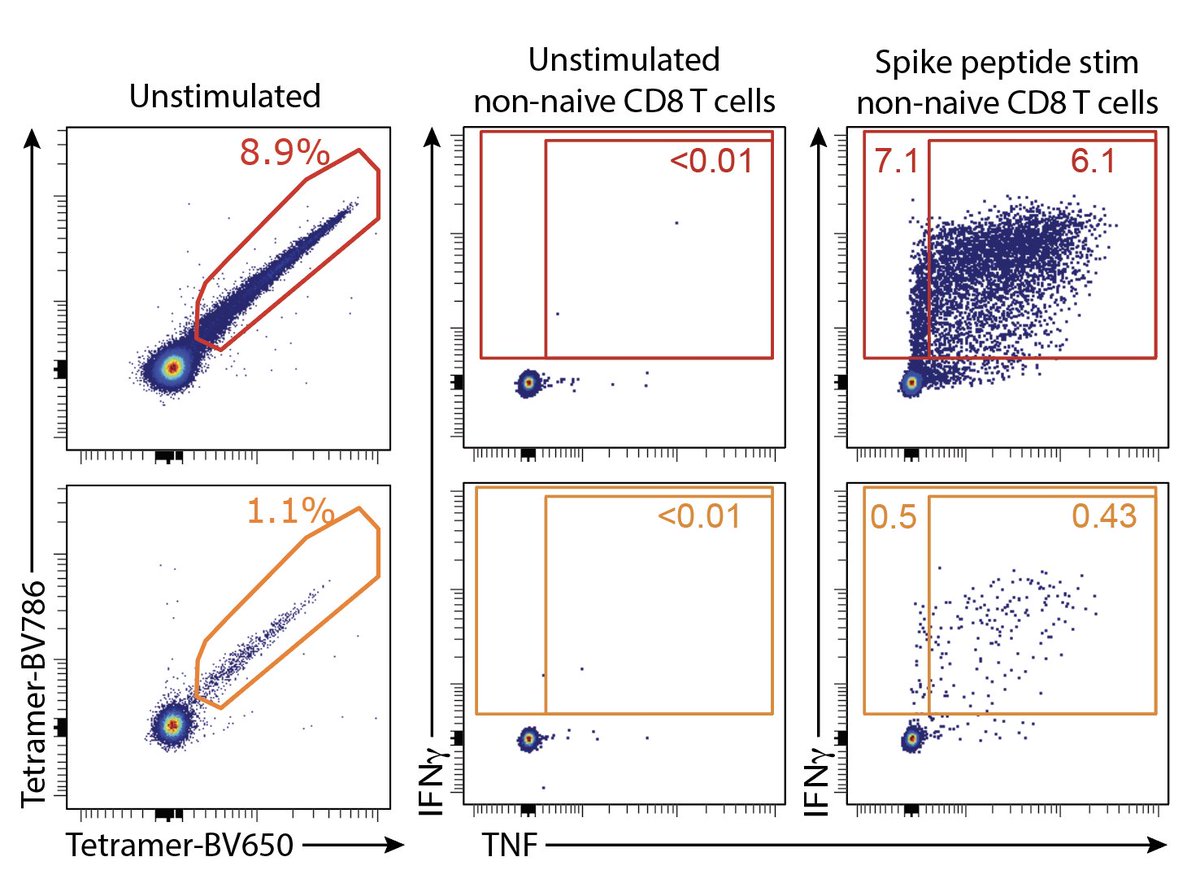
Spike-specific CD8 T cells from the subset of people with LC with persistent activation and evidence of exhaustion (e.g. expression of TOX and 2B4) produced fewer cytokines and were less proliferative compared to recovered controls, indicating some degree of T cell exhaustion.
First, not all people with LC show evidence of persistent T cell activation. This is consistent with a model in which multiple mechanisms contribute to LC, and SARS-CoV-2 persistence drives disease in only a fraction of patients.
Taken together, our data are consistent with chronic stimulation of spike-specific CD8 T cells by a persistent reservoir of SARS-CoV-2 in a subset of people with LC. These findings have several implications for ongoing efforts to develop successful therapies for LC.
To more directly test whether these cells showed evidence of T cell exhaustion, we stimulated cells ex vivo with spike peptides and assessed the ability of spike-specific CD8 T cells to produce cytokines, proliferate, and expand in culture.
In contrast to Flu-specific CD8 T cells, which had similar gene expression profiles in recovered controls and people with LC, spike-specific CD8 T cells from people with LC resembled spike-specific cells from acute SARS-CoV-2 infection samples.
T cell exhaustion is a distinct differentiation fate driven by chronic antigen stimulation. We observed strong enrichment for T cell exhaustion gene sets in spike-specific CD8 T cells from the activated subset of people with LC, consistent with persistent TCR-driven activation.
Spike-specific CD8 T cells from these people with LC shared gene expression profiles with spike-specific cells from acute SARS-CoV-2 infection, including enrichment of gene expression modules associated with recent TCR stimulation but not bystander activation.
At the clonal level, a large majority of spike-specific CD8 T cell clones from these people with LC (selected from the subset with high activation) were enriched in activated gene expression clusters compared to clones from recovered controls.