@mariabamfoo@netflix I’ve always loved your material but this documentary hit different. My wife and I loved it. We laughed, cried and enjoyed it the whole way through. Thank you.
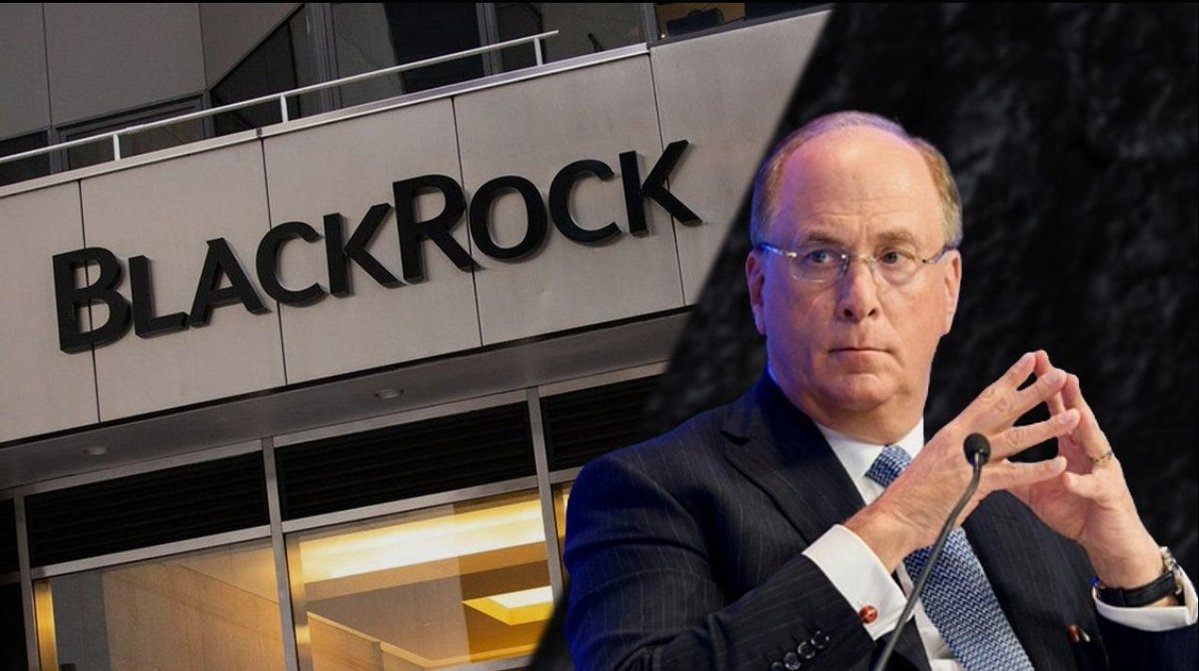
What most people already understand, even without the economic terminology, is that firms like BlackRock operate less like investors and more like modern feudal landlords.
They buy essential infrastructure,water networks, ports, energy grids, data centres, and other public necessities, often using vast amounts of borrowed money and paying prices that ordinary market participants cannot match.
Once the acquisition is complete, the debt is pushed onto the acquired company itself.
The result is simple: the public pays.
Consumers repay that debt through higher water bills, rising energy prices, increased fees, and declining service quality.
The infrastructure becomes a cash-extraction machine.
Profits flow upward to shareholders and executives, while the financial burden flows downward to ordinary households.
When the model inevitably breaks down, the consequences are socialised. Communities are left with crumbling infrastructure, polluted rivers and failing services.
Thames Water's £14 billion debt mountain and repeated sewage scandals are a stark example of what happens when financial engineering takes precedence over public stewardship.
The executives who loaded the company with debt have already collected their bonuses.
The investors have already taken their returns.
And when the system finally reaches its breaking point, taxpayers are expected to pick up the bill.
Privatise the gains.
Socialise the losses.
That is the business model......
NEW: RFK Jr. says Medicare spending on wound care patches exploded from $200 million in 2019 to $14 billion last year: "It's all stolen."
Bad actors billed Medicare billions by slapping the most expensive skin grafts on elderly and dying patients who didn't need them.
"The doctors who prescribed them would get 6% of the sales cost. And so, they were incentivized to prescribe more expensive products. In Europe, they spend 35 cents a cubic inch. We were spending $135, and that went up to $2,000 a cubic inch."
"So 2019, we were paying $200 million. Last year we spent 14 billion. All stolen. It's all stolen. And we were on track to spend 23 billion this year."
"We put an end to it, and we now have driven that cost down to somewhere around a billion dollars."
In one Arizona case, the owners of two wound care companies pleaded guilty to more than $1.2 billion in fraudulent claims. Medicare paid over $1 million per patient for grafts slapped on elderly patients who didn't need them, many of them dying in hospice.
In June, DOJ charged 11 more defendants over more than $2 billion in allograft claims, including a company accused of issuing sham invoices to inflate what Medicare paid.
It feels like every week I learn a new way people were ripping off taxpayers for billions.
I order a lot of secondhand and vintage books online. This year the prices jumped and I chalked it up to inflation. I was wrong.
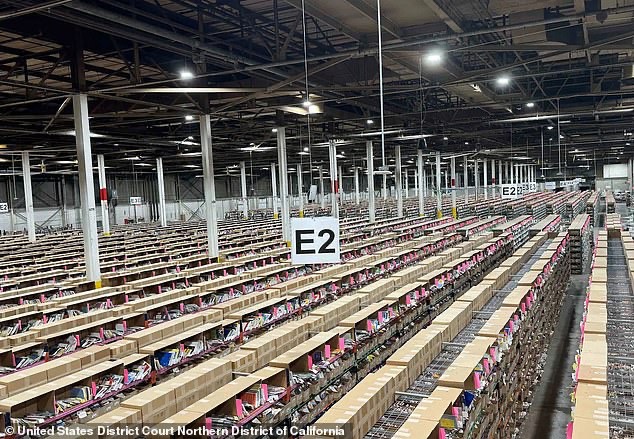
The reason behind the spike in prices is what AI companies euphemistically dub "destructive scanning." That is when they buy millions of second-hand books in bulk and send them to enormous warehouses across America. There, automated assembly lines cut the pages from the spines and then feed the pages into huge industrial scanners.
Those books are being harvested for their text to expand the database for the LLM models. The physical pages? Later discarded. Some of these are the last remaining editions of historical and collectible works — once they're cut and scanned, they're gone.
Booksellers across the UK, Germany, New Zealand, Australia and the U.S. are reporting the same thing: bulk, random, non-fiction orders. Orders have ranged from 1,000 books to as many as a million in a single purchase. Just one vendor contract called for scanning 500,000 to 2 million books.
Anthropic ran this under an internal name, Project Panama, and tried to keep it quiet. Some booksellers noticed something was odd. A Devon bookseller, for instance, got an odd order this summer for books on subjects as disparate as Cornish pioneers in South Africa, cheeses of the world, and Hong Kong jewelry — from a "shipping company" near Heathrow. Her suspicions grew fast. It turned out to an AI run office.
I should have seen this coming. I'm one of the author-plaintiffs in the Bartz et al. v. Anthropic class action — a different kind of theft. Anthropic had trained Claude on more than seven million digitized books, sourced from pirate websites, without paying a penny to authors or publishers. Mine included, seven of my thirteen. There are 120,000 individual authors and rightsholders (representing 447,576 eligible works out of 482,460 total listed books).
A federal judge approved the $1.5 billion settlement this summer. It was the court documents from that litigation that exposed Project Panama. I missed it until the story recently hit the Washington Post and Daily Mail and other outlets.
Having learned an expensive lesson from its class action payout, Anthropic is now going after physical books a different way — and legally, this time. Under the first-sale doctrine, established by the Supreme Court in 1908, once someone buys a physical book, they can do whatever they want with it, including destroying it.
So Anthropic attorneys have determined that buying and scanning a physical copy sidesteps the piracy problem. And once that book is shredded, any future Claude user can draw on its contents for free — the original gone forever.
Some call this a modern-day book burning. The Nazis destroyed books to erase what was in them — these companies destroy books to steal the information and then essentially sell it back to you. I am still angry this is somehow legal.
#SundayWisdom from Michael Crichton:
“There’s nothing more sobering than a 30-year-old newspaper.”
Flip through old headlines and you’ll find no shortage of apocalyptic predictions and existential crises that have long since faded into obscurity.
The media amplifies fear because fear captures attention – but it only works if we’re willing to consume the news uncritically. A prosperous society depends on citizens who can distinguish between genuine threats and manufactured hysteria.
Resist panic, think clearly, and remember that fear is one of the easiest things in the world to sell.
A peak life advice from Alex Hormozi:
“The single greatest skill you can develop is the ability to stay in a great mood in the absence of things to be in a great mood about.”