As others have noted, the point here isn't a fixed hour amount but in putting in time for personal study.
Some weeks it will be less, and some, it will be more.
However, if the extent of a preacher's study is merely reading the text and then one or two commentaries, summarizing their content, then he's preaching the ideas of commentaries rather than the Word.
That's all he has from his six hours of prep time.
People who preach the text rather than the words of others need around 20 hours or more.
Good exegesis requires long hours in study to know the text for yourself before you even begin to think about preaching it to others. There's translation work, cross references, lexical and cultural studies, and yes, exegetical commentaries. There's the need to be able to synthesize the data into an honest interpretation of God's Word. Oh, yeah, and then there's prayer and personal application.
Then (and only then) comes the hours of sermon prep.
There was a time when I was preaching everyday and I only had about six hours to prepare, and I consistently realized I was missing information in the text and incorrect in my presentation of it as I continued. I also didn't have time to really apply what I was learning to myself.
Men, strive to take your time in the text.
@AgarthaRiseUp@KahanJulie@not_our_guy Our nation won't survive in any recognizable form if this is our mindset.
There are far better ways to help our country.
@prestonwrhodes@Brian_Sauve Sometimes, yes. And when it's needed, I also try to spread the work of study over weeks at a time.
The point isn't the number.
https://t.co/fvHRjkPdIG
As others have noted, the point here isn't a fixed hour amount but in putting in time for personal study.
Some weeks it will be less, and some, it will be more.
However, if the extent of a preacher's study is merely reading the text and then one or two commentaries, summarizing their content, then he's preaching the ideas of commentaries rather than the Word.
That's all he has from his six hours of prep time.
@Chris_1689@Brian_Sauve Brian isn't arguing it takes him less time because he's a such a scholar, but because it's not needed.
And, while you're right in the sense that previous studies informs current study, no one should be resting solely on past knowledge.
People who preach the text rather than the words of others need around 20 hours or more.
Good exegesis requires long hours in study to know the text for yourself before you even begin to think about preaching it to others. There's translation work, cross references, lexical and cultural studies, and yes, exegetical commentaries. There's the need to be able to synthesize the data into an honest interpretation of God's Word. Oh, yeah, and then there's prayer and personal application.
Then (and only then) comes the hours of sermon prep.
There was a time when I was preaching everyday and I only had about six hours to prepare, and I consistently realized I was missing information in the text and incorrect in my presentation of it as I continued. I also didn't have time to really apply what I was learning to myself.
Men, strive to take your time in the text.
Et Tu Sauve?
In light of the Wes Huff scandal we have Brian Sauve, who mocked Reformed ministers for spending too much time on sermons
Brian admitted he only spends 6-10 hours preparing sermons
Turns out sermon prep goes quick when you lift others exegesis and outlines👇
1/4
@DavidAFrench Of the various words we could use to describe this heckling, "vile" isn't one.
Rather, the City of Bartow having an imam pray is rather vile.
As others have noted, the point here isn't a fixed hour amount but in putting in time for personal study.
Some weeks it will be less, and some, it will be more.
However, if the extent of a preacher's study is merely reading the text and then one or two commentaries, summarizing their content, then he's preaching the ideas of commentaries rather than the Word.
That's all he has from his six hours of prep time.
@TheHolyHeckler It is both historically and exegetically accurate.
Your mistake is in assuming a term can't have more than one meaning in Scripture. It does in everyday language, and it does in the rhetoric of the Bible, as well.
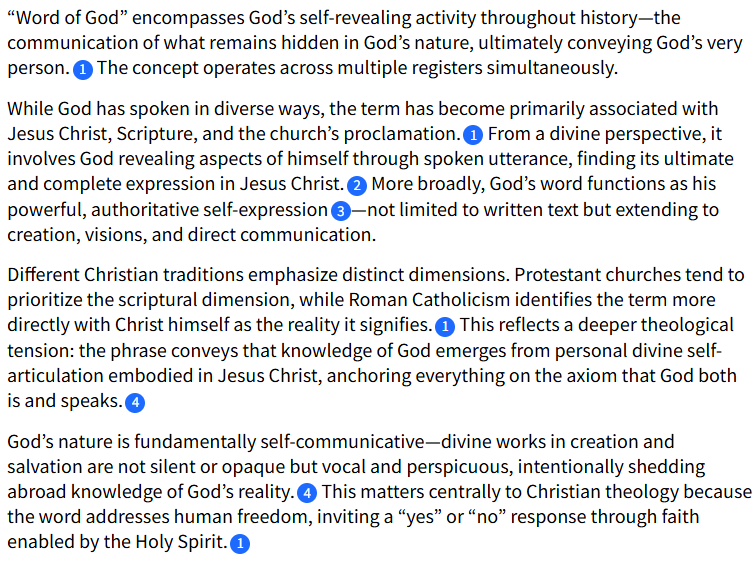
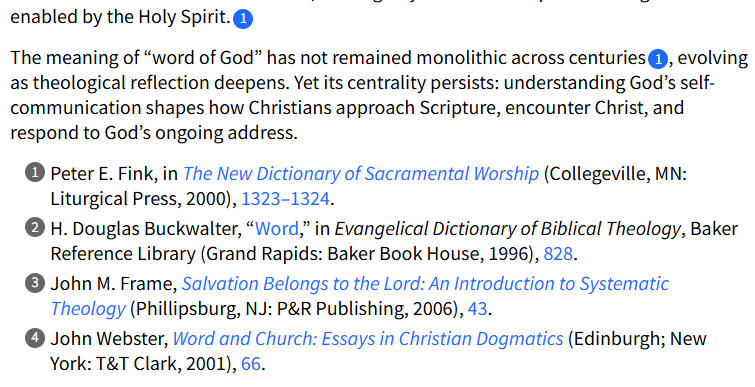
Here's a good summary from my Logos library:
@Brian_Sauve I'm not pretending anything of the story. But I've also preached 6 days a week, and as I said, this required me to take certain shortcuts in the study process. You can cast shade at me for saying it, but you can't honestly say you wouldn't benefit from more study.
@erap4p@AKofiCup It's a different Enoch. His whole supposition (Cain repented) was built on a lack of studying the text.
The call to repent is indeed important, but those preaching God's Word should allow meaning to arise from the text rather than reading it into it.
There's room for minor nuance, but not for skipping the whole process.
A preacher can't say with certainty "Thus saith the Lord" if he hasn't wrestled with the meaning of the text himself.
Otherwise, he'd be preaching his own ideas (or the ideas of others) rather than the Word of God.