Surveillance pricing is here - and it's changing how companies decide what YOU pay.
Instead of one price for all, companies now use your personal data to determine the maximum you'd be willing to spend. Your browsing history, location, income level, even how often you open an app - it all feeds into AI algorithms that price discriminate against individual consumers.
The examples are alarming: Delta announced plans to use AI for personalized ticket prices (before public backlash). Amazon changes product prices every 10 minutes. Target's app charged $100 more for a TV when a shopper was in the parking lot versus further away.
I recently spoke with @readersdigest about this troubling practice. As I explained: "Surveillance pricing egregiously invades everything about you to determine what you, as an individual, would most likely be willing to pay - rather than the universal pricing model we're all historically used to."
The good news? The FTC is investigating and there are promising bipartisan legislative efforts underway. But until comprehensive federal privacy laws exist, this practice continues.
My advice: Browse in incognito mode, clear your cookies, use a VPN, and always shop around. "Treat every 'personalized offer' with a healthy dose of skepticism."
Check out the full article here: https://t.co/yoHgfEp2fd
I recently spoke with @verge about the rise of “catch a cheater” apps and why they’re not just creepy but dangerous.
As I told The Verge, “What’s marketed as ‘cheater busting’ is really just vigilante surveillance.” They use facial recognition and huge amounts of scraped data to “build shadow databases of dating profiles that Tinder never meant to be public.” It’s mass data mining, connecting the dots on people without their consent.
The technology itself isn’t perfect either. Even top algorithms can drop from 99% accuracy in lab conditions to around 90% in real life. That's a big spread allowing for a lot of mistakes, which means false matches, real harm, and potentially explosive consequences between partners.
In Europe, these apps certainly violate GDPR. Here in the U.S., we still don’t have a comprehensive federal privacy law, but there’s hope. Bipartisan bills like COPPA 2.0 and the American Privacy Rights Act (APRA) would give Americans control over how their data is collected, shared, and sold.
Check out the full story here: https://t.co/dEKVQEZ67S
90% of startups succeed by pivoting! On Passage To Profit: @markweinstein tells Elizabeth & Richard Gearhart why flexible entrepreneurs win. Learn how to adapt, thrive, and grow your business https://t.co/5lNWYqsKo0
#Podcast#Entrepreneurs#StartupTips#PassageToProfit
It was a pleasure speaking with��Revenue Brew (by @MorningBrew ) about how Exa is rethinking company structure to move at the speed of AI.
As I shared in the piece, when businesses like Exa move toward a RevOps function, "Your product team is not a stand-alone team. Your sales team is not a stand-alone team. Everybody now coalesces . . . Exa wants to be the Google of AI, so this requires a RevOps team, not a product team, because AI is the service."
You can read the full article here: https://t.co/P0HMapj2aJ
I recently joined @DivergentCIO on @CoruzantPod for a lively conversation on the future of social media, privacy, and how we can restore sanity online.
We covered:
-The rise of surveillance capitalism and what’s next after Web2 and Web3
-Why manipulative algorithms are so destructive to our mental heath and democracy
-My vision for “Restoration Networking” - a framework for platforms to treat users as customers to serve, not data to sell
Here's the full episode: lhttps://podcasts.apple.com/us/podcast/restoring-sanity-online-mark-weinsteins-fight-for-privacy/id1501617739?i=1000727432252
“The free, open access communications paradigm we have did not arrive like magic. It was the product of a fair amount of political wrangling” - that's why we must continue our fight for the web.
🙏 @washingtonpost for reviewing 'This Is for Everyone'
https://t.co/BjJXYny5tr
Great to contribute to the @Daily_Express roundup today on books everyone should read.
As I shared: "The 7 Habits of Highly Effective People by Stephen Covey is timeless because it’s about building character first, and then success naturally follows. Dr. Covey was generous enough to endorse my own books, which was a real honor. His principles of integrity, win-win thinking, and seeking first to understand, are just as vital in business as they are in everyday life.”
Thanks to @Steffan_Rhys for including me.
The full article: https://t.co/P3OgriyKYE
Shared my thoughts with @Newsweek today on generational divides in digital habits:
“Gen Z were born into a world where smartphones were ubiquitous. They’re happier using phones for everything, while millennials prefer laptops for big tasks that require extra prudence. Looking ahead, Gen Alpha will integrate AI seamlessly into all areas of their lives. That’s the evolution of today’s digital landscape.”
Interesting piece by @marmorava: https://t.co/voH9BfL5d5
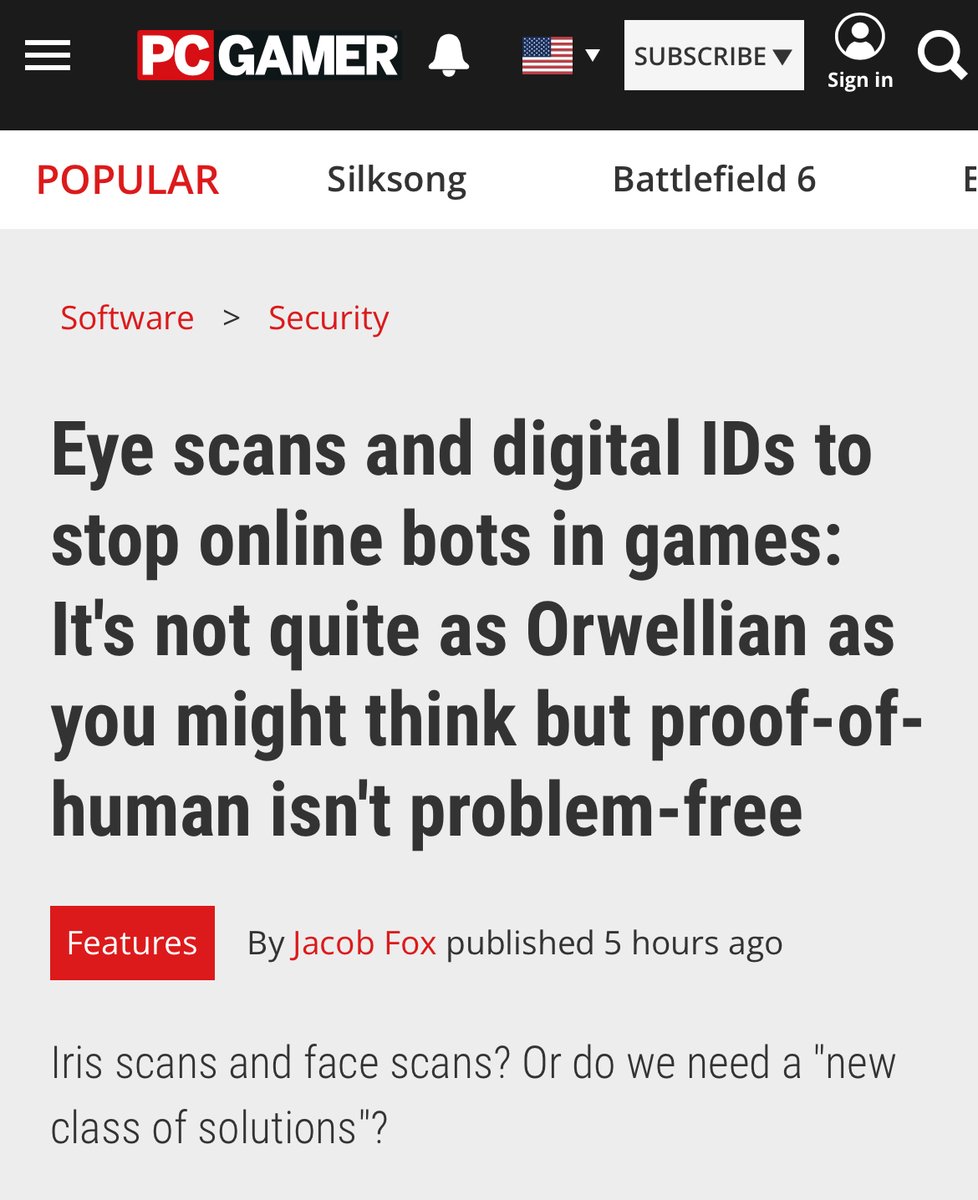
Glad to speak with @pcgamer today on proof-of-human in gaming and how to keep it privacy-preserving.
As I said in the piece: “Proof-of-human doesn’t mean more data harvesting. The ideal system would collect the absolute minimum needed to verify a person is real, then delete it.”
“The reality is our data is already out there… The ideal proof-of-human tech is designed to reduce your exposure by replacing constant surveillance and tracking with a simple one-time verification layer.”
https://t.co/hTF97CR2WB
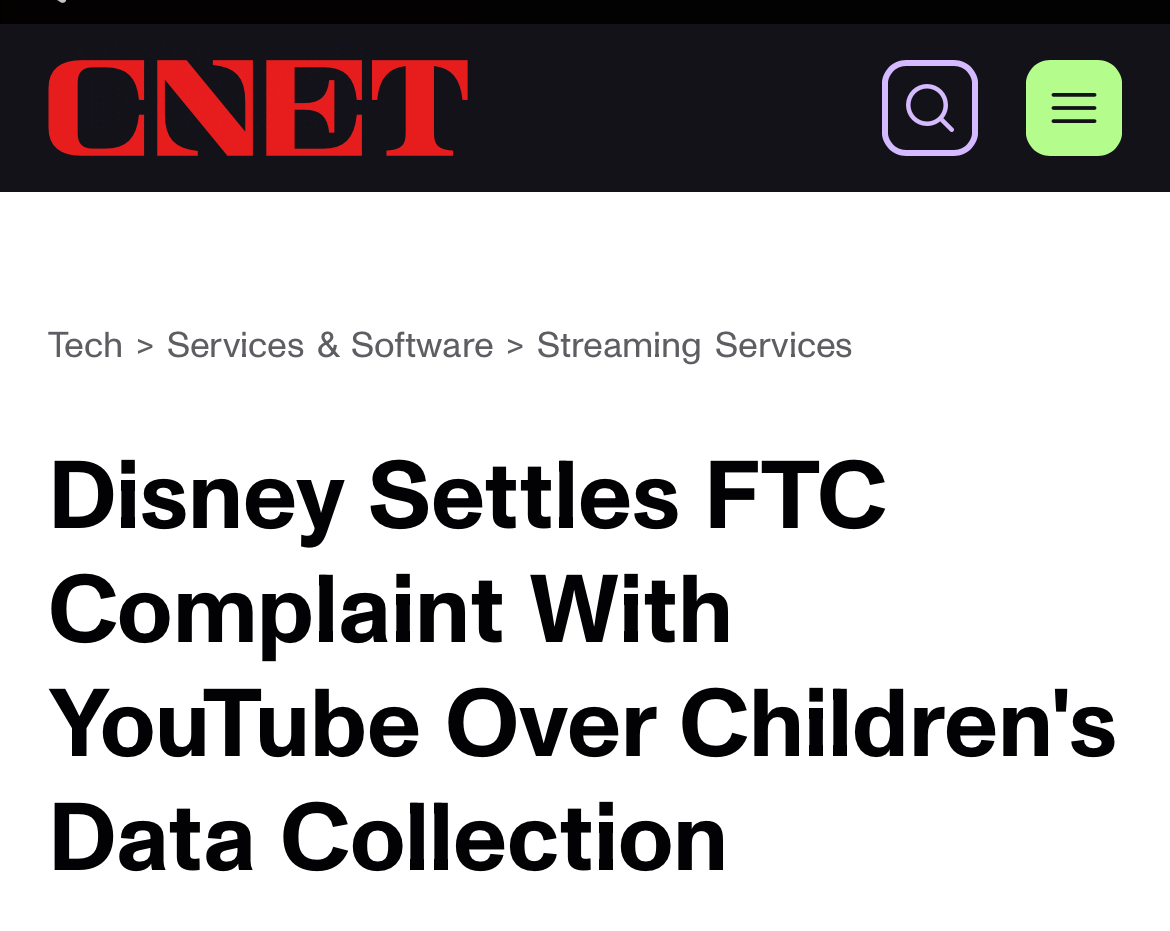
Yesterday I spoke with @omarg at @CNET about Disney’s $10M FTC settlement over collecting kids’ data on YouTube.
As I told CNET: “Disney is one of the most trusted brands, yet they knowingly broke the rules… If Disney does this, you can bet many other brands are too.”
Fines alone won’t fix this problem because dominant companies like Disney and Google (YouTube's owner) pay them as "costs of doing business."
https://t.co/GCbs1zaAhJ
How do you attract investors & advisors when you don’t have a big network? 🤔
In our livestream, @markweinstein (inventor of social networking & privacy advocate) shared the playbook 👇
On Best Seller Live my co-host @CynthiaJohnson and spoke with author @markweinstein about data control, protecting kids online, and what’s ahead with user verification and a bipartisan privacy rights act. #bestsellerlive#booksthatmatter
https://t.co/FLBPfsW02L
New studies tie heavy AI use to weakened critical thinking, loneliness & emotional dependence. My op-ed in @thehill illuminates what’s at stake and presents key fixes https://t.co/2fA2Q3Nd3p
TikTok was fined about $600 million by Ireland’s data-privacy watchdog for failing to guarantee that user data sent to China was protected from government surveillance https://t.co/JuiShS73sO
Online safety is finally being taken seriously. The House just passed the #TakeItDownAct 409-2. It forces social media platforms to remove non-consensual images, cracks down on AI deepfakes, and has strong penalties for abusers. I broke it down on NBC: https://t.co/Vn9rWIDNlP #OnlineSafety
As the landmark antitrust case against Meta heats up, I have had a front row seat into where we were and where we are headed, which I detail in my just published Op-ed in @Newsweek: "My Company Competed Against Facebook. Here's What Happened" https://t.co/2ddbakppcm