@kaulcsmc Pts w/ a single 50-70% stenosis of a coronary or carotid artery did not meet criteria for "qualifying" athero, so these patients are in high-risk DM group in NEJM paper
But in this analysis of pts without known "significant" athero, we did not want these 50-70% stenoses included
A great team effort as always, and I especially enjoyed the collaboration with friend, colleague, and EC expert @Dr_RajatGupta on this one.
@KamanuFred@TIMIStudyGroup
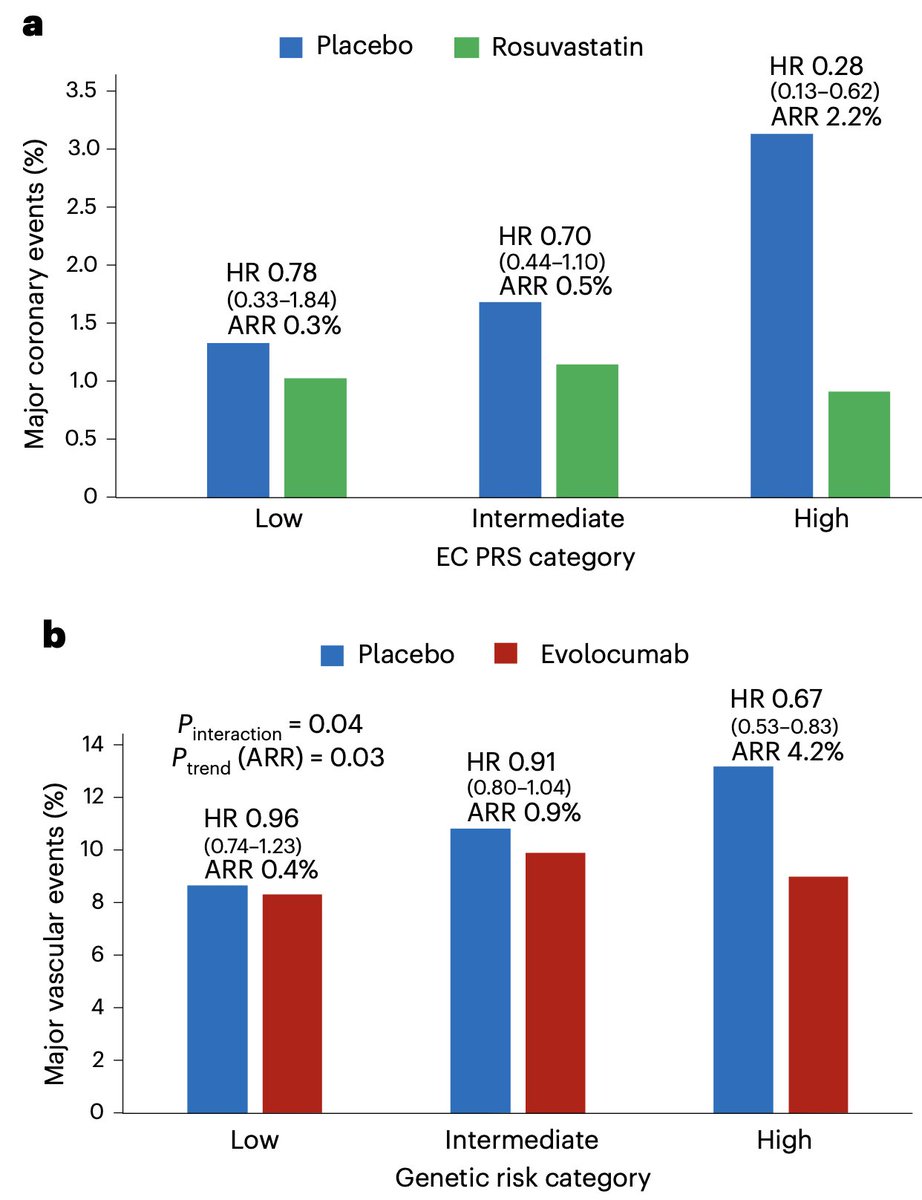
Now out in @NatureMedicine, we developed an Endothelial Cell PRS for CAD that:
1) Quantifies a currently immeasurable axis of CAD risk
2) Identifies individuals who are LDL-sensitive
3) Establishes which Pts will have greatest CV benefit from early & aggressive lipid lowering
Honored to be a part of the @NationalLipid Association's Expert Clinical Consensus on the Role of ApoB in the Clinical Management of Cardiovascular Risk in Adults.
When should we be checking apoB?
How low should we go?
See link and thread below...
https://t.co/lYq6RA81J8
To summarize, apoB is a precise, accurate, and well-validated measure that provides information not available on standard lipid panels
Incorporation of apoB into clinical practice identifies patients at higher CV risk than appreciated who may warrant intensification of therapy
Role of apolipoprotein B in the clinical management of cardiovascular risk in adults: An Expert Clinical Consensus from the National Lipid Association - Journal of Clinical Lipidology @nationallipid
https://t.co/bXAOK0Xtej