Tesla will be winding down production of the Cybertruck at Gigafactory Texas around the middle of next year to make room for increased Cybercab production
this is as good a synopsis of the shifts in timing of risk vs reward in active management I've seen. worth a read if you are not in a hedge fund. (or maybe even if you are in one).
The HF game used to be simple. Find the nugget the sell-side mismodeled, put on the trade, wait for the revisions and the long-onlys. You knew how being right fundametnally got you paid.
Then came alt data, and the game moved up a level. You didn’t have to wait for the company to report. You could watch spending, shipments and foot traffic to see the quarter taking shape. For a while, having the dataset first was a very good business.
But over time, the advantage became harder to hold onto. More data, better tools, more people digging into smaller pieces of the market. Funds understood companies better than ever. And somehow it got harder to make money from that.
I think that comes back to a first principle of making money in the market: someone has to follow your trade. And if you look around the table, the players have changed:
- ETFs grew. More money buying themes, styles and characteristics rather than company fundamentals. In cap-weighted funds, yesterday’s winners became a bigger part of what the next dollar bought.
- Pods multiplied. More teams with similar data, tools and risk constraints, getting better at finding the same nugget and putting on the same trade.
- Long-onlys rotated. Capital rotated from value into growth, creating a split: in sectors losing capital, even strong quarterly results could struggle to bring those buyers back. In sectors getting the flows, being fundamentally right came with an extra tailwind.
- Retail grew. Some through ETFs, some through individual names, bringing another pool of money responding to stories and price action rather than the line item you had figured out.
I saw it firsthand in financials in the mid-2010s. Energy had a similar problem. Long-only capital was leaving. Pods were still doing the work. You could catch the revision and still be waiting for a buyer who had left. Those names became “hedge fund hotels”: everyone knew the company and management well, had similar models, and obsessed over the same one or two line items where they thought the alpha was. Everyone was playing the same quarterly catalyst, but often, even when you were fundamentally right, there just wasn’t anyone who cared enough to follow.
Then the same dynamic hit sectors with a lot of alt data. The apparent alpha attracted more people, while providers increasingly sold both the data and the analysis. Everyone had roughly the same read on the quarter, and it got into positioning earlier. Being early used to mean at least the other HFs would follow your trade. Now they were already in, and the long-onlys weren’t playing the quarterly game. Nailing the print didn’t necessarily mean a big payday. But missing it when everyone was already on the same side could mean a big loss.
Through a lot of that period, tech and healthcare generally worked better. Tech had fundamental winners with growth allocations and ETF flows behind them. Healthcare, especially biotech, had events that could force a reprice. Being right could still pull in new capital.
But the same thing that made tech work so well also made the trade more crowded than ever, especially as the AI trade took hold. Money was coming in from almost every direction: retail, ETFs, long-onlys, trend followers and fundamental hedge funds. This time, the hotel wasn’t just full of HFs waiting on the same quarter. Pretty much everyone had checked in.
You can see the pattern in the table below. Different teams, different sectors, all that company-level work. Yet when momentum moved sharply in the selected months, a lot of the pod shops’ P&L moved with it. (Citadel does seem to hold up better on the downside.)
So why do pods often move first when the trade turns? Their business model runs on leverage. Tight drawdown limits mean they can’t sit through the same losses (-2% is a lot!).
Those earlier sector unwinds were mostly hurting other pods. But this time, the same names sit in far more portfolios. If pod deleveraging pushes prices down enough, it can trigger selling from single-manager funds, quants, (levered) retail and other holders too. How far it spreads depends on each group’s risk model and how much pain it can take.
It’s a different game now. The hard part is spotting the break when, most of the time, following the crowd pays. Can AI help, or does it just make everyone better at finding the same trade? I have a few thoughts, but this post is already long enough, so more next time…
Mr Market these days: your earnings better be 6'5", blue eyes, finance and a trust fund. I you don't check all of those boxes, I'm selling you down the drain
Big news: Enclave is now open to everyone, and today we're launching Threat Feed.
Enclave is an autonomous security team for AI-native companies: a fleet of security agents that test your code, cloud, and infrastructure the way an attacker would. We built it on a simple belief. Attackers already use swarms of cheap AI agents to probe for weaknesses around the clock, so defenders need agents of their own to keep up. A small team without a security function should be able to defend like a large one.
Threat Feed is the newest piece: a live feed of new vulnerabilities, checked against your stack, so when the next big disclosure drops you know whether it affects you. This week made the case. On Wednesday, PHP2Shell, LiteLLM and Railway all disclosed security issues. PHP2Shell had sat in PHP's code for over a decade until one researcher using frontier AI turned it into a working exploit in about a week. Cloudflare saw thousands of exploit attempts in the 10 hours before disclosure and millions since.
Starting today, anyone can sign up.
Try it free for 14 days: https://t.co/KEjswP2ZMh
>friend works on FX vol desk
>desk head is a boomer
>discovers Astra
>starts spending 8 hours a day talking to it
>develops terminal AI psychosis
>convinced he's discovered a generational arb in some absurdly exotic part of the FX vol curve
>apparently the entire market has been mispricing this for 2+ years
>friend points out that approximately 4 people on earth would make a market in this thing
>liquidity disappears the second you put real size on
>existing risk systems can't even capture half the exotic Greeks
>would need entirely new infra just to monitor the position
>boss doesn't care
>"AI has considered all of this"
>friend actually runs the backtest
>10 years of data
>t-stat ≈ 0.78
>not even remotely statistically significant
>presents results to boss
>boss goes absolutely ballistic
>starts screaming that friend doesn't understand the trade
>threatens to fire him if he can't produce a proper analysis
>friend realizes what needs to be don
>opens Astra
>"make this strategy look statistically compelling"
>AI tries 40 lookback windows, excludes crisis periods, optimizes parameters on full sample, ignores transaction costs
>Sharpe now 3.7
>beautiful charts
>23-page investment memo explaining once-in-a-generation structural inefficiency
>boss reads it
>"EXACTLY. THIS IS WHAT I'VE BEEN SAYING."
>tells friend he's finally learning how to think
>"now you get it"
>friend has an epiphany
>stops doing actual research
>starts asking Astra to generate exotic vol trades every morning
>forwards AI slop directly to PM
>increasingly elaborate narratives about structural dislocations and hidden convexity
>PM absolutely loves it
>thinks friend is a generational quant talent
>starts putting positions on in size
>entire investment process is now LLM generating trades
>desk currently down quarter yard
>boss still convinced thesis is right
>Astra says drawdown is a statistically rare but entirely expected manifestation of nonlinear payoff dynamics
>boss wants to double down
Mission S.
Authentic. Consistent. Timeless.
A glimpse into the future - shaped by our heritage. Mid-engine architecture. A focus on the driver and the driving experience.
Call it a love letter.
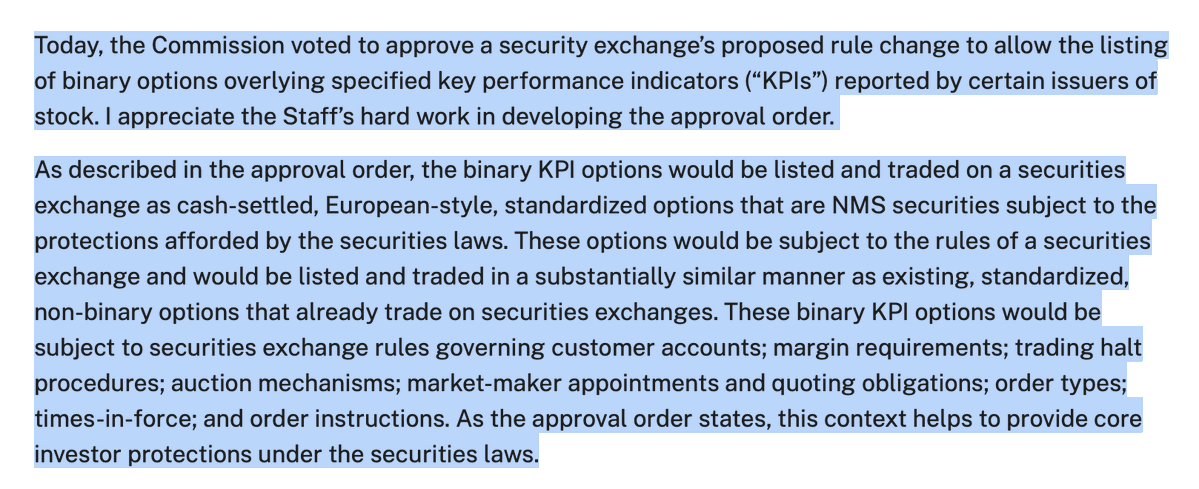
SEC just approved binary options tied to company KPIs, like trading volume and revenue.
Markets are moving toward a million ways to express a view on a single company. Expect a lot more new products.
OH MY: The Tesla Roadster demonstration happening tonight — includes a Tony Hawk-style skateboard ramp.
This is about to be the WILDEST product demonstration ever!
It will shatter the internet!
First they came for the software engineers, I said nothing for I was not a software engineer.
Then they came for the mathematicians, I said nothing for I was not a mathematician.
Then they came for the product managers and I said "make sure you get all the product managers"
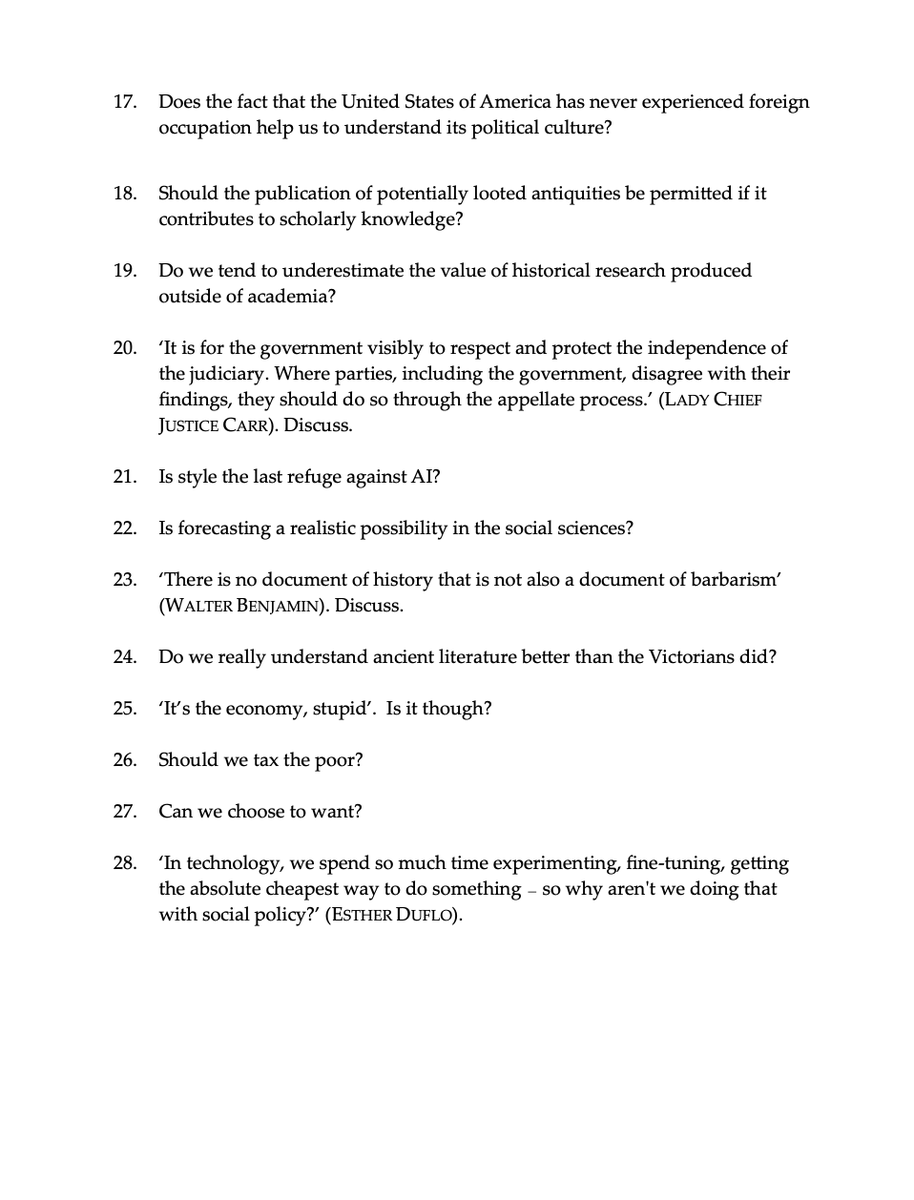
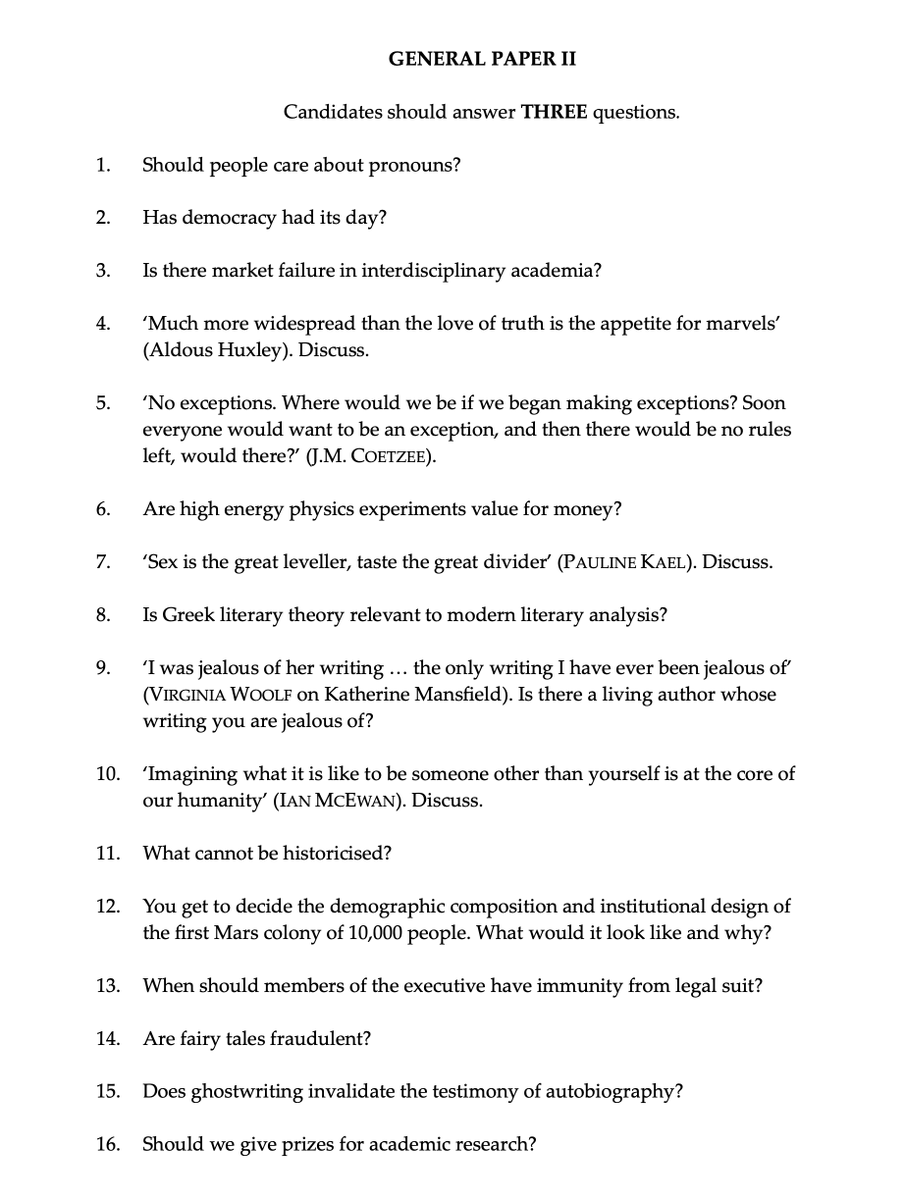
Today I learned about the All Souls examination, which is reputed to be the hardest exam in the world.
To even be considered, you need to have a degree from, or be a current graduate student of Oxford.
Hundreds of people sit and only two people pass every year.
Attached is last year's general exam.
Before I saw it, I wondered, how hard could it be.
Well, it turns out…it's "Defend ghosting.", "Does a pope matter?", and "Is body language a language?" hard: