🚨عاجل: محاولة اختراق شبكات Starlink
3:00 ص الهاكرز: "أغلقنا محطات Starlink في العالم كله، ادفع 500 مليون دولار بتكوين أو ينقطع الإنترنت عن الأرض!"
🚀 3:01 ص: إيلون ماسك يرد:
"افحصوا الـ Firmware لديكم.. بينما كنتم تكتبون مذكرتكم، قام نظام Neural-Auto-Patch بالتحديث التلقائي وتمرير عمليتكم بالكامل لـ قمر صناعي معطل في المدار الخارجي! شكراً لاختبار الـ Hotfix الخاص بنا." 😎💥
سرعة الاستجابة والأتمتة الذكية في حماية البنية التحتية هي الفارق الحقيقي اليوم بين النجاة والكوارث السيبرانية!
هل ترى أن الـ AI سيكون خط الدفاع الأول والأخير عن الشبكات في المستقبل؟ 🧵👇 https://t.co/Bizw40YoTD
#JASMY
About a decade ago, Japan, like the rest of the world, found itself at a turning point. Taking the lead in the modern digital era had become essential. The country already possessed one of the most advanced technology industries in the world, as everyone knows. Its companies were driving the development of consumer electronics, telecommunications, sensors, robotics, and computing, weren’t they?
But a new revolution was emerging, one that was sometimes overlooked or relegated to the background. The famous Fourth Industrial Revolution would no longer rely solely on machines. Its foundations would have to be built on something far more difficult to control: data.
Every smartphone, every connected device, every vehicle, every household appliance, and every digital service would progressively generate an enormous amount of information.
The question was, and still is, fundamental:
Who owns this data? Who can use it? And above all, who should have the right to decide how it is used?
It was within this context that Japan gradually began developing a particular vision for its digital future.
Under the economic and technological transformation policies initiated during the era of former Prime Minister Shinzo Abe, Japan began promoting a central idea: technology should not merely improve productivity. It should contribute to transforming society itself.
This vision would take shape through Society 5.0; a society in which the physical and digital worlds are deeply interconnected, where artificial intelligence, IoT, robotics, and data become infrastructures serving the population.
But this transformation raised a major problem. The more connected the world becomes, the more data individuals generate. And the more valuable that data becomes, the more its concentration in the hands of a few major platforms becomes a strategic issue.
It was precisely around this challenge that a new philosophy began to emerge.
The idea was not to regard personal data as nothing more than a raw material destined for platforms. It should remain connected to its rightful owner.
A citizen should be able to determine what they share, with whom, under what conditions, and for what purpose.
In other words, digital technology should not strip individuals of their power over their own data. On the contrary, it should give them greater control.
It is on this philosophy that Jasmy would gradually build its identity in Japan, bringing together several worlds and fields that had long evolved separately: electronics and the Internet of Things, digital identity, blockchain, artificial intelligence, and data infrastructure.
The objective was not initially to create another cryptocurrency. The real challenge was much broader.
It was about building an infrastructure capable of creating a trusted relationship between individuals, their data, their devices, and the companies seeking to make use of that data.
Here, blockchain is a tool for establishing rules, rights, permissions, and traceability in a digital environment where trust is essential.
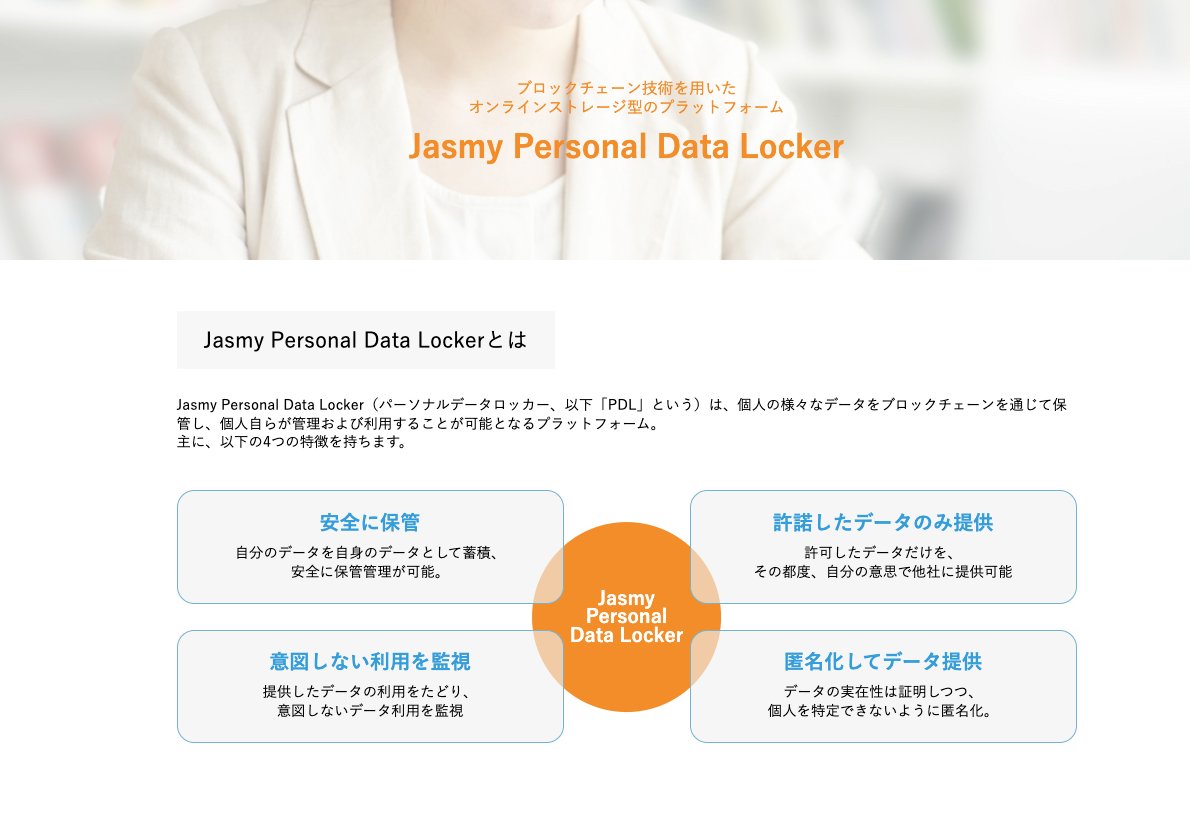
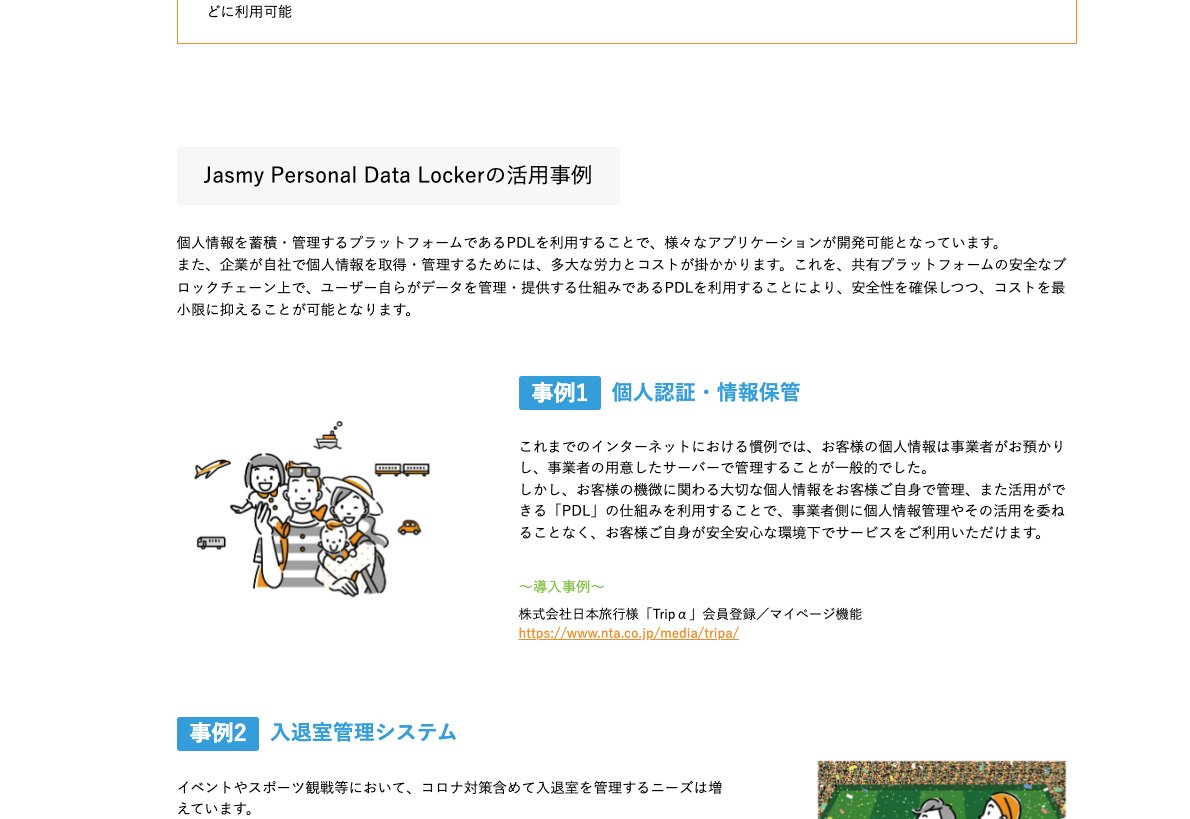
This is also why Jasmy has moved toward concepts such as digital identity, Personal Data Lockers, connected devices, digital wallets, and infrastructures designed to manage the rights associated with data.
The principle remains the same:
Connect without confiscating.
Make use of data without abandoning sovereignty.
And create value without removing control from the person who produces it.
This philosophy takes on an even greater dimension with the rise of artificial intelligence.
AI needs data enormous amounts of data.
But the AI era raises a question that Japan and the Jasmy team had already begun anticipating several years ago:
How can data be used on a massive scale while protecting the rights of those who produce it?
The Japanese answer does not necessarily have to be a choice between innovation and protection. Rather, it can be about building an infrastructure capable of making both work together.