If you're 'triggered' by:
- Someone sighing when you're talking
- Mild criticism
- Someone leaving during a presentation, scrolling while you talk, or saying in a text 'can't talk now'
You may have 'Rejection Sensitive Dysphoria' according to the new psych-babble on TikTok..
We do not need emotion-numbing drugs like antidepressants to manage the effects of deprivation and inequality as this article suggests. We need social and economic change and to give people constructive support. https://t.co/QNcjzXqqxs
The neurofication of everyday life, aside from fuelling a global psych-drug market, is driving young people to reframe various forms of real distress & difficulty as indicating fixed disabilities, that neither they nor anyone else can change. This is debilitating a generation.
'The experiences classified as ADHD are real and can be profoundly disabling, but the scientific.. status of ADHD as a unified neurodevelopmental disorder has not been demonstrated and remains open to legitimate question' @psychgeist52@JDaviesPhD https://t.co/jL19EeYWVx
It is said that Neurodivergent people (such as those diagnosed with ADHD or autism) do not fit into modern society. Can you point out to me who does - who is our capitalist society made for?
@callmecactus__ Yes 90% of psychiatry is pseudoscience. I say that as a psychiatrist. Of course the behaviours and struggles are real interpreting them as a neurological condition is unsupported by the evidence
Detecting a signal of abnormalities at a group level doesn't mean that this claimed neuro-biological evidence is valid at an individual level, it's pretty much similar to statistical difference detected by analysing any other spectrum of variations across a large population.
Critics of the ADHD construct: show me scientific evidence that there is a specific demonstrable abnormality or difference that justifies concluding it is a neurological issue. Proponents: The people I like say it is and you’re ableist if you disagree
Critics of the ADHD construct: show me scientific evidence that there is a specific demonstrable abnormality or difference that justifies concluding it is a neurological issue. Proponents: The people I like say it is and you’re ableist if you disagree
Love this paper
1. Checking ANA in everyone with elevated ALT is unhelpful, sometimes harmful, usually confusing
2. Biopsy when ALT <100 but ANA elevated is not useful
3. Autoimmune hepatitis is a clinical diagnosis and frequently made DESPITE biopsy findings
When you send an email using ChatGPT, people know. When you write a thread using ChatGPT, people know. And when you write an article using ChatGPT, people know. For the sake of all that is good and holy, stop.
Defining neurological disease is less objective than often assumed. Simon Shorvon considers how confusion between symptoms and disease, shifting criteria, unstable classifications, and complex aetiology can undermine the medical model. https://t.co/G2KJMCBW9I
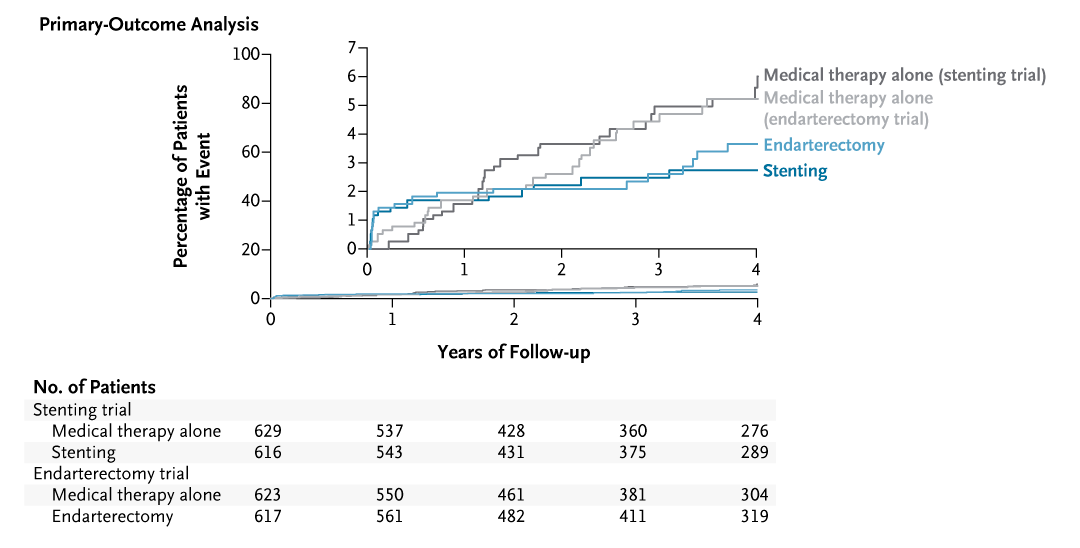
Original Article: Medical Management and Revascularization for Asymptomatic Carotid Stenosis (CREST-2 trials) https://t.co/ZHLCV9ukNU
Editorial: Managing Asymptomatic Carotid Stenosis https://t.co/dLgi1iv8v0
#Neurology
There were 46 new medicines approved in 2025, including:
- Two new antibiotics
- A new class of painkiller
- The first medicine for bronchiectasis
- The first two drugs for IgA Nephropathy
- New degraders, antibody-drug conjugates and bispecific antibodies for cancer
NEW in Frontline Gastroenterology!
💊 Low-dose amitriptyline for IBS isn’t just effective — it’s cost-effective too.
In a prespecified economic analysis of the ATLANTIS trial, low-dose, titrated amitriptyline (10–30 mg) used as second-line therapy for IBS in primary care was:
✅ Clinically effective
✅ Safe and well tolerated
✅ Likely cost-effective over 12 months
✅ Associated with small QALY gains and overall cost savings
📌 Given the high prevalence and healthcare burden of IBS, this inexpensive neuromodulator could deliver meaningful population-level benefit.
🔗 Read the full paper in Frontline Gastroenterology
https://t.co/DbgJItuPIS
@PhilSmithIsBack@OTavabie@dr_aditi_kumar@TrevorTabone@eathar_s@IrenePerezMD@KGananandan@zare_benjamin @medicalreg @dtleiberman
On this week’s cover of The Lancet, a new letter: “Gaza’s healthocide: medical societies must not stay silent”.
Read the letter and more in our latest issue: https://t.co/9b01T7yhR3
Hoping for promising results out of this first-in-human Phase I trial. It aims to test a gluten derived peptide immunotherapy; VTP-1000 for coeliac disease.
https://t.co/uO2YzBMJHi