@mooseincrisis His arse is demonstrably bigger than that of the horse. He should absolutely NOT have been allowed to mount. What were they all thinking!! This is abuse! #themanhasthebrainsofachocolatefrog
@devicesadesires I would have thought that actually being a practising Christian would have been absolutely essential. You could be all of those things without actually bring Christian or are we so woke now that you're not allowed to state that.
The assumption is straightforward: Extreme Unction was a medieval invention designed to replace physical healing with a spiritual ritual for the dying. Then you read Origen's Homilies on Leviticus, written around 240 AD.
Long before any medieval council formalized the language, Origen is already explaining the Christian use of blessed oil to the early Church.
He does not treat the anointing of the sick as a symbolic memorial or a temporary apostolic miracle that faded away. He ties it directly to the biblical command in James 5:14-15. Is anyone among you sick? Let him call the presbyters, and let them pray over him, anointing him with oil.
Origen identifies this anointing as involving both bodily healing and the forgiveness of sins, but he makes a careful distinction. He calls the physical healing a "lesser healing" in contrast to the "greater healing" of the soul through the remission of sins.
This shatters the timeline. The early Church was not waiting until the Middle Ages to cope with the loss of physical healing. They understood the anointing exactly as James described: a sacrament ordered toward both body and soul, with the spiritual healing of sins as the greater gift.
The presbyters did not merely pray for recovery. They administered an active, objective instrument of grace that brought bodily healing while forgiving sins through the Lord's command.
Why does the earliest Christian witness treat James 5 as a normative Church practice rather than a temporary gift that expired?
#Thame#SouthOxfordshire
SASSY STILL MISSING
Nearly a week without Sassy at home
The last sign of her is her wandering down her driveway at approx 10:45am Friday 24 July.
There have been no confirmed sightings despite posts being shared across the county & surrounding areas.
#SpanielHour
DEXTER cavalier King Charles missing Ringland Hills, NORWICH
What3Words ///tinkle.anchorman.pots #NR8
29/7/26
Male black&tan adult (White hair on chin&chest)
MIGHT BE SKITTISH so do not attempt to pick up
https://t.co/EyKL2legb5
@EveningNews@JacquiSaid
A name most Catholics barely notice is a problem for the modern assumption that the early church was just informal Bible fellowships.
Linus.
Not a famous wonder-worker. Not a celebrity theologian. A nearly silent name, remembered in old Christian lists as one of the earliest bishops of Rome, and preserved in the Church's memory precisely because offices mattered.
That is the point modern people miss.
If Christianity began as a loose spiritual network, with no visible continuity, no inherited office, no public memory of who received responsibility from whom, then figures like Linus should be disposable. The faith would preserve ideas, not names. It would remember experiences, not succession.
But early Christianity did the opposite.
It remembered bishops, churches, chains of handing-on, and concrete communities that could say: this is what we received, and this is who was entrusted to guard it.
Linus does not prove every Catholic claim by himself. That would be too easy, and too sloppy.
But he does place pressure on the Protestant imagination that wants the apostolic Church to be mostly invisible until later corruption arrived. The ancient pattern is more stubborn than that.
Before Christianity had imperial power, before medieval universities, before printing presses, it already cared about visible continuity.
Names like Linus are not decorative footnotes. They are evidence of a Church that understood doctrine as something guarded in a living body, not reinvented by isolated readers.
The modern assumption says authority is what happens after corruption.
The older Catholic instinct says authority is how the apostolic deposit survived in the first place.
🐕 #MISSING#NorthYorkshire
Please share to help find FRODO
#Whippet
Last seen West Marton #Skipton#BD23 on 28 July 2026 at 21:20
Frodo is staying with owners friends while owner away & jumped the back yard fence.
Nervous dog, please do not chase 🙏https://t.co/48erFjwPbp
As we're sure everyone has noticed, algorithms are throttling all of us & views have massively dropped for us
We want to get #missing Gracie home-
If you see this please like or share so we know it's been seen🙏
We don't want Gracie hidden behind all the propaganda👇
#pershore
🆘27 JULY 2026 #Lost Kokko (Coco) #ScanMe
Cocker Spaniel Female PLEASE SHARE
#Redhill#Surrey#RH1
Likely disorientated as lost and 25 miles from home. Lost by owners mums dog walker. Wearing navy blue corded collar with mums details on it
https://t.co/OAYaouy8Rr
📣🚨BERT - STOLEN ON 22ND FEB 2026🚨📣
🔁Can you share to help #bringberthome please🔁
Bert, male, ? years old, Cocker Spaniel
https://t.co/ktscKY6UiY
📍STOLEN from: Wokingham #Berkshire RG41
🗓Stolen since: 22nd February 2026
‼️Bert was taken while owner
@CalverVictor was in hospital. Bert is a lifeline for his owner who is very poorly. Bert was taken by someone known to the family & is believed to have been moved on to possibly Hartley, Witney. Bert is registered to GU14 area. CRN issued by police‼️
#teamgreenacres #stolendoghour #k9hour #rehomehour #spanielhour #lostdog #missingdog #founddog #teamzay
The Apostle Paul did not leave the Church a book to be interpreted in isolation, he left a living authority to be obeyed.
Read 2 Thessalonians 2:15 slowly. "Stand firm and hold fast to the traditions which you were taught, either by an oral statement or by a letter of ours."
Paul does not say "only the letters." He explicitly puts oral tradition and written tradition on the same level of obligation. The Greek word is paradosis, a handed-down deposit, not graphē, a writing.
So where does Sola Scriptura go from here? You cannot use the Bible to argue that only the Bible is binding when the Bible itself commands you to obey what was never written down.
Paul reinforces this pattern everywhere. 2 Timothy 2:2: "What you heard from me before many witnesses, entrust to faithful people who will be able to teach others as well." The transmission chain is personal, oral, and authoritative. 1 Corinthians 11:2: "Hold fast to the traditions, just as I handed them on to you."
The apostolic model was never "read the letter, figure it out alone." It was bishops and teachers handing down a living deposit from one generation to the next. If your tradition rejects oral apostolic authority, it is rejecting the very apostles it claims to follow.
How does Sola Scriptura actually handle verses that explicitly command obedience to unwritten tradition?
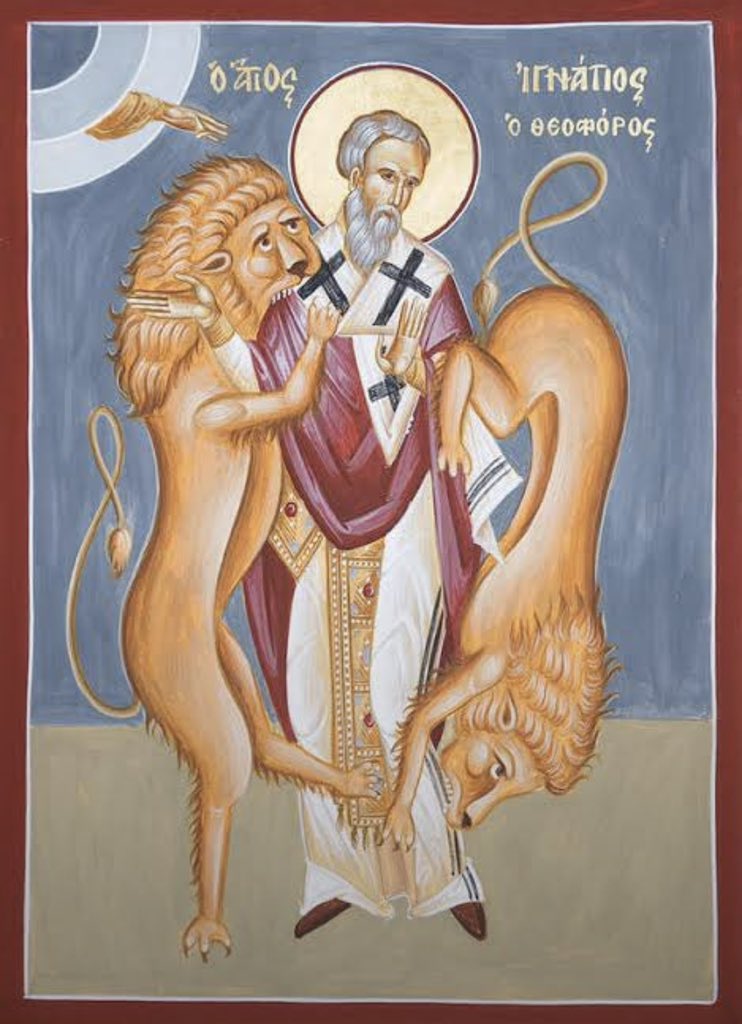
THE CHURCH FATHER WHO WROTE THIS IN 107 AD AND IT SILENCES EVERY PROTESTANT ARGUMENT
St. Ignatius of Antioch was a student of the Apostle John. He was arrested and sent to Rome to be eaten by lions.
On the way, he wrote seven letters. In 107 AD, within living memory of the Apostles, he wrote:
“Where the bishop is, there let the multitude of believers be; even as where Jesus is, there is the Catholic Church.” (Letter to the Smyrnaeans, 8:2)
This is the first recorded use of the term “Catholic Church” and it comes from a man who personally knew the Apostle who leaned on Jesus’ chest at the Last Supper.
He also wrote:
“Take note of those who hold heterodox opinions… They abstain from the Eucharist and from prayer, because they do not confess that the Eucharist is the flesh of our Savior Jesus Christ.”
Real Presence of Christ in the Eucharist. The Catholic Church by name. Obedience to bishops in apostolic succession.
107 AD. Not the Council of Trent. Not the Middle Ages.
The next time someone tells you the Catholic Church invented these doctrines centuries later, show them Ignatius.
He wrote this on the way to die for it.
🚨MISSING SINCE 14TH MAY 2025 - Can you share to help get Bunty home please🚨
Bunty, 27 year old #Shetlandpony
📍Missing from: #brightling#eastsussex@brightonargus@Brighton_tweets
🗓 Missing since: 14.5.25
🏥Bunty is disabled & requires medication🏥
Bunty has never been apart from her Mum & poor Mum is pining for her👇
https://t.co/zPUCytbLmS
📞 Please Call Number On Poster Below👇 If You See Bunty👇
OR
Anyone with information can report it to Sussex Police & quote serial 637 of 14/05
OR
☎️Call 101 or Crime Stoppers anonymously on 0800 555 111
#teamgreenacres #rescue #stolendoghour #rehomehour #ponyhour #missingpony #foundpony #stolenpony #lostpony
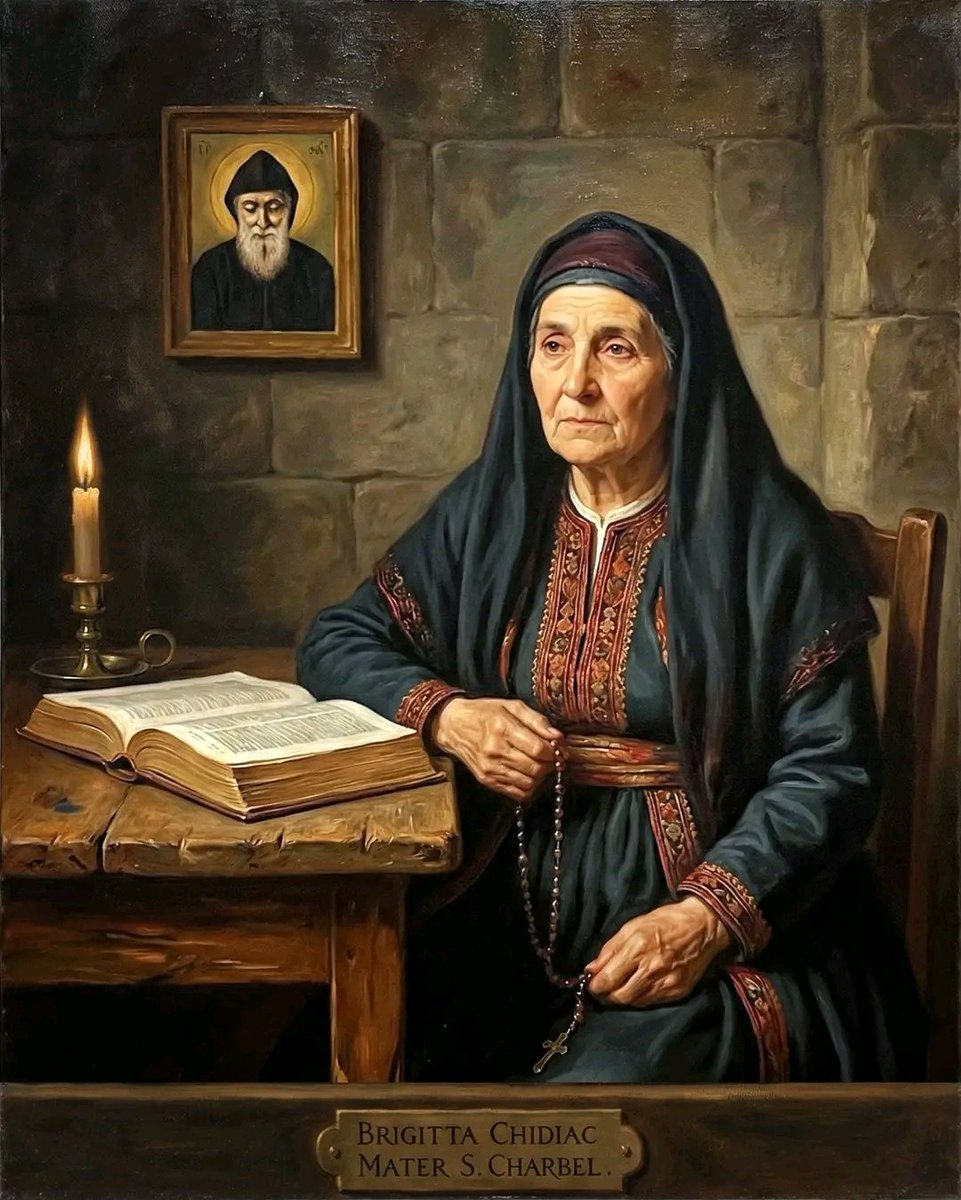
Brigitta Chidiac: The Mystery of the Mother of Charbel Makhlouf ✨
The world knows Saint Charbel as the silent hermit of Annaya, but his path to the heights of Mount Lebanon began in the calloused hands and prayerful heart of a woman named Brigitta Chidiac. If Charbel is the fruit of Lebanese sanctity, Brigitta was the soil, hardened by the elements of the North and softened by a life of perpetual prayer.
Born in the rugged town of Bsharri around 1800, Brigitta carried the spiritual DNA of the Holy Valley of Qadisha. Her own brothers, Augustine and Daniel Chidiac, were already renowned hermits at the Monastery of Saint Antonios of Qozhaya. When she married Antoun Zaarour Makhlouf and moved to Bekaa Kafra - the highest village in the Middle East - she brought that monastic intensity into the domestic sphere.
The "thick" reality of her life was one of relentless labor and sudden tragedy. In 1831, when her youngest son Youssef (the future Saint Charbel) was only three, her husband Antoun died of a fever while returning from forced labor for the Ottoman army. Left a young widow with five children in a village perched 1,800 meters above the sea, Brigitta did not buckle. She was described by villagers as a woman of "formidable character," a silk weaver who turned her loom into an altar. As she wove, she prayed the Rosary incessantly, teaching her children that work and prayer were the same breath.
To ensure her children’s future, she later entered a second marriage with a devout man named Lahoud Ibrahim. This detail is often overlooked, but it is essential: Lahoud was a deacon who was eventually ordained a priest, taking the name Father Abdelahad. This meant Charbel grew up in a home that was literally a "Domestic Church," serving at the altar for his stepfather while watching his mother live a life of penance that rivaled any monk. Brigitta was known to fast every single day of the year, except for Sundays and major feast days.
The most agonizing chapter of her life occurred in 1851. Youssef, then 23, left for the monastery in the middle of the night without a word of farewell. Brigitta and his uncle tracked him to the Monastery of Our Lady of Mayfouk, where she stood outside the gates for weeks. She initially pleaded with him to return, fearing the loss of her son to the absolute silence of the cloister.
However, after a month of spiritual struggle, the grace of surrender took hold of her. In a moment that defined the vocation of every Catholic mother, she finally told him: "If you were not to be a good monk, I would say 'Come back.' But I know now that the Lord wants you. In my pain of being separated from you, I say to Him: 'May He bless you and make you a saint.'"
She never saw him again. For the next 47 years, Charbel lived in total detachment, but he carried her "rule of life" with him. Brigitta died on June 2, 1875 - the very same year Charbel received the final permission to enter the absolute solitude of the Hermitage of Saints Peter and Paul. As she closed her eyes to this world, her son entered the deepest silence of his life, a testament to the mother who first taught him that God is enough.
-PrayersToJesusChrist
🐕🧨Shared post URGENT PLEASE SHARE #IRELAND#WEXFORD
Missing lab wearing a muzzle - unable to eat😔
Black Lab BUTCH went missing on Wednesday 22 July 2026
Whitefort/monomer area of #Crossabeg
Neighbours set off #fireworks & Butch raced off into the fields & not been seen since