Lately, the President of the United States has been repeating a claim almost every day, which he believes is the main reason why the Russians failed to capture Kyiv in three days:
“The Russians had a thousand tanks moving along a concrete highway.
They would have been in Ukraine in four hours if they had been traveling at a tank’s maximum speed — exactly 48 miles per hour. Nothing could have stopped them. The war would have been over in one day.
And this very stupid general — I have no idea who he is.
He decided to turn right into farmland and then left toward Kyiv, instead of staying on the highway. On the concrete highway, a perfectly good road, where everything was going very well for them.
Another three and a half to four hours, and the whole war would have been over.
But eventually, they got stuck in the mud.”
They say Donald Trump is given news and briefings on sheets of paper with pictures on them so that the president of the world’s most powerful country can get up to speed more quickly.
We hope this post reaches at least one US government official who can print out and show him photographs of Russian columns destroyed by Ukrainian defenders. This was made possible, in part, by Javelins supplied to Ukraine by the American people — for which we are sincerely grateful — not Trump, shortly before Russia’s full-scale invasion.
One of the world’s “most powerful” armies, backed by a nuclear power, was stopped by Ukrainian defenders armed with old Soviet-era equipment, a handful of Javelins, and a few Bayraktar drones.
While almost all of our Western “partners” were betting on Kyiv falling within mere dozens of hours, Ukrainian defenders did the impossible, burning Russian columns and killing the invaders.
Ukraine stood firm. And it still stands today.
And no Putin sympathizer who is merely passing through — whether the US president or anyone else — will ever be able to rewrite history in Russia’s favor.
The truth is on our side.
Thank you for sharing our material. It matters.
Russia calls this “domestic production.”
Yet in the Geran-4 flight controller examined by Ukrainian specialists, no Russian-made electronics were found at all. Of 105 identified components, 80 came from 🇺🇸 U.S. companies — with @TXInstruments, including components from National Semiconductor acquired by TI in 2011, accounting for 58.1%.
#Russia #US #ExportControls
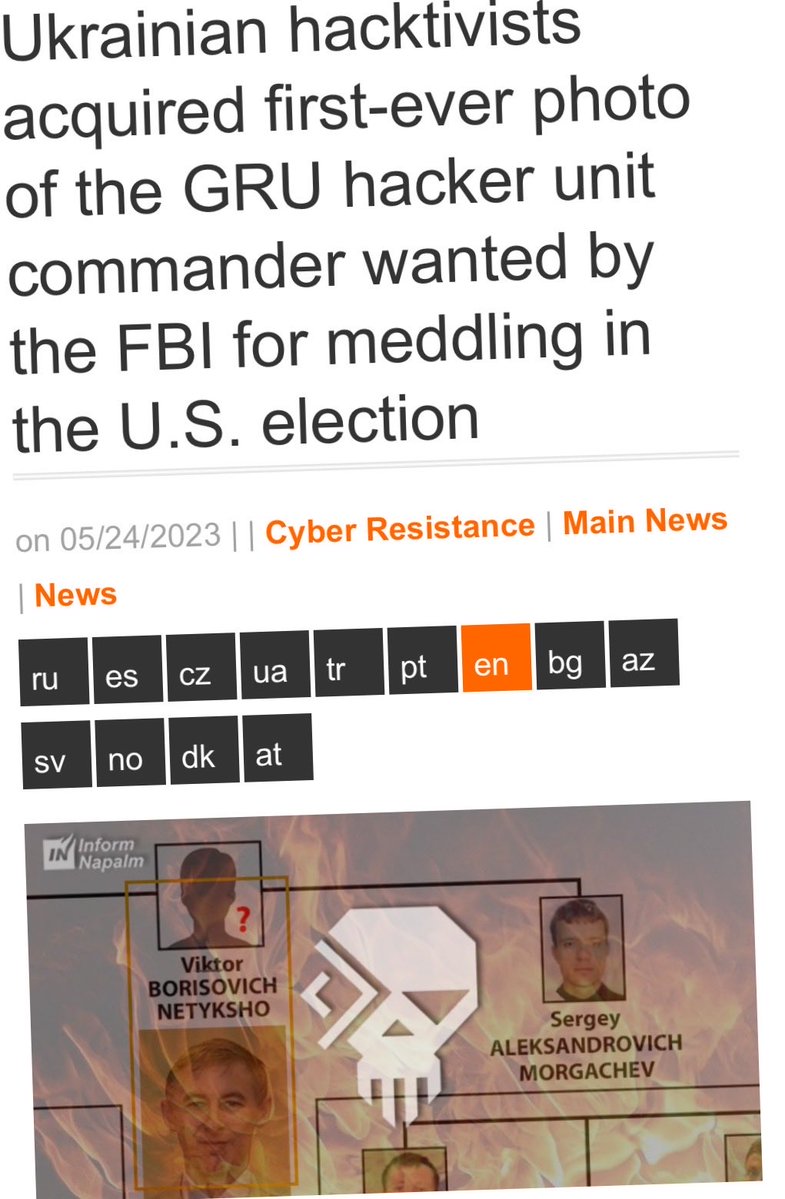
@Kash_Patel While you’re talking about “love from #Russia,” we found another gift for you: a unique photo of Russian officer Viktor #Netyksho, who is wanted by the #FBI. He has since been promoted to Major General.
Read more: https://t.co/TFi5Pb7izt
@Kash_Patel There’s a package that needs to be delivered to a Russian hacker wanted by the FBI. Think you can deliver it — with love?
https://t.co/x6k875vzv0
The latest reporting suggests this strategic snafu may have occurred more locally within DOD Starshield systems, not with Starlink or SpaceX.
I’m not holding my breath for Defense Secretary Hegseth to offer transparency, so we’ll be asking the DOD Inspector General to initiate an investigation and report back to Congress and the American People.
Meanwhile, both Ukrainian civilians and U.S. diplomatic and security personnel were placed at unnecessary risk and without warning.
At best, this was an unacceptable error or lapse, and at worst a conscience decision to clear the field for a Russian attack.
#Starlink restrictions are disrupting #Ukraine’s military operations. Musk points to the US government. The White House points back to SpaceX.
Hollywood is full of American superheroes fighting evil. In reality, Ukraine fights that evil while #US officials and billionaires point fingers.
Trump supports the Dictator Putin and opposes Ukraine who wants our freedom and Independence. Ukraine loves America freedoms. Putin hates it. Why does Trump love Putin?
39 ballistic missiles in a single night, missing US early warnings, and Starlink restrictions. Coincidence or mounting pressure on Ukraine?
On the night of October 14, Russia attacked Ukraine with 39 missiles flying on ballistic trajectories and 128 drones. According to the Ukrainian Air Force, only four missiles were intercepted. Some of the others failed to reach their targets.
The 39 missiles represent the highest number recorded in our verified sample of attacks over the past three months.
However, Russia had already been increasing its use of ballistic missiles over the summer. In August, the Ukrainian Air Force reported approximately 50 ballistic missiles launched in a single week. It would therefore be misleading to attribute Russia's current tactics solely to recent developments in relations between Kyiv and Washington.
But another troubling pattern is emerging.
Just yesterday, we cautioned against jumping to conclusions about a possible suspension of US intelligence sharing, particularly early warnings of Russian missile launches. There was no independent confirmation of such a decision. In fact, US officials publicly insisted that intelligence sharing was continuing.
Yet President Zelenskyy has now explicitly stated that Ukraine failed to receive advance warnings from its partners about ballistic missile strikes on Kyiv on two consecutive occasions.
Meanwhile, reports have emerged that SpaceX has introduced restrictions affecting Starlink terminals operating at speeds above 160 km/h (100 mph). According to Ukrainian military personnel, these restrictions have already disrupted combat missions involving drones.
Each of these developments could have a technical explanation when considered separately.
Taken together, however, they raise a serious question: Has Washington begun intensifying pressure on Ukraine behind the scenes by exploiting its dependence on critical American technologies?
This is particularly concerning amid reports that Trump has demanded an end to Ukrainian strikes on Russian oil refineries.
For now, Ukraine appears to be refraining from such strikes, while simultaneously facing restrictions that affect its own defensive capabilities. This deserves a public explanation from Ukraine's partners.
Could there be undisclosed agreements between Washington and Moscow?
The timing of diplomatic pressure, failures in early warning, and restrictions on satellite communications warrants thorough international scrutiny and investigation.
Because if a country that provided Ukraine with security assurances is using technological dependence as a means of coercion while Russia continues its massive attacks on Ukraine's energy infrastructure, it raises a fundamental question about the value of international security commitments.
And that is yet another reason to remember the Budapest Memorandum.
#Ukraine #Starlink #Trump #Putin
❗️Last night, the operation of Starlink terminals in Ukraine was restricted.
Connectivity began to drop when moving at speeds exceeding 160 km/h. As a result, a number of critical missions were disrupted.
SpaceX likely took these measures at the request of the Trump administration. Also last night, when Kyiv was attacked by ballistic missiles, Ukraine did not receive intelligence regarding their launch— a failure that could have led to higher casualties.
Ukraine did not attack Russian oil refineries, yet Trump has already begun imposing sanctions on my country. Meanwhile, sanctions against Russia have been eased.
Today, Russia expressed its thanks for the lifting of sanctions on diesel exports by dropping five glide bombs on residential buildings in Zaporizhzhia. As of now, sadly, twelve people have been confirmed killed, including three children. My condolences to all their families and loved ones. Another fourteen people have been injured, and two of them are in critical condition – the doctors are fighting to save their lives. The status of twelve more people who may have been there is still being verified. All emergency services are at the scene, and search-and-rescue operations are underway. Overnight, thirteen of our regions came under attack. Residential buildings, infrastructure, and railway facilities have been damaged.
Last night confirmed once again that in Russia, they take any easing of pressure to mean they can keep fighting, to mean they can keep dropping bombs on cities. Different signals are needed. Russia must understand that it needs to stop the war, and for that to happen, Russia must feel its losses. Right now, it is our long-range capabilities that are ensuring this. And we will respond to Russian strikes. I thank everyone who is helping.
Accord de la honte. Si le Congrès ne le bloque pas dans les plus brefs délais, cela voudra dire que les États-Unis d'Amérique financeront les bombardements de Poutine sur l’Ukraine. Trahison de l’occident. Trahison de l’Europe. Trahison du credo américain.
🇰🇷 한국은 우크라이나와 외교적 갈등을 빚고 있지만, 북한군은 러시아와의 협력을 통해 현대전의 경험을 쌓고 있습니다.
그 사이 한국 항구에서 러시아로 향한 연료 운송 논란까지 불거졌습니다.
InformNapalm의 새로운 OSINT 분석과 쿠르스크 전선의 독점 기록을 한국어로 확인해 보세요.
🔗 https://t.co/WA4ApUkQJb
관심 있는 분들과 공유해 주세요!
#우크라이나 #북한 #한국 #러시아 #국제안보 #군사분석
🇫🇮🇰🇷 Miksi Etelä-Korea kiistelee Ukrainan kanssa kahdesta pohjoiskorealaisesta sotavangista, samalla kun Pohjois-Korea ottaa oppia nykyaikaisesta sodankäynnistä?
Samaan aikaan polttoainetoimitukset Etelä-Korean satamista Venäjälle herättävät kohua.
InformNapalmin uusi OSINT-analyysi ja ainutlaatuista arkistomateriaalia – nyt suomeksi!
https://t.co/LVtoGETnDh
#Ukraina #PohjoisKorea #EteläKorea #Turvallisuuspolitiikka
While #Seoul 🇰🇷 clashes with #Kyiv 🇺🇦 over two North Korean POWs, #Pyongyang 🇰🇵 is systematically learning the lessons of modern warfare from #Russia 🇷🇺.
Meanwhile, fuel continues to reach Russia from South Korean ports. Our analysis of a growing strategic contradiction:
https://t.co/yXy0VX1EQm
If this assessment resonates with your own, please help us amplify it.
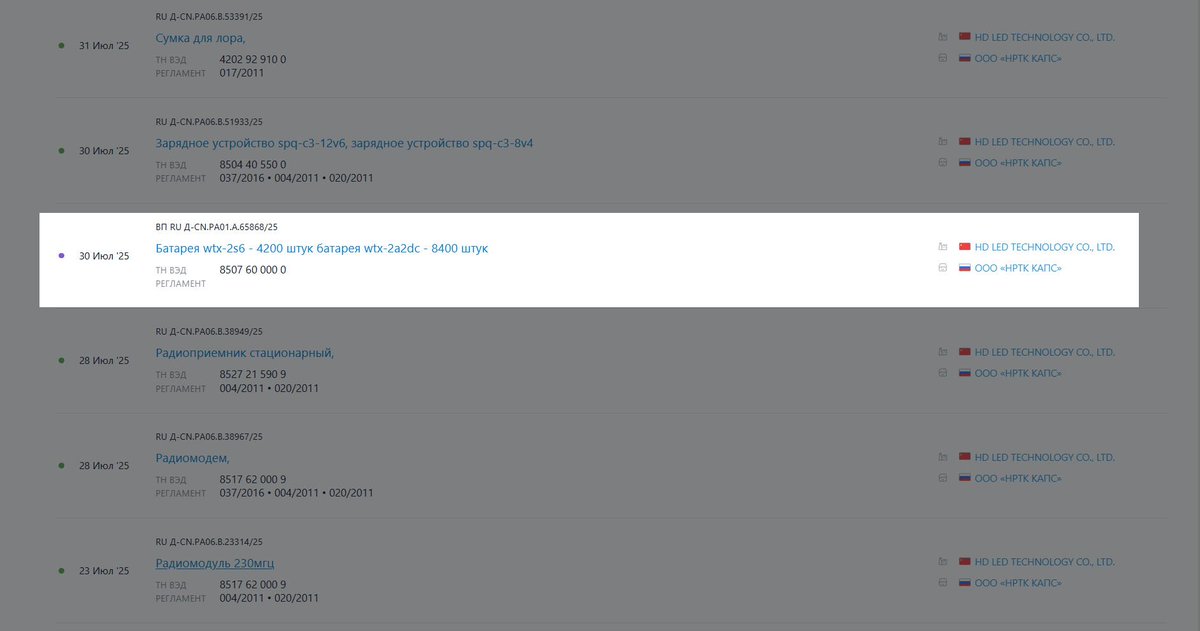
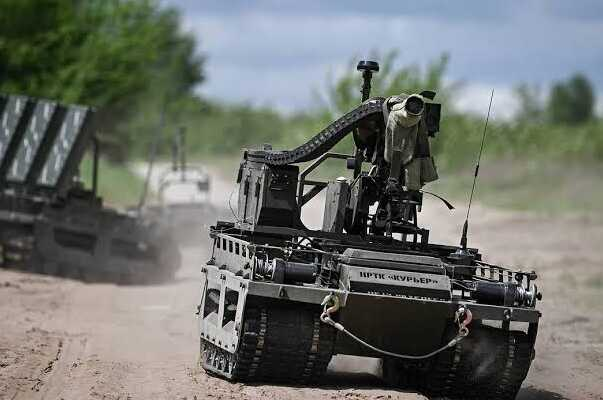
Russia is already airdropping its Kurier combat UGV from Il-76 aircraft. But who stands behind the electronics linked to its developers? InformNapalm traced dozens of declarations, Chinese companies, product models, a contract and an invoice — with the paper trail leading to Shenzhen.
https://t.co/I6CmD7iwqS
#OSINT #Russia #China
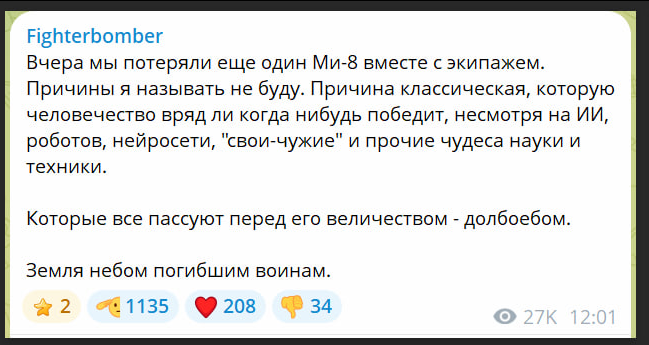
Russia has lost another military Mi-8 along with its crew.
On the evening of October 1, a Russian Defense Ministry Mi-8 military helicopter crashed in the Anninsky District of Russia’s Voronezh Region. According to Russian sources, the aircraft went down in a field about 80 km from Voronezh. All three crew members are “200” — KIA.
The loss has been confirmed by several Russian military and aviation-focused channels.
Fighterbomber, a channel closely associated with Russian military aviation, also reported the Mi-8 loss today and rather transparently hinted at human error 😏
In other words, the helicopter was shot down by #Russia’s own air defenses.
Again.
A 30-second fake video is circulating online in which three unidentified men wearing digital camouflage with Ukrainian flag patches threaten #Iran.
The Russian influence-operation actors behind the video took an extremely crude approach to staging it: they dressed in Ukrainian digital camouflage, completely concealed their faces with balaclavas, printed the Iranian flag on an A4 sheet of paper, and added an unnatural voice-over containing Russianisms and grammatical errors.
The audio appears to have been added separately. The faces were likely concealed not only to prevent identification but also to make it more difficult to verify whether the speech was synchronized with the speakers’ lip movements.
At the same time, all the elements required for an information provocation were deliberately left visible: Ukrainian flag patches, the Iranian flag, aggressive threats, references to the United States, and Persian subtitles.
InformNapalm separately analyzed the audio track using the TruthScan AI Voice Detector, which examines acoustic characteristics and artifacts associated with synthetic speech. The result indicated a 99% probability that the voice had been generated using AI voice-over tools. This constitutes a significant technical indicator that the video was staged. TruthScan is designed to detect synthetic speech produced by ElevenLabs, Murf, and other voice-generation platforms.
Heorhii Tykhyi @SpoxUkraineMFA , spokesperson for Ukraine’s Ministry of Foreign Affairs, officially described the video as a fake and as a staged “appeal” by unidentified people with concealed faces, intended to exacerbate tensions.
To an informed Ukrainian audience, the fabrication is obvious. However, Ukraine was not its primary target. The Persian subtitles indicate that the video was produced mainly for Iranian and broader Middle Eastern audiences.
The objective is straightforward: to create the impression that the Ukrainian Armed Forces are officially threatening Iran, associate Ukraine with US strikes, and provoke diplomatic tensions between Kyiv and Tehran.
One of the main amplifiers of the fake was OSINT613, also known as Open Source Intel, a major English-language aggregator covering Middle Eastern news with more than 1.6 million followers on X.
Without conducting proper verification, the outlet presented the unidentified masked individuals as Ukrainian soldiers and relayed the threats embedded in the video to an audience of more than a million people.
@Osint613 itself claims to verify material through several independent sources. In this case, however, even the most basic verification procedures were evidently not performed.
This is not the outlet’s first failure of this kind. In 2023, Reuters established that OSINT613 had falsely presented a photograph of money seized during an anti-corruption raid in Nigeria in 2017 as allegedly showing $50 million discovered in a truck carrying humanitarian aid to Gaza. After spreading the false claim, the account deleted the post and stated that it had relied on a source it considered credible.
There is currently no publicly available evidence of organizational links between OSINT613 and #Russia. Its dissemination of the fake may therefore have been inadvertent. Nevertheless, the pursuit of speed and reach can turn large news aggregators into ready-made distribution channels for Russian information operations.
This case illustrates the contemporary model of a Russian influence operation: cheaply produce a staged video, add a synthetic voice and subtitles tailored to the intended audience, and then pass it to major aggregators that will generate millions of views on their own.
A mask, camouflage uniform, and a flag patch on a sleeve are not proof that someone belongs to the Ukrainian Armed Forces. Likewise, an account with millions of followers does not become a reliable source merely because of the size of its audience.
P.S. To avoid contributing to the further spread of the original Russian information operation with Persian subtitles, we added prominent labels identifying the video as fake. As the screenshots from X demonstrate, the fake received approximately 348,000 views, while the official rebuttal issued by the Ukrainian Foreign Ministry spokesperson received only around 17,000.
Some of history’s greatest cities fell after sieges lasting hundreds of days. Mala Tokmachka is a tiny Ukrainian village in the Zaporizhzhia region. Before the full-scale invasion, its population was only around 200 people. And yet, the “mighty” Russian army has spent some 1,500 days assaulting the village—without succeeding in capturing it.