Husband, Father, CMO @Cook_center, Digital Marketer, Content/SEO, Aspiring Book Writer, @Ch_JesusChrist, @UUtah grad, Romney Republican, and Traeger Ninja.
Texas Tech coach Joey McGuire challenged Texas to play in Week 1.
He claimed both Week 1 foes are willing to buy out of their matchups, and Tech can pay for both.
“They can come to Lubbock and figure out if their 2s and 3s can win this conference.”
https://t.co/izZ9iHwIm2
Let me trace the timeline here because nobody's connecting it.
Step 1: Scrape the entire internet. Every book, every article, every conversation, every piece of art, every forum post. Do it without asking. Do it without paying.
Step 2: Train a model on all of it. Call it "artificial intelligence."
Step 3: Go to BlackRock's Infrastructure Summit and announce: "We see a future where intelligence is a utility, like electricity or water, and people buy it from us on a meter."
Step 3 is where you sell people's own knowledge back to them. On a meter.
They took the collective output of human thought, compressed it into a model, and now they want to charge you by the token to access a version of what you and everyone you know already created.
One Reddit user put it perfectly: "They stole all this data from us, the people, our life's work, creativity, art, by devouring the internet and blowing through all copyright laws. Now they want to sell it back to us in the form of a utility."
Imagine if someone photocopied every book in the public library, burned the library down, and then opened a subscription service for the copies.
That's the metered intelligence business model.
And they're pitching it to infrastructure investors as though they invented water.
Just one day after ending "The Late Show" on CBS, Stephen Colbert returned to TV ��� to host a public access show with rocker Jack White in Monroe, Michigan.
Appearances by Jeff Daniels, Eminem and Steve Buscemi.
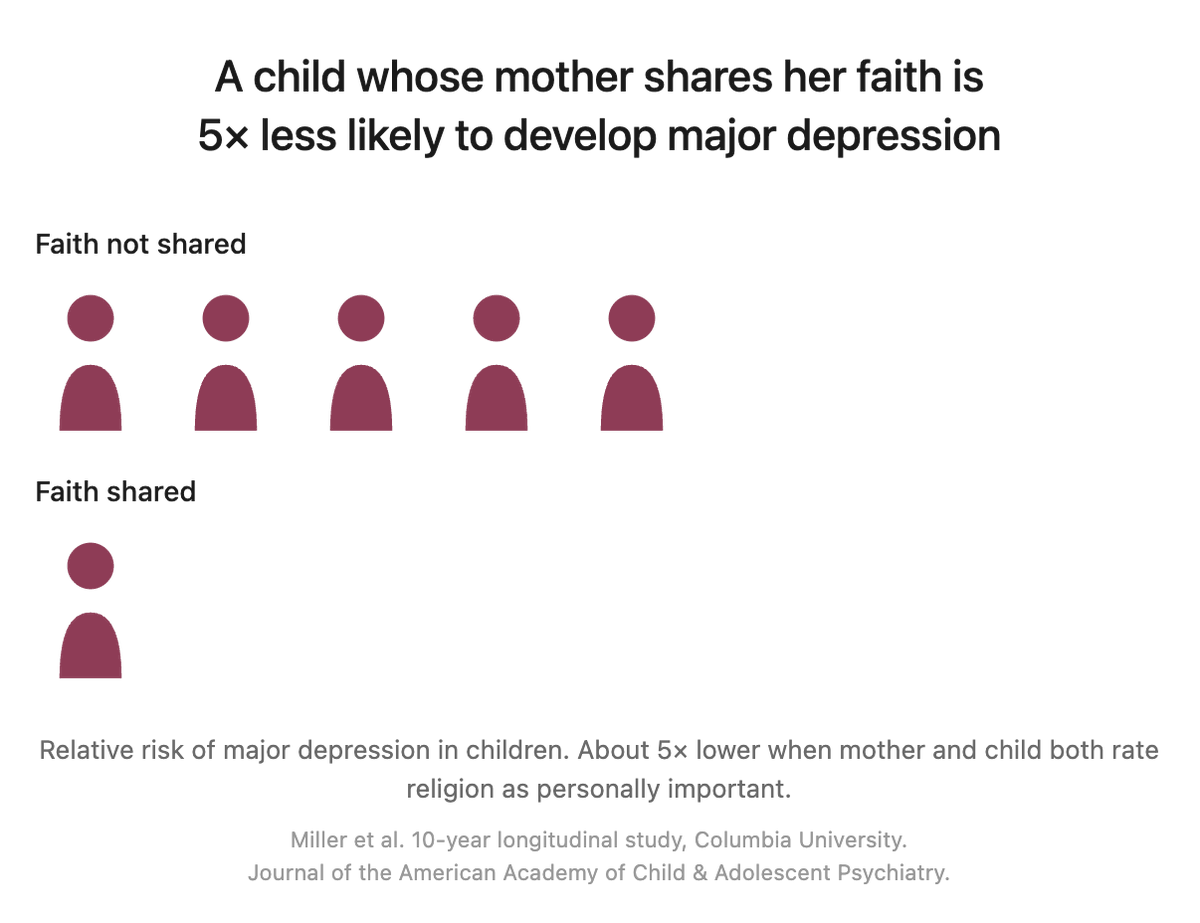
The most powerful protection against childhood depression is having a mother who values religion.
When a mother and her child both said religion was personally important to them, the child was 80 percent less likely to develop major depression.
Five times lower risk.
That comes from a 10-year longitudinal study at Columbia led by psychologist Lisa Miller. It's the largest protective effect against depression she has found anywhere in the resilience literature.
A decade later, Miller's team put adults from the same cohort in MRI machines. People who rated religion or spirituality as personally important had thicker cortices in the exact brain regions that thin in people at high familial risk for depression. The protection has a physical signature.
The variable wasn't belief alone. It was shared, internalized importance. Mom and child both meant it.
The strongest known buffer against depression in kids is a parent and child who share a faith that actually means something to both of them.
This is 1 of the best interviews I’ve watched in years.
.
If anyone knows @BenSasse or knows how to get in touch with him, please tell him THANK YOU for giving this time amidst his circumstance.
What a gift.
(& Scott Pelley & @60Minutes - 🫡)