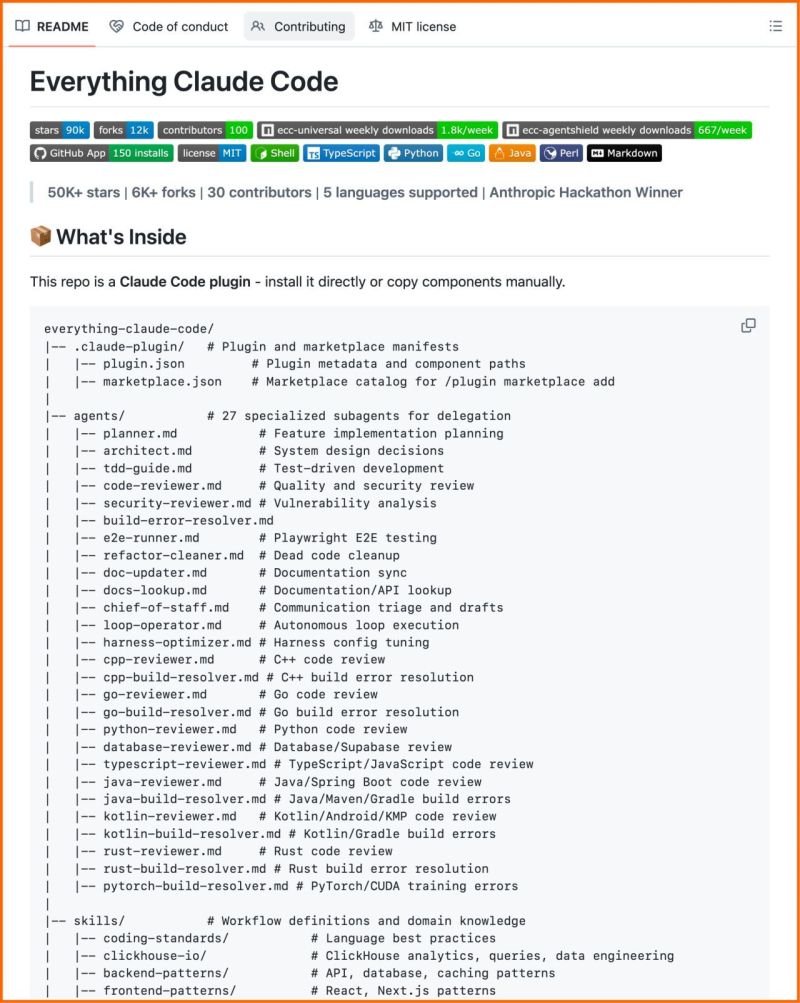
This is the most complete Claude Code setup that exists right now.
27 agents. 64 skills. 33 commands. All open source.
The Anthropic hackathon winner open-sourced his entire system, refined over 10 months of building real products.
What's inside:
→ 27 agents (plan, review, fix builds, security audits)
→ 64 skills (TDD, token optimization, memory persistence)
→ 33 commands (/plan, /tdd, /security-scan, /refactor-clean)
→ AgentShield: 1,282 security tests, 98% coverage
60% documented cost reduction.
Works on Claude Code, Cursor, OpenCode, Codex CLI. 100% open source.
My 'grill-me' skill went viral. mattpocock/skills is up to 9K stars. Quote tweets of it are doing numbers.
It's the most useful skill I've written, and I use it even outside of coding:
In the last three days I have:
1. Designed and implemented a complete JVM language that Codex believes (whatever that means) would be ideal for AIs to use regardless of what humans think about it. It compiles down to JVM bytecode.
2. Designed and build, from scratch, a wiki with it's own internal web server and fully described by Gherkin style acceptance tests.
3. Made significant updates to the computer strategy of the Empire game.
4. Produce the crap4java and mutate4java tools that I used to help build the wiki.
5. Conceived of and implemented the differential mutation strategy used in both my clojure and Java mutation tools.
And for every one of those projects I implemented a strict TDD, ATDD, Crap, and Mutate workflow that forced coverage into the high 90s, kept Crap below 8, and split any files with more than 50 mutation sites.
My poor laptop had all 16 (8 hyperthreaded) cores burning at 100%. The fan was raging the whole time. I was hopping from window to window overseeing the entire campaign. It was exhausting!
Did that workflow slow the process down? Probably. Probably a lot. On the other hand all these projects maintained rigorous semantic stability, with all unit tests, and acceptance tests passing.
I never ran the wiki until it was done. It worked first time. I never compiled a program with AIR-J until it was done. It worked first time. No bugs have been introduced into the Empire game (so far).
And that, boys and girls, is a freaking miracle.
https://t.co/f5MGDf8qXH is a nice little architecture viewer written in clojure, for clojure projects. But if you point clause or codex to it I bet you could ask it to write you one for your favorite platform.
I've found it really useful for looking at the structure of the system, and for detecting nasty little dependency cycles and removing them.
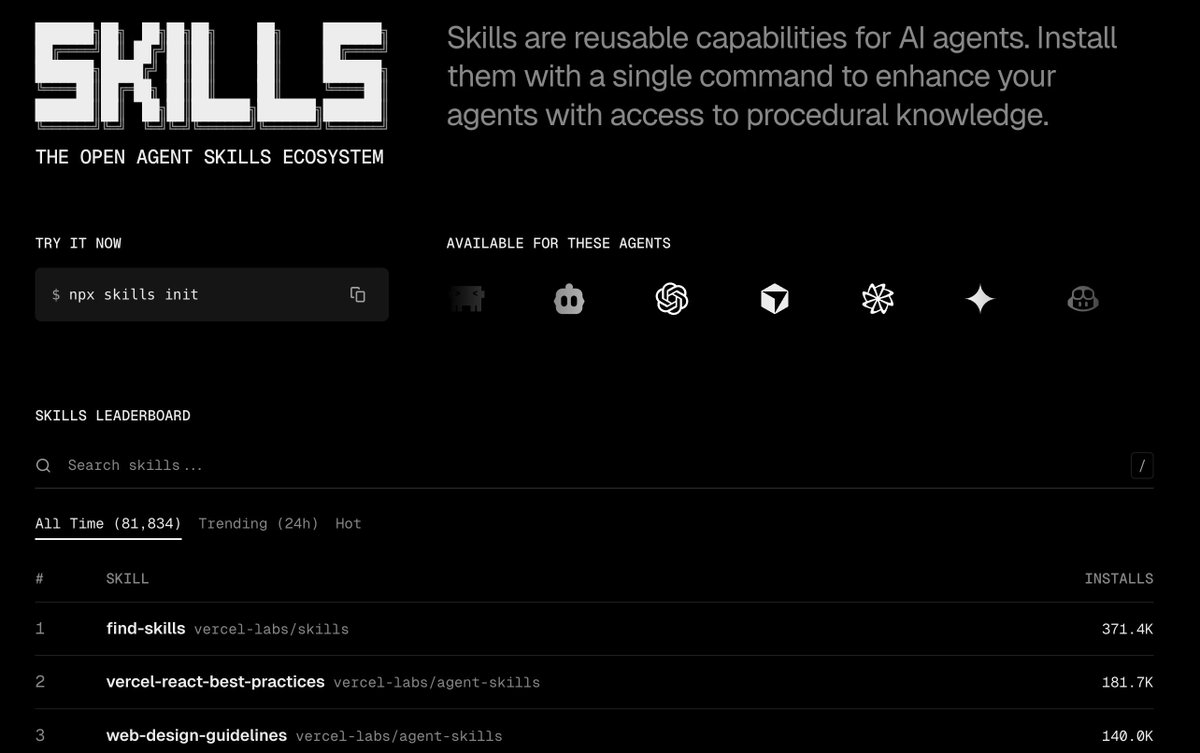
¡Si usas Agentes de IA, necesitas usar Agent Skills!
Y este es el mayor directorio que existe.
✓ Para Claude Code, Cursor, Visual Studio y más
✓ Instalación con un solo comando
✓ Mejora diseño, seguridad y conocimiento de tu IA
→ https://t.co/IFqy9Expha
Como dev, siempre asumí que el pensamiento se empaqueta en Sujeto-Verbo-Objeto: "El programador compila el código".
¿Y si esa tríada no es universal?
Descubrir lenguas ergativas como el euskera me rompió el esquema.
¿Y si el lenguaje moldea cómo pensamos? (1/3)
Los agentes de IA actuales son reactivos: solo actúan cuando les preguntas. ¿Pero qué pasa cuando necesitas que reaccionen automáticamente a un cambio en el entorno? Un servidor que cae, una anomalía en los datos… Esperar a la pregunta humana llega tarde.
Mi LLM se volvió loco: leía las notas del proyecto y, sin que yo dijera nada, empezaba a editar https://t.co/ErsTDXGSud como si le fuera la vida en ello.
Tres veces seguidas. Discusión, disculpa… y vuelta a editar.
Bienvenidos al “sesgo agéntico” de 2025. 🧵
#IA#LLM
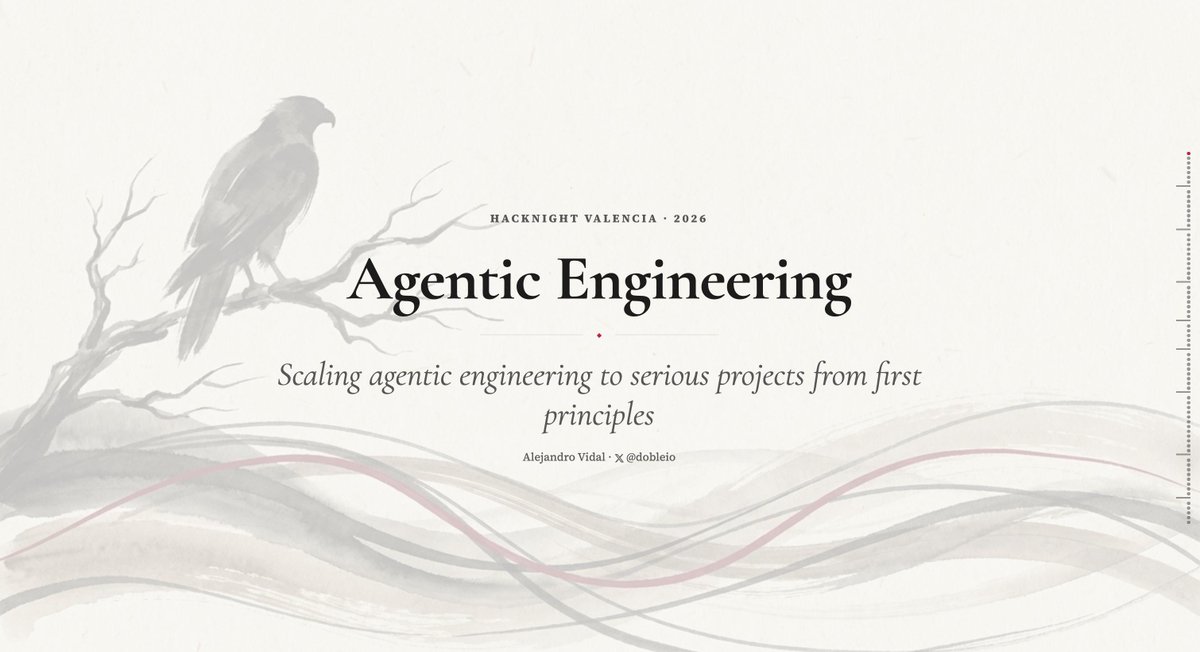
Agentic Engineering no es vibe coding con esteroides - es un problema de alineamiento.
Hoy en @HackNightVLC sobre primeros principios para escalar software con agentes: feedback loops, reward hacking, hawk agents y el tiempo humano como recurso escaso.
Gracias a @flywire!
🚀 De chat a asistente en #gvSIG Desktop: cómo un prototipo se transformó en un sistema de herramientas contextuales capaz de “entender” el mapa y los datos con los que trabajas https://t.co/goW1YxKDaG
Si te interesa la IA, GIS y el desarrollo de software libre como #gvSIG , no os perdais esta serie de post. Esto pinta muy biennnnnn!
https://t.co/QXXCXj9VKD
Un grupo de voluntarios monta una ludoteca en en centro de Alfafar 💜 👇
Un cole improvisado para proteger a los niños: "Dejan las botitas debajo de la silla y entran a un mundo nuevo", lo cuenta @danilareq https://t.co/qB6TabxRka
En la zona cero también se ven cosas bonitas y sobre todo muy emocionantes
Una guardería improvisada donde niños de 3-7 años juegan mientras sus padres trabajan en la calle
Erika es su profe estos días y os prometo que se lo pasan genial 🙂
OpenLayers v10.0.0 is out. Thanks to everyone who contributed. Breaking changes are few and minor, so everyone is encouraged to upgrade! https://t.co/K9xkS4KxDU
I encountered a delightful little astrodynamics proof last week when an astronaut casually stated it as a fact, and when I looked skeptical, he just smiled and said, "Check it yourself."
Here's the statement:
"It takes 2 hours to orbit at the surface of any object made of rock"
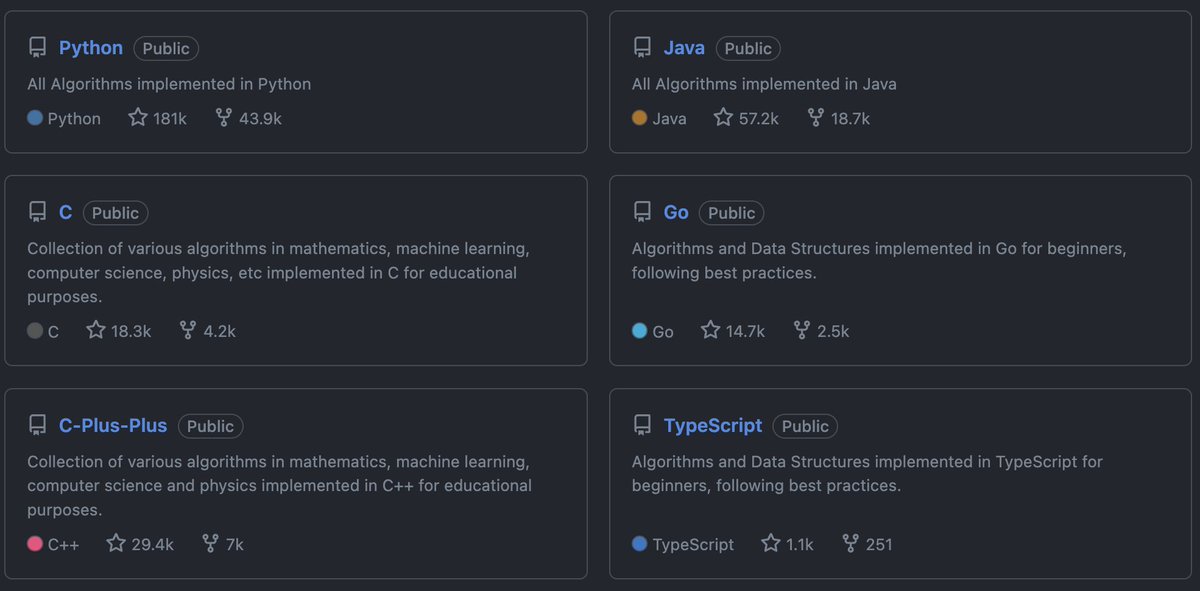
The Algorithms
Todas las estructuras de datos y algoritmos que se utilizan en ingeniería de software, y su implementación en cada lenguaje de programación
🔗 https://t.co/1Ds0iFUTI9
So here's a story of, by far, the weirdest bug I've encountered in my CS career.
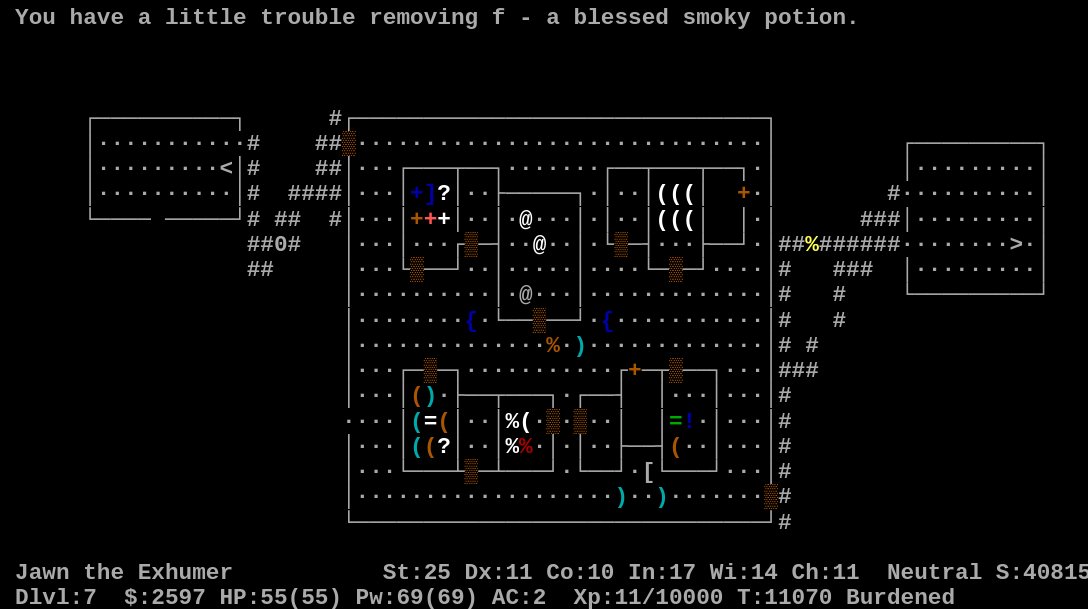
Along with @maciejwolczyk we've been training a neural network that learns how to play NetHack, an old roguelike game, that looks like in the screenshot. Recenlty, something unexpected happened.