A research into cat behavior shows that domestic cats regard humans as social peers rather than superiors, often perceiving their owners as large, awkward kittens.
Far from being aloof or defiant, a cat’s apparent indifference stems from a profound interspecies mismatch in social expectations.
As anthrozoologist John Bradshaw explains, cats—unlike dogs—never evolved to recognize humans as dominant leaders or authority figures. Instead, they filter all interactions through an exclusively feline framework. Behaviors like kneading on your lap or licking your hair are not mere displays of affection; they are the same grooming and bonding rituals cats reserve for close kin or pride members. In their eyes, we are simply enormous, somewhat clumsy fellow cats who require inclusion in the group.
This absence of hierarchical deference accounts for cats’ frequent disregard of commands or household rules. Treating us as equals, they follow cat-to-cat social protocols in every encounter. The “gifts” of dead prey on the doorstep or constant shadowing around the home are acts of care toward what they see as a big, furless, rather inept companion.
Recognizing this mindset transforms the human-cat relationship from one based on authority and obedience to one of mutual companionship. It turns out that while many owners believe they have domesticated their cats, the cats themselves are quietly convinced they are patiently tending to their oversized, adopted family members.
[Bradshaw, J. (2013). Cat Sense: How the New Feline Science Can Make You a Better Friend to Your Pet. Basic Books]
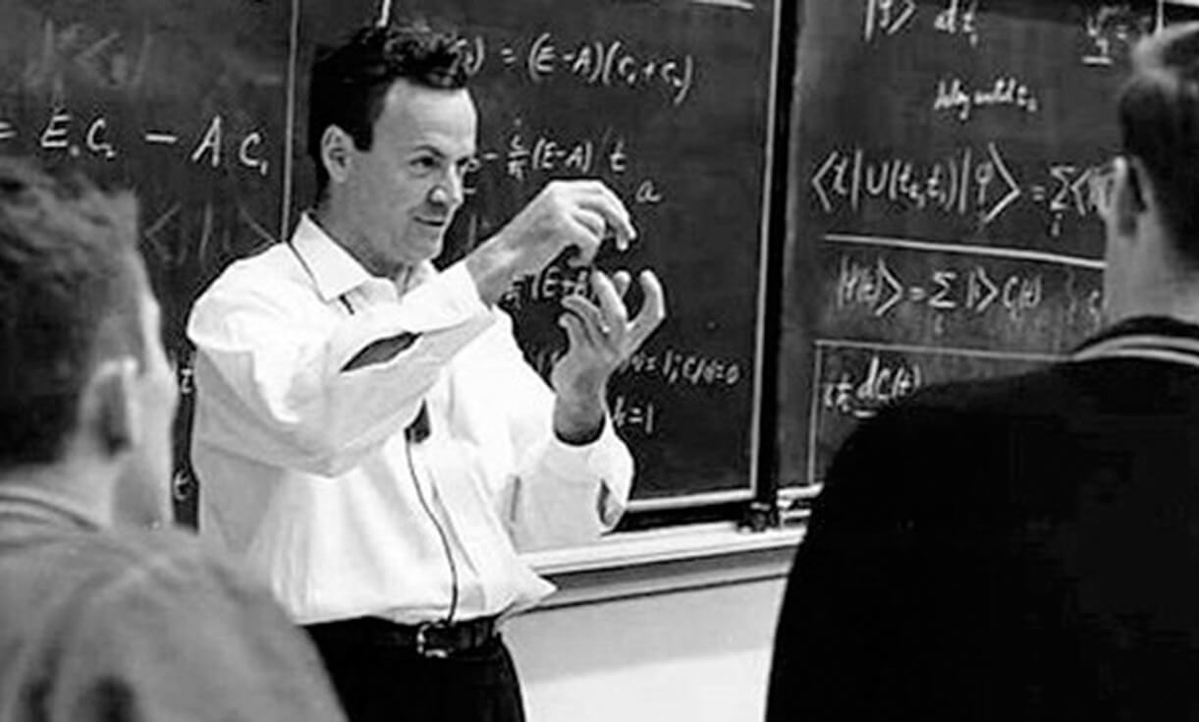
“Never confuse education with intelligence. A person can have a PhD and still be an idiot.”
— Richard Feynman
A degree proves you studied. It doesn’t prove judgment, humility, curiosity, or common sense. True intelligence is not just knowing answers. It’s asking better questions.
Agree?
The greatest talent any artist can have, and one that’s almost never mentioned, is the ability to recognize the potential of a piece while it’s still unpolished, in its most abstract and raw form.
This is even more important in AI art.
AI is an incredibly powerful tool, but only in the right hands.
Take Midjourney, for example. Two people can look at the exact same style reference: one won’t know what to do with it and just move on, while the other instantly sees its creative potential and is already thinking about turning it into a short film or using it for a different project.
Only someone with that kind of sharp intuition can truly get the most out of AI, transforming something ordinary into something extraordinary.
Science Corp. founder @maxhodak_ explains how their visual prosthesis actually works to help restore vision:
"The device that we have now is 2mm by 2mm... it's like looking through a straw. The electrodes are 0.1mm, which means that you stimulate a bunch of cells at a time... and they only get a small amount of detail at once."
"We're not restoring high-resolution color vision today, but what we are getting is this intuitive-form image that patients can look at. It strings together shapes into letters and letters into words, and the brain can apprehend that intuitively. And that had never really been done before."
"We actually have the next version of the chips already in hand. The electrodes are much smaller and are going to go from 400 to a couple thousand. We're working on the clinical study for those over the next year. And hopefully every two years or so we'll have new versions coming out."
Ever feel like stock charts and fancy patterns like "head and shoulders" are more hype than help?
As a physician-turned-biotech investor, I used to chuckle at them—reminded me of my baby daughter singing "Head, Shoulders, Knees, and Toes."
In my latest post, I share why I ditched technical analysis for a simple, patient approach that treats investing like planting a tree... and how that mindset turned a two-year "paper loss" in Amicus Therapeutics into a quick 30%+ gain on its $4.8B acquisition.
Busy doctors: If you're tired of market noise and want better long-term returns with less stress, this one's for you.
Read the full article here 👇#InvestingForPhysicians #PhysicianWealth #LongTermInvesting #BiotechInvesting
https://t.co/NmuFmWDfvN
#InvestingForPhysicians #PhysicianWealth #LongTermInvesting #BiotechInvesting $FOLD $BMRN
Proteins are central to life, responsible when things go right & part of the problem when they don't, like in diseases. Stanford researchers, like @KhoslaLab & @fordycelab, are unlocking the potential of proteins in medicine, sustainability & beyond: https://t.co/NLgFJVXBdq
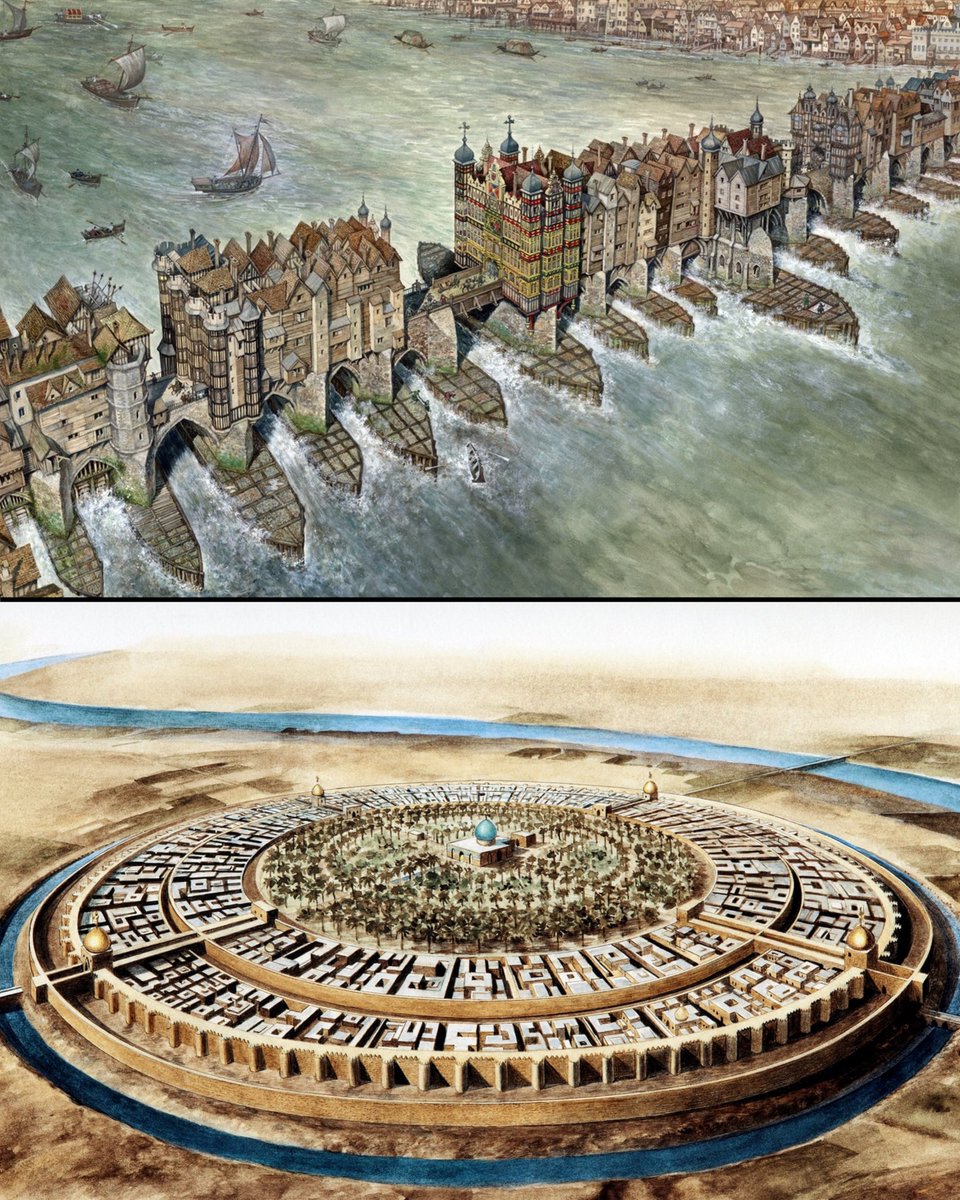
We often hear about the 7 Wonders of the World, both ancient and modern.
But what about wonders of the Medieval Age?
Here are seven — and what happened to them... 🧵
NVIDIA CEO: What Elon achieved with his team had never been done before. He's the only person in the world who could build a supercomputer that fast. It's unbelievable.
“Building a massive factory, liquid-cooled, energized, permitted, in the short time that was done, that is superhuman. And, as far as I know, there's only one person in the world who could do that.
Elon is singular in this understanding of engineering and construction and large systems, marshaling resources. It's unbelievable.
And then, of course, his engineering team is extraordinary. The software team is great, the networking team is great, the infrastructure team is great. Elon understands this deeply.
And from the moment that we decided to go, the planning with our engineering team, then all of the infrastructure, all of the logistics and the mount of technology and equipment that came in on that day, to training, 19 days. Incredible.
So, I think what Elon and the X team did, and I'm really appreciative that he acknowledges the engineering work that we did with him and the planning work and all that stuff, but what they achieved is singular. Never been done before.
Just to put in perspective, 100,000 GPUs, that's easily the fastest supercomputer on the planet, as one cluster. A supercomputer that you would build would take normally three years to plan, and then they deliver the equipment, and it takes one year to get it all working. We're talking about 19 days.”
Jensen Huang on @BG2Pod, October 13, 2024
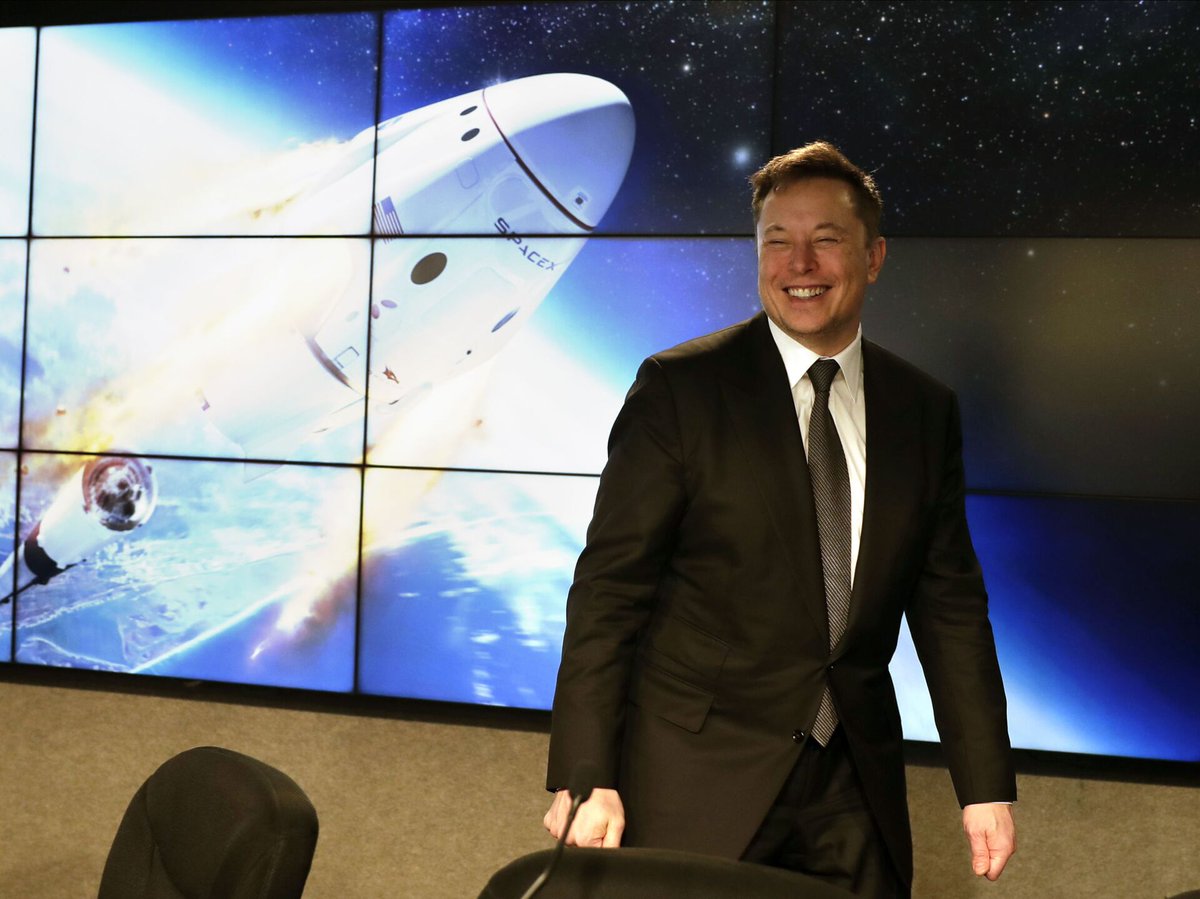
@plzbepatient I don’t know, when someone like Jim Cantrell who has worked around other rocket scientists and engineers his entire career calls you the smartest person they have ever met, you got at least be somewhat intelligent.
Elon Musk is the Chief Engineer at @SpaceX in title and reality.
I realize this is a hard suppository to swallow for all the jealous haters out there who couldn't engineer their way out of a wet paper bag but it's a well-documented fact.
Here is what people who actually know what they're talking about have to say:
Kevin Watson
“Elon is brilliant. He’s involved in just about everything. He understands everything. If he asks you a question, you learn very quickly not to go give him a gut reaction.
He wants answers that get down to the fundamental laws of physics. One thing he understands really well is the physics of the rockets. He understands that like nobody else. The stuff I have seen him do in his head is crazy.
He can get in discussions about flying a satellite and whether we can make the right orbit and deliver Dragon at the same time and solve all these equations in real time. It’s amazing to watch the amount of knowledge he has accumulated over the years.”
Garrett Reisman
“What's really remarkable to me is the breadth of his knowledge. I mean I've met a lot of super super smart people but they're usually super super smart on one thing and he's able to have conversations with our top engineers about the software, and the most arcane aspects of that and then he'll turn to our manufacturing engineers and have discussions about some really esoteric welding process for some crazy alloy and he'll just go back and forth and his ability to do that across the different technologies that go into rockets cars and everything else he does.”
“He’s obviously skilled at all those different functions, but certainly what really drives him and where his passion really is, is his role as CTO. Basically his role as chief designer and chief engineer. That’s the part of the job that really plays to his strengths.”
Josh Boehm
“Elon is both the Chief Executive Officer and Chief Technology Officer of SpaceX, so of course he does more than just ‘some very technical work’. He is integrally involved in the actual design and engineering of the rocket, and at least touches every other aspect of the business. Elon is an engineer at heart, and that’s where and how he works best.”
Robert Zubrin
“When I met Elon it was apparent to me that although he had a scientific mind and he understood scientific principles, he did not know anything about rockets. Nothing. That was in 2001. By 2007 he knew everything about rockets - he really knew everything, in detail. You have to put some serious study in to know as much about rockets as he knows now. This doesn't come just from hanging out with people.”
This past week, an anonymous AI researcher released an INCREDIBLY innovative architecture known as Entropix which aims to replicate how OpenAI’s latest o1 model scales inference-time compute - otherwise known as its ability to 'think' before speaking.
It’s essentially based on measuring uncertainty - defined formally as entropy and varentropy - to improve reasoning. When the model is uncertain of the next best tokens / thoughts, it inserts pause tokens like “…wait” which prompts the model to reflect and produce additional chains of thought.
Key Takeaways:
> Measuring uncertainty and parallel exploration of reasoning paths, allows models to efficiently and dynamically scale inference-time compute to “think” more deeply and strategically.
> Prompt engineering alone is likely too rigid to invoke generalized reasoning… advancements in the underlying attention mechanism like this may unlock far more powerful reasoning potential from small models like Llama 3.1 1b that can run locally on a laptop
> As Noam Brown, researcher of reasoning at OpenAI, recently suggested - methods like MCTS alone may not be the answer. Rather, enhancements to underlying model architecture - a lot like what we’re starting to see with this concept of entropy and pause tokens - may be what we need to unlock the true potential of inference-time compute
Link to the code + the author behind this down below 👇








![Rainmaker1973's tweet photo. A research into cat behavior shows that domestic cats regard humans as social peers rather than superiors, often perceiving their owners as large, awkward kittens.
Far from being aloof or defiant, a cat’s apparent indifference stems from a profound interspecies mismatch in social expectations.
As anthrozoologist John Bradshaw explains, cats—unlike dogs—never evolved to recognize humans as dominant leaders or authority figures. Instead, they filter all interactions through an exclusively feline framework. Behaviors like kneading on your lap or licking your hair are not mere displays of affection; they are the same grooming and bonding rituals cats reserve for close kin or pride members. In their eyes, we are simply enormous, somewhat clumsy fellow cats who require inclusion in the group.
This absence of hierarchical deference accounts for cats’ frequent disregard of commands or household rules. Treating us as equals, they follow cat-to-cat social protocols in every encounter. The “gifts” of dead prey on the doorstep or constant shadowing around the home are acts of care toward what they see as a big, furless, rather inept companion.
Recognizing this mindset transforms the human-cat relationship from one based on authority and obedience to one of mutual companionship. It turns out that while many owners believe they have domesticated their cats, the cats themselves are quietly convinced they are patiently tending to their oversized, adopted family members.
[Bradshaw, J. (2013). Cat Sense: How the New Feline Science Can Make You a Better Friend to Your Pet. Basic Books]](https://pbs.twimg.com/media/HKRpIX7WoAAnaMi.png)