After diving deep into the Centrifuge Docs & really starting to connect the dots, here comes…
→ 𝐓𝐡𝐞 𝐔𝐋𝐓𝐈𝐌𝐀𝐓𝐄 𝐂𝐄𝐍𝐓𝐑𝐈𝐅𝐔𝐆𝐄 𝐓𝐇𝐑𝐄𝐀𝐃!
My goal? To boil down 64+ hours of research into one EASY-TO-UNDERSTAND thread.
Let´s dive in 👇
RWAs are making noise again… 👀
• $2.7B market cap in Q1 2024, projected to explode to $16T by 2030.
Big names in TradFi are sniffing around, but this isn’t a free ride.
The spotlight? Oracles.
These data feeds are the linchpin for RWAs. If your oracle isn’t transparent and decentralized, you’re playing with fire.
We’ve seen the hacks, the oracle failures, the price manipulations - one bad data feed, and billions are at risk.
With heavyweights like BlackRock diving in, the stakes are high.
Transparent, reliable oracles aren’t just a nice-to-have - they’re the difference between #DeFi scaling or burning out.
What do you see in this video?
If you said the best way to wrap up an RWA Summer—you're right.
Nothing beats our flagship New York Summit.
• 250 hand-picked speakers and attendees
• Two days split between panels and interactive sessions
• Plenty of time to network at the beautiful William Vale
Want to get in on the experience? You have one more week to lock up early bird pricing.
Apply here: rwasummit .io/new-york-2024
Major RWA Firms Reveal Tactics for MakerDAO’s $1 Billion Tokenization Race 👇🏽
On Monday, @MakerDAO officially launched the Spark Tokenization Grand Prix, an ambitious competition to onboard up to $1 billion of tokenized assets, particularly focusing on short-duration US Treasury Bills.
The competition is an initiative by SparkDAO, a subDAO of MakerDAO. It is designed to assess participants’ ability to supply liquidity, align with MakerDAO’s vision, and introduce novel solutions within the DeFi ecosystem.
In a governance post, Steakhouse Financial, a treasury management firm and a strategic finance core unit of MakerDAO, provided details about a competition. The firm pointed out that the competition would evaluate products based on their legal structure, cost efficiency, and liquidity provisions.
Additionally, they stressed the necessity for strategic alignment with MakerDAO’s goals. Moreover, they focused on products capable of offering attractive yields and the required liquidity for frequent rebalancing.
@troyargana1@allo_xyz hey man, if you're interested I can give you a free ticket as we have an extra one with my team for Coinfest Asia (just basically need your email and name, nothing else)
@Centrifuge 's move to integrate @Ledger wallet support is a brilliant step forward, and here's why 👇
1/ By enabling CFG token holders to use Ledger wallets, Centrifuge is prioritizing security at the highest level. We all know that Ledger is considered as the safest way to store your tokens.
Ledger = strong protection against hacks and unauthorized access.
2/ Making CFG compatible with Ledger wallets opens the door for more users to feel comfortable holding and managing Centrifuge tokens. Ledger is a trusted name in the crypto community, and its support can attract new investors who may have been hesitant to join without such security options. Especially when we are adressing RWA
3/ Managing CFG tokens just became easier and safer. With Ledger, users can seamlessly hold, receive, and send tokens, making their experience smoother. This convenience, combined with security, enhances the overall user experience.
Overall, this move shows that Centrifuge is serious about the security and growth of its platform. It's a win-win for both the project and its community, and it definitely sets the stage for a bullish outlook on $CFG.
After banning digital assets in 2018, Qatar is softening its stance and has recently announced a new initiative focused on asset tokenization.
Digital assets, DLT, and tokenization are part of the Middle Eastern nation’s Digital Agenda 2030, says Yousuf Mohamed Al-Jaida, the Qatar Financial Centre (QFC) CEO.
Based in Doha, QFC launched in 2005 to provide a business and financial center with its own legal and tax rules.
QFC has been exploring digital assets despite the country’s blanket ban.
In partnership with the Qatar Central Bank (QCB) and other organizations, it launched the Digital Assets Lab “to spur open innovation, research and development in digital assets and Distributed Ledger Technology.”
In an op-ed, Al-Jaida revealed that the QFC is set to welcome its first cohort of 20 participants this month, comprising fintech startups, academia, and established financial institutions. To qualify, applicants must meet criteria that touch on financial and commercial viability, innovation potential, legal compliance, and alignment with the country’s strategic goals.
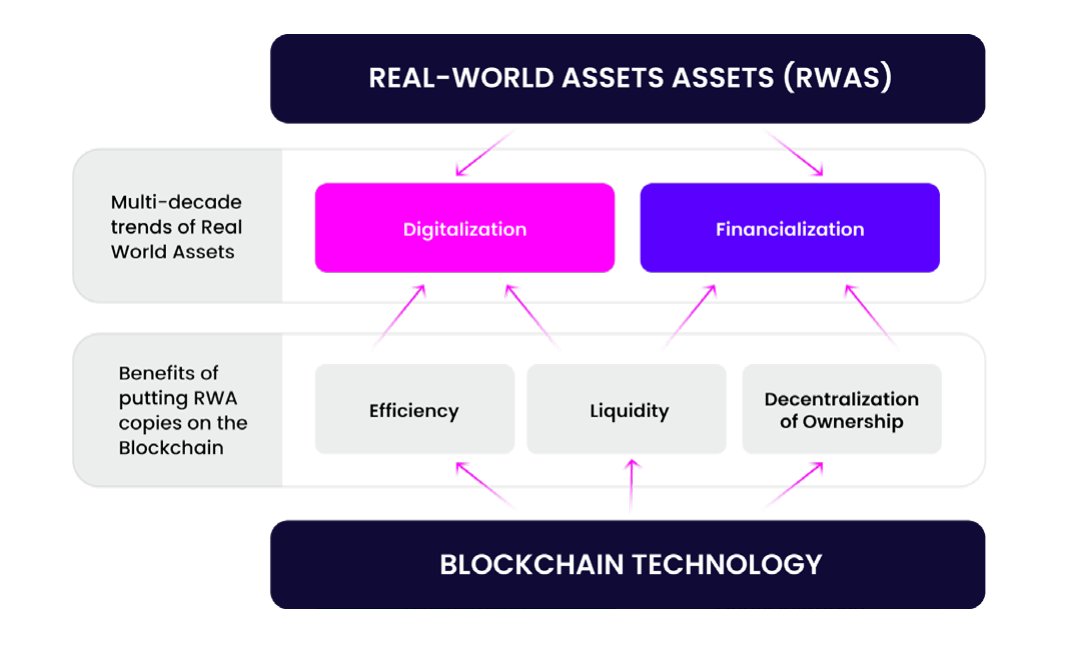
➤ There are two dimensions that you need to know, and that apply to each #RWA
These dimensions are also associated with the two structural trends happening in RWAs today.
▪️ Digitalization - applies to tangible- and intangible assets
▪️ Financialization - applies to real- and financial assets.
For example:
Patents = intangible real asset
Equity = intangible financial asset
Machinery = tangible real asset
➤ The on-chain world limits the computational capacity of blockchain-based smart contracts without tokenizing RWAs.
Tokenization extends the computational capacities of the economy by bringing off-chain or real-world assets into the realm of smart contract capabilities.
This movement is called the computational economy and is a new economic paradigm where web3 technologies facilitate the development of a ‘computable economy’, which enables a significant increase in economic complexity and, from this, wealth.
#Tokenization of RWAs is a critical step in unlocking the computational economy, which we believe is the ultimate endgame of blockchain technology.
➤ Many industries, including art, real estate, manufacturing, and investment and asset management, stand to benefit greatly from tokenizing real-world assets (#RWA).
Major institutional players are taking notice of the RAW tokenization industry, which is predicted to reach $10 to $15 trillion by the end of the decade. This is, in our opinion, a gross underestimate.
Many different kinds of assets can be made more liquid, accessible, and efficient by turning them into digital tokens that can be traded on a blockchain. For example, tokenized bonds are a real use case.
Real estate, carbon credits, and firm assets like inventory and intellectual property are just a few examples of the many digital assets that could be moved onto the blockchain.
Our expectation is that RWA tokenization will have far-reaching effects over the next decade in a variety of industries, and our study intends to fill founders' and investors' gaps in knowledge in this area.