Some more interesting facts about Tyler1’s rise:
• His first child was born on April 11th, 2024 and only a few days later he went on to play a relentless slew of rapid games from April 14th-May 11th, that eventually raised his rapid elo to his all time peak rating of 1960 on chess dot com. He would typically play on his phone while his baby was on his chest.
• Reaching 1960 elo from 198 elo in roughly 1,553 hours is exceptionally fast for an adult beginner. His enormous volume crammed into such a short period may explain much of it, but most players would not approach 1960 that quickly, especially through mostly intuitive amounts of games and puzzles, rather than a structured study routine. With equivalent volume plus reviewing every game, most adult beginners would likely reach about 1,200–1,700 Chess dot com rapid, Tyler1 reaching 1,960 was exceptionally strong.
• People speculate that when Tyler1 first started playing chess and he lost to his brother Erobb and then Erobb trolled him hard that this was his initial motivation to grind and get good at chess.
Tyler1’s Obsessive Rapid Chess Improvement “Method” — from 198 to 1960 elo Rapid in ~10 months:
Schedule -
Monday: Puzzles + Chess + Chess Content
Tuesday: Chess + Chess Content
Wednesday: Puzzles + Chess Content
Thursday: Chess + Chess Content
Friday: Puzzles + Chess + Chess Content
Saturday: Chess + Chess Content
Sunday: Day off
Durations -
42-weeks (294 days; 252 active; 42 days inactive)
6 hours, 40 minutes per active day. 0 mins per inactive day. ~40 hours weekly. ~174 hours monthly
Chess + Chess Content: 126 days — ~882 hours total — 7 hours per day, broken into 6 hours, 30 minutes of chess + 30 minutes of chess content — 3 days per week
Puzzles + Chess Content: 42 days — ~84 hours total — 2 hours per day, broken into 1 hour, 30 minutes of puzzles + 30 minutes of chess content — 1 day per week
Puzzles + Chess + Chess Content: 84 days — ~714 hours total — 8 hours, 30 minutes per day, broken into 6 hours, 30 minutes of chess + 1 hour, 30 minutes of puzzles + 30 minutes of chess content — 2 days per week
Chess Content: 252 active days — ~126 hours total — 30 minutes per active day — 6 days per week
Days off: 42 days — 1 day per week
= ~1,680 hours of chess, puzzles, and chess content over a 42-week period (294 days — 252 active/42 inactive)
Key Factors to Tyler1s Rise:
Motivation - highly motivated to improve at chess; different theories on his motivations include - loss to brother Erobb, xQc & PogChamps, viewers trolling, to prove that he could do it to chess community, and more; either way he was highly motivated; he stated in his early chess streaming videos, when he was ~200-400 elo, that he would reach 2000 elo. At the same time his chat was trolling him hard every time he blundered.
Hardwork - unrelenting grind.
One uncommon opening for white and black with similar pawn structures - used one uncommon opening that works for both white and black that has similar pawn structures and plans, which leads to faster & novel play and mastery of one system only; he used the Cow opening, and later modified it into his own half cow opening after much trial and error.
Time management - when Tyler1 was ~700 he was mainly rapid-focused, when he was ~700–1400 he was rapid focused, but added in substantial amounts of blitz, around ~1400 he started a major ramp up in playing bullet while still keeping a rapid focus as well, and above ~1700 the focus shifted almost entirely back to rapid. Although blitz and bullet wasn’t his main focus, Tyler1 played 773 blitz and 1795 bullet games over the course of his rise from 198 to 1960 elo rapid on chess dot com which probably made him better in time management, more confident in time scrambles, and generally led to faster play which was one of his main strengths; bullet is estimated here to be 1.5mins playing + 45secs review and blitz 4mins playing + 1min review; and rapid 10mins playing + 2.5mins review on average; over the course of his rise Tyler1 played 6045 rapid games.
Hyper-focus - A LOT of chess crammed into a short period of time.
——
Conclusion:
Gamer/Streamer Tyler1’s Chess rose from 198 elo to 1960 rapid from July 7th, 2023 to May 11th 2024. 274 days active, 36 days inactive. The above chess plan is an estimated approximation of his schedule thats very close to exactly how much time he spent on chess and how he allocated his time to it.
The chess consumption metric is assumed based on average amount people consume chess content weekly and is unverified. But the other metrics are ~100% verified — rounded them though so schedule is clean and the amount of time spent on various things are simple numbers. In reality, the numbers were slightly different, even though these numbers are essentially equivalent to the time he spent on various things chess related during his rise.
Note on chess consumption: given his schedule, you may want to consume more content on endgames for optimal results.
@GothamChess@GMHikaru@chesscom@AnnaCramling@loltyler1 #chess
More stats documenting his rise:
Phase 1 | Tyler1 puzzle + game periods July 7th, 2023 to Jan 7th, 2024:
At the beginning of this rise Tyler1 was 28 and 4 months years old.
note: a period of activity is one or more consecutive active days. Isolated active days are separate one-day active periods. One day or consecutive days with neither rated games nor puzzles are separated and listed as 0.
——
July 7–8: 0 puzzles | Ratings: Rapid 667 | Blitz 341 | Bullet unrated
Games: Rapid 7 | Blitz 2 | Bullet 0
Rapid equivalents: 7.80
July 9–13: 0
July 14–15: 0 puzzles | Ratings: Rapid 602 | Blitz 341 | Bullet unrated
Games: Rapid 5 | Blitz 0 | Bullet 0
Rapid equivalents: 5
July 16–17: 0
July 18–21: 0 puzzles | Ratings: Rapid 209 | Blitz 100 | Bullet 667
Games: Rapid 50 | Blitz 7 | Bullet 5
Rapid equivalents: 53.70
July 22–23: 0
July 24–28: 0 puzzles | Ratings: Rapid 223 | Blitz 109 | Bullet 395
Games: Rapid 33 | Blitz 27 | Bullet 8
Rapid equivalents: 45.24
July 29: 0
July 30–August 25: 509 puzzles | Ratings: Rapid 711 | Blitz 122 | Bullet 322
Games: Rapid 923 | Blitz 22 | Bullet 3
Rapid equivalents: 932.34
August 26: 0
August 27–January 7: 11684 puzzles | Ratings: Rapid 1417 | Blitz 1030 | Bullet 1312
Games: Rapid 2945 | Blitz 715 | Bullet 345
Rapid equivalents: 3293.10
Phase 2 | Tyler 1 post puzzle + games / games only phase Jan 8th to May 11th, 2024
January 8: 0
January 9–16: 0 puzzles | Ratings: Rapid 1417 | Blitz 1030 | Bullet 1221
Games: Rapid 0 | Blitz 0 | Bullet 172
Rapid equivalents: 30.96
January 17: 0
January 18–27: 0 puzzles | Ratings: Rapid 1417 | Blitz 1030 | Bullet 1294
Games: Rapid 0 | Blitz 0 | Bullet 487
Rapid equivalents: 87.66
January 28: 0
January 29–February 1: 0 puzzles | Ratings: Rapid 1417 | Blitz 1030 | Bullet 1279
Games: Rapid 0 | Blitz 0 | Bullet 72
Rapid equivalents: 12.96
February 2–5: 0
February 6–7: 0 puzzles | Ratings: Rapid 1417 | Blitz 1030 | Bullet 1240
Games: Rapid 0 | Blitz 0 | Bullet 30
Rapid equivalents: 5.40
February 8: 0
February 9–March 1: 0 puzzles | Ratings: Rapid 1392 | Blitz 1030 | Bullet 1281
Games: Rapid 8 | Blitz 0 | Bullet 613
Rapid equivalents: 118.34
March 2: 0
March 3–18: *note: on March 7, 2024 Tyler1 turned 29 years old | 0 puzzles | Ratings: Rapid 1705 | Blitz 1030 | Bullet 1308
Games: Rapid 568 | Blitz 0 | Bullet 60
Rapid equivalents: 578.80
March 19–20: 0
March 21–25: 0 puzzles | Ratings: Rapid 1672 | Blitz 1030 | Bullet 1308
Games: Rapid 218 | Blitz 0 | Bullet 0
Rapid equivalents: 218
March 26–April 4: 0
April 5–10: 0 puzzles | Ratings: Rapid 1743 | Blitz 1030 | Bullet 1308
Games: Rapid 201 | Blitz 0 | Bullet 0
Rapid equivalents: 201
April 11–13: 0
April 14–May 8: 0 puzzles | Ratings: Rapid 1906 | Blitz 1030 | Bullet 1308
Games: Rapid 1037 | Blitz 0 | Bullet 0
Rapid equivalents: 1037
May 9: 0
May 10–11 through peak game: 0 puzzles | Ratings: Rapid 1960 | Blitz 1030 | Bullet 1308
Games: Rapid 50 | Blitz 0 | Bullet 0
Rapid equivalents: 50
From his first game on July 7 2023 CT through to his 1960 peak game on May 11 2024:
# of Rapid games: 6045
Won as White: 1533 — 50.53% of White games
Lost as White: 1368 — 45.09% of White games
Drew as White: 133 — 4.38% of White games
Won as Black: 1434 — 47.63% of Black games
Lost as Black: 1433 — 47.59% of Black games
Drew as Black: 144 — 4.78% of Black games
# of Blitz games: 773
Won as White: 191 — 51.48% of White games
Lost as White: 163 — 43.94% of White games
Drew as White: 17 — 4.58% of White games
Won as Black: 221 — 54.98% of Black games
Lost as Black: 161 — 40.05% of Black games
Drew as Black: 20 — 4.98% of Black games
# of Bullet games: 1795
Won as White: 457 — 50.89% of White games
Lost as White: 409 — 45.55% of White games
Drew as White: 32 — 3.56% of White games
Won as Black: 463 — 51.62% of Black games
Lost as Black: 405 — 45.15% of Black games
Drew as Black: 29 — 3.23% of Black games
Total games: 8613
Well maybe it wont be 3700+ elo or maybe it will, hard to tell—but still I would say soon it will be easy to play at GM levels or maybe even a little better than Magnus levels—like 3000+ elo, because of AI strategies taught to humans by AI…by soon like the next ~0-10 years leaning more close to ~5 years away than not.
Posted my prediction chess will become draw-ish in the next ~0-10 years because AI will teach humans easy ways to play at 3700+ elo chess; this will also happen in many other games; the AI will be able to create simple strategies humans can apply to greatly improve #AI#games#AR
It feels like the beginnings of this will be here by 2030.
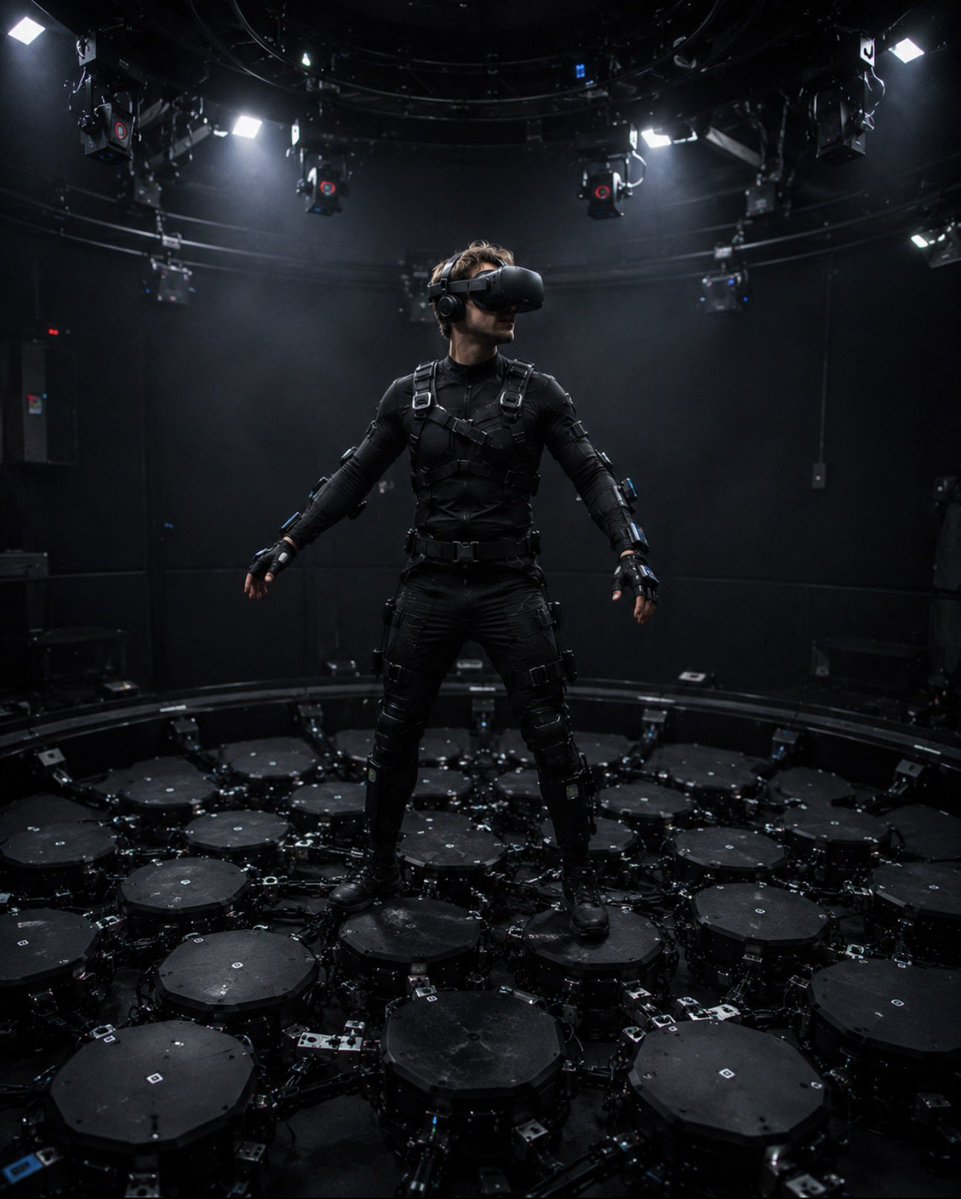
So since this is where we are headed to soon with AI, personalization, various futuristic tech, and VR, etc. we need to start contemplating the proper way to utilize and live with this powerful technology.
And maybe these VR worlds won’t only feel real or just like living in general, but one day they will have the ability to feel “ultra real” and like “ultra living” — since you will be able to basically do anything you want to do in them and have the worlds be designed into anything you want them to be by just working with the AI to craft the world in more and more of a way you prefer…The rules of physics, objectives, settings, objects, characters, ideas, relations, cultures and literally everything are whatever you want them to be because the AI designs it and refines exactly for your preferences.
Moderation comes to mind…
#futurism #VR
The ultimate video game is a personalized realistic world/experience we live our lives in, not different from normal reality in the feeling of realism or importance.
I am not saying this is a good thing or is a bad thing, but rather only that this kind of “ultimate video game” is coming soon (likely in the next ~0-10 years, maybe in the next ~0-20 years if you’re really conservative in the estimate…) — this tech will probably have both positive and negative effects depending on how you use it. This realistic VR will be so high tech people will use it for real experiences and some will live much or maybe even all of their lives there.
For example, in one positive instance a person might face time / visit their family member thats on the other side of the world virtually via a futuristic metaverse like setting, because it’s the only way to spend time with them.
And in another negative example of this tech maybe a young child becomes addicted to his AI friends and the virtual AI generated world/life and never wants to live or interact outside of VR because they have become attached to their life there.
Maybe likewise, adults will become attached to their VR worlds/lives of choice and never want to leave them, because everything they want is there and it’s how they want it to be—personalized exactly as they like.
Or yet in another situation maybe parents have their children grow up in VR with virtual friends, school, and a world, etc.—and maybe this kind of situation has some good to it? Or maybe not? This kind of situation seems bad overall on first blush, but do we really know? Is it that simple? Or are we just scared of change?
Do virtual worlds have some benefit if we utilize them in the right ways and to the right extent? Are virtual worlds just an extension of the real world and therefore real themselves, or are they something else entirely?
This level of VR has never been achieved, so it therefore has never been studied or even really contemplated much in philosophical thought because of this. Since it’s not here yet, we can only speculate.
Well maybe it has sort of been done before in some sense, and is here now at some level…
For example, we know people who play a lot of video games have some positive and negative effects from these experiences. And these people if they utilize video games in a healthy way may be able to benefit from them whilst reducing all the negatives of playing video games. If they play them using some kind of discerning moderation that maximizes benefits while minimizing detriments.
And so maybe the same is true for VR? But is this futuristic realistic immersive VR the same thing as the mere AAA video games of 2026 and before? Or is realistic immersive VR something different entirely that needs its own dedicated investigation?
It’s not yet clear what the difference is, between the immersive VR that’s coming soon and current video games, but it seems potentially the difference between traditional video games and the video games of the future may be great — as these future VR worlds will be as realistic and immersive as living in everyday reality.
These experiences may no longer be called or considered to be “video games” or “playing” anymore. But instead they may be defined as “virtual worlds” “and living in virtual worlds”. Or just “worlds” and “living”, for short.
And so maybe futuristic realistic immersive VR could be utilized as a very healthy way to raise your children before they interact with real people, or maybe not. Maybe it’s an absolutely horrible and heinous way to raise a child!?
Thats the point, this is not so simple once you think carefully about it…
And yet this is where we are headed at a very rapid pace. VR like this will likely exist in the next ~0-10 or maybe ~0-20 years. I lean more towards ~0-7 years myself. Maybe with 3-5 years as the sweet spot so around 2029-2031. 2030 if I had to say one year.
(read end of essay in the comments…) #virtualreality
It feels like the beginnings of this will be here by 2030.
So since this is where we are headed to soon with AI, personalization, various futuristic tech, and VR, etc. we need to start contemplating the proper way to utilize and live with this powerful technology.
Moderation comes to mind…
#futurism #VR
It feels like the beginnings of this will be here by 2030.
So since this is where we are headed to soon with AI, personalization, various futuristic tech, and VR, etc. we need to start contemplating the proper way to utilize and live with this powerful technology.
Moderation comes to mind…
#futurism #VR
It feels like the beginnings of this will be here by 2030.
So since this is where we are headed to soon with AI, personalization, various futuristic tech, and VR, etc. we need to start contemplating the proper way to utilize and live with this powerful technology.
Moderation comes to mind…
#futurism #VR
If you have clear points of skepticism for denying the singularity is here, then it is NOT here yet — simply because the singularity will be SO profound it will be impossible to deny its existence once it is here.
There’s a major difference between massive progress and the singularity. In my estimation we will have massive progress in the next decade — information explosion likely sometime next summer to first quarter of 2028, this is not AGI yet, but the precursor.
AGI is when AI understands all human things (of which there is a plethora), mental ideas and all physical skills, and not only understands them, but can demonstrate they understand them through taking action—verification will be needed to ensure they really understand what they say they do.
For example, we would not say an AI that claims it has solved cancer really understands this just because there was an information explosion it had and it claims it does have the cure to cancer—we would need to verify this through testing to ensure it does REALLY understand what it claims it does. Until then we can not consider it to be true intelligence — “By their fruits you shall know them.”…
AI will not likely be able to reach true AGI until something like 2029-2036, it seems to me. Since verification and full coverage is needed—both of which are vast undertakings. So AGI will arrive, I think, around 2029-2036. Seems logical.
Then is the point where we reach ASI (2037-2043) which is when the AI goes beyond human level in all things and therefore surpasses humans abilities in all of these things.
The singularity is not just reaching ASI, but it’s the final never ending stage when all of these areas/mental and physical things have automated progress loops. I think this will likely occur around 2044-2055.
At this point, because it’s the singularity, each progress loop essentially never stagnates anymore — or plateaus significantly, in other words.
So the progress is essentially exponential.
It may be that we never reach a perfect exponential, but rather something like a exponential that keeps incessantly progressing with only minor issues. I would still consider this “the singularity” for all extensive purposes though. And the amount of minor issues and minor plateaus will get less and less over time.
And so in conclusion, when for all things there is the information explosion (2027-2028), and then later AGI (2029-2036), and then ASI (2037-2043), and then finally the automated looping ASI (2044-2055) the singularity will actually be here because at that point its exponential progress for all things mental and physical.
And how do we know this is here?
Because it’s SO obvious as to be undeniable.
Technically it could arrive slightly before it’s obvious, but this gap in perception will not last long if it does—as the progress will be so significant as to virtually be instantly recognizable.
So when people are shouting the information explosion, AGI, ASI, and exponential progress for all things aka the singularity is already here and you can still skeptically question whether its true or not, the very fact of your skepticism means its not here yet.
And so these shouts are not true.
Rather the people shouting have their real reasons for shouting—namely, to make money through garnering support and investments for their AI companies, or they may have some other financial or social incentive, or both, etc. Another option is they simply misunderstand what the singularity and these other events are technically and so they are naively saying “the singularity” is here under false pretenses.
Because when the singularity is here there will be no more doubt in my mind or yours and no way to evidentially challenge that presumption with skepticism.
#AI
#singularity
@sama@elonmusk@finkd@JeffBezos@Microsoft@nvidia@TheRundownAI
Estimates time taken to play and solve during this period:
Rapid-game time: 1259 hours 22 minutes 30 seconds
Blitz-game time: 64 hours 25 minutes
Bullet-game time: 67 hours 18 minutes 45 seconds
Total game time: 1391 hours 6 minutes 15 seconds
Total puzzle time at 47.87 seconds per attempt on average: 162 hours 7 minutes 14 seconds
Combined time: 1553 hours 13 minutes 29 seconds
Combined average time per active day: 5 hours 40 mins
Average puzzles per day: 44.5
Average rapid-equivalent games per active day: 27.2
Average days off per week = ~1 (technically 0.81 days off average per week - took 36 days off over 44 weeks)
——
Reaching 1960 from 198 in roughly 1,553 hours is exceptionally fast for an adult beginner. His enormous volume explains much of it, but most players would not approach 1960 that quickly, especially through mostly games and puzzles rather than structured study.
With equivalent volume plus reviewing every game, most adult beginners would likely reach about 1,400–1,700 chess . com rapid, centered near 1,550–1,600. Tyler1 reaching 1,960 was exceptionally strong.
Phase 2 | Tyler 1 post puzzle + games / games only phase Jan 8th to May 11th, 2024
January 8: 0
January 9–16: 0 puzzles | Ratings: Rapid 1417 | Blitz 1030 | Bullet 1221
Games: Rapid 0 | Blitz 0 | Bullet 172
Rapid equivalents: 30.96
January 17: 0
January 18–27: 0 puzzles | Ratings: Rapid 1417 | Blitz 1030 | Bullet 1294
Games: Rapid 0 | Blitz 0 | Bullet 487
Rapid equivalents: 87.66
January 28: 0
January 29–February 1: 0 puzzles | Ratings: Rapid 1417 | Blitz 1030 | Bullet 1279
Games: Rapid 0 | Blitz 0 | Bullet 72
Rapid equivalents: 12.96
February 2–5: 0
February 6–7: 0 puzzles | Ratings: Rapid 1417 | Blitz 1030 | Bullet 1240
Games: Rapid 0 | Blitz 0 | Bullet 30
Rapid equivalents: 5.40
February 8: 0
February 9–March 1: 0 puzzles | Ratings: Rapid 1392 | Blitz 1030 | Bullet 1281
Games: Rapid 8 | Blitz 0 | Bullet 613
Rapid equivalents: 118.34
March 2: 0
March 3–18: *note: on March 7, 2024 Tyler1 turned 29 years old | 0 puzzles | Ratings: Rapid 1705 | Blitz 1030 | Bullet 1308
Games: Rapid 568 | Blitz 0 | Bullet 60
Rapid equivalents: 578.80
March 19–20: 0
March 21–25: 0 puzzles | Ratings: Rapid 1672 | Blitz 1030 | Bullet 1308
Games: Rapid 218 | Blitz 0 | Bullet 0
Rapid equivalents: 218
March 26–April 4: 0
April 5–10: 0 puzzles | Ratings: Rapid 1743 | Blitz 1030 | Bullet 1308
Games: Rapid 201 | Blitz 0 | Bullet 0
Rapid equivalents: 201
April 11–13: 0
April 14–May 8: 0 puzzles | Ratings: Rapid 1906 | Blitz 1030 | Bullet 1308
Games: Rapid 1037 | Blitz 0 | Bullet 0
Rapid equivalents: 1037
May 9: 0
May 10–11 through peak game: 0 puzzles | Ratings: Rapid 1960 | Blitz 1030 | Bullet 1308
Games: Rapid 50 | Blitz 0 | Bullet 0
Rapid equivalents: 50
From his first game on July 7 2023 CT through to his 1960 peak game on May 11 2024:
# of Rapid games: 6045
Won as White: 1533 — 50.53% of White games
Lost as White: 1368 — 45.09% of White games
Drew as White: 133 — 4.38% of White games
Won as Black: 1434 — 47.63% of Black games
Lost as Black: 1433 — 47.59% of Black games
Drew as Black: 144 — 4.78% of Black games
# of Blitz games: 773
Won as White: 191 — 51.48% of White games
Lost as White: 163 — 43.94% of White games
Drew as White: 17 — 4.58% of White games
Won as Black: 221 — 54.98% of Black games
Lost as Black: 161 — 40.05% of Black games
Drew as Black: 20 — 4.98% of Black games
# of Bullet games: 1795
Won as White: 457 — 50.89% of White games
Lost as White: 409 — 45.55% of White games
Drew as White: 32 — 3.56% of White games
Won as Black: 463 — 51.62% of Black games
Lost as Black: 405 — 45.15% of Black games
Drew as Black: 29 — 3.23% of Black games
Total games: 8613
# of Rapid equivalent games played: 6677.30 rapid-equivalent games w/game review ( because 773 \times 5 \div 12.5 = 309.2; 1795 \times 2.25 \div 12.5 = 323.1; 6045 + 309.2 + 323.1 = \mathbf{6677.3} )
*note: rapid equivalent games w/ game review assumes rapid games are 10 mins + 2.5min game review (12.5mins) on average; and blitz is 4mins + 1 min game review on average (5mins) and bullet is 1.5 mins + 45 second game review on average (2.25mins)
Total puzzles solved/not solved: 12193
Solved: 6674 — 54.74%
Not solved: 5519 — 45.26%
That is effectively 777.6 rapid-equivalent games of puzzles.
Games + Game Review + Puzzles = 7,454.90 rapid-equivalent games.
Which is…
Total minutes: 93,186.25
Total hours: 1,553.10
Equivalent to this Total of 24 hour days: 64.71 days
So if you practice chess for 12-hour days it would take 129.42 days to get the same amount of practice in as Tyler1.
And if you practice chess for 6-hour days it would take 258.84 days to get the same amount of practice in as Tyler1.
Tyler1 himself roughly practiced - 5.67 hours per active day—about 5 hours 40 minutes daily on his 274 active days, and he had 36 days off with essentially zero practice (although, maybe he consumed chess content on these days so could be even more than this…but this is not fully unconfirmed).
Theres also a new trend of becoming better/chess masters faster than ever e.g. Tyler1 and various YouTubers, etc… If you could trace the trend of how fast people are learning chess from the beginning of chess to now it would probably correlate with my prediction becoming true.