"Masterwork360 is a destination you map—it’s a continuous act of creation moving forward. When your moments align with enhavim, your legacy takes shape in real time."
Raiders of the Lost Ark was released in theaters on June 12, 1981. Directed by Steven Spielberg and created by George Lucas, this iconic, Academy Award-winning action-adventure film launched the legendary Indiana Jones franchise.
Go behind-the-scenes at the Ranch with Skywalker Sound's Ben Burtt and Foley artist John Roesch as they discuss how they created the iconic sounds of Raiders of the Lost Ark!
Celebrate the film's 45th anniversary and watch it now on Disney+!
Our latest shipment from the @Space_Station is heading back to Earth next Tuesday, June 16, aboard an uncrewed @SpaceX Dragon spacecraft. Here's how to watch: https://t.co/LSIkqntD9l
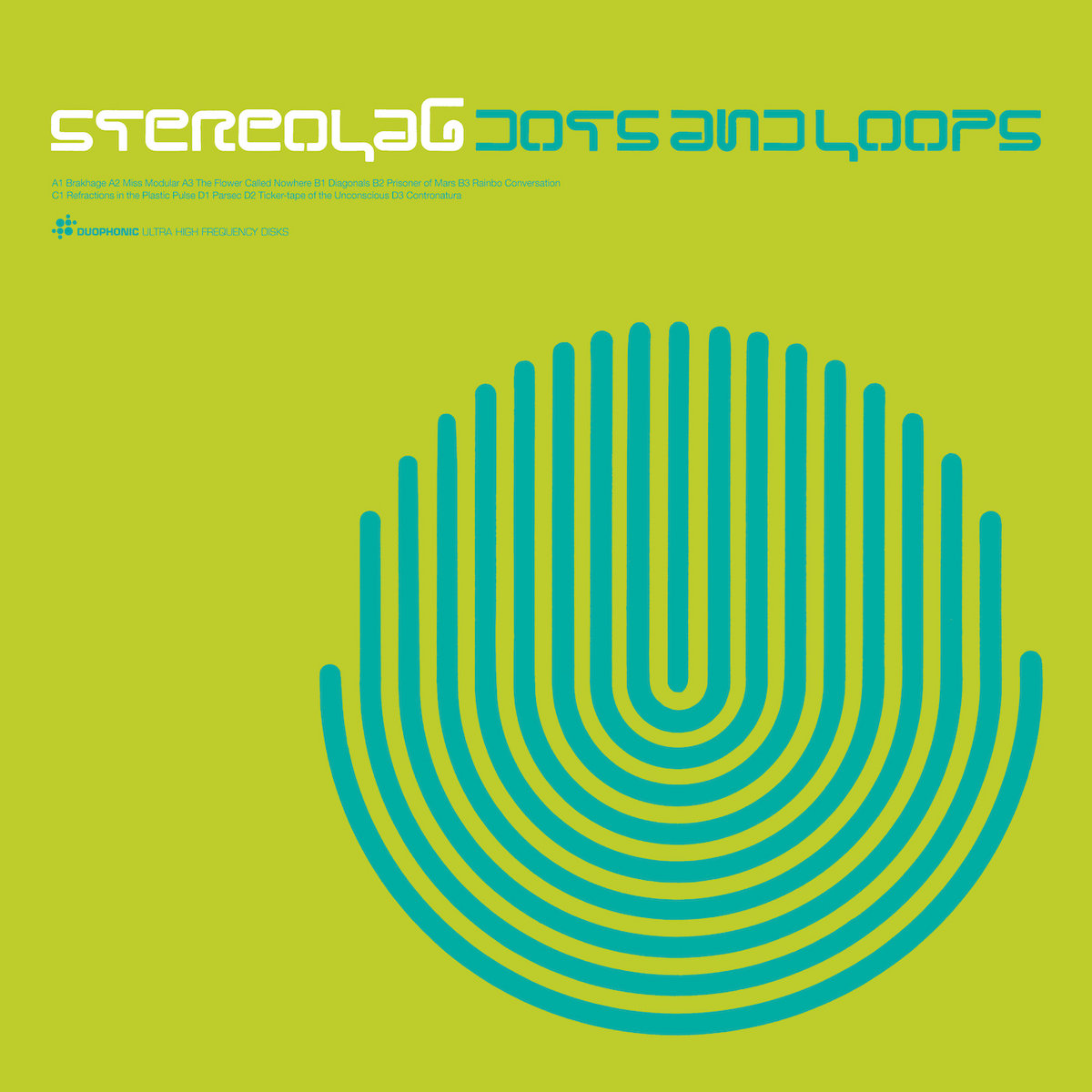
The hazeltine 1500 model appears in the videos for Stereolab songs Miss Modular and Fluorescences.
(The 1500 model also appears on the cover of Kraftwerk's 1981 album Computer World.) #masterwork
If you wondered where the term "Boolean logic"* came from, read on.
*Boolean logic is algebra where variables have two possible values: True (1) or False (0).
A self-taught Irish schoolteacher wrote a book in 1854 that almost nobody read for 80 years, until a 21-year-old MIT student picked it up and realized it could be used to design every computer in human history.
His name was George Boole. The book is called An Investigation of the Laws of Thought.
Boole was born in 1815 in Lincoln, England. His family was poor. He left school at 16 to support them. He taught himself Latin, Greek, French, German, and Italian.
Then he taught himself mathematics. By 19 he had opened his own school. By 24 he was publishing original papers in the Cambridge Mathematical Journal, competing with men who had spent decades inside the best universities in Britain.
He never had a degree. He never had a mentor. In 1849, Queen's College in Cork hired him as a professor anyway.
In 1854, he published his masterwork. What he built inside it was something nobody had attempted before at this scale. He turned logic into algebra.
Before Boole, logic was philosophy. You argued in sentences. You reasoned in paragraphs. It was powerful and completely impossible to automate, because there was no formal system underneath it, just language.
Boole stripped it down to arithmetic. He showed that every act of human reasoning could be reduced to operations on two values. True or false. One or zero. AND, OR, NOT. If both conditions are true, the result is true. If neither is, the result is false. Every judgment a human mind makes, every decision, every deduction, could be written as an equation following those rules.
Logicians read it. They found it interesting. Engineers building machines had never heard of it.
For 83 years, the book sat there.
Then in 1937, a 21-year-old MIT master's student named Claude Shannon was working on a thesis about electrical relay circuits. Switches that could be open or closed. Current that either flowed or didn't.
He read Boole and understood something nobody had connected before.
An open switch is a zero. A closed switch is a one. A circuit with two switches in series only carries current when both are closed. That is AND. A circuit with two switches in parallel carries current when either is closed. That is OR. Shannon proved that every possible logical relationship Boole had described could be physically built using wire and switches.
That single insight is the foundation of every computer ever made.
After Shannon, chip designers stopped thinking about electricity and started thinking about logic. Every transistor on every processor running right now is implementing a Boolean operation. Every if-statement in every codebase is Boolean logic. Every database query using AND or OR. Every neural network threshold that fires or doesn't fire. All of it is running the algebra of a self-taught schoolteacher from Lincoln who died 160 years ago.
The strangest part is what happened to Boole at the end.
He was walking to class in November 1864 when he got caught in a rainstorm. He lectured for hours in wet clothes. He went home sick. His wife, Mary, believed in homeopathic medicine and thought the cure should mirror the cause. She wrapped him in wet sheets and poured cold water over him repeatedly.
He died a few days later. He was 49.
He never saw a transistor. He never saw a circuit. He never saw a single physical machine run a single one of his rules.
His book is in the public domain. Free to download. Most engineers use the word Boolean dozens of times a week. Almost none of them know who they are saying.
The man whose logic runs inside every phone, every server, and every AI model on Earth died soaking wet in a small Irish town, 83 years before anyone figured out what he had actually built.
The Future of Trust in the Masterwork Years: Why human credibility becomes the most durable competitive advantage in a synthetic environment.
https://t.co/IIGtgEA82G
The Future of Trust in the Masterwork Years: Why human credibility becomes the most durable competitive advantage in a synthetic environment.
https://t.co/Mkh1GBoWkh
"Human freedom involves our capacity to pause, to choose the one response toward which we wish to throw our weight." -Rollo May
And this is the basis for developing your Masterwork.
The Committee of Five—John Adams, Benjamin Franklin, Thomas Jefferson, Robert Livingston, and Roger Sherman—was appointed to draft the Declaration of Independence 250 years ago today.
Jefferson's draft of the document is here at the Library, and will be featured in a new exhibition opening July 3.
If your last major win felt strangely flat, you are not losing your edge. Often, accomplished people do not see it coming. Read on to see where you are standing, and why it draws the map for what comes next. https://t.co/f0GiJbj93h
via @MasterworkYears
Creativity is not merely the innocent spontaneity of our youth and childhood; it must also be married to the passion of the adult human being, which is a passion to live beyond one's death. - Rollo May
The Masterwork Years
https://t.co/qP05hEZ5MP
Get ready for Earth joy!
Earlier today, we announced the four astronauts who will go to space on Artemis III —and shared the latest updates on the future of @NASAArtemis.
Learn more about how this mission will set us up to return humanity to the Moon: https://t.co/kAvzvuYzEw