50 websites that can turn a “quick visit” into hours of exploring .
1. https://t.co/BKQKtCoHx7 — Live satellite views
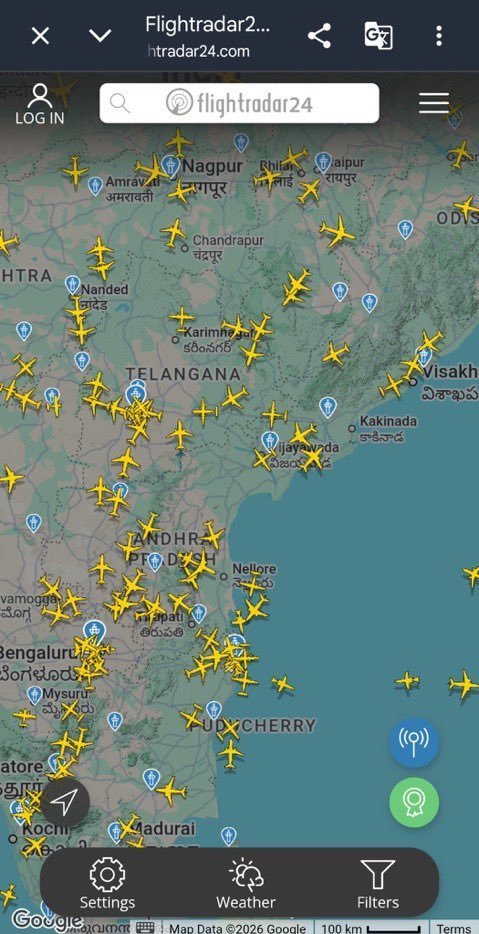
2. https://t.co/skHM6ihO1M — Track planes worldwide
3. https://t.co/3wHLr5BTqs — Track ships in real time
4. https://t.co/wneZoYkXVV — Live weather & storms
5. https://t.co/th5qTv4uYt — Live lightning strikes
6. https://t.co/ugJruuA2MX — Recent earthquakes
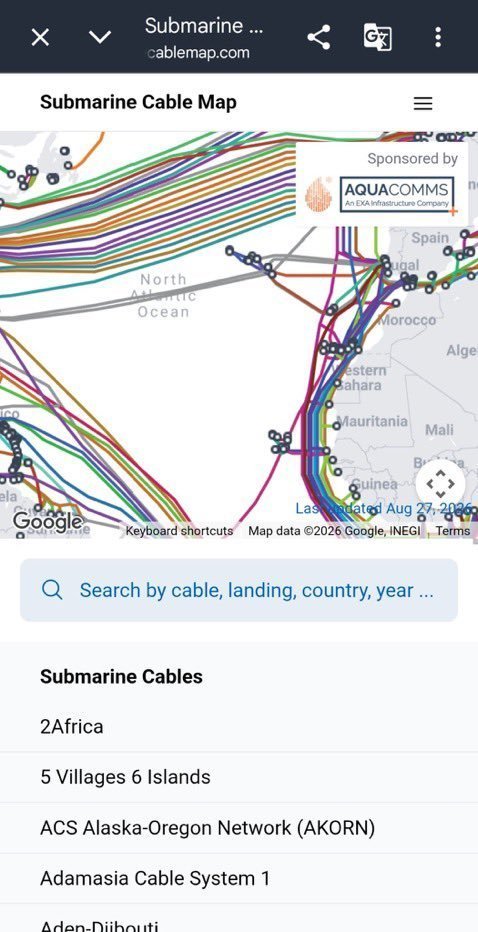
7. https://t.co/KjzFm8Mv5H Explore internet cables
8. https://t.co/ihBKAFPlqM — Monitor global forests
9. https://t.co/QO76fqkPBq — Live world statistics
10. https://t.co/6aNOFkpEaE — Live internet stats
11. https://t.co/Ng5YgeOtoO — Compare country sizes
12. https://t.co/8nxdhZQnea — Explore historical maps
13. https://t.co/KxBUC8vkvs — Historical map archive
14. https://t.co/jCKAhsYH7r — Community-built world map
15. https://t.co/d5QWs5njpu — Windows around the world
16. https://t.co/RKjjmyqV5D — Virtual city walks
17. https://t.co/foY7sojylA — Random places worldwide
18. https://t.co/ZJ889iuSUd — Strange places worldwide
19. https://t.co/wVGZkiJ20o — Fun interactive experiments
20. https://t.co/j1VNMfYDcy — Atom to universe
21. https://t.co/CvOBtl9Vm8 — Explore space in 3D
22. https://t.co/RnlofaWs0Q — Interactive sky map
23. https://t.co/1PlQgAjbMU — NASA’s daily space image
24. https://t.co/2RuTZvWdt3 — NASA image archive
25. https://t.co/beEkHBgT5l — Interactive data stories
26. https://t.co/RMccQyBARG — Global data & insights
27. https://t.co/gNH6mlzyjF — Understand global trends
28. https://t.co/ZrVElnYKY2 — Data visualizations
29. https://t.co/ahtXNpo1de — World Bank data
30. https://t.co/ShMYouw5GP — Turkey’s official statistics
31. https://t.co/GqEd2SxdGe — Massive digital archive
32. https://t.co/8ijFqv85Ff — Free classic books
33. https://t.co/Gt6dp7gGNG — Explore millions of books
34. https://t.co/LogFrI4LvX — Library of Congress archive
35. https://t.co/O9XxbTPkbZ — Europe’s cultural archive
36. https://t.co/lQg0HnHYrx — America’s digital library
37. https://t.co/TcOIZ5l4tt — Virtual museums
38. https://t.co/6wMBrfTaPl High-res artworks
39. https://t.co/trYjdzxThm — Online art collection
40. https://t.co/Jgz9Abg2UC — Historical treasures
41. https://t.co/y4axNFEMBi — Free culture & education
42. https://t.co/wkw7PgTFlB — Explore the Met collection
43. https://t.co/AZ98yxOlXC — Explore music genres
44. https://t.co/UWyCzSQMRQ — Music by country & decade
45. https://t.co/Q0NMpm9XqQ — Wikipedia edits as audio
46. https://t.co/bY6Plsgls1… — Random knowledge
47. https://t.co/tukI2JCMXp — Time & astronomy tools
48. https://t.co/A8xsuxYqHd — Latest science news
49. https://t.co/RrqPEgwNK3 — Free research papers
50. https://t.co/4ZyBN6Hpdk — Interactive data visualizations
The internet is much bigger than your usual feed.
🔖 Bookmark this for later.
Follow @justinbrave21 for more useful websites & AI tools. 🚀
Why is Ibn Sahl left out of history? The Muslim genius who pioneered Snell's Law long before it was recognized.
Ibn Sahl (d. 1000), was a Muslim mathematician and physicist, who flourished in Baghdad.
He was the first to discover the law of refraction (Snell's law).
Ibn Sahl uses this law to derive lens shapes that focus light with no geometric aberrations, known as anaclastic lenses.
🧵[THREAD]
These kids didn't wait to grow up before changing science forever.
- Gauss fixed his dad's math at 3 and added 1 to 100 in seconds at 7.
- Maxwell wrote his first paper at 14.
- Ramanujan derived theorems alone at 11.
- Landau graduated at 13.
- Von Neumann did 8-digit division in his head at 8.
- Schrödinger published physics at 16.
- Feynman taught himself advanced math as a teen.
- Terence Tao crushed calculus at 7 and won Olympiad gold at 13.
Proof that true brilliance starts young and never stops inspiring us.
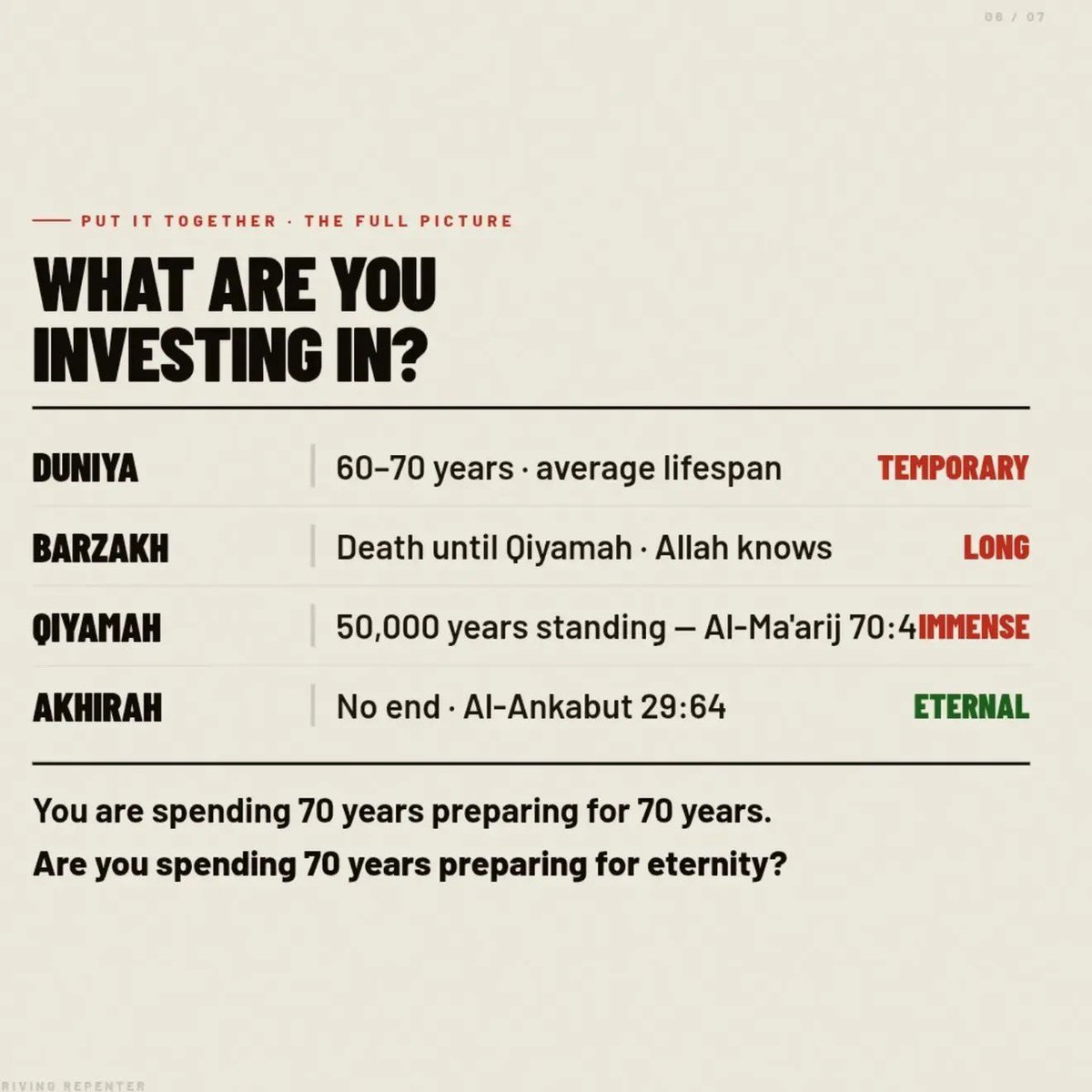
Allah will test you in 3 ways.
1. Allah will give you what you want immediately and test your "GRATITUDE"
2. Allah will give you what you want with a little delay and tests your "PATIENCE"
3. Allah doesn't give you what you want & tests your "FAITH"
Allah delayed something in your life, only to have this sincere state of heart from you, so that He can open up the doors for you. trust Allah because tawakkul opens doors to miracles which are beyond our imagination. and there's no door that Allah can't open.
✨You’ve seen this in every math class:
sin(a ± b) = sin a cos b ± cos a sin b
sin(2a) = 2 sin a cos a
cos(2a) = 1 − 2 sin²(a)
🚨But did you know these formulae came from a Muslim scholar 1000 years ago?
Meet Abū al-Wafā al-Būzjānī, the genius who shaped Trigonometry. 📐
Abū al-Wafā Būzhjānī (d. 998) was a Persian Muslim mathematician and astronomer from Khorasan. Born in Būzjān (near Nishapur, Iran), Būzhjānī showed early brilliance in mathematics and geometry.
He later moved to Baghdad, then the heart of the Islamic Golden Age, a city of scholars, libraries, and observatories.
In Baghdad, he became one of the leading scientists of the House of Wisdom (Bayt al-Ḥikmah). Here, he studied Greek works like Euclid and Ptolemy, and expanded them far beyond their original limits.
📐 His Contributions to Mathematics:
He established several trigonometric identities such as [sin(a±b)] in their modern form:
{sin(α ± β)= Sinα Cosβ ± Cosα Sinβ}
{sin(a + b) = Sin(a)Cos(b) + Cos(a)Sin(b)}
{Cos(2a) = 1-2sin²(a)}
{Sin(2a) = 2Sin(a) Cos(a)}
He compiled tables of sines and tangents at 15° intervals, introduced secant and cosecant, and explored the relationships between all six trigonometric lines. His work made both mathematics and astronomy quantitatively precise.
He also studied geometry, arithmetic, and number theory, writing detailed commentaries on al-Khwārizmī and Diophantus.
Some sources suggest that he introduced the tangent function, although other sources give the credit for this innovation to al-Marwazi.
🌌 His Work in Astronomy:
Abū al-Wafā designed and built a wall quadrant, a large, fixed instrument used to measure celestial altitudes with remarkable accuracy.
This invention influenced later observatories across the Islamic world.
His masterpiece, Kitāb al-Majisṭī (“The Almagest”), improved upon Ptolemy’s astronomy, described planetary motion, and developed mathematical methods for finding the Qibla direction, the direction of prayer. 🕌
In 997, he participated in an experiment to determine the difference in local time between his location, Baghdad, and that of al-Biruni (who was living in Kath, Uzbekistan).
Their result was astonishingly accurate, within about 1 hour of modern calculations. ⏱️
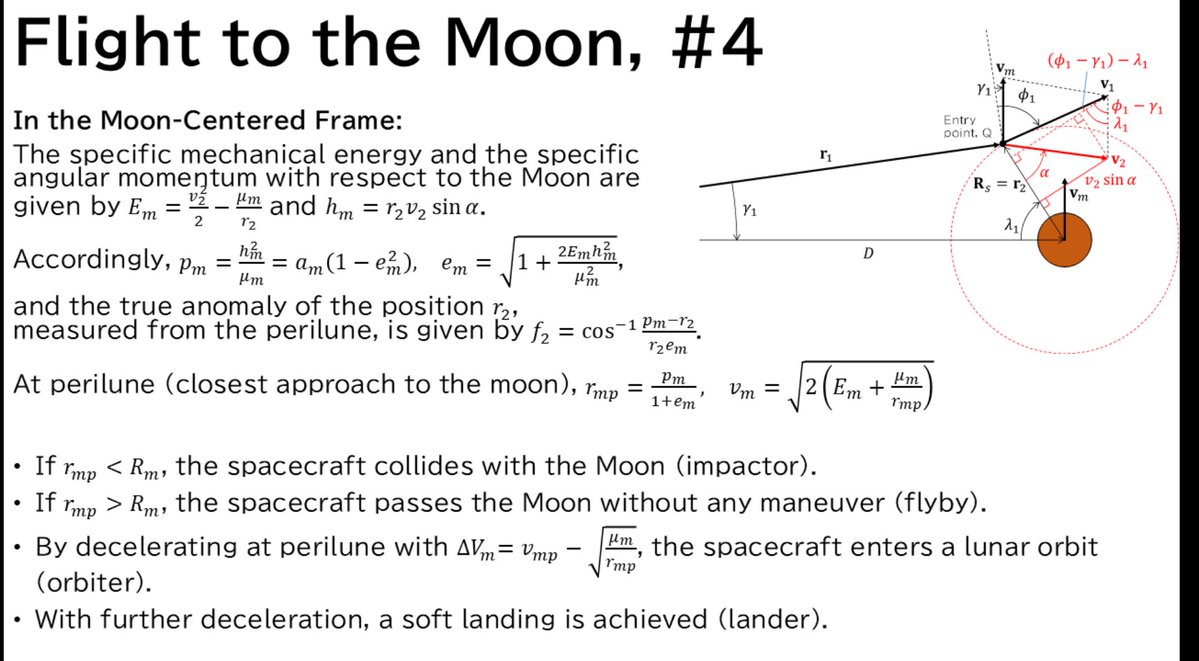
The Artemis II crew has recreated “Earthrise,” one of the most famous photographs of all time, with a small twist. The new photo is of Earthset, capturing the surface of the moon and the crescent-lit Earth setting beyond it in the same frame: https://t.co/gtoKcocrw5
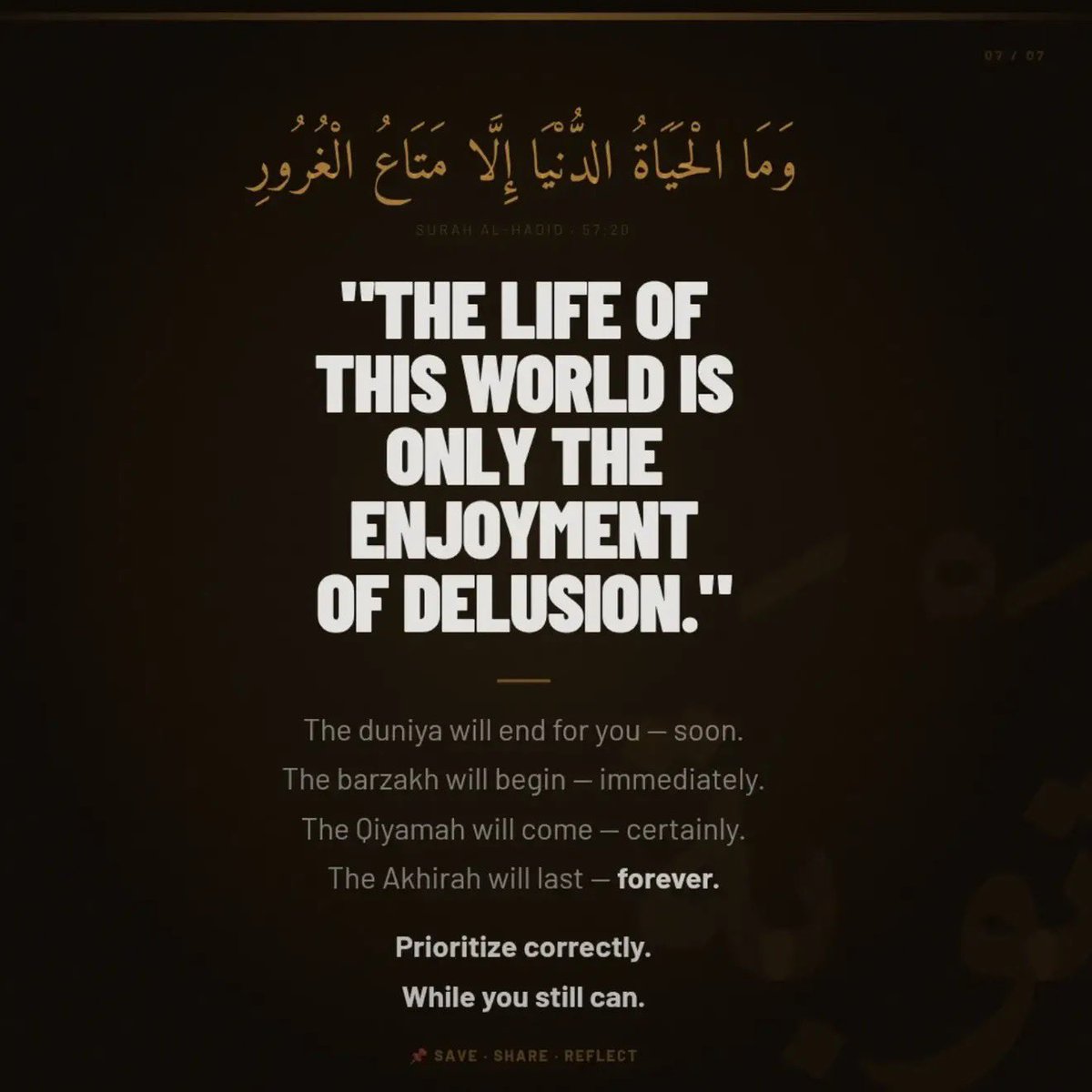
Rabbighfirli – My Lord, forgive me
Warhamni – Have mercy on me
Wajburni – Cover my shame
Warfa'ni – Raise my rank
Warzuqni – Give me sustenance
Wahdini – Give me guidance
Wa'afini – Make me healthy
Wa'fu'anni – Pardon me



![IslamicSH_'s tweet photo. Why is Ibn Sahl left out of history? The Muslim genius who pioneered Snell's Law long before it was recognized.
Ibn Sahl (d. 1000), was a Muslim mathematician and physicist, who flourished in Baghdad.
He was the first to discover the law of refraction (Snell's law).
Ibn Sahl uses this law to derive lens shapes that focus light with no geometric aberrations, known as anaclastic lenses.
🧵[THREAD]](https://pbs.twimg.com/media/HSj2aa1bMAAZP8p.png)




![IslamicSH_'s tweet photo. ✨You’ve seen this in every math class:
sin(a ± b) = sin a cos b ± cos a sin b
sin(2a) = 2 sin a cos a
cos(2a) = 1 − 2 sin²(a)
🚨But did you know these formulae came from a Muslim scholar 1000 years ago?
Meet Abū al-Wafā al-Būzjānī, the genius who shaped Trigonometry. 📐
Abū al-Wafā Būzhjānī (d. 998) was a Persian Muslim mathematician and astronomer from Khorasan. Born in Būzjān (near Nishapur, Iran), Būzhjānī showed early brilliance in mathematics and geometry.
He later moved to Baghdad, then the heart of the Islamic Golden Age, a city of scholars, libraries, and observatories.
In Baghdad, he became one of the leading scientists of the House of Wisdom (Bayt al-Ḥikmah). Here, he studied Greek works like Euclid and Ptolemy, and expanded them far beyond their original limits.
📐 His Contributions to Mathematics:
He established several trigonometric identities such as [sin(a±b)] in their modern form:
{sin(α ± β)= Sinα Cosβ ± Cosα Sinβ}
{sin(a + b) = Sin(a)Cos(b) + Cos(a)Sin(b)}
{Cos(2a) = 1-2sin²(a)}
{Sin(2a) = 2Sin(a) Cos(a)}
He compiled tables of sines and tangents at 15° intervals, introduced secant and cosecant, and explored the relationships between all six trigonometric lines. His work made both mathematics and astronomy quantitatively precise.
He also studied geometry, arithmetic, and number theory, writing detailed commentaries on al-Khwārizmī and Diophantus.
Some sources suggest that he introduced the tangent function, although other sources give the credit for this innovation to al-Marwazi.
🌌 His Work in Astronomy:
Abū al-Wafā designed and built a wall quadrant, a large, fixed instrument used to measure celestial altitudes with remarkable accuracy.
This invention influenced later observatories across the Islamic world.
His masterpiece, Kitāb al-Majisṭī (“The Almagest”), improved upon Ptolemy’s astronomy, described planetary motion, and developed mathematical methods for finding the Qibla direction, the direction of prayer. 🕌
In 997, he participated in an experiment to determine the difference in local time between his location, Baghdad, and that of al-Biruni (who was living in Kath, Uzbekistan).
Their result was astonishingly accurate, within about 1 hour of modern calculations. ⏱️](https://pbs.twimg.com/media/HHf61X_aIAAM_05.png)




![IslamicSH_'s tweet photo. Why is Ibn Sahl left out of history? The Muslim genius who pioneered Snell's Law long before it was recognized.
Ibn Sahl (d. 1000), was a Muslim mathematician and physicist, who flourished in Baghdad.
He was the first to discover the law of refraction (Snell's law).
Ibn Sahl uses this law to derive lens shapes that focus light with no geometric aberrations, known as anaclastic lenses.
🧵[THREAD]](https://pbs.twimg.com/media/HSj2bKQb0AAdeOO.png)


![IslamicSH_'s tweet photo. ✨You’ve seen this in every math class:
sin(a ± b) = sin a cos b ± cos a sin b
sin(2a) = 2 sin a cos a
cos(2a) = 1 − 2 sin²(a)
🚨But did you know these formulae came from a Muslim scholar 1000 years ago?
Meet Abū al-Wafā al-Būzjānī, the genius who shaped Trigonometry. 📐
Abū al-Wafā Būzhjānī (d. 998) was a Persian Muslim mathematician and astronomer from Khorasan. Born in Būzjān (near Nishapur, Iran), Būzhjānī showed early brilliance in mathematics and geometry.
He later moved to Baghdad, then the heart of the Islamic Golden Age, a city of scholars, libraries, and observatories.
In Baghdad, he became one of the leading scientists of the House of Wisdom (Bayt al-Ḥikmah). Here, he studied Greek works like Euclid and Ptolemy, and expanded them far beyond their original limits.
📐 His Contributions to Mathematics:
He established several trigonometric identities such as [sin(a±b)] in their modern form:
{sin(α ± β)= Sinα Cosβ ± Cosα Sinβ}
{sin(a + b) = Sin(a)Cos(b) + Cos(a)Sin(b)}
{Cos(2a) = 1-2sin²(a)}
{Sin(2a) = 2Sin(a) Cos(a)}
He compiled tables of sines and tangents at 15° intervals, introduced secant and cosecant, and explored the relationships between all six trigonometric lines. His work made both mathematics and astronomy quantitatively precise.
He also studied geometry, arithmetic, and number theory, writing detailed commentaries on al-Khwārizmī and Diophantus.
Some sources suggest that he introduced the tangent function, although other sources give the credit for this innovation to al-Marwazi.
🌌 His Work in Astronomy:
Abū al-Wafā designed and built a wall quadrant, a large, fixed instrument used to measure celestial altitudes with remarkable accuracy.
This invention influenced later observatories across the Islamic world.
His masterpiece, Kitāb al-Majisṭī (“The Almagest”), improved upon Ptolemy’s astronomy, described planetary motion, and developed mathematical methods for finding the Qibla direction, the direction of prayer. 🕌
In 997, he participated in an experiment to determine the difference in local time between his location, Baghdad, and that of al-Biruni (who was living in Kath, Uzbekistan).
Their result was astonishingly accurate, within about 1 hour of modern calculations. ⏱️](https://pbs.twimg.com/media/HHf669za0AErbcc.jpg)