Most children who develop Type 1, autoimmune diabetes have no family history. With current and emerging disease-modifying interventions, this could be preventable. Why aren't all children age 2-4 years getting screened for islet cell autoantibodies as this new international expert consensus recommends?
https://t.co/w1EnMUHZmP @DiabetologiaJnl
I'm a cardiologist. Let me tell you about a woman I'll call Lisa. She was 50. She may be you.
Never smoked. Normal weight. Exercised regularly. Ate fish, vegetables, olive oil. No diabetes. No high blood pressure. Total cholesterol 221, HDL 68 — numbers that make a physician smile and say everything looks great.
Her 10-year risk calculator said 2.5%. Low risk. No statin recommended. See you next year.
Then she got a calcium scan.
Her score was 204.
Most women her age score zero. A score above 200 places her far above the 95th percentile — with roughly seven to eight times the event risk of a peer with the same "excellent" risk factors and a clean scan.
She had significant coronary artery disease at 50. The calculator had no idea. Her only conventional clue was buried in her family history: her mother had a heart attack and a stent at 62.
Here is what almost everyone gets wrong.
Cardiovascular disease kills more women than breast cancer, lung cancer, and chronic lung disease combined. It is the leading cause of death in women, and we screen relentlessly for the cancers while largely ignoring the thing most likely to kill us.
And the risk calculators systematically underperform in women. They were built around age, blood pressure, cholesterol, smoking, and diabetes — and they badly underweight the factors that actually drive risk in a female body.
Let me walk you through the ones nobody counts.
𝟭. PREGNANCY WAS YOUR FIRST CARDIAC STRESS TEST
This is the single most underused piece of information in women's cardiology, and if you take one thing from this post, take this.
Pregnancy places extraordinary demands on the cardiovascular system. Blood volume rises by 40-50%. Cardiac output climbs. The vascular system is pushed harder than at almost any other point in life.
Some women pass that test. Some don't. And the ones who don't are showing you something about their vasculature decades before anything else will.
Preeclampsia — the diagnosis is high blood pressure and organ stress in pregnancy, but the underlying biology is endothelial dysfunction, the exact process that begins atherosclerosis. Women who experience it carry roughly double to quadruple the lifetime cardiovascular risk. Their risk of chronic hypertension afterward is dramatically elevated, and events occur meaningfully earlier.
Gestational diabetes — this is insulin resistance revealing itself under metabolic load. Up to half of these women develop type 2 diabetes within a decade, and cardiovascular risk climbs with it. It was never "just a pregnancy thing that resolved."
Preterm delivery, placental abruption, and delivering a growth-restricted baby all carry independent cardiovascular risk signals — likely because they reflect abnormal placental vasculature, and the placenta is a vascular organ.
Here is the failure, and it is systemic: most women are discharged after a preeclamptic pregnancy with no cardiovascular follow-up plan whatsoever. Their blood pressure normalizes, everyone exhales, and nobody mentions it again for thirty years.
If you had any of these complications, your cardiac surveillance should begin in your thirties and forties — not at 65. Blood pressure monitored. ApoB, Lp(a), hs-CRP, and fasting insulin checked. That history belongs in your chart as a permanent risk factor, and you may have to be the one who puts it there.
𝟮. PERIMENOPAUSE IS A CARDIOVASCULAR EVENT, NOT JUST A HORMONAL ONE
We talk about menopause as hot flashes and mood. What we rarely explain is that it is one of the most consequential vascular transitions of your life.
Estrogen is not merely a reproductive hormone. It is vasculoprotective, and it does specific measurable things:
It promotes nitric oxide production, which keeps your arteries dilated and the endothelium healthy. It favorably shapes lipids — supporting HDL and helping clear LDL. It has anti-inflammatory effects on the vessel wall. It helps maintain insulin sensitivity and influences where your body stores fat.
Then it withdraws.
And the changes that follow are not gradual background aging — they cluster tightly around the menopausal transition itself:
LDL and ApoB rise. Triglycerides rise. HDL becomes less functional even when the number looks unchanged.
Body fat redistributes from hips and thighs to the abdomen — and visceral fat is metabolically active, inflammatory tissue, not passive storage.
Insulin resistance increases, sometimes markedly.
Blood pressure rises, and hypertension becomes more common in women than men after this transition.
Arterial stiffness increases measurably.
And here is the part I want every woman in her forties to understand: these shifts begin in perimenopause — potentially years before your last period, while your cycles are still occurring and everyone including your doctor still thinks of you as premenopausal.
That is precisely the window when this is most modifiable, and precisely when nobody is looking.
Two specific things worth knowing: women who go through premature or early menopause — before 40, or before 45 — carry meaningfully higher cardiovascular risk and warrant earlier, more aggressive evaluation. And emerging data suggests that frequent or severe hot flashes may themselves correlate with worse vascular measures, meaning the symptom may be a signal rather than merely an inconvenience.
On hormone therapy: in November 2025 the FDA began removing the black box warnings, and the FDA Commissioner called the original decision one of the greatest errors in modern medicine. Roughly 50 million women were frightened away from treatment based on a misread of the WHI — in whose estrogen-only arm breast cancer risk was actually lower. For most healthy women starting within 10 years of menopause or before 60, the risk-benefit calculation looks very different than we were told. It is not a cardiovascular preventive therapy, and it must be individualized — but it deserves a real conversation rather than a reflexive no.
𝟯. THE OTHER FACTORS THAT DON'T APPEAR ON ANY CALCULATOR
Autoimmune disease — lupus, rheumatoid arthritis, psoriasis. Far more common in women, and chronic inflammation accelerates atherosclerosis at any age. A woman with lupus deserves the vigilance we'd give a diabetic.
PCOS — insulin resistance, dyslipidemia, and elevated risk that starts in the twenties.
Migraine with aura, associated with higher stroke risk.
Breast cancer treatment — certain chemotherapies and chest radiation carry cardiac consequences that surface years later.
And elevated Lp(a) — the one to act on this week.
𝟰. Lp(a): TEST IT ONCE. THEN TELL YOUR FAMILY.
A genetically determined particle that drives plaque, clotting, and aortic valve calcification simultaneously. Set at birth. Essentially unchanged by diet, exercise, or weight loss. Roughly 1 in 5 people carry elevated levels.
The 2026 ACC/AHA guidelines now give a Class I recommendation to measure it once in every adult. Most people never have been.
Ask for it in nmol/L. Under 75 is lower risk. 125+ carries roughly 1.4x increased risk. 250+ doubles it.
And in women specifically: midlife levels above the 75th percentile predict higher event rates over the following thirty years. A blood draw at 45 forecasting your seventies.
If yours is elevated, get your parents, siblings, and children tested. It's inherited — your result is partly theirs.
𝟱. THE REST OF THE PANEL TO DEMAND
ApoB — counts every atherogenic particle rather than the cholesterol they carry. One analysis found 54% of patients had dangerous levels that standard LDL testing missed entirely.
hs-CRP — and here's a striking finding: in healthy women, a single midlife measurement of hs-CRP + LDL + Lp(a) together predicts 30-year risk more powerfully than any one alone.
Fasting insulin — under 5. It rises 10-15 years before glucose does, and almost nobody checks it. This is where perimenopausal metabolic change shows up first.
Plus HbA1c, kidney function, and urine albumin-to-creatinine ratio.
𝟲. THEN ACTUALLY LOOK AT YOUR ARTERIES
A calcium score is the usual first step — cheap, ten minutes, low radiation, highly predictive.
But here is the trap for younger women, and it is critical: calcium is a LATE finding. Soft, non-calcified plaque — the kind that ruptures — is invisible to a calcium scan. And women calcify later than men, which means a woman's disease is disproportionately the type a calcium score cannot see.
CT angiography solves that. It visualizes the entire coronary tree, quantifies soft plaque volume, and identifies high-risk features that predict events.
And the detail that matters most for us: women have events at lower absolute plaque burdens than men, partly because our coronary arteries are smaller. Less plaque, same danger.
The SCAPIS study found silent atherosclerosis in over 40% of middle-aged adults with no known disease.
One more thing every woman should know: a normal stress test is not a clean bill of arterial health. It detects flow-limiting narrowing over roughly 70% — and women more often have microvascular disease, plaque in vessels too small for standard imaging to see. A woman can be having a heart attack with "clean" coronary arteries on catheterization. If symptoms persist despite normal testing, push for cardiac MRI, PET, or coronary function testing.
AND THE NEWS THAT'S GENUINELY EXCITING
For forty years, Lp(a) was the risk factor we could measure and could not treat.
That's ending. Five drugs in advanced development achieve 70-95%+ reductions. Two Phase 3 outcome trials — pelacarsen with 8,323 patients and olpasiran with about 7,300 — are reading out in the second half of 2026.
If positive, they'll be the first proof that lowering Lp(a) prevents heart attacks. That changes everything for one in five people.
WHAT TO DO THIS MONTH
Write down your full pregnancy history — every complication, by name. Write down your family history — which relative, which event, what age.
Get Lp(a) tested once. Add ApoB, hs-CRP, and fasting insulin.
If you're in perimenopause, this is your window. Get the baseline now, while the changes are still early and still reversible.
If anything is elevated — or you had preeclampsia, gestational diabetes, early menopause, or a family history of premature disease — ask about imaging. And if your calcium score is zero but your risk factors aren't, ask specifically about CT angiography.
Lisa's numbers looked perfect at 50. Her arteries did not.
The difference between those two facts is the difference between finding out in a scanner and finding out in an ambulance.
Stop accepting "your numbers look fine."
Ask them to look.
HE PROTECTED 54,000 DOCTORS. THE @NHS PROTECTED ITSELF.
In January 2014, Dr Chris Day (@drcmday) was working overnight in the intensive care unit at Queen Elizabeth Hospital in Woolwich. Two locum doctors didn't show up. The unit was running at double the patient load the national guidelines allow. He raised the alarm. He reported unsafe staffing. He linked the situation to two patient deaths.
That's what the NHS calls a whistleblower.
What followed was eight years of litigation, a legal battle all the way to the Court of Appeal, and over £700,000 of public money spent by Health Education England (@NHSE_WTE) and Lewisham and Greenwich NHS Trust (@LG_NHS) trying to stop his case being heard at all.
Here's the really elegant bit. HEE's opening legal argument wasn't that they'd done nothing wrong. It was that whistleblowing law simply didn't apply to them, because they didn't directly employ junior doctors. They were just the organisation that controlled the career progression of every single one of England's 54,000 junior doctors. Totally different thing.
Dr Day fought that argument to the Court of Appeal and won. The law was clarified. All 54,000 junior doctors below consultant grade in England now have statutory whistleblowing protection. One man, crowdfunding against three QCs, changed employment law for an entire profession.
No formal apology from the NHS. No reinstatement. No path back to a consultant career. He has worked as a locum A&E doctor ever since, doing overnight shifts while his opponents collected salaries, pensions, and the occasional glowing tribute to NHS transparency.
During the 2022 tribunal hearing, the communications director at Lewisham and Greenwich NHS Trust deleted up to 90,000 emails. The director whose entire NHS email archive was also deleted during live litigation happened to be the instructing legal client in the case. The tribunal described the conduct as extraordinary. Nobody was prosecuted. The trust issued a partial apology about a press release.
The system did exactly what it always does. It absorbed the cost, deflected accountability, and waited for the man it destroyed to run out of money or energy.
He hasn't.
Sources: The Guardian | @BBC | BMJ | Westminster Confidential @davidhencke | Protect @WhistleUK | @BylineTimes | @CrowdJustice
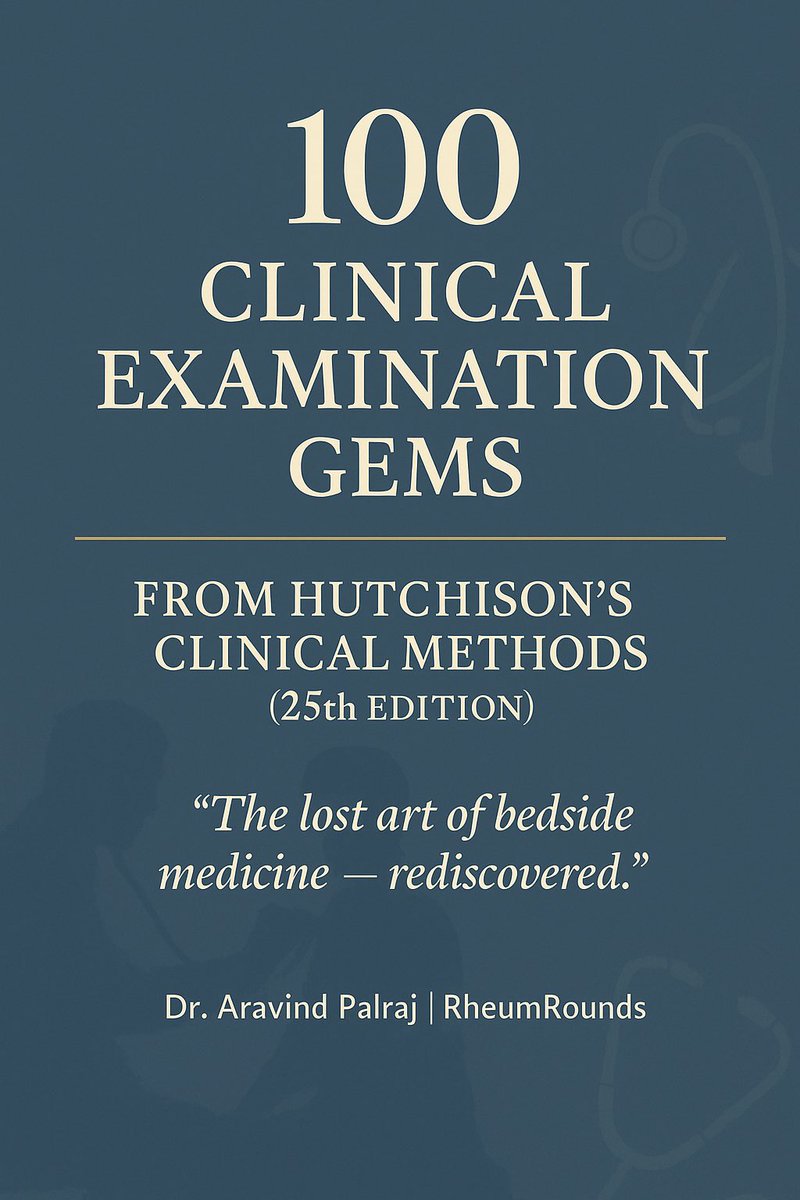
🧵100 timeless bedside gems every doctor should know.
Straight from Hutchison’s Clinical Methods — distilled into 10 clean infographics.
If you love real clinical medicine, this thread will remind you why you chose it.
🩺 Let’s bring back the art of examination 👇
(Save this thread — it’ll outlive most AI tools.) #MedTwitter #MedEd #FOAMed @DrAkhilX @IhabFathiSulima@drkeithsiau@DurgaPrasannaM1@JasmineNephro
Wes is a charming fella and is pitching as the reasonable party.
But here is a short thread on what you need to know about why strike action is the only way to keep this Government honest.
Carotid sinus massage to break a tachycardia is the closest thing to magic we get to do in cardiology. The idea that you can rub on someone’s neck and cure their heart problem is surreal. What are some other quick cures in other specialities that are like this?
Scene from 24 hrs in A&E. A patient with nausea and vomiting is given an alcohol wipe to sniff to relieve symptoms. While this may sound absurd, its effectiveness has been confirmed in randomised trials and may be superior to ondansetron. Would you recommend this?
In 1929, a 25-year-old doctor cut into his own arm and inserted a catheter into his heart.
No permission, no supervision, just sheer defiance.
He risked death to prove a theory no one believed.
His insane gamble saved millions of lives.
Here's his story:
Periodic reminder that for most people with vasodilatory shock we should be targeting a MAP > 60 mmHg (not 65).
A lower MAP goal was associated with a shortened duration of vasopressors & possibly reduced mortality.
With vasopressors, less is truly more.
https://t.co/85Rtv2gHgg
Listen to this termination of resuscitation… which is how it should happen.
There are several things to note that Dr. Robby from The Pitt did here that are spot-on.
1. He, in no uncertain terms, told her parents that her cardiac arrest was non-survivable. This is not the time to list out percentages or probabilities. This is the time to provide certainty to the inevitable death.
2. He told the parents when the appropriate time was to terminate resuscitation.
Notice… No one said, “hey, so, do you want us to keep going or what?”. When a statement like that or similar is used, what the family hear are, “so… do YOU want to let granny die now or what?”
You, the medical professional, that understands physiology and abysmal outcome even if ROSC is achieved at this point should be the one bearing the burden of making that decision, not the family member.
3. He offered to allow the remaining family to come in before stopping all of the visible efforts of resuscitation. (see previous post on this topic)
My general gist is something like this, “Johnny has had no pulse and no blood flow to the brain for 40 minutes. Even if all the things we are doing were to get his heart beating again, he has suffered permanent brain damage. He will never wake up and be the same person you’ve him as. Now is the appropriate time to stop.”
More to come on potassium levels and cardiac arrest...
#emergency #emergencymedicine #criticalcare #icu #erlife #iculife #science #army #armymedicine #armyemdoc #resuscitation #research #data #family #death #cpr #medx #medtwitter
What causes acute kidney injury?
Well, the list is long.... but IV contrast is not one of them.
We reviewed 13 studies (9 retrospective, 4 prospective), which included 25,950 patients. Based on currently available data, CA-AKI is not a thing.
Check out our review for more details.
https://t.co/xDyF63Vfm2
@long_brit@MGottliebMD
#emergency #emergencymedicine #criticalcare #icu #erlife #iculife #science #data #research #army #armymedicine #armyemdoc #resuscitation #kidney #nephrology #bean #medx #medtwitter
(1/x) How did I get into #pocus and research?
It starts (like most good stories) in an overheated medical tent at Pemberton Music Festival listening to Snoop Dog.
A 🧵
When you need to, will you cut the neck? 🔪
Here's how I stay prepared to perform HALO ( high-acuity low opportunity) procedures in the ICU.
A 🧵 on preparing for high stakes yet rare clinical events.
(1/6)
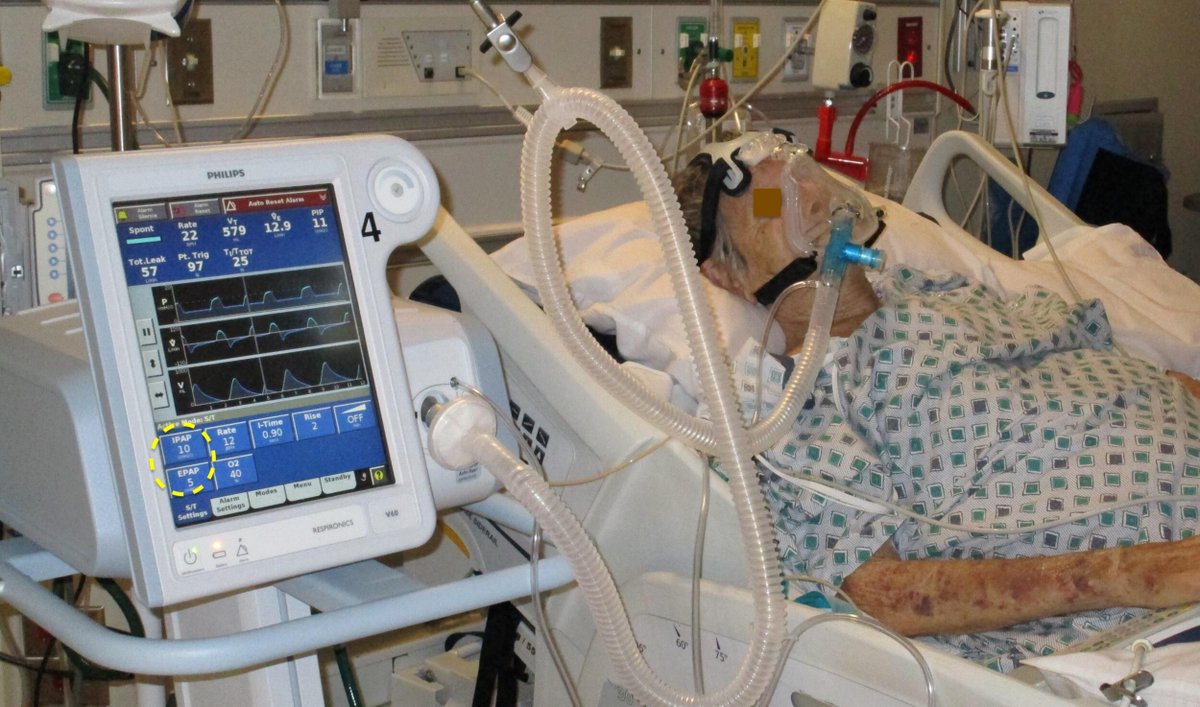
ICU - Non-Invasive Ventilation (NIV) Secrets:
Did you ever admit to the ICU a patient with COPD exacerbation who came from the ED on NIV? Or who went home on NIV? If you are a pulmonologist, you will not learn anything from this post but the rest of us
Well, we found the thirty pieces of silver. The @RCPhysicians used PAs as an attempt to bail them out of financial hardship.
Sacking their morals and exploiting PAs in the process. Brilliant.
This choice has left the college with irreparable damage to its reputation.
https://t.co/lSur43L5rV