NEW BLOG POST:
The third and final part of "What Happened to Stitch Fix?":
In the aftermath of the failed Freestyle bet, the company tries to retreat to the Fix business--only to find that it damaged its core business as part of its ambitious pursuits.
https://t.co/IBUhz3XUzh
NEW BLOG POST:
"Stitch Fix is likely a $100b company within 10 years," a viral tweet predicted back in 2020.
Currently trading for less than half a billion dollars, it doesn't seem to be on track though.
While the rise of Stitch Fix was well documented,
its fall was largely ignored.
Which is a shame, since this is more than yet another post-Covid flameout story.
The Stitch Fix story carries important lessons, which I'll explore on the next few posts.
This is part 1 in 'What Happened to Stitch Fix?':
From Profitable Niche to $100B Disruption Dreams
https://t.co/Shil6UOPtJ
NEW BLOG POST:
"Stitch Fix is likely a $100b company within 10 years," a viral tweet predicted back in 2020.
Currently trading for less than half a billion dollars, it doesn't seem to be on track though.
While the rise of Stitch Fix was well documented,
its fall was largely ignored.
Which is a shame, since this is more than yet another post-Covid flameout story.
The Stitch Fix story carries important lessons, which I'll explore on the next few posts.
This is part 1 in 'What Happened to Stitch Fix?':
From Profitable Niche to $100B Disruption Dreams
https://t.co/Shil6UOPtJ
NEW BLOG POST:
What Happened to Stitch Fix - Part 2
The company is getting a new CEO, and a grand new ambition.
In the process, it is also losing the discipline its founder instilled.
https://t.co/yEs4taCEoZ
NEW BLOG POST: The serendipitous story of how the end of ZIRP and rising interest rates turned out to be a boon for Wealthfront, and whether it could be built into a sustainable business.
(link below)
NEW BLOG POST: Could Anthropic Commoditize the Cloud?
Many interpreted reports on Microsoft dropping Claude Code as doubts about AI coding. But this is wrong.
Agentic coding works too well, to the extent that it could threaten the major clouds. Who, naturally, fight back.
An historical analogy from the early days of the cloud, and a look into the race to capture value in the new agentic value chain.
https://t.co/wNsKBQAOM4
NEW BLOG POST: Could Nadav Zafrir Accelerate Check Point's Growth?
A visionary founder is often succeeded by a more financially-responsible grown-up leader.
Tim Cook taking over Apple after Steve Jobs is the canonical example.
Check Point’s case, however, was quite the opposite. Founder Gil Shwed himself played the Tim Cook role of a grown-up who prioritizes margins over making risky investments.
Nadav Zafrir, a cybersecurity VC and former 8200 commander, took over 18 months ago, with the task of bringing innovation and startup culture to drive growth. In other words, to be Steve Jobs.
While investors initially hoped for growth to accelerate, this is proving to be harder than they thought. And might never happen.
https://t.co/45UucubCHA
NEW BLOG POST: Fairfax's (Failed) Bet On BlackBerry.
Prem Watsa is often called "Canada's Warren Buffett."
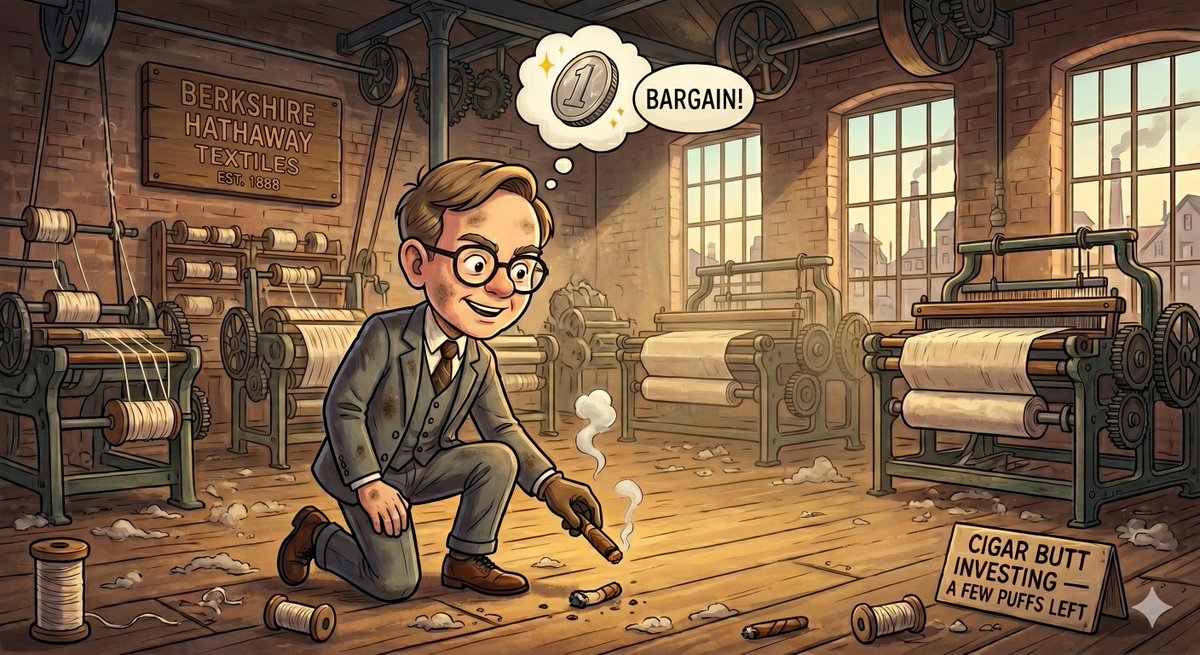
His investment in BlackBerry closely parallels actual-Buffett's mistake of investing in Berkshire Hathaway, and carries the same lesson.
https://t.co/3wVqDw3vEO
NEW BLOG POST: When The Moat Dries Up.
“Berkshire is a delight to own,” 35-year-old Warren Buffett wrote to his partners in 1965; twenty years later, however, he shut down its original operations, calling it one of the biggest mistakes of his career.
The story and the lessons have been well-documented by now, and yet, public market investors keep repeating the same mistake.
https://t.co/sPlzZ9StnV
Not to make a prediction about Apple, but we've seen in past paradigm shifts that while the new technology ended up disrupting an incumbent, the new thing had initially boosting its revenue.
From @benedictevans:
"The web removed most of Microsoft’s levers of power, but it also sold a lot of PCs - for the first time there was a real reason for a ‘normal’ person to buy a computer. Hence, in 1995 there were perhaps 100m PCs on Earth, and three quarters of them were in offices, but today there are 1.5bn. If you wanted to get online, you needed a computer, and with Apple prostrate and Linux never quite managing to produce a consumer product, Windows was the only real option."
This might a dumb question but why do people talk about Apple not being a player in AI at the same time as people talk about Macs instantly selling out because people use them for self-hosting LLMs?
NEW BLOG POST: The Mainframe Paradox
The mainframe survived the web and the smartphone, and even grew because of them. What it AI going to do?
https://t.co/Sk9byi7DgO
NEW BLOG POST:
Google rarely builds desktop apps, but finally relented and launched one for Gemini. A me-too product for now, but it could represent a much bigger opportunity than it looks.
https://t.co/BQE1TvmDjM
I thought of my favorite business analogy —
the mouse who says ‘let me out of the trap, I've decided I don't want the cheese.'
- Charlie Munger
In my recent blog post, I dive into one such story:
The cautionary tale of how a single strategic misstep unraveled Eventbrite’s admirable post-pandemic rebuild.
Google just completed its acquisition of Wiz, the largest in its history.
I wrote an article last year analyzing the rationale behind the deal, and does it have to do with AI 👇
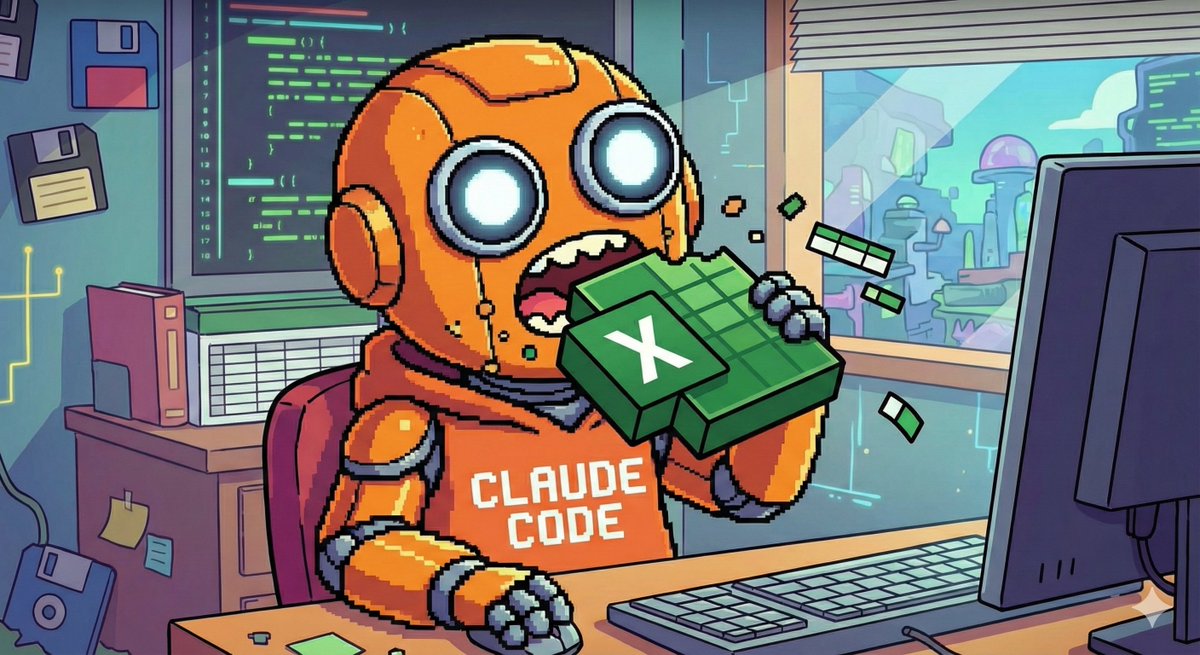
NEW BLOG POST: Excel Obsoletion
Microsoft Excel remained the world's most popular programming language throughout the Cloud and Mobile eras; with AI, however, English may assume that role, rendering spreadsheet software obsolete.
https://t.co/CKlg6OCP3L