I recently had the chance to record a convo with @littmath about math and AI. It was great hearing a little about his workflow, some current best practices, and more. Excited to try out some new things myself, now!
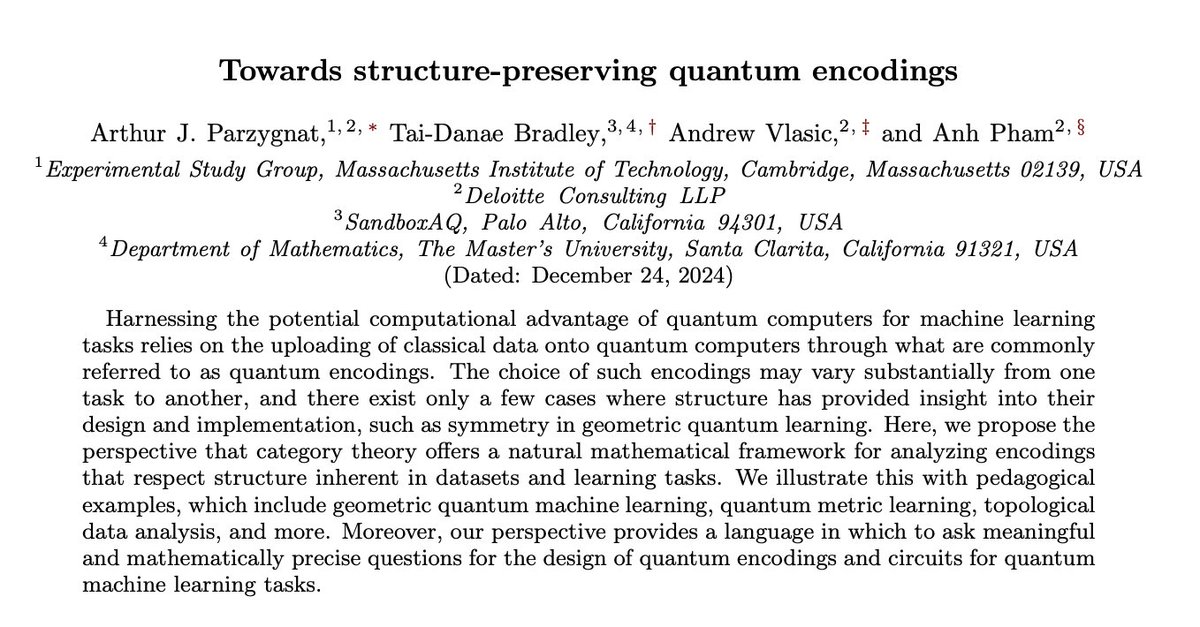
Not too long ago, my collaborators and I wrote a preprint on the problem of uploading classical data onto a quantum computer, from a more mathematical (& category theoretical) perspective. I finally got around to blogging about the ideas. New series is up! https://t.co/g4jqkoFkaJ
The mathematician Tai-Danae Bradley is using category theory to try to understand how words come together to make meaning. Read Joseph Howlett’s interview: https://t.co/KyLlHRYiwa
10 years ago today, I launched the Math3ma blog. At the time, I wasn’t sure the site would resonate with anyone, but I’ve been amazed by all that’s happened over the past decade! To celebrate, here’s a new post on category theory and language models 🥳https://t.co/EO3ghmMjcT
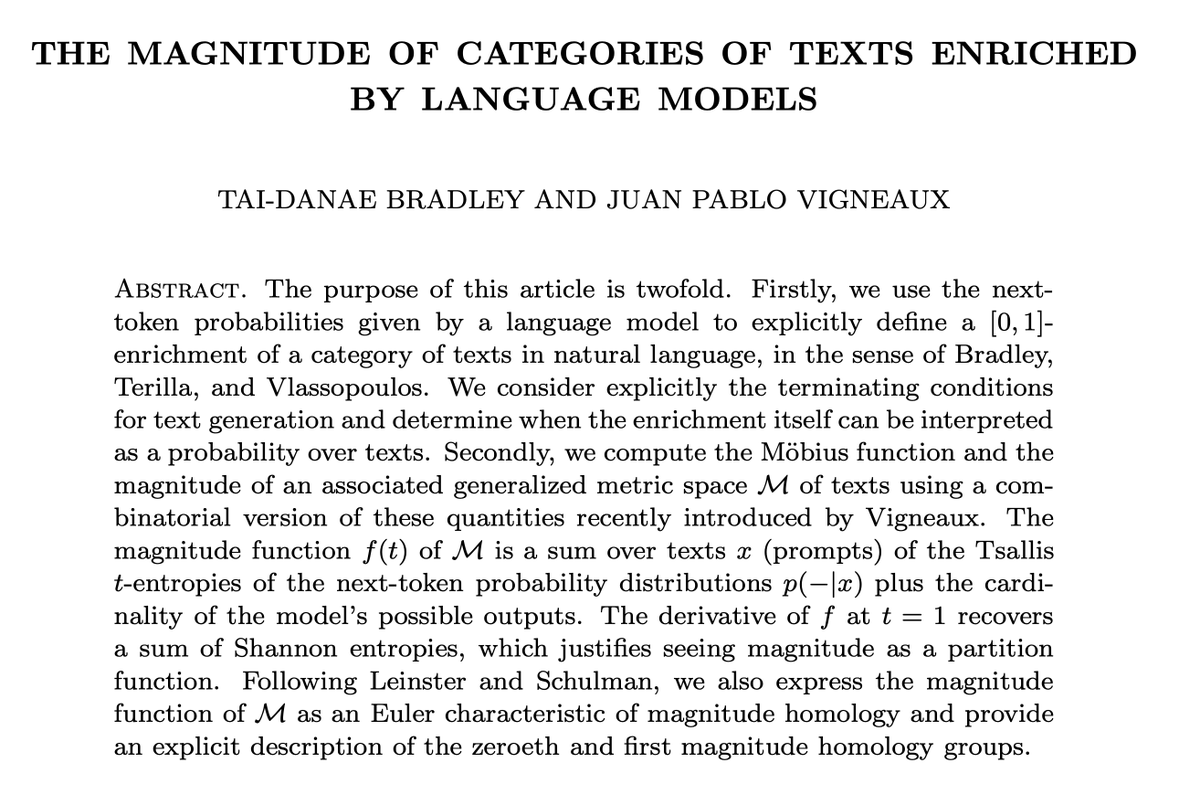
Okay sure, here's a thread on our preprint 🧵https://t.co/Wk94JPWG8e
It's a blend of two existing ideas in category theory: 1) magnitude and 2) a (generalized) metric space associated to an LLM. I'll say a little about each, and how we relate them....
1/
We wrote our preprint to (hopefully) be self-contained, so you don't really need to know about category theory to follow it. But hopefully this thread is a little helpful, too.
19/19
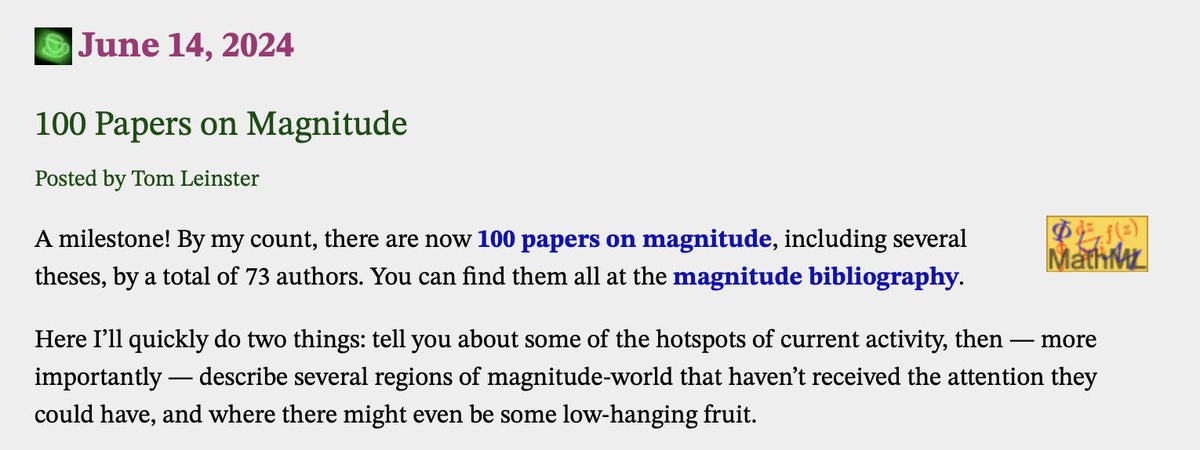
Oh, and so far, there are 100+ papers on magnitude, which is pretty neat. Tom Leinster is keeping track on his website — check out more here! https://t.co/gAAFizViUB
And here: https://t.co/JFpKX1zCQg
18/