Help us please @googledocs - My colleague and I are having an issue where when we own a document and add fractions to it, the spacing above the fractions is large and strange. When others view the doc, it looks totally normal. Am I making any sense?
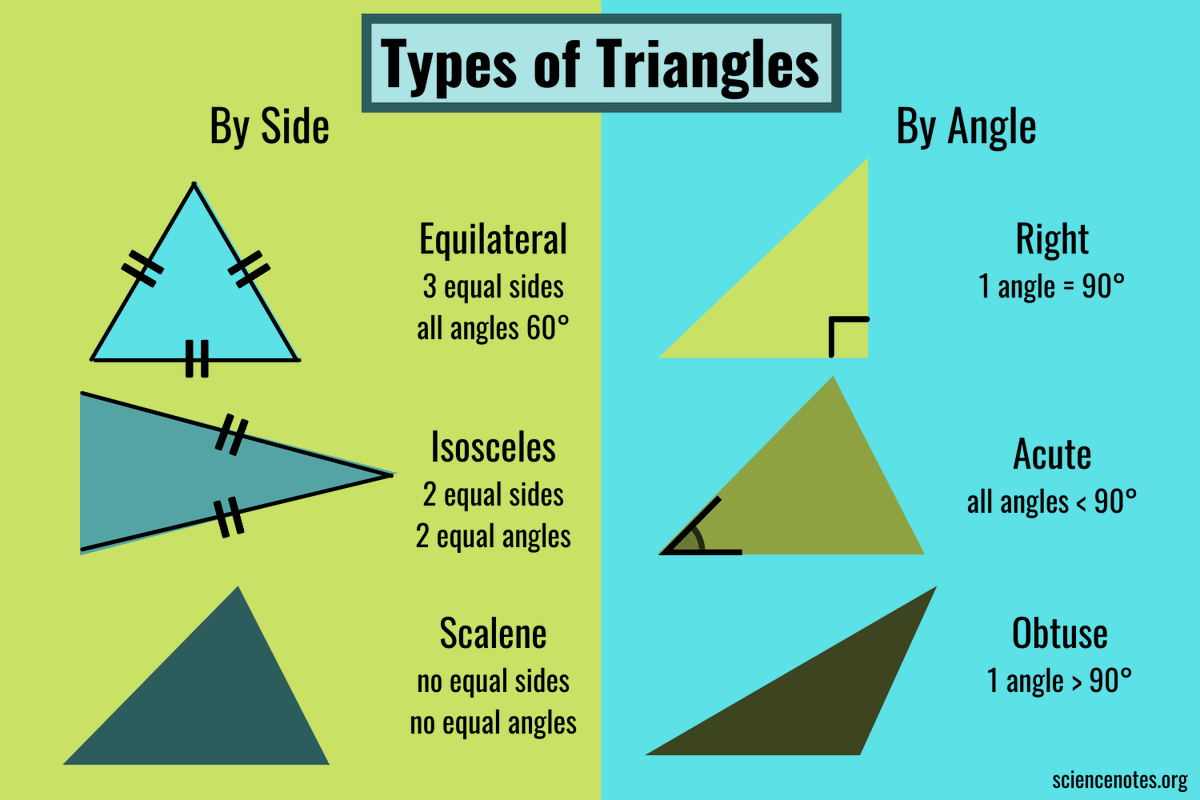
@JessicaTilli1@IllustrateMath @dionnedance @achievethecore @unboundedu@MathScienceN6th cited 4th gr progressions: ..can use side length to classify triangles as equilateral, equiangular, isosceles, or scalene; & can use angle size to classify as acute, right, or obtuse... learn to cross-classify, for ex, naming a shape as a right
isosceles triangle
For the 5.G.B standards, do students need to be able to identify shapes by name, or just by properties? Specifically, do they need to know names for triangles like scalene, isosceles, and equilateral? #MTBoS#ITeachMath
Not trying to promote gambling, but I like to think about the math and stats! What does it mean to have a .933 SV%? What would make it higher? Lower? What information do you need to make a good prediction?
In his last game, Matt Murray had a .933SV%.
Will his save percentage tonight be OVER or UNDER that tonight against the Jets?
Have any hot takes about tonight's game? Visit https://t.co/U4nN351eEj to play for real.
Portion of Teacher Edition:
Suggested Question --> "For which operation do you need to know which fraction is greater before you set up the equation?" Eeek! Creating a misconception with a rule that expires. Let's skip that one... #mtbos#iteachmath
@Scoothie_Math@gfletchy Thank you for sharing! I want to look at and think about this more. My first thought is.... yes! Fractions are numbers and this supports us in thinking about them that way — not as some special, weird thing.
A1. In each case they made a 10 to make addition easier. I noticed that they did so by taking 5 from one to give to the other. Instead, I would have reversed it, making the second number the 10 by taking 2 from the first. #elemmathchat
@Scoothie_Math Agree! I feel like transfer doesn’t just happen naturally without good questions and opportunities to observe and generalize. This question sparks that!
@MrOrr_geek Used to get that question a lot! I wonder what we could have done differently when initially working with integers and/or simplifying numerical expressions, long before that question arises.
@pwharris I have done 18x5=90 enough times as a number talk to make it a known fact! I tripled that to get 270 since I needed 15 groups of 18, not just 5.
@SCH211@iteachmathAll Thanks! We want to use them to represent 2-step problems. I feel like it's a little messy, but your ?arrow makes sense. Do you find that students find the bars equally helpful when the number of groups is unknown as when the size is unknown?
I've been digging into tape diagrams, but I'm struggling with how to use them when measurement division is involved. If I know the number of groups but not the size, I can have that many x's in my bar. But what if I know the size... help?
#OpenUpMath#LearnWithIM#iteachmath