4yrs ago,@rmkhokha asked me to study the #metabolism of normal mammary epithelial cells for my MSc. Today, I share with you my 1st first-author pub in @NatMetabolism (https://t.co/C2H0uGzWB8).Below a thread on how studying normal cells helps us better understand #breastcancer. /1
WEMBY JUST DROPPED A BAR:
"The lack of experience is a strength of us...because we could do impossible stuff because we don't know it's impossible" 🥶
(h/t @ohnohedidnt24)
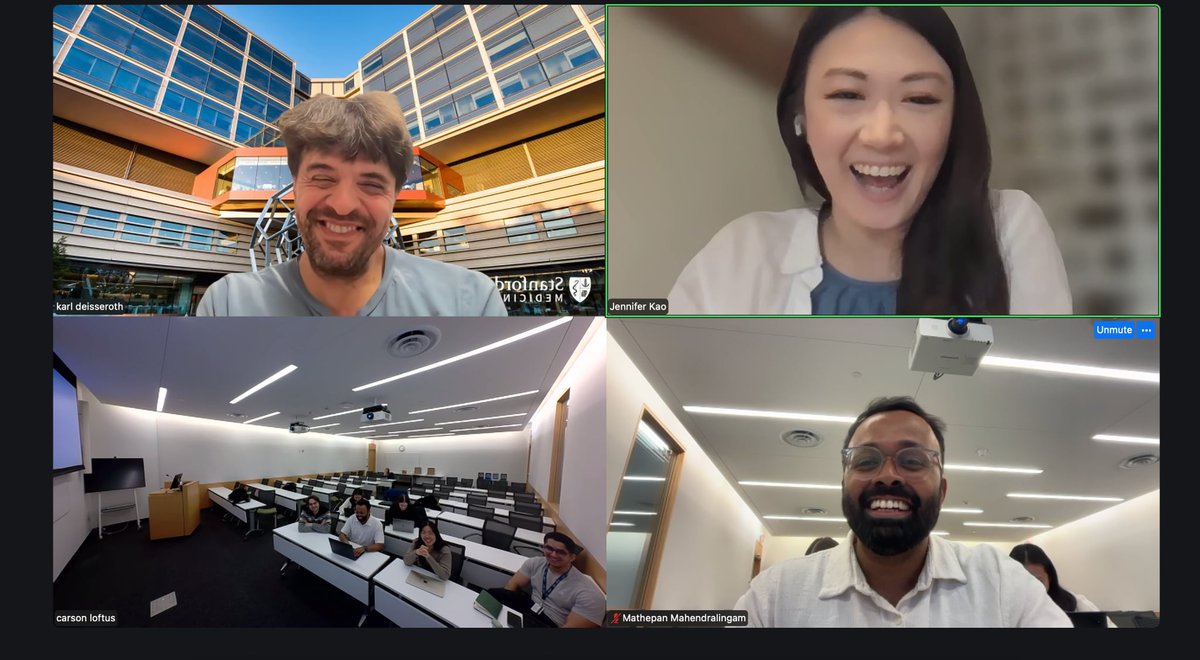
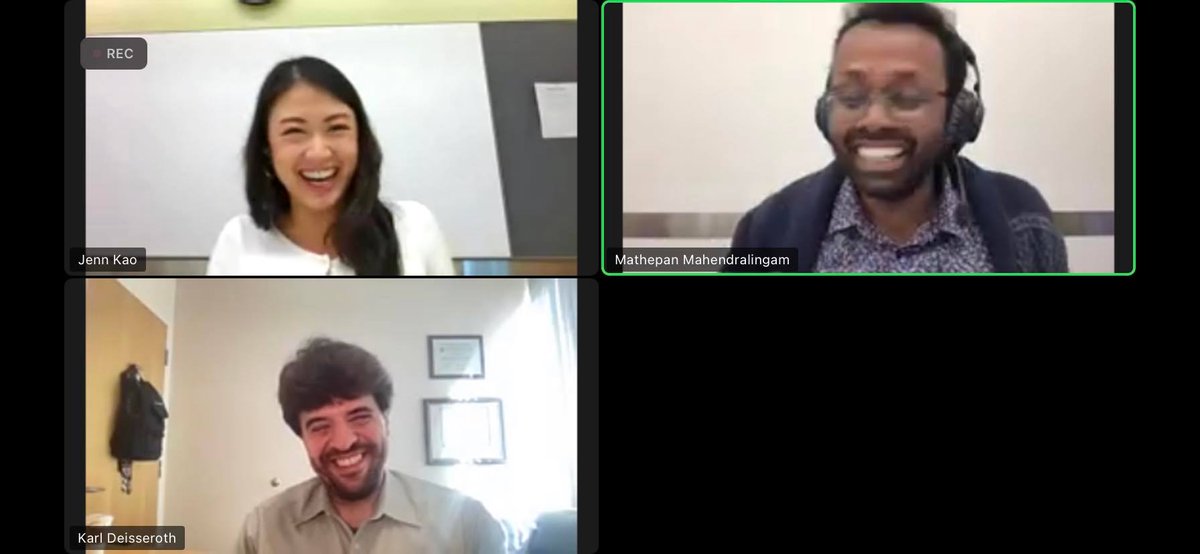
@uoftmdphd@KarlDeisseroth@mathepan@kao_jenn Thank you @KarlDeisseroth! Getting a glimpse into your thinking process and philosophy behind your writing was very inspiring. It encourages us to work with vigour, treat with humanity, and reflectively express ourselves.
5yrs later, our 2nd @uoftmdphd bookclub ft @KarlDeisseroth! @kao_jenn and I asked KD how to write for papers and for prose. We revisited Projections and students shared their writing. Thank you Karl for your mentorship of physician-scientists & reminding us of the power of words
Today’s talk hosted @uoftmdphd and moderated by @mathepan and I, once again proved @KarlDeisseroth as a pioneer - this time, in bridging the gap between basic science, psychiatry, and literature. (1/4)
What protects some people from leukemia?
Thrilled to share work from the @bloodgenes lab, now published in @Science.
We identify an inherited genetic variant that protects stem cells from blood cancers by reducing risk of CHIP.
https://t.co/ExgWIJQe6y
🧵👇 (1/n)
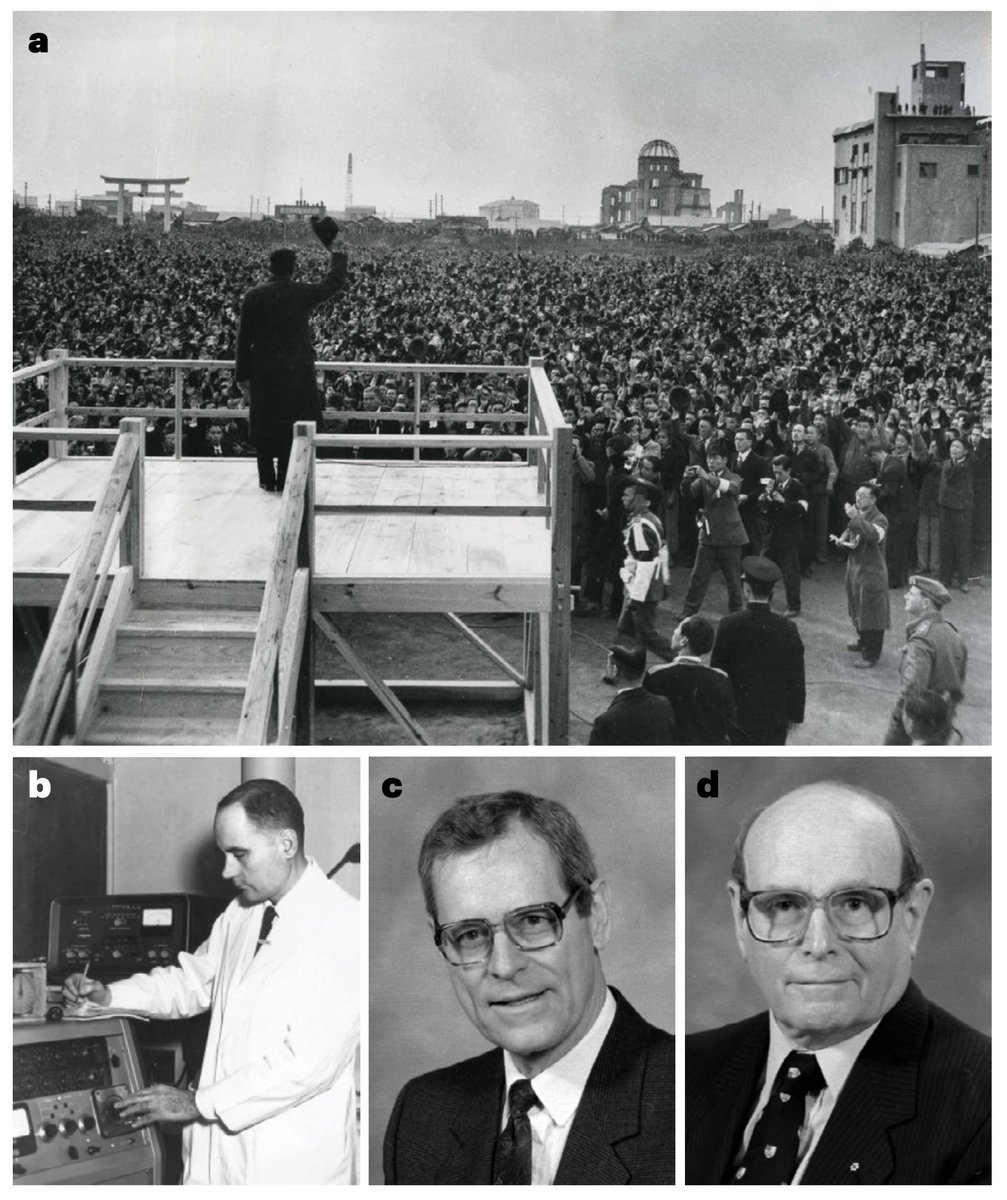
How did the devastation of the atomic bombings 80 years ago ultimately help give rise to bone marrow transplantation and modern #stemcell biology? Our historical commentary with @JGudera in @NatureCellBio explores these unappreciated connections: https://t.co/ppif5jQhbW
This went live today, on Thanksgiving, which feels quietly special.
This article is about one of my favorite topics: how human genetics is being used to shape drug development. It’s a synthesis of ideas and lessons that have emerged over many years, brought together into a single narrative.
I’m grateful for the opportunity to give structure to these thoughts — and excited about where human genetics–driven drug development is headed next. The future here feels genuinely promising.
Many thanks to the editors at @WorksInProgMag — @bswud and @salonium — for the opportunity and for helping edit this article into its best possible version.
Hope you enjoy this light read on Thanksgiving Day :)
🧬 Nature’s laboratory
https://t.co/X9Z2joGLgv
The separation of immunodeficiency and rheumatology is a relic of history in modern medicine. It is all immunology in the end - Excellent new reminder by Megan Cooper & Joshua Tobin @jhumimmunity https://t.co/qQ34gKtrxz
After years of trying to convince Maaz not to drop out of the MD/PhD program, I’ve accepted that math is his singular passion
All the best at @AnthropicAI ! Claude Maaz 5.1 coming soon to a browser near you 👀🖥️
Hi everybody! I am super excited to share the work done during my PhD published in @nature today! We describe a new mechanism of self- vs. non-self RNA discrimination by showing how N-glycans shield glycoRNAs from stimulating endosomal RNA sensors https://t.co/7hzGDPjvMU
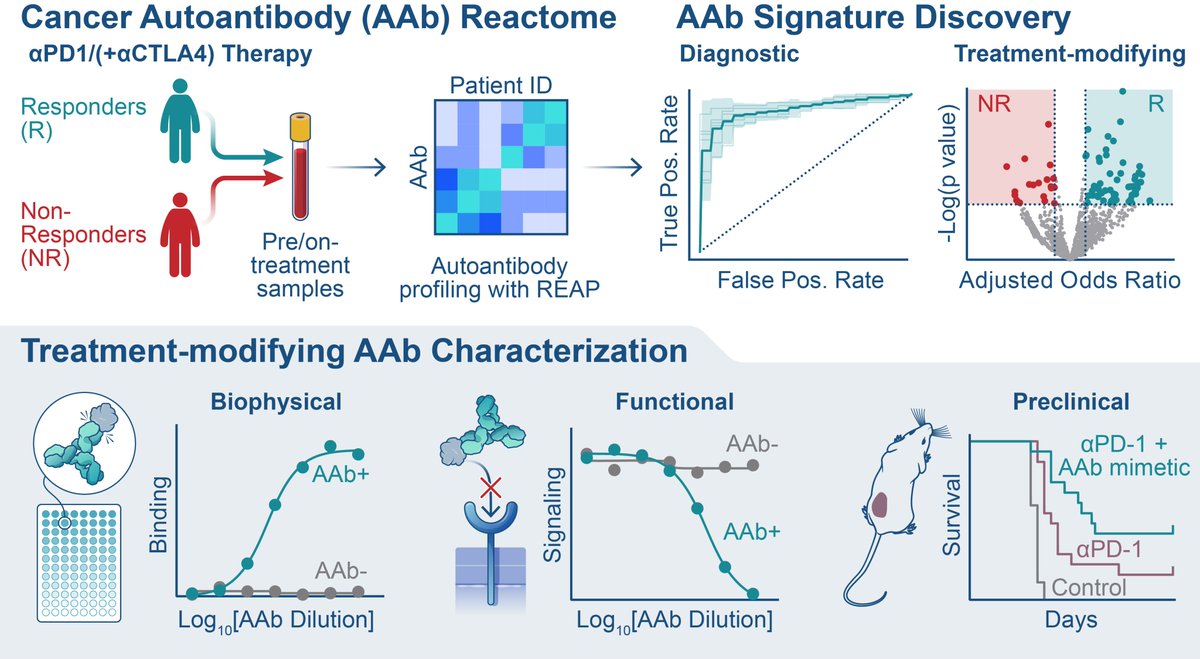
T cells do the heavy lifting when it comes to the anti-tumor action of checkpoint immunotherapy. But do antibodies play a role too?
That’s the question @yile_dai looked to answer in his thesis work, out today in @Nature! 🧵below
https://t.co/VgTByRKRCX
Today marks a meaningful milestone -- I am starting as a lab investigator @CompOncMSK and thoracic oncologist @MSK_DeptOfMed, focused on improving treatment through a deep understanding of cancer evolution. I'll soon be looking for fellow travelers on this mission. Stay tuned!
Cytarabine has been the mainstay for AML treatment. This chemotherapy can lead to problems with movement and balance. Here we explain this neurotoxic side effect: https://t.co/1AvK5l8CD0. Work led by Jia-Cheng Liu, Donpgeng Wang, Elsa Callen and many terrific collaborators!
The "Peer Review File" is an incredible resource for students to learn the type of questions reviewers may ask and also how scientists structure and write their response to reviewers!
From today, all new submissions to Nature that are published will be accompanied by referees’ reports and author responses — to illuminate the process of producing rigorous science
https://t.co/Fua3YQ8XPt
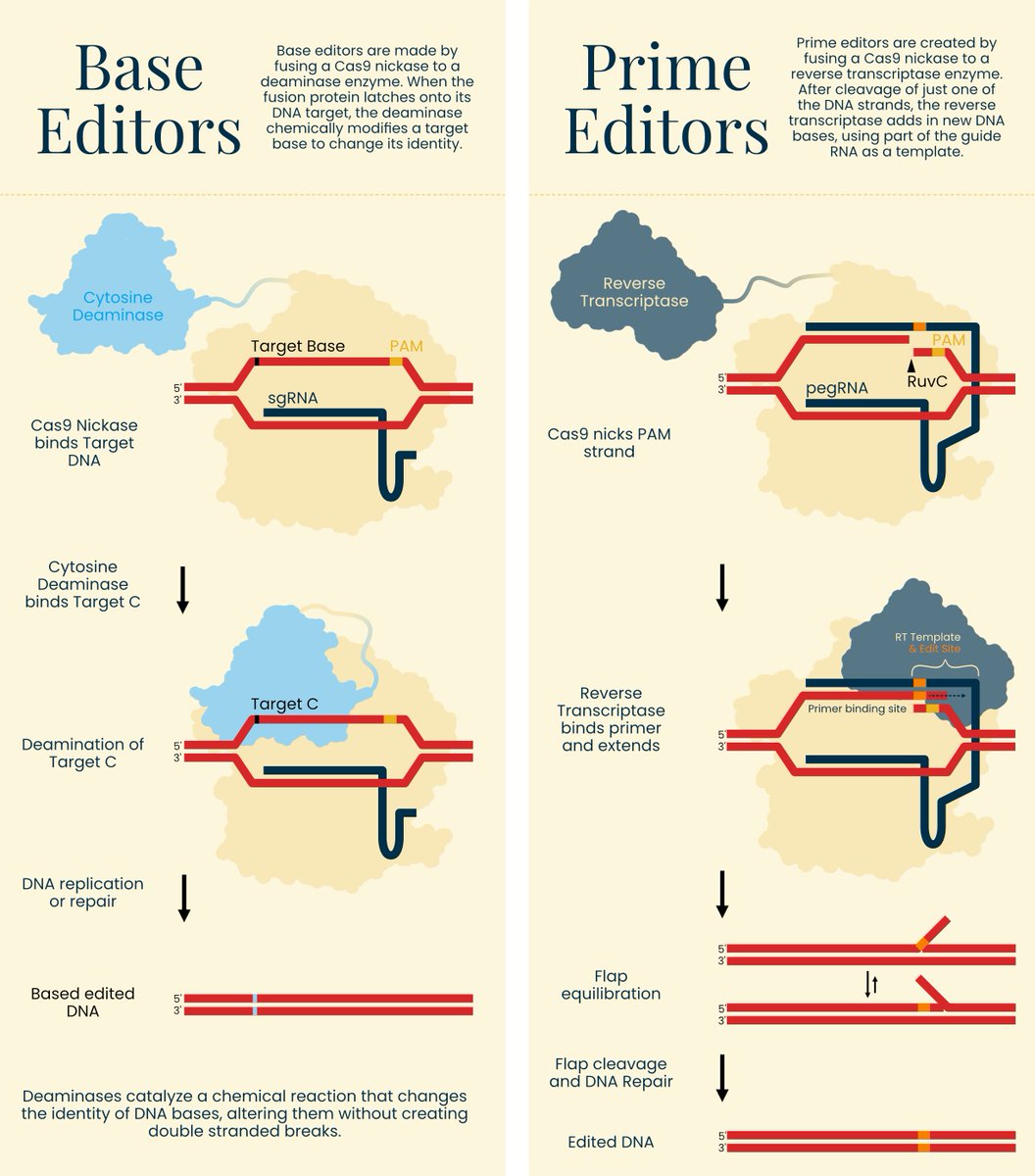
We've been working on this resource for months: A VISUAL GUIDE TO GENOME EDITORS.
Learn how tools like Cas9, Cas13, prime editors, and Bridge editors work - with diagrams!
We hope this becomes a valuable resource for the biology community and students.
Congratulations to our Human Neural Circuitry team; https://t.co/aGD7OacNs8 publishes today in Science! This was the hardest challenge of my career, but one of the most rewarding, after years of rebuilding– & for myself, expanding my inpatient neuropsychiatry work to the service of basic discovery:
https://t.co/4czK1YK2YV
I’m grateful for the opportunity to work with the amazing lead authors Isaac Kauvar @ikauvar, Ethan Richman, and Tony Liu @liutony66, and with equally brilliant faculty colleagues in our HNC program: Carolyn Rodriguez @CRodriguezMDPhD, Paul Nuyujukian, and Vivek Buch @VivekBuchMD, along with many other key collaborators spanning hospital and laboratory. https://t.co/qohlvNuQYF
CHOP & @PennMedicine have delivered the first-ever personalized gene editing therapy for a patient with CPS1 deficiency, marking a major milestone in the application of CRISPR-based treatments.
Learn more about KJ & the future of personalized medicine: https://t.co/A9DTcNmxrR.
How does heart failure rewire gene regulation? 🔍 Excited to share our single-cell, multimodal epigenomic resource on human heart failure🫀: https://t.co/LG7mrr7x7c.