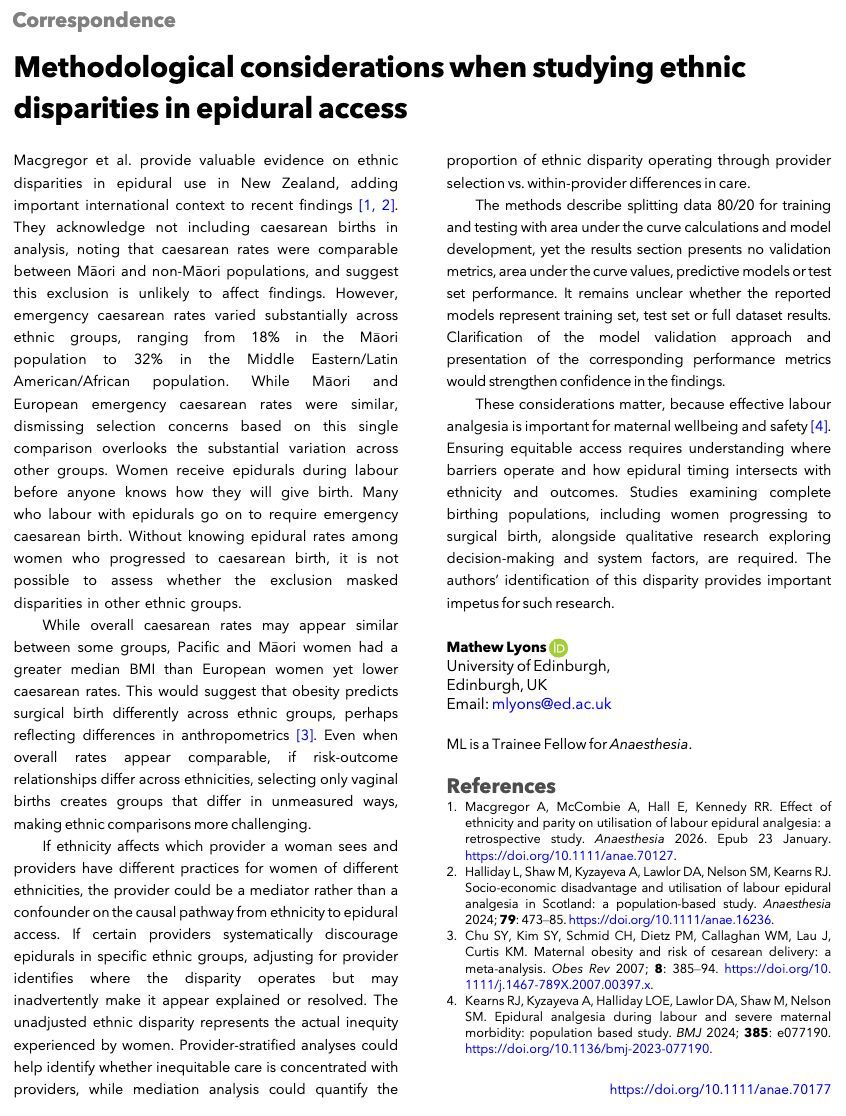
Methodological considerations when studying ethnic disparities in epidural access
"Ensuring equitable access requires understanding where barriers operate and how epidural timing intersects with ethnicity and outcomes."
#anaesthesia#obstetrics#MedTwitter
https://t.co/pEQvO7iiHx
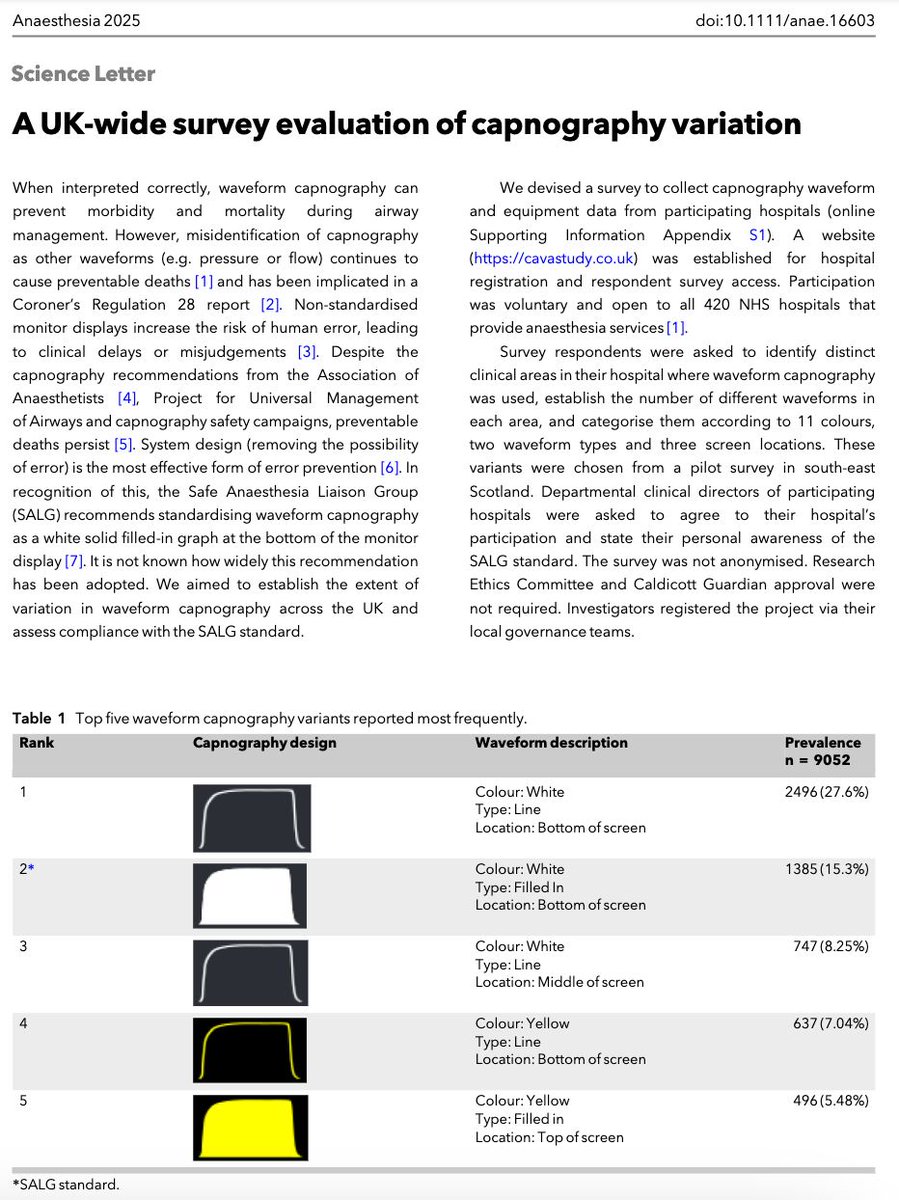
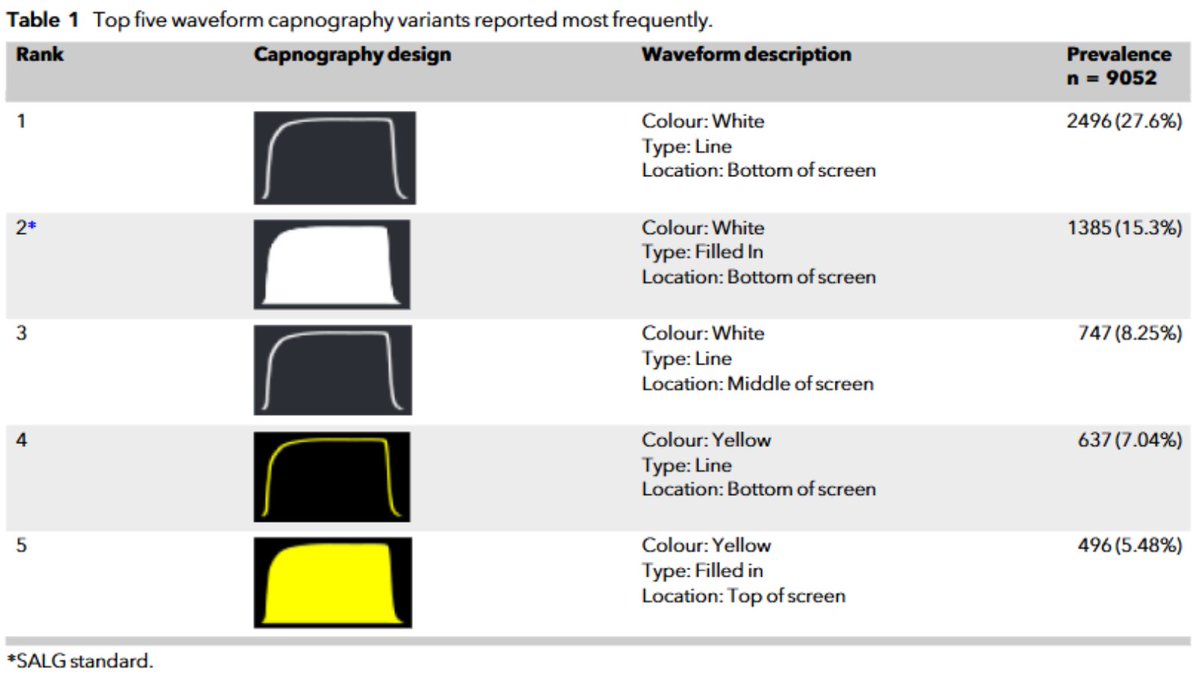
@NicholasChrimes@Anaes_Journal@Nitrousman75@AAGBI We also need to update this to include standardised display of capnography to avoid misidenification. We have a minimum of 36 traces around the UK, with individual hospitals having up to 13!! It's no surprise traces get misidentified. https://t.co/suBeR2WV0y
Very proud of this article by our team and nationwide collaborators.
Worrying variation across the UK, between and within hospitals, with at least 36 variants in use.
This has a big impact on patient safety.
@mathewlyons @AndrewAShepherd @RCoANews@isostandards
The Safe Anaesthesia Liaison Group recommends standardising waveform capnography as a white solid filled-in graph at the bottom of the monitor display.
Is there compliance with the SALG standard in the UK?
#anaesthesia
https://t.co/HLfjd7qys8
How many capnography variants do you encounter every day?
We show worrying variation across the UK, between and within hospitals, with at least 36 variants in use. This has a big impact on patient safety. We should urgently implement the SALG standard.
https://t.co/HGpJCsne4r
CaVa now has 97 hospitals registered from across the UK. Registration closes this Sunday (6th Oct), data collection deadline is the 20th Oct. If you have not yet registered, please do so before Sunday. We'd love to get over 100 sites! https://t.co/7TXnQPhMm2
UK-wide study exploring capnography trace variation. Looking to recruit more site leads for data collection!
Anyone interested in this important patient safety project can find out more on the website
https://t.co/tLNKuYGadD
🍾CaVa UK Data Collection starts today🍾
All site leads have been emailed.
If your hospital is not registered, it's still not too late - register at https://t.co/7TXnQPhMm2
Please share widely - the more hospitals that take part, the more powerful our message will be!
@doctimcook@EM_RESUS Make sure you know which trace is your capnography trace!
We're trying to see how much variation there is around the UK in how it is displayed. If you work in Anaesthetics or ITU, get your team to take part.
https://t.co/gSKyHcfAtJ
Calling all Intubators!
The CAVA UK survey is looking at CApnography VAriation across the UK.
If your hospital is not yet signed up, register now: https://t.co/7TXnQPikbA
Quick survey of capnography traces, ideal for a novice trainee or anyone interested in audit or safety.
The CAVA UK Study registration is now live. Sign up your hospital to take part in a national survey of capnography traces.
More information and sign up on our website:
https://t.co/vitBXfbG4J
We are pleased to announce the topic for our 8th National Audit Project (NAP8) will be complications of regional anaesthesia (peripheral blocks and central neuraxial blockade) and other neurological complications of anaesthesia.
https://t.co/HDYe6Z3ByI
Delighted to see this finally announced
It was, to be frank, always the front runner -
NAP8 - REGIONAL ANAESTHESIA
It will be a brilliant project as it will create the largest ever database of major complications of regional anaesthesia and IMO for the first time enable genuine estimates of the frequency of complications of regional anaesthesia.
https://t.co/nLfAKa3QEM
@RCoANews@RCoA_CRI@RegionalAnaesUK@OAAinfo
Super job today Gareth 👏
• raising important awareness of the unmet needs in IBD
• flying the flag for the Edinburgh IBD unit
• highlighting your great study with @mathewlyons & the rest of our team
Fantastic effort @mathewlyons!
-Great perseverance,
-Great analysis & writing
-Great story!
Our patients are admitted less for their IBD over the last 10 years
BUT
>50% of our IBD population still hospitalised & significant healthcare use for a minority
Work to do!
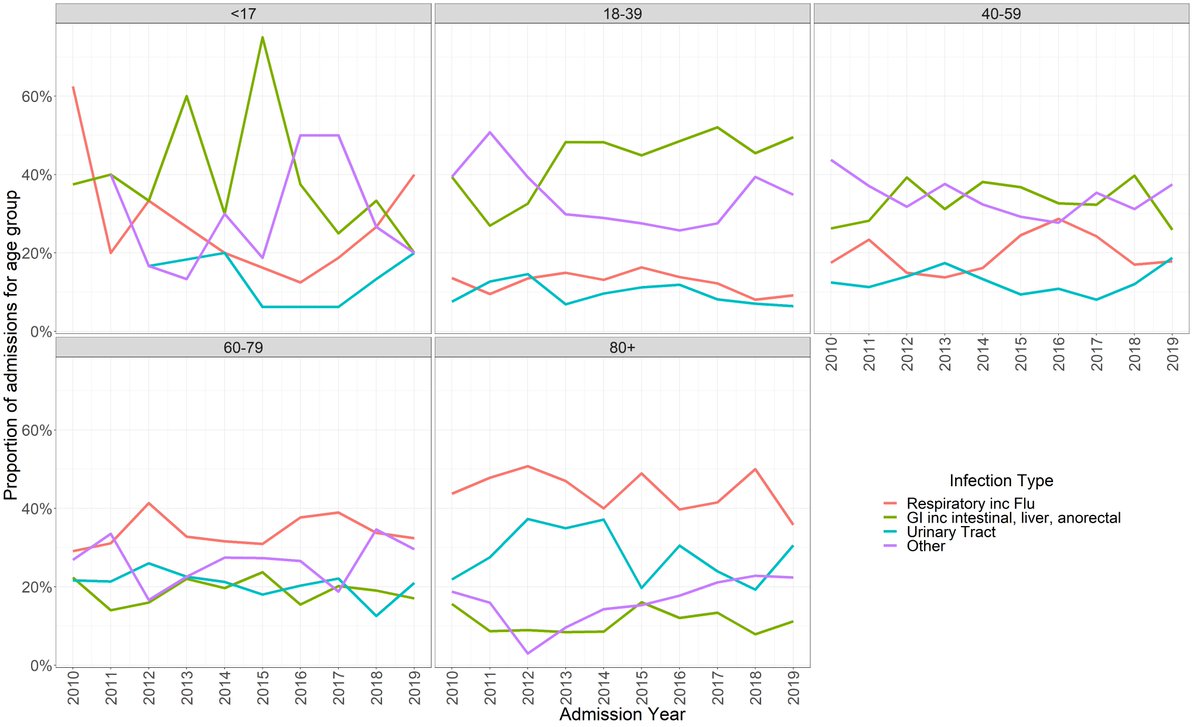
5/ Infection rates in hospitalised IBD patients has remained constant over the 10 years, including admissions to ITU or death from infection despite substantial changes immunomodulating therapies.