Maths Teacher • School Leader • FCCT • FRSA • NPQH • Sharing ideas, curios, problems & resources to inspire the teaching and ignite the learning of mathematics.
On Ramanujan’s birthday, outside 2 Colinette road Putney, the once nursing home where a convalescing #Ramanujan had THAT conversation about 1729 with Hardy • https://t.co/K1sB1mjVJX• https://t.co/mX3kilLVhy
On Ramanujan’s birthday, outside 2 Colinette road Putney, the once nursing home where a convalescing #Ramanujan had THAT conversation about 1729 with Hardy • https://t.co/K1sB1mjVJX• https://t.co/mX3kilLVhy
#Ramanujan was born #OTD 138 years ago. He created this, his birthday magic square, where all rows, columns, diagonals, corners, corners of 3×3 squares, and 2×2 corner and centre squares sum to the sum of the digits of his birthday in the 1st row. https://t.co/F3HZyiUM6g
The 'First Equation'… a story about the evolution of the notation we use for addition (+), subtraction (–), and equality (=), which led to the first time an equation was written using the modern notation we use today, 14x + 15 = 71. https://t.co/OCZODrmTq5
A daily dose of summer maths play for 42 days of the summer break ⇒ from games of Hex, Sprouts and Misère Os and Xs (with just Xs) to Lewis Caroll's Amazing Number-Guessing game, fractals and Fibonacci on the beach, and much more: https://t.co/wYqmcEXagZ
Suppose not all numbers are interesting, like 20067: the first number not to appear in the OEIS because there is nothing interesting about it. But being the smallest uninteresting number is in itself interesting. ↯ Therefore all numbers are interesting. #InterestingNumberParadox
By the end of today, exactly
1×2×3×4×5×6×5×4×3×2×1
seconds will have passed this year.
= 1 day
= 24 hours
= 24×60 minutes
= 24×60×60 seconds
= (2×3×4)×(5×6×2)×(5×4×3) seconds
= 1×2×3×4×5×6×5×4×3×2×1 seconds
#HappyNewYear#HappyNewYear2025
Writing 1 once, 2 twice, 3 three times, and so on, up to 45 forty-five times [or (20+25) (20+25) times], produces a string of 2025 or 45² [or (20+25)²] digits — the only number where this happens. #HappyNewYear2025 • https://t.co/MALfH2q9yi
Math up your countdown to 2025…
= (10×9×8×7÷6÷5×4+3)×(2+1)
= (10+(9+8×7)×6)×5+4×3×2+1
= (10+(9×(8−(7−6×5))))×(4×3)+2-1+0!
= 10×(9+8×7−6+5!+4!)−3×2+1
= 10×9×(8+7+6)+5!+4×3+2+1
= (10+9)×(8+7+6)×5+4!+3+2+1
#HappyNewYear#HappyNewYear2025
Math up your countdown to 2025…
= (10×9×8×7÷6÷5×4+3)×(2+1)
= (10+(9+8×7)×6)×5+4×3×2+1
= (10+(9×(8−(7−6×5))))×(4×3)+2-1+0!
= 10×(9+8×7−6+5!+4!)−3×2+1
= 10×9×(8+7+6)+5!+4×3+2+1
= (10+9)×(8+7+6)×5+4!+3+2+1
#HappyNewYear#HappyNewYear2025
Math up your countdown to 2025…
= (10×9×8×7÷6÷5×4+3)×(2+1)
= (10+(9+8×7)×6)×5+4×3×2+1
= (10+(9×(8−(7−6×5))))×(4×3)+2-1+0!
= 10×(9+8×7−6+5!+4!)−3×2+1
= 10×9×(8+7+6)+5!+4×3+2+1
= (10+9)×(8+7+6)×5+4!+3+2+1
#HappyNewYear#HappyNewYear2025
Writing 1 once, 2 twice, 3 three times, and so on, up to 45 forty-five times [or (20+25) (20+25) times], produces a string of 2025 or 45² [or (20+25)²] digits — the only number where this happens. #HappyNewYear2025 • https://t.co/MALfH2q9yi
Happy 2025 — the first year to be a square (whose digits sum to a square) that is equal to the sum of the first [sum of its digits] consecutive cubes and to the square of (and the product of the proper divisors of) the sum of a split of its digits. #HappyNewYear
Writing 1 once, 2 twice, 3 three times, and so on, up to 45 forty-five times [or (20+25) (20+25) times], produces a string of 2025 or 45² [or (20+25)²] digits — the only number where this happens. #HappyNewYear2025 • https://t.co/MALfH2q9yi
Happy 2025 — the first year to be a square (whose digits sum to a square) that is equal to the sum of the first [sum of its digits] consecutive cubes and to the square of (and the product of the proper divisors of) the sum of a split of its digits. #HappyNewYear
Writing 1 once, 2 twice, 3 three times, and so on, up to 45 forty-five times [or (20+25) (20+25) times], produces a string of 2025 or 45² [or (20+25)²] digits — the only number where this happens. #HappyNewYear2025 • https://t.co/MALfH2q9yi
Happy 2025 — the first year to be a square (whose digits sum to a square) that is equal to the sum of the first [sum of its digits] consecutive cubes and to the square of (and the product of the proper divisors of) the sum of a split of its digits. #HappyNewYear
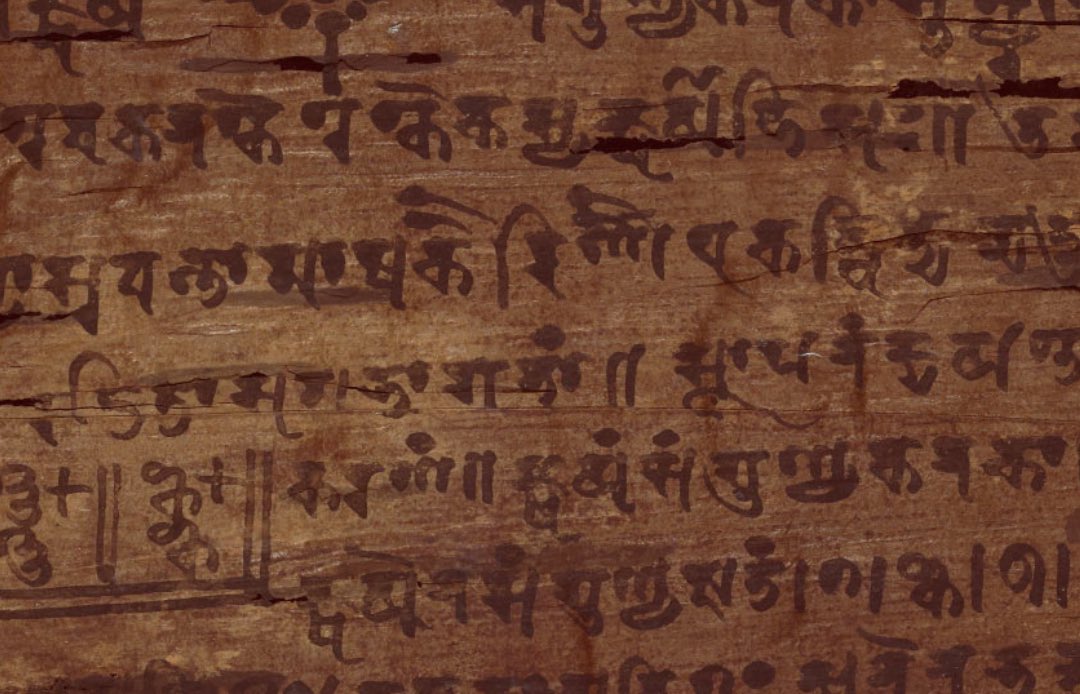
Indian mathematician Brahmagupta imagined a number for nothing (śūnya शून्या in Sanskrit, ‘vacant’) in 628 CE → The idea reached the Middle East via al-Khwārizmī (ʂifr صِفر in Arabic, ‘cipher’) in 825 CE → It spread through Europe via Fibonacci (‘zero’ in Italian) in 1202.





![MathsEdIdeas's tweet photo. Writing 1 once, 2 twice, 3 three times, and so on, up to 45 forty-five times [or (20+25) (20+25) times], produces a string of 2025 or 45² [or (20+25)²] digits — the only number where this happens. #HappyNewYear2025 • https://t.co/MALfH2q9yi https://t.co/NJBXcrLz9Y](https://pbs.twimg.com/media/Gf7IuGCXsAAuXCv.jpg)
![MathsEdIdeas's tweet photo. Happy 2025 — the first year to be a square (whose digits sum to a square) that is equal to the sum of the first [sum of its digits] consecutive cubes and to the square of (and the product of the proper divisors of) the sum of a split of its digits. #HappyNewYear https://t.co/nJwyRS8L3O](https://pbs.twimg.com/media/Gf1HsioXwAA7WVS.jpg)