El límite del Vo2Máx es muscular, no cardiopulmonar 🏃🏻💨
🫀 Cuando hayas logrado toda tu fortaleza cardiopulmonar, estímulos que te hagan llevar a la *biogénesis mitocondrial* también mejorarán el Vo2Máx 📈
https://t.co/7wtusxnNZV
🫀Un mayor volumen de sangre se correlaciona con un VO2max más alto
🚴Los factores que determinan el rendimiento deportivo son múltiples y están tan interconectados que es difícil evaluar su impacto de forma aislada.
👉¿Qué tan importante es el VO2max para un deportista?
🔥El VO2max, aunque no garantiza una medalla de oro, puede ser clave para alcanzarla, especialmente en disciplinas donde el componente cardiovascular y metabólico es crucial.
🔬¿De qué depende este parámetro?
El VO2max se determina por la relación entre el gasto cardíaco (volumen de sangre que el corazón bombea por minuto) y la diferencia arteriovenosa.
🩸Un mayor volumen de sangre bombeada se asocia con un VO2max más alto, lo que mejora el rendimiento en deportes de resistencia.
🫀El volumen de glóbulos rojos, encargados de transportar el oxígeno, es clave para aumentar el VO2max.
🤷♂️Pero la pregunta es: ¿cómo se puede mejorar?
👉En este audio-artículo analizamos la importancia de la serie roja (glóbulos rojos, hematocrito y hemoglobina) en la mejora del rendimiento, junto con nuevas estrategias para optimizar estos parámetros.
Si eres deportista o entrenador, este contenido es para ti.
👇Puedes leerlo o escucharlo pinchando este link.
https://t.co/qdf2pRJfM7
🫀 El rendimiento en atletismo no depende de la capacidad máxima, sino de la potencia que puedes exprimir en zonas bajas sin generar respuesta de estrés.
💚 Ganar eficiencia desde abajo, conseguirá un sistema más difícil de perturbar en esfuerzos máximos
https://t.co/51rkYBABib
⚖️ Por cada 1kg de peso corporal perdido, se reducen 4kg de peso de presión en las rodillas en cada paso realizado.
🚩El exceso de peso tiene un impacto directo en la salud articular.
Increasing step rate can have multiple benefits for runners. Despite this it's not a cure all! Those with a low starting step rate and gait findings that are likely to improve from an increase (such as over-striding or increased hip adduction) are more likely to benefit.
🥩DIETA CETOGÉNICA EN ATLETAS
📚Posicionamiento de la Journal of the International Society of Sports Nutrition.
Documento de lo más serio que hay. Te resumo lo importante.
Dentro hilo🧵👇
Recovery after a 20km race:
"Both structural and functional recovery were still incomplete at 4 days, whereas DOMS had resolved."
https://t.co/1kxN8LZ3lT
A high V02 Max is the metric most closely linked to a longer life.
But what is V02 Max?
And more importantly, how do you increase it?
Because most people are doing it wrong.
📕Make Sure To Bookmark✅
🧵👇
/1
Analysis of marathon training plans "provides valuable insights into creating a marathon training plan". It is interesting to see what is being recommended vs the science of training.
https://t.co/rJ6h440toH
The components of VO2 max🧵
1. What is VO2 max?
VO2 max is the maximum volume of oxygen an individual can use during intense exercise. It represents aerobic endurance and cardiovascular fitness, typically measured in ml/kg/min.
2. VO2 max can be modeled as the delivery of oxygen and uptake
VO2 max is a product of the efficiency of the cardiovascular system in delivering oxygen to the muscles (central factors) and the capability of the muscles to uptake and utilize this delivered oxygen (peripheral factors).
3. What is the Fick Equation?
The Fick Equation relates VO2 max to the product of cardiac output (Q) and the arteriovenous oxygen difference (a-VO2 difference).
VO2max = Q x (a-VO2 difference)
4. Cardiac Output:
Cardiac output (Q) is the amount of blood the heart pumps every minute. It is calculated as: Q = SV x HR, where SV is stroke volume and HR is heart rate.
At rest, a typical healthy individual has a cardiac output of about 5L/min, influenced by a stroke volume of about 70ml and a resting heart rate of 70bpm.
During intense exercise, the stroke volume can rise to 100ml or more, and the heart rate can almost triple. The result: cardiac output increases by a factor of ~4.
For elite athletes, the changes in cardiac output from rest to maximal exercise potentially reaching 8x or more.
5. a-VO2 Difference:
The arteriovenous oxygen difference is the difference in oxygen content between arterial and venous blood. It provides insight into how much oxygen the tissues extract from the blood.
6. Which of these components is more modifiable?
The cardiac output, especially stroke volume, sees greater changes between trained athletes and untrained individuals. Although the a-VO2 difference can increase slightly with training, the primary difference in VO2max between well-trained endurance athletes and untrained individuals mostly comes from changes in cardiac output.
7. How does cardiac output change with base training?
Base training mainly increases stroke volume, leading to enhanced cardiac output. With consistent training, the heart muscle becomes stronger and can pump more blood with each beat. Resting heart rate may also decrease, indicating greater heart efficiency.
@Alan_Couzens details this process in chapter 7 of his book. You can also measure VO2 max directly in a lab, but looking at it through the lens of cardiac output and a-VO2 difference helps us better understand the changes we're trying to make in our training.
If Jakob Ingebrigtsen keeps losing, will we decide that Norwegian double-threshold training doesn't work after all? A few thoughts in the wake of Saturday's "mile of the century" at Pre: ⬇️
https://t.co/OFCp1DdRS7
Peak forces on the calf, quads, glutes and hamstrings are high during running which is why it’s important to assess and strengthen these muscles after injury. We cover how to do this and lots more in our free Achilles video series. Access it now at https://t.co/KEji9T24t3
Training only LIT (zone 2), or only HIT, is like always pedalling with one leg.
It is interesting to see them as different cranks of the same bike: they alternate in their work so that your performance improves.
Los entrenamientos justo por debajo del umbral anaeróbico (los típicos controlados) siguen siendo base aeróbica.
El objetivo es reclutamiento de fibras rápidas para su conversión en lentas.
Se necesita de años a una década para ver cambios.
https://t.co/pmzXeBWSld
¿Cuándo se necesita un período de recuperación?
Simple y sencillo: escuchando a las sensaciones del organismo.
Bonus: + monitorización de variables aisladas (externas e internas) como apoyo y/o posible anticipación.
¿Cambian los umbrales con el calor? En ☀️🌡️ se modifican las respuestas (p.e. ⬆️ uso de glucógeno) y se reparte el estrés diferente (p.e. ⬇️ VO2🫁 a = FC🫀). En este estudio📚, se ve que la FC refleja bien los umbrales (apenas varía en ❄️ vs ☀️🌡️). La potencia ⬇️en ☀️🌡️ a = La🩸
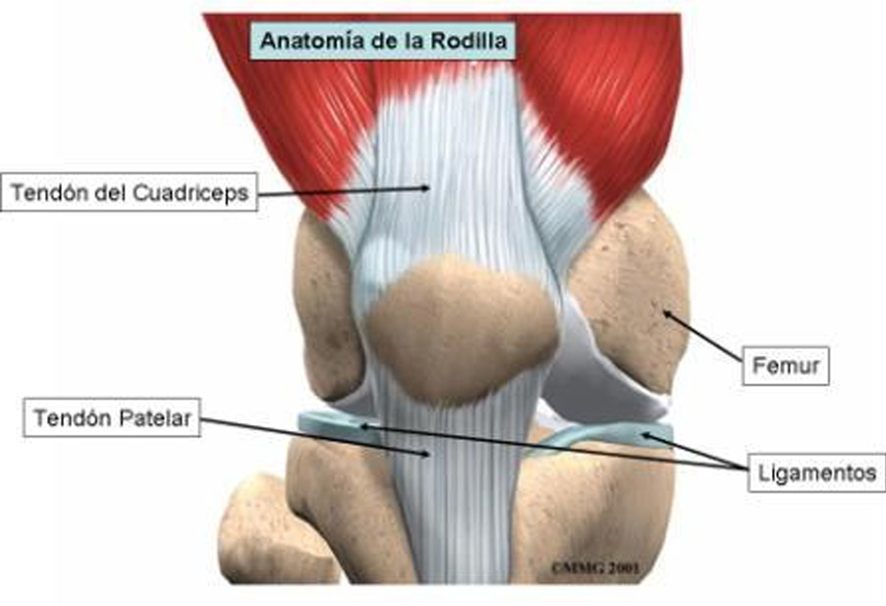
TENDINOPATÍA ROTULIANA
La tendinopatía rotuliana o rodilla del saltador se caracteriza por un aumento de dolor gradual en la zona anterior de la rodilla frecuente en deportista de salto como el voleibol o baloncesto.
Hagamos un breve repaso de esta patología 🧵👇🏼