💡 One of the most important findings in delirium research in recent years, and I think it's still not widely enough known.
The DECIDE study (Richardson et al, Age and Ageing 2021) followed 305 older adults from the population-based CFAS II-Newcastle cohort.
They compared cognitive trajectories in three groups: hospitalised with delirium, hospitalised without delirium, and a matched group who weren't admitted to hospital at all.
The hospitalised patients who didn't develop delirium had essentially the same cognitive trajectory as those who were never admitted. No significant difference.
But those who developed delirium during their admission showed a 2.2-point MMSE decline at one year compared to the no-delirium group (P<0.001). Neither the number of admissions nor total length of stay were significant predictors.
For years we've assumed that hospital admission itself is bad for the brain. This study suggests the real culprit is delirium. And delirium is something we can detect and, at least partly, prevent.
That makes it potentially a modifiable risk factor for dementia - at least it means that we need to look into this more and explore the potential benefits of early detection and aggressive treatment aimed at protecting the brain.
#medtwitter #dementia
🤔 Delirium treatment is actually pretty complex.
When we say 'delirium treatment' what do we mean?
From finding & triggers, to maintaining physiological stability, to treating symptoms & reducing long-term complications, there is a lot to think about.
I've cared for people with delirium for many years now, & it takes me at least 20 mins to work through all the variables, make a plan, & communicate it.
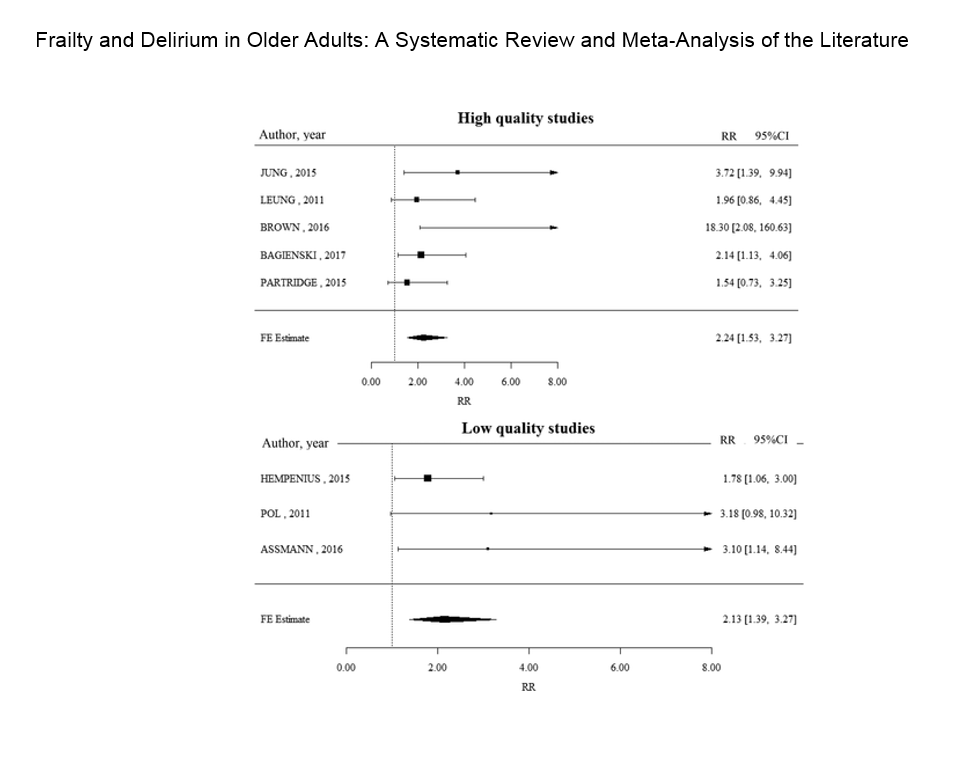
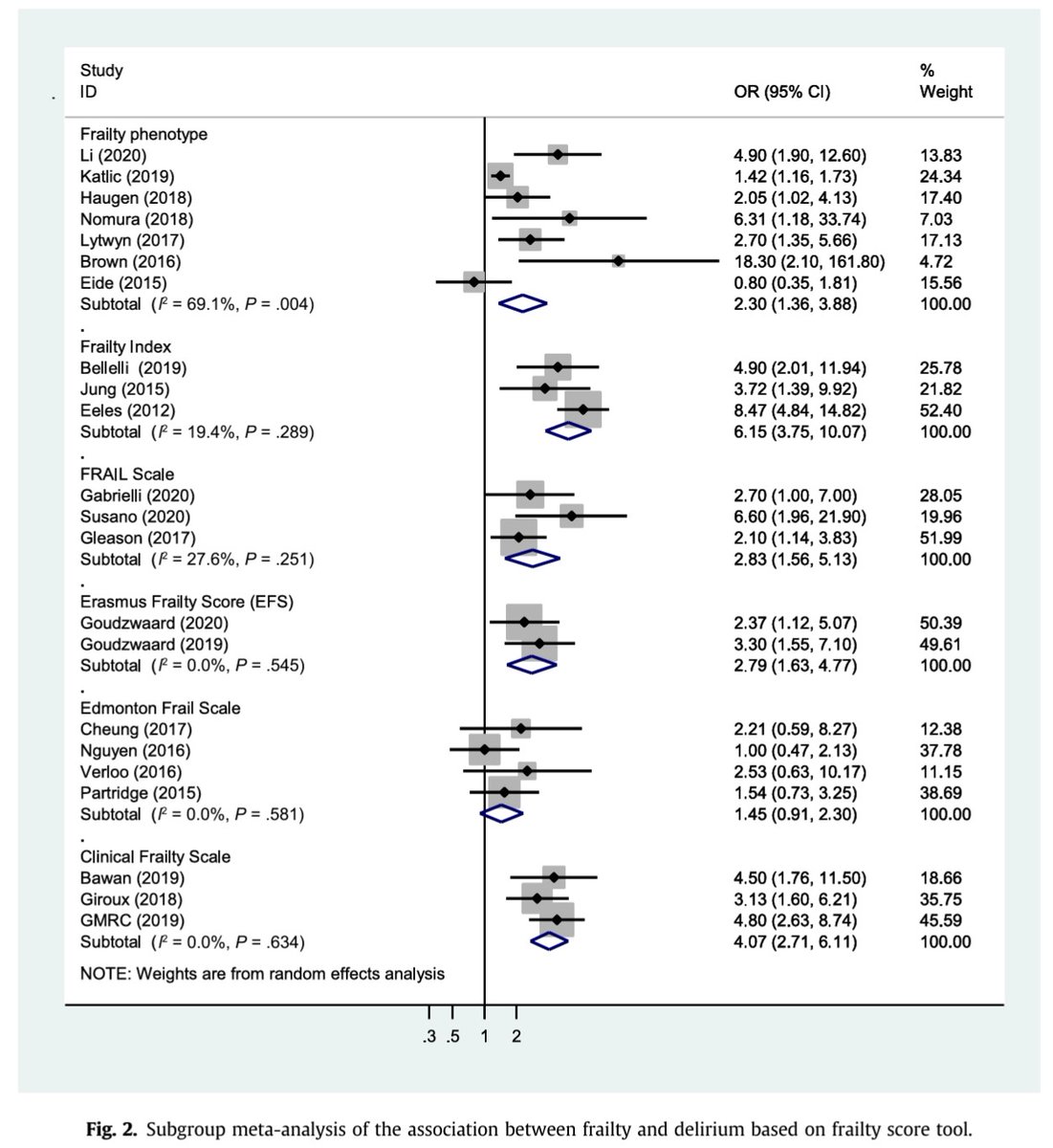
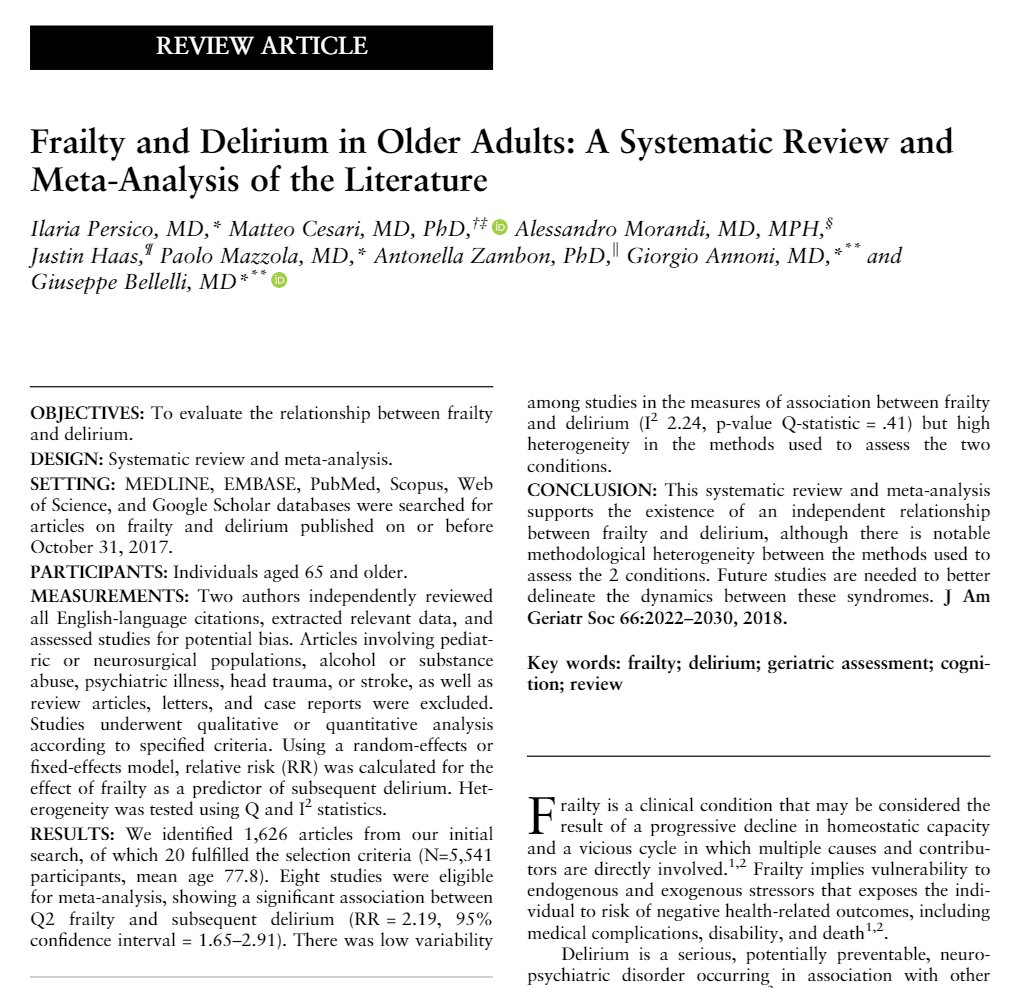
📋 #Practitioners now commonly assess #frailty in acute patients.
⭕ Frailty gives a 3-fold ⬆️ risk of #delirium
🔬 Frailty Index & Clinical Frailty Scale (CFS) were most strongly associated.
🔗 https://t.co/Aan7uqQByn
"Effective elective care for older individuals significantly improves quality of life and the benchmark for this care has been clearly established with irrefutable evidence supporting #Perioperative Care of Older People Undergoing Surgery (POPS) services." https://t.co/PJ5F8dASrM
Intermediate care must include provision of rehab for older people. Failure to provide this is inhumane and causes further ill health. We are shocked to read in @HSJnews that this isn't being routinely provided. https://t.co/jdPObzCz8b #RighttoRehab
#Delirium is a very common condition in older people admitted to hospital with an overall prevalence of 23%. It is therefore vital that health professionals working with older people have a good understanding of delirium. https://t.co/iqKet7HPPw
@CrossCountryUK Thanks, but 100 of us have arrived at Bristol temple meads where we have been told to board a very slow train instead of the buses. A more cynical person would wonder if the buses were ever booked ?!
I see no bus replacement service @CrossCountryUK from Bristol Parkway?! Your station master here just said you didn't know the phone number for the bus company Greensleeves. Would you like me to look it up for you?!
"Older people are more likely than other age groups to face long waits in emergency departments and are more likely to get stuck in hospital because of a lack of care in the community. This has a knock-on effect on the whole system." - @adamgordon1978 https://t.co/mX4G3c5lAb