Aviation safety is written in blood, as the saying goes - unfortunately
Sad news today, tragic for the crew and passengers.
Well wishes to the families and friends of all involved, and a reminder for all the aviators
The hierarchy of aviate, navigate, communicate is important to remember, and one everybody has gotten wrong.
For aviate: if you find yourself out of control, you’ll probably have at most 2-3 mins to successfully apply OCF recovery procedures like your life depends on it
The private jet that went down just miles from Mar-a-Lago had 9 people on board, according to the FAA.
The plane crashed in a residential area near Cresthaven, Florida.
The aircraft had departed from Austin-Bergstrom International Airport in Texas and was on its way to North Eleuthera Airport in the Bahamas when it crashed.
According to the New York Post, the plane took a "sharp right turn" before nosediving into the ground from about 8,000 feet.
The plane is a $2 million Learjet 60, according to the Post.
Witnesses on the ground say the crash sounded like a missile.
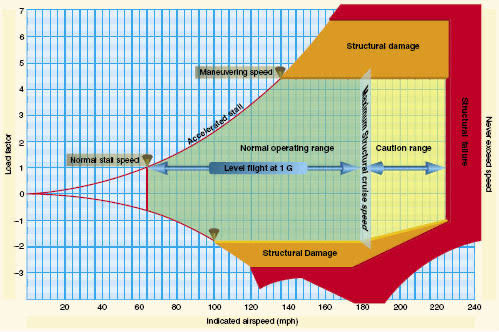
Also, for aviate, slow to Va (design maneuvering speed) to put the plane in the best spot to handle the stresses of turbulence and minimize stalling or overspending the aircraft
For Navigate: thunderstorms getting well above the tropopause is a good indication they are large, in-flight radar, ads-b or SatCom nexrad can help you pick a path that avoids flying into a major cell or wall of thunderstorms.
If you’re going to go over it, you have to go way over it to avoid the icing/hail updrafts
Otherwise go around it, or if you must go through Navy flight school taught to go through about 1/3 up from the bottom of the thunderstorm.
https://t.co/7JycqUVsNd
LIVE RADAR: I just got a message from a follower that told me she had her Jetblue flight from Atlanta to Fort Lauderdale diverted due to this mess over Southern Florida. The pilot tried, doing several circles over the Everglades, but no luck. She also experienced severe turbulence, with people throwing up on the plane. These storms are no joke, from above (and on the ground). Multiple flash flood warnings are in effect.
Further, if in heavy icing autopilot can continue trimming until the edge of the autopilot envelope and hand you a questionably flyable airplane, certainly with a lot of surprise
This was part of the factors for the crash in Brazil
https://t.co/kZW7p3z7tZ
@thesamparr Absolutely wild numbers, especially for one small geographical area
Will be interesting to see in a few years how many stay and drive mega housing deals and how many retire and head to other regions to settle down
Today marks 9 years since my last day on active duty in the @USNavy
It's been an incredible journey so far, from working on self-driving cars at Cruise, to helping start the Federal business at @scale_AI, and joining the @DIU_x autonomy team on the first day of the full COVID lockdown, to finally starting @beacon_a_i.
So many awesome teammates and friends along the way. It feels like I did some things pretty well; others not so much. Tried to learn from both. Looking forward to seeing where the next nine go. 🛫 🫡 🇺🇸
Photo from my last night in D.C. (my last duty station)
AI that assists pilots
We're building R2-D2 for pilots: a hardware-lite AI teammate designed to help professional crews flying today's aircraft
Introducing Aviation Autonomy 2.0
The first deployment of AI pilot assistance into operational aircraft
5 flights. 3 operational KC-46As. 3 airfields. ~20 hours.
Murdock, our AI pilot assistant, flew with U.S. Air Force crews.
No changes to certified flight-critical systems. The crew stays in command.
Axios exclusive:
https://t.co/qYEdCBJPdv