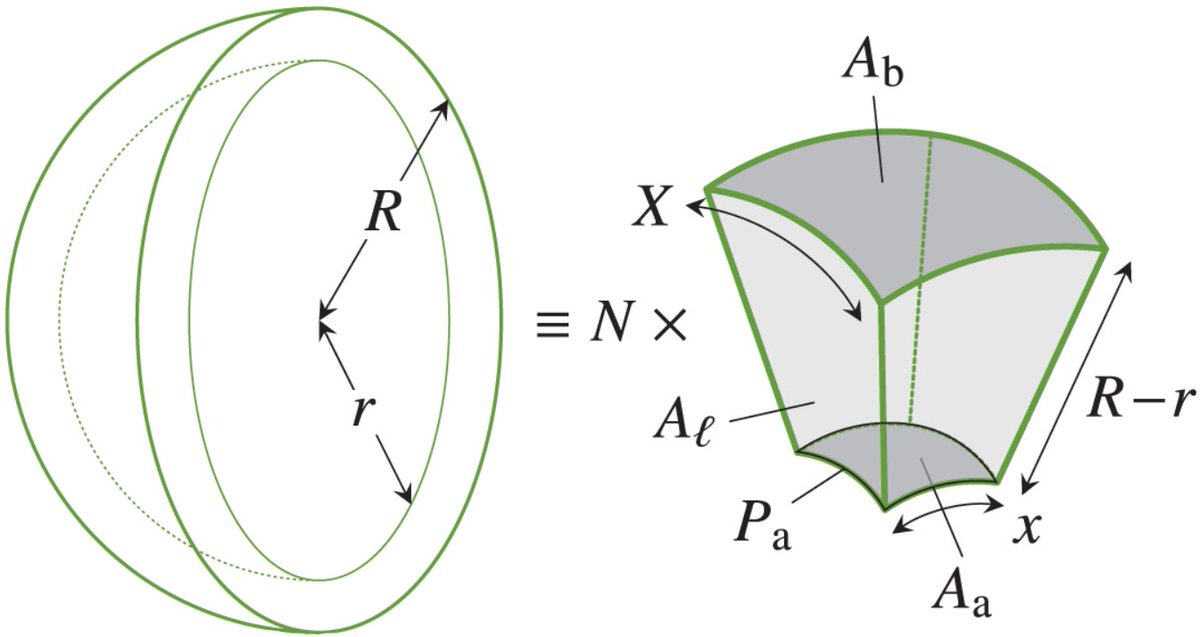
New #review on "Shaping Epithelial Lumina under Pressure" now published #BiochemSocTrans@PPPublishing! @mattbovyn and I review lumen formation mechanics and discuss the emerging role of nonlinear mechanics in the elongation of tubular lumina.
https://t.co/AEcbBV78AY
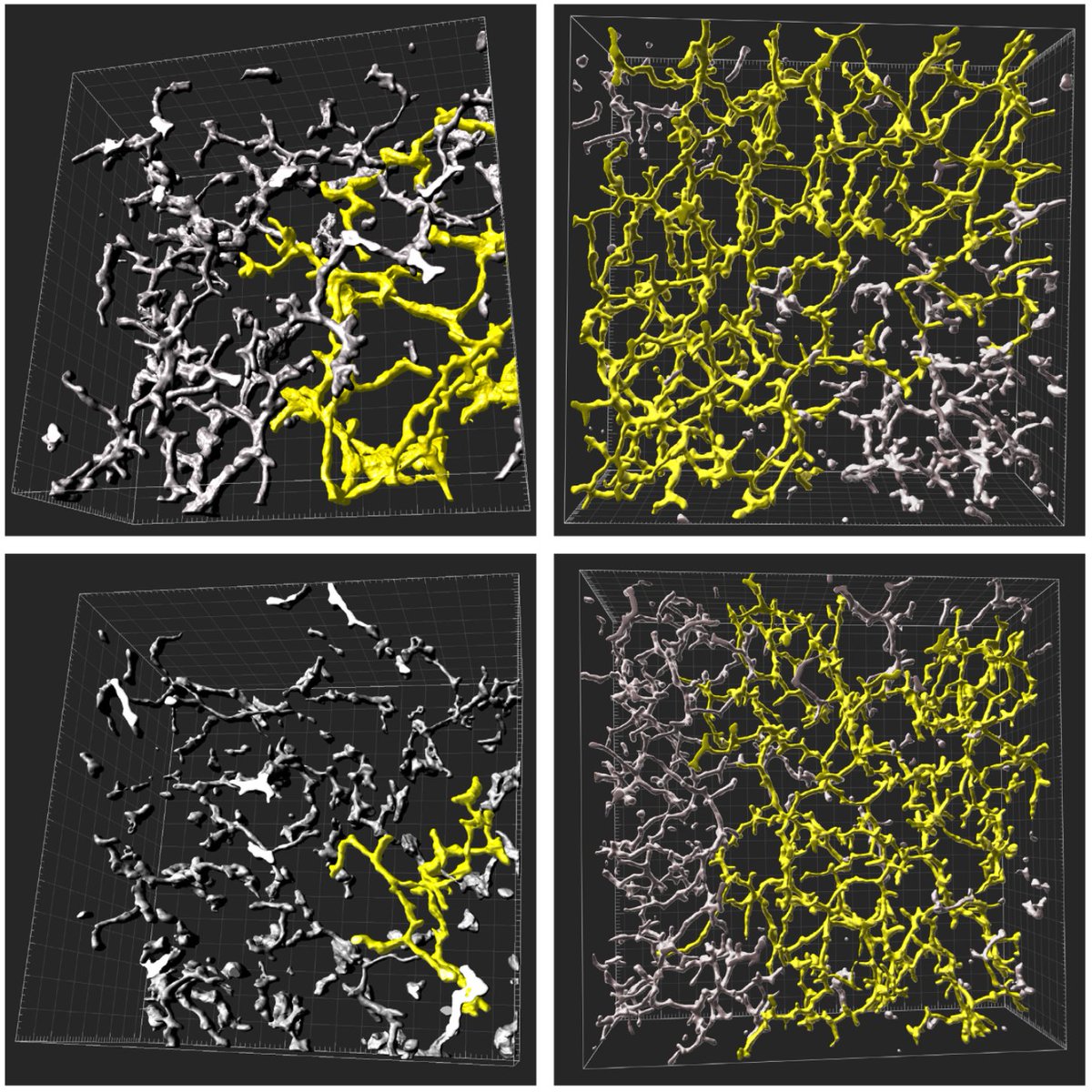
New #preprint! A great #devbio#biophysics collaboration @mpicbg@csbdresden with @ZerialLab, led by @Jul_Delpierre: Hepatoblast iterative apicobasal polarization is regulated by extracellular matrix remodeling, available at https://t.co/wkGuQecyci. @mpipks
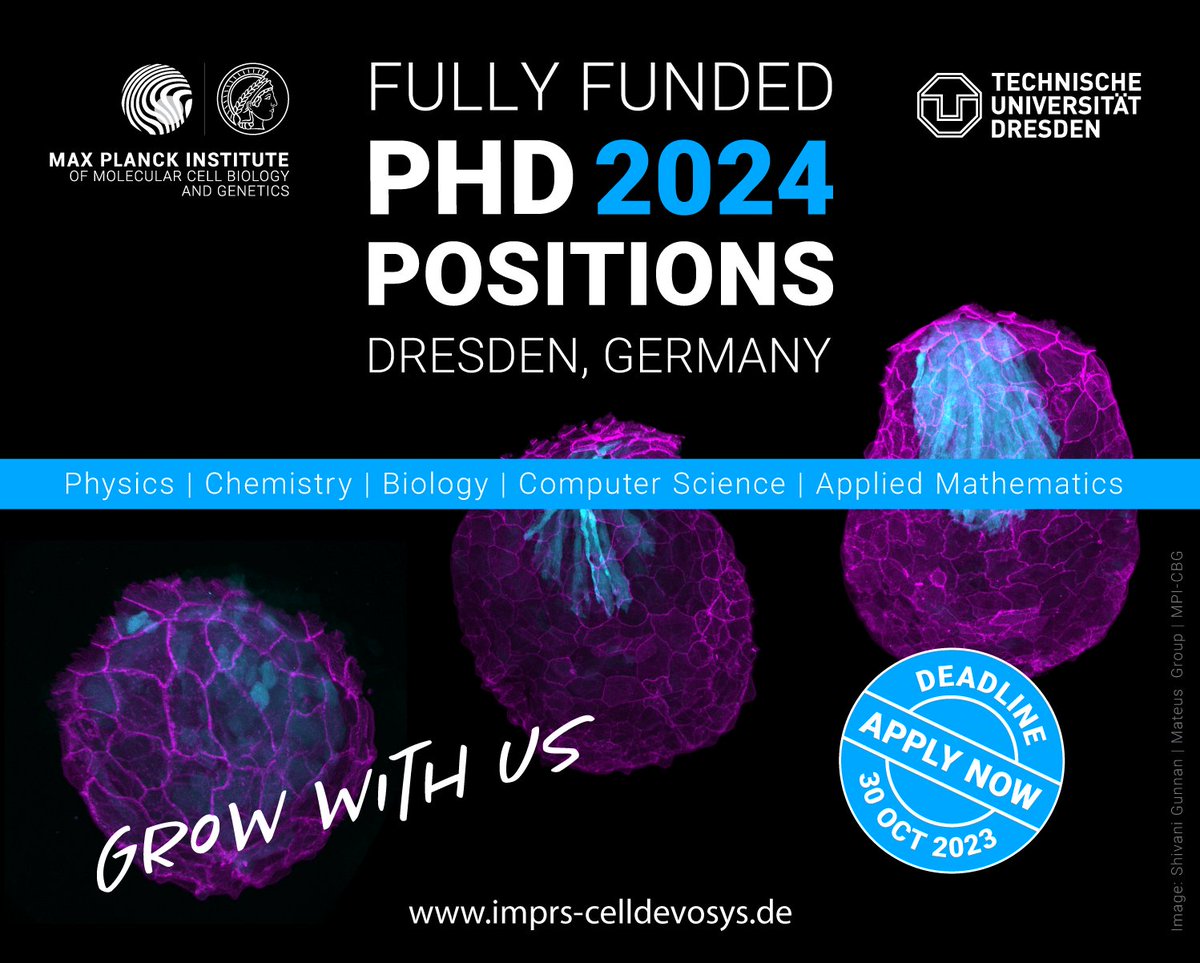
The PhD program of the @mpicbg, the @imprs_mpicbg, is accepting applications until October 30, 2023 for fully funded PhD positions. Apply now if you are enthusiastic in conducting research with us and want to be part of our community. https://t.co/gggrIf2kyM
The 2021 edition of the Physical Biology of the Cell class that Rob Phillips teaches at Caltech is available on YouTube. If you want to learn about the interface between physics and biology please check the class. Help me retweet this to reach students!
https://t.co/8zvmHnkbzl
The #CytoMorphoLab is happy to present:
Microtubule Mechano-Sensations,
recorded for #cellbio2020
Feel free to comment the science or the movie and to share it with cell biology and cytoskeleton afficionados.
https://t.co/TX6u1x4M4o
It'll be interesting to see how much people trust these structures. How much would you invest in testing a hypothesis based on one? Make a cell line? A mouse model? Design a drug? https://t.co/PdxBEv76Qw
How to understand cells, tissues and organisms as agents with agendas – https://t.co/v5PBO7vMJf via @aeonmag
My colleague Michael Levin has opened up a whole world of phenomena that are illuminated by adopting the intentional stance. He's been teaching me a lot. Check it out.
#ad NEW VIDEO: How a pattern that never repeats allowed us to find a material we thought impossible
https://t.co/zW2NFB4ChZ
Part of this video was sponsored by @LastPass#LastPass#PasswordManager
@blootic It predicts completely wrong outcomes when you apply it to another situation that seems similar. Also, it's not at all clear why it is so different from previous measurements.
I was mostly just frustrated when I wrote it, but it makes for kind of a good hook huh? 😛
This was my draft for the conclusion:
Kinesin potentially has the ability to bind 10-100 times faster than previous estimates.
This is exciting because it gives a very different picture for how cargos may bind to microtubules in the cell.
It is also deeply confusing.
Have you wondered which great biophysics seminars are happening somewhere around the world, which you could have joined in the Zoom era if you only knew about them? Introducing https://t.co/0R3dpSve97 @wwphysicsoflife - a clearinghouse of virtual seminars in bio/physics. /1
@blootic We know overcoming barriers to transport is important, e.g. in neurons where blocked transport means non-functional synapses. What particular scenario and why this way aren't clear.
If you catch a lipid droplet, it will realize it's stuck and try harder to escape. Even more surprisingly, it will do the same thing on its own outside the cell. Somehow this little machine can sense it's not accomplishing its objective and respond. Not bad for a 500nm fat ball!
Foreground is finished on the immunological synapse painting--so many wiggly lines to paint! These paintings were so much easier before we began to understand the importance of unstructured proteins...