Fmr. NASA Software dev 21 years. Photographer, commercial drone pilot. Love truth, innovation, outdoors, dogs & cats, and chill people. Fan of SpaceX/Tesla/BO
Sharing this in case it helps with the APP_w141_ECU_Thermal_Issue alerts that are starting to show up:
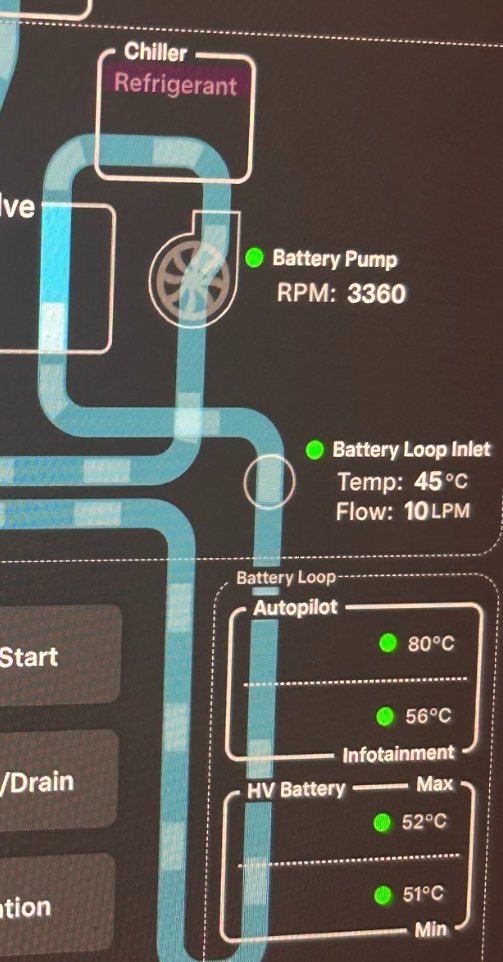
The Autopilot / FSD computer is liquid-cooled with the car’s glycol coolant mix, not air-cooled. Coolant runs through dedicated hoses to a cold plate on the computer module. A portion is diverted from the main thermal loops (usually after the chiller) to cool the AP ECU and often the media computer before continuing on to the battery and other components.
Heat from the board gets absorbed by the coolant. That coolant is then cooled either by the front radiator (and fans) or more aggressively by the chiller, which uses the AC refrigerant circuit to drop temps below ambient when needed under load or during preconditioning.
Valves (including the Octovalve on heat-pump cars) route everything in series, parallel, or other modes between the powertrain loop, battery loop (which includes the computers), etc.
Because the AP ECU sits near one of the highest points in the circuit, it’s particularly sensitive to air pockets, low coolant level, restricted flow, or reduced radiator efficiency (debris, bugs, etc.). Those are common triggers for elevated board temps and this alert. Service procedures often start with a coolant purge/bleed, level check, or radiator cleaning.
This liquid-cooling setup is consistent on HW3 Model 3/Y and similar on other models. Tesla service manuals reference the computer coolant hoses, and independent teardowns confirm it.
Might be worth checking those basics first. Hope it helps some people triage.
I have just a Premium 2024, and not a performance. However, either way, the 21" tires are known for their harsher ride. I have the 19" Pirelli Scorpion MS here and will stick with them, they are comfortable to ride in. I remember I had a loaner S Plaid, and wow, what a difference in comfort. https://t.co/SQDKcHaF2p
@TesLatino@XMoney@X@elonmusk Sorry to hear that. Holler if there is anything I can do. I am in the Space Coast (duh) here in FL. I think you normally are south of me....except right now...you are REALLY south!
Sharing this in case it helps with the APP_w141_ECU_Thermal_Issue alerts that are starting to show up:
The Autopilot / FSD computer is liquid-cooled with the car’s glycol coolant mix, not air-cooled. Coolant runs through dedicated hoses to a cold plate on the computer module. A portion is diverted from the main thermal loops (usually after the chiller) to cool the AP ECU and often the media computer before continuing on to the battery and other components.
Heat from the board gets absorbed by the coolant. That coolant is then cooled either by the front radiator (and fans) or more aggressively by the chiller, which uses the AC refrigerant circuit to drop temps below ambient when needed under load or during preconditioning.
Valves (including the Octovalve on heat-pump cars) route everything in series, parallel, or other modes between the powertrain loop, battery loop (which includes the computers), etc.
Because the AP ECU sits near one of the highest points in the circuit, it’s particularly sensitive to air pockets, low coolant level, restricted flow, or reduced radiator efficiency (debris, bugs, etc.). Those are common triggers for elevated board temps and this alert. Service procedures often start with a coolant purge/bleed, level check, or radiator cleaning.
This liquid-cooling setup is consistent on HW3 Model 3/Y and similar on other models. Tesla service manuals reference the computer coolant hoses, and independent teardowns confirm it.
Might be worth checking those basics first. Hope it helps some people triage.
Heat issues are hard to triage. Have you ever chased down a bad part on a circuit board. looking for a little darker color or something that just barely got cooked.. its almost impossible to say its good once it has been exposed. The worst rectification for an aircraft electrical discrepancy is no fault found, checks 4.0. Cleared to fly.
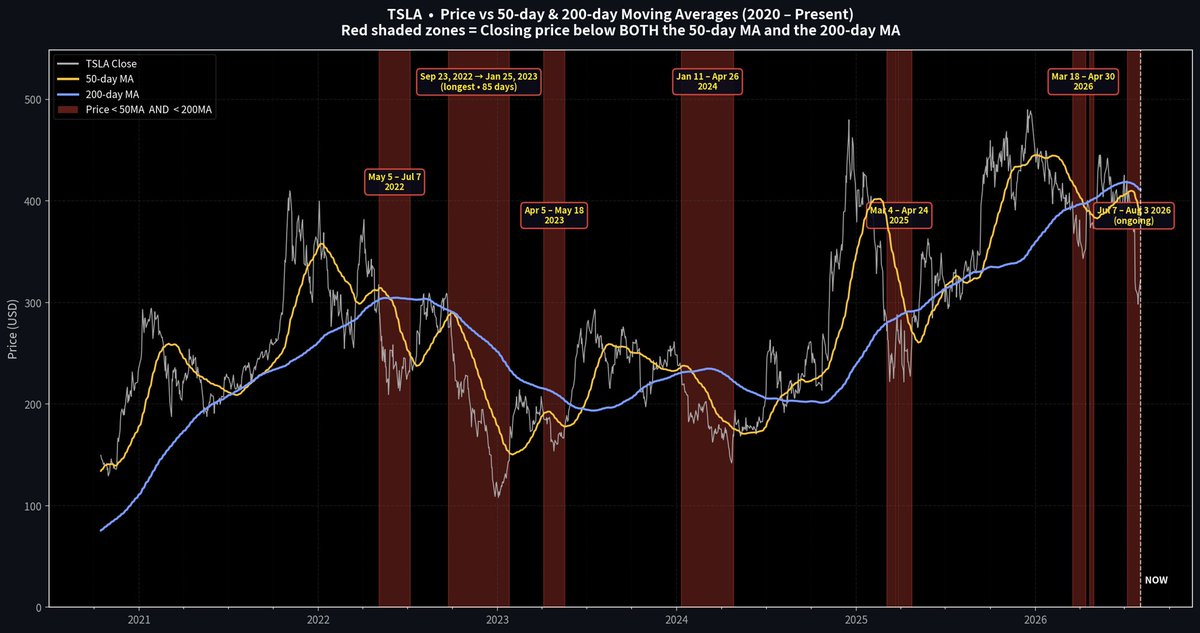
TSLA 50-day & 200-day Moving Averages
"This too shall pass"
Red shaded zones show every sustained period where the closing price was below both the 50-day MA and the 200-day MA. 2020 to present.
Heck yeah! Warranty for sure if it is a leak. But warranty too, if the HW3 v14 lite also causes the overheating without having a low coolant condition. I am just posting things that someone can easily check if it is indeed that, or is it truly from the v14 lite overheating the processor.
@ChuckCook What is interesting about this warning is that it happens, and then self-clears after 20 seconds. Curious now as to why...did the bubble circulate through the system and has temporarily cleared, or did the CPU throttle itself?