Dean of Business and Professor of Economics at Black Hills State. Topics include hockey, econ, and random musings. Bow tie aficionado. All views are my own.
@jmhorp Not Nordic, but when I started at Monash in 2005, I was surprised that earning just shy of $50k very nearly put me in the top tax bracket. Their 2nd highest bracket was 42%, above the top US rate. The top rate was 47%. I could knock 1% off that by buying private health insurance
Causality runs the other way; costs don't determine prices--prices determine costs. Pizza doesn't cost $10 because ingredients cost $3, specialized ovens amortize to $2.50 per pizza, etc. Ingredients, pizza ovens, etc. cost what they do because consumers will pay $10 for pizza.
@Groundwork @KatieJWells @ConsumerReports@MorePerfectUS@bencasselman@nytimes Companies no longer price according to how much it cost THEM to make something. Instead, they price based on what YOU are willing to pay. An army of pricing advisers–a cross between the Geek Squad & Seal Team Six–is helping them to execute these high-tech pricing experiments. 6/9
Let's be clear though. every single day the national debt reaches a historic high, surpassing a previously unheard of number, and will continue to do so for the foreseeable future...
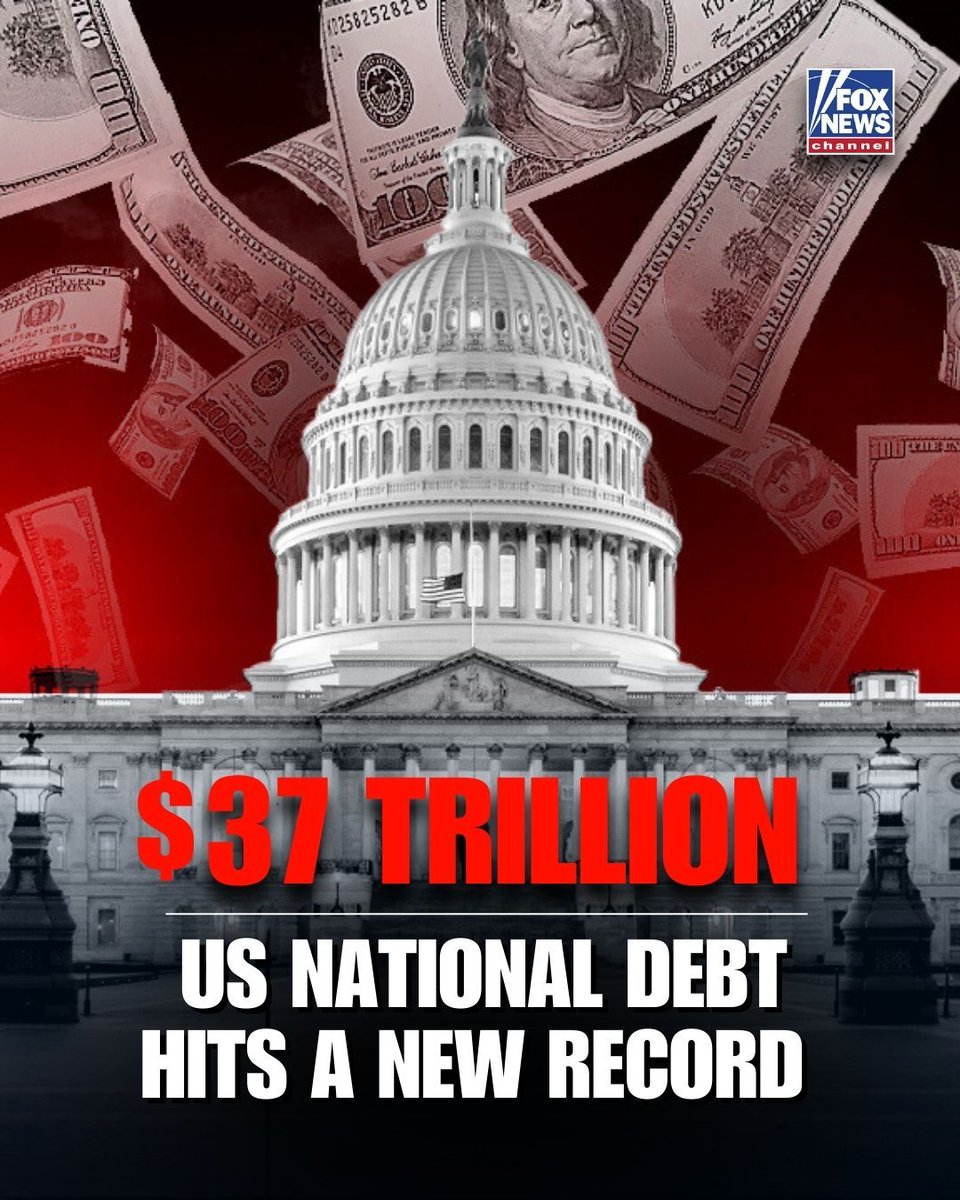
The U.S. national debt surpassed $37 trillion on Friday for the first time in the nation's history, less than eight months after it reached the $36 trillion mark.
$5.33/hr.
That’s what the minimum wage would need to be today to match the hot‑air‑balloon‑buying power Boomers had in the 1970s.
Trickle‑down economics works, has always worked, and will always work, if you pick a different arbitrary comparison point.
$66/hr.
That’s what the minimum wage would need to be today to match the home-buying power Boomers had in the 1970s.
Trickle down economics doesn’t work, has never worked and will never work in an oligarchical society.
Economic prosperity demands institutions immune to political pressure. Strong central bank independence is one of those essential institutions.
The more politicians want loose monetary policy to mask fiscal policy failures, the more crucial it is to resist.
Look, I'm no JPow stan, but what's the Fed to do when fiscal policy is inherently stagflationary? Tariffs + protectionism shock LRAS (higher costs, less efficiency) while monetary policy only manages AD...and you can't stimulate your way out of a productivity driven slowdown.
This morning, US government criticism of both Federal Reserve Chair Powell and the institution itself has broadened to include "mission creep" and the effectiveness of other officials.
The developments of the last few days reinforce my view:
If Chair Powell's objective is to safeguard the Fed's operational autonomy (which I deem vital), then he should resign.
I recognize this isn't the consensus view, which favors him staying until the end of his tenure in May. Nor is it a first best, which is simply not attainable. Yet, it's better than what is playing out now – growing and broadening threats to Fed independence – and will undoubtedly increase should he remain in office.
As to market reaction, most of the frequently mentioned candidates to replace Chair Powell would be able to calm any potential market jitters.
#economy #federalreserve #markets
Hmmm...I always thought Coke and Pepsi used corn syrup instead of sugar because sugar tariffs raise the price of sugar so much that corn syrup is cheaper.
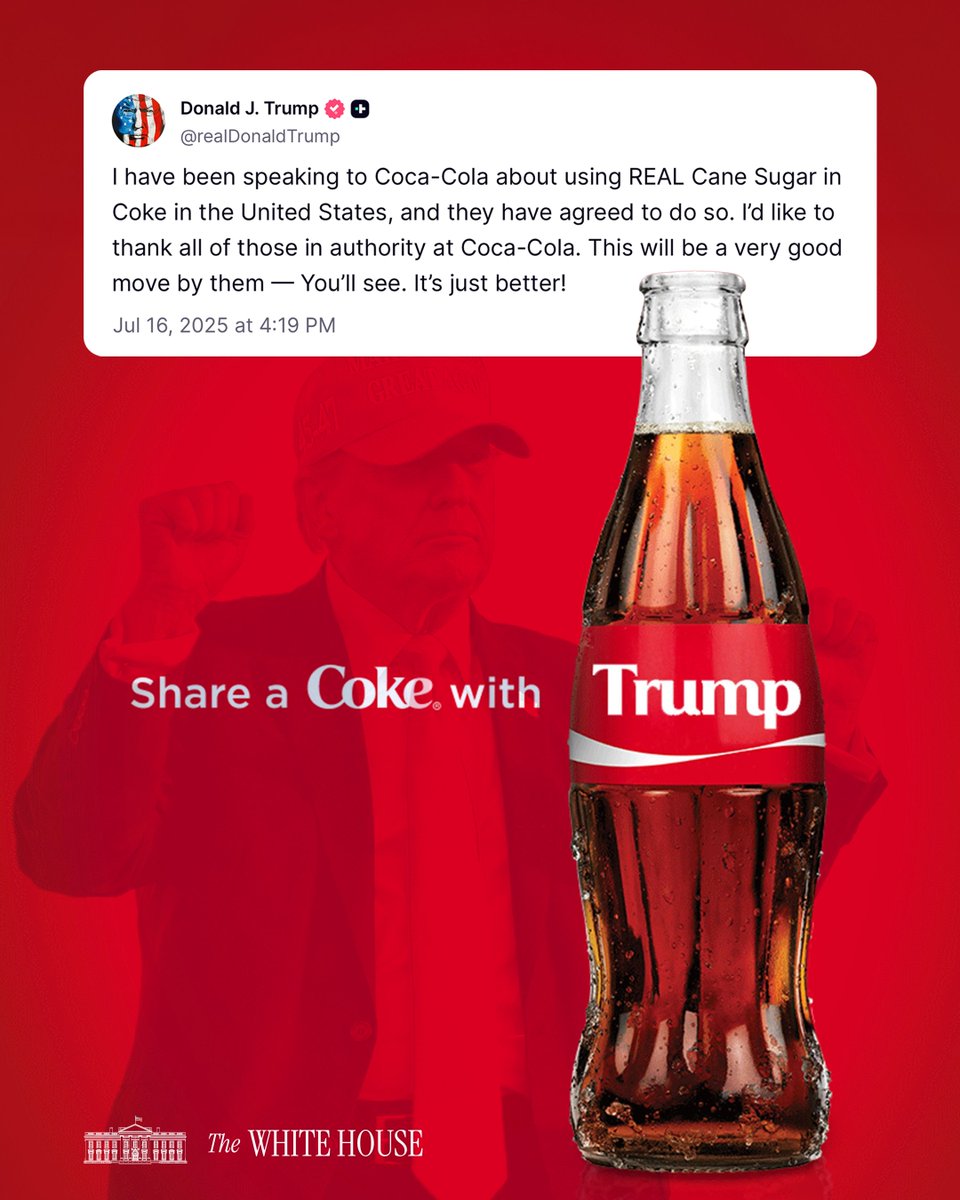
"I have been speaking to @CocaCola about using REAL Cane Sugar in Coke in the United States, and they have agreed to do so. I’d like to thank all of those in authority at Coca-Cola. This will be a very good move by them — You’ll see. It’s just better!" –President Donald J. Trump
Let me be charitable: perhaps this simply misinterprets the notion that inflation is 'always and everywhere a monetary phenomenon.' True, tariffs aren't monetary policy. But inflation is also money chasing fewer goods-and tariffs mean fewer goods. Still fundamentally monetary.
“Tariff inflation” is an oxymoron. Raising a price via an explicit policy choice is not inflation, and resulting relative price changes in the economy are not a cognizable subject of monetary policy.
A Fed holding rates higher in response is politicizing its role.
The economic development course “Fuel the Growth – 2025: Advancing Economic Development in Communities” is returning to BHSU-Rapid City for its fifth year! The event is scheduled to take place October 6-9. Find out more and register today! https://t.co/nrgIaZl5zX
BHSU has once again earned accreditation for its business degree programs from AACSB International, a distinction held by fewer than six percent of business schools worldwide. Read more in our latest news release 🔽
https://t.co/m0wkxbp3LF
I think the answer to this puzzle lies in Bastiat's "seen and unseen." Those who benefit from rent control realize it, those who are harmed don't, and worse, see the beneficiaries and presume that the reason they aren't in that group is that there's not enough rent control.
It is remarkable how utterly we economists have failed to convince others that rent control is a bad policy. Our rhetoric has traditionally relied heavily on the logic of theory. I think we need to rely more on evidence.
I haven't used ChatGPT in a while, did something change? All the sudden it's using lingo that makes me feel like I got a TEMU Joe Rogan for a life coach.
So what happens when you make service sector (virtually) income tax-free while manufacturing wages stay fully taxed? Isn't this just subsidizing the exact economic shift Trump claims to want to reverse through tariffs?