What happens when PD meets myasthenia gravis?
Patients with PD+MG reach key postural and cognitive milestones earlier than PD-only patients.
🧠 @PecoraroPasquale @AlbertoEspay@heba_deraz@UCMovDis#MovementDisorders
https://t.co/tBxcAFvKas
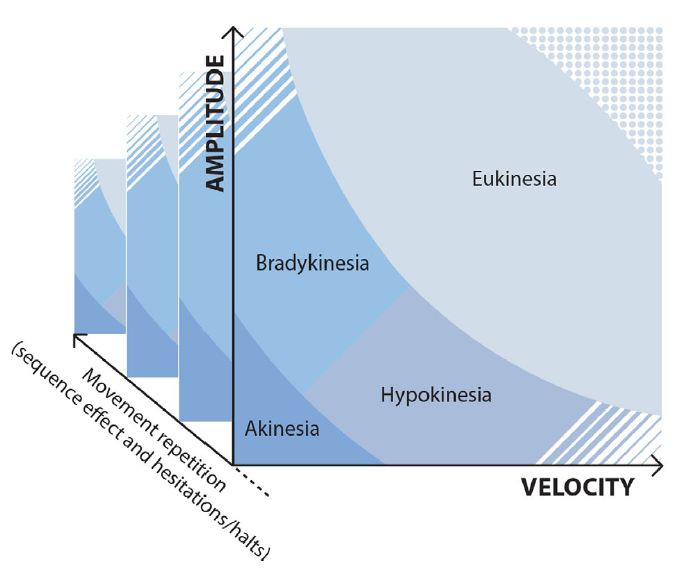
Insightful article by Paparella and colleagues exploring the Bradykinesia complex (bradykinesia+ hypokinesia+ dysrhythmia+ sequence effect) in Parkinson's disease. @AlbertoEspay@DrAlfonsoFasano https://t.co/690cU0h5nu
Can you pick out who has Parkinson's disease from the video using the 'whistle-smile' reflex? Maybe? Frederic Hanes described this sign in 1943. Giulia Paparella and colleagues revisit the observation in a trial of 34 Parkinson's folks versus 34 healthy controls in @MDCP_Journal.
Key Points:
- When healthy individuals are prompted to whistle during a medical examination, 'they typically comply and subsequently smile.'
- In Parkinson's 'they execute the whistle but often fail to produce an immediate smile.'
- In their study they showed a sensitivity of 76% and a specificity of 65% for the sign.
My take: It is hard to believe that there are only two papers on this sign published since 1943. Behavioral neurologists have long been fascinated by spontaneous smiling versus posed and elicited smiling in Parkinson's disease. Though the sensitivity and specificity are too low to become a biomarker, this is a sign neurologists can keep in their pockets for teaching. Researchers may also consider studying this phenomenon with functional imaging as the limbic-motor newtowrk is fascinating and we have also observed DBS induced smiling. The brain is a fascinating supercomputer and frankly, we do not know what we do not know. Ecce signum – behold the sign of the smile in Parkinson's.
https://t.co/GGzIlRgM4T #Parkinsons
Smiles induced by DBS:
https://t.co/SC2cO5lmBj
Spontaneous and posed smiles in Parkinson:
https://t.co/2RgLs5oc63
Motor cortex and facial smiling in primates by Morecraft:
https://t.co/vSzGLsz9pc #Parkinsons #smilefest2024 #smile
New research from @MatteoBologn & colleagues involved the recruitment of 34 people with #Parkinsons & 34 control volunteers, & then asking them to 'whistle' during assessment
The Hanes sign (“whistle-smile” reflex) could hold potential in PD assessments
https://t.co/hQuqC8DszJ
Happy @UCMovDis fellowship graduation!
Congratulations Dr. Lin @miniowlcat and Dr. Marsili @LucaMarsili1!
Dr. Lin will join @TriHealth as a movement disorders neurologist
Dr. Marsili will join @uofcincy as faculty.
Diagnostic uncertainties in Tremor
Drs. @LucaMarsili1@MatteoBologn and I discuss our clinical approach, etiological differential and associated diagnostic challenges in patients presenting with tremor
Link: https://t.co/Cu7jBEn7oY
@SeminNeurol#NeuroTwitter#Neurology
#Bradykinesia is one of the cardinal motor symptoms of #Parkinson’s disease, but its mechanisms are not fully understood. Bologna et al. review recent findings on bradykinesia pathophysiology, including the role of network dysfunction. https://t.co/zDnWM3WBp6
Join #IAPRD2021 to hear Dr. Albert Espay discuss Parkinson’s and related syndromes: Time to reject the Braak hypothesis. See (https://t.co/o2yOcuqyc8) our full scientific program and register (https://t.co/qD1HwWnJH6) today.
#Parkinsonsdisease#Parkinsons
Get the latest on Biomarkers in Parkinsonism and Related Disorders from Drs. Wilma van de Berg, Pascal Derkinderen, and Ken Marek #IAPRD2021. See our full full scientific program for more great talks. https://t.co/EqvpWwkeke
The nearly two-decade-old Braak hypothesis has survived overwhelming evidence to the contrary.
Tune in to "Time to Reject the Braak Hypothesis" on Saturday, May 1, at the Virtual IAPRD 2021 Congress (15:00 CET)
https://t.co/KbLHMXpZYo